Birth | Born as the eldest son of Emperor Xiaowu of Jin, Sima Yao.
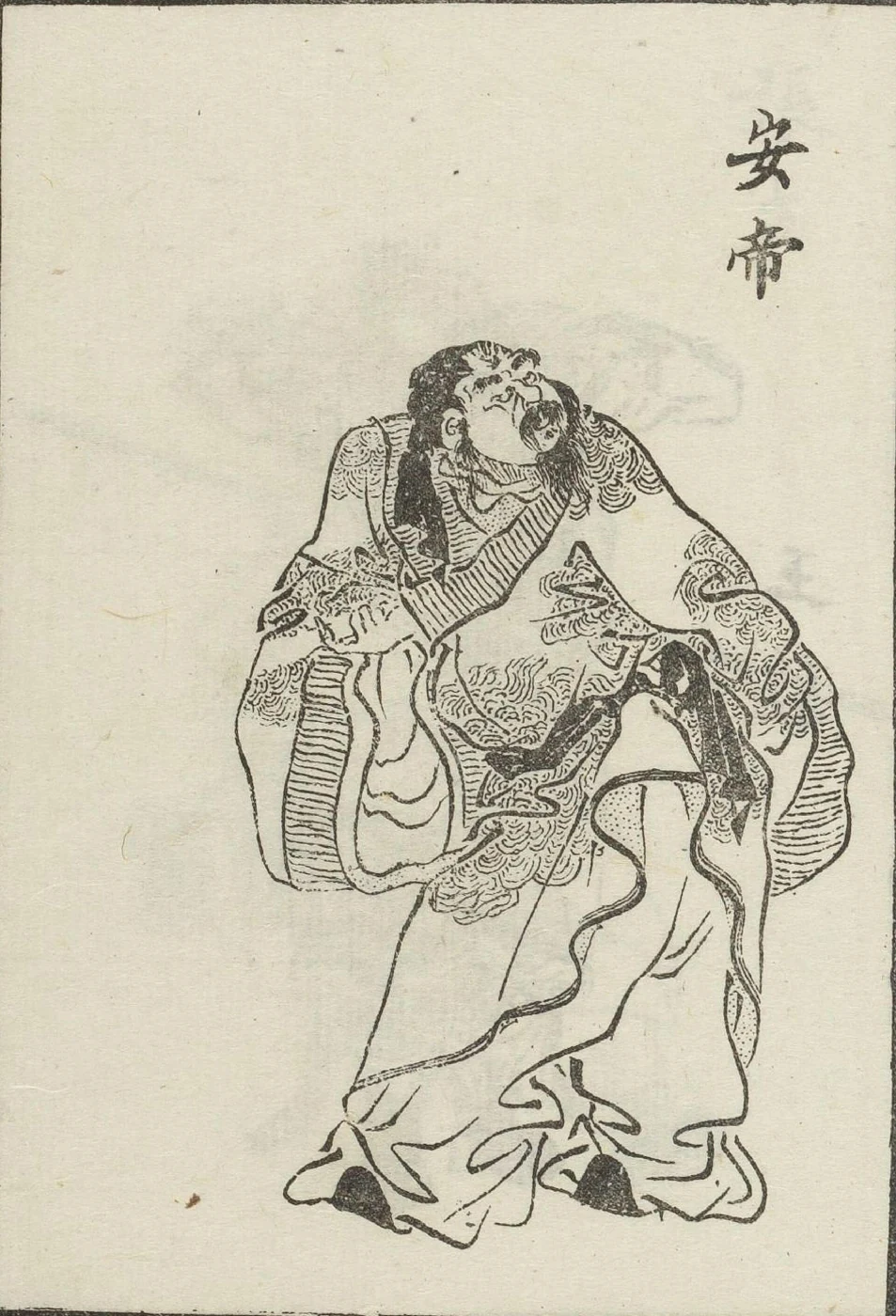
382 CE–419 CE
Emperor
Sima Dezong
司马德宗
Emperor An of Jin, Sima Dezong (382–January 28, 419), courtesy name Dezong, was a native of Wen County, Henei Commandery (present-day Wen County, Jiaozuo, Henan) and the tenth emperor of the Eastern Jin. He was the eldest son of Emperor Xiaowu of Jin, Sima Yao, and his mother was Chen Guinu. Sima Dezong was intellectually impaired, could not speak, and could not distinguish heat from cold or hunger from satiety. During his…
382 CE–419 CEEastern Jin
PROFILE
Emperor An of Jin, Sima Dezong (382–January 28, 419), courtesy name Dezong, was a native of Wen County, Henei Commandery (present-day Wen County, Jiaozuo, Henan) and the tenth emperor of the Eastern Jin. He was the eldest son of Emperor Xiaowu of Jin, Sima Yao, and his mother was Chen Guinu. Sima Dezong was intellectually impaired, could not speak, and could not distinguish heat from cold or hunger from satiety. During his twenty-two years on the throne, imperial authority fell into the hands of powerful ministers, successively including Sima Daozi, Sima Yuanxian, Huan Xuan, and Liu Yu. Major events of his reign included Huan Xuan's usurpation, the rebellions of Sun En and Lu Xun, and Liu Yu's Northern Expeditions. The Eastern Jin regime continued under the leadership of the Northern Headquarters general Liu Yu, but Sima Dezong was ultimately killed because Liu Yu intended to replace Jin. He became a symbolic figure of the decline of Eastern Jin imperial power.
- Also known as
- Emperor An of Jin
- Courtesy name
- Dezong
- Period
- Eastern Jin
- Date of Birth
- 382
- Date of Death
- January 28 419
- Dynasty/Polity
- Eastern Jin
- Identity
- Emperor
- Ethnicity
- Not recorded in historical sources
- Ancestral home
- Wen County, Henei Commandery (present-day Wen County, Jiaozuo, Henan)
- Place of birth
- Not recorded in historical sources
- Reign
- Not recorded in historical sources
- Predecessor
- Emperor Xiaowu of Eastern Jin (Sima Yao)
- Successor
- Emperor Gong of Eastern Jin (Sima Dewen)
- Era names
- Not recorded in historical sources
- Temple name
- Not recorded in historical sources
- Posthumous title
- Emperor An of Jin
- Main significance
- Eldest son of Emperor Xiaowu; intellectually impaired; reigned during Huan Xuan's usurpation and Liu Yu's rise, and was killed on Liu Yu's orders.
LIFE TIMELINE
On the xinsi day of the eighth month (September 16) | On the xinsi day of the eighth month (September 16), appointed Crown Prince.
Emperor Xiaowu died on the gengshen day of the ninth month (November 6). Sima Dezong succe | Emperor Xiaowu died on the gengshen day of the ninth month (November 6). Sima Dezong succeeded to the throne the next day, the xinyou day, and changed the era name to Long'an the following year.
Wang Gong | Wang Gong, Inspector of Yan Province, and Yu Kai, Inspector of Yu Province, raised troops because of dissatisfaction with Wang Guobao and others. Emperor An was forced to have Wang Guobao killed to quell the uprising.
Wang Gong | Wang Gong, Yu Kai, Yin Zhongkan, Huan Xuan, and others again raised troops. The rebels advanced to the vicinity of Jiankang, and Wang Gong was killed.
His mother Chen Guinu was posthumously honored as Empress Dowager De | His mother Chen Guinu was posthumously honored as Empress Dowager De; Sun En's rebellion broke out.
Sun En attacked Kuaiji | Sun En attacked Kuaiji; his grandmother, Grand Empress Dowager Li, died.
Sun En attacked Jiakou | Sun En attacked Jiakou, Linhai, and Guangling, repeatedly defeating Jin forces.
Sun En threatened Jiankang and later died after defeat | Sun En threatened Jiankang and later died after defeat; Huan Xuan raised troops from Jiangling, entered Jiankang, deposed and killed Sima Daozi and Sima Yuanxian, and appointed himself Grand Councilor and Defender-in-chief.
Huan Xuan styled himself Chancellor of State and Prince of Chu. On the renchen day of the | Huan Xuan styled himself Chancellor of State and Prince of Chu. On the renchen day of the twelfth month (January 1, 404), he usurped the throne, founded a state called Chu, and demoted Emperor An to Prince of Pinggu.
On the renyin day of the first month (January 19) | On the renyin day of the first month (January 19), Emperor An was moved to Xunyang. In the third month Liu Yu raised troops against Huan Xuan; Huan Xuan was defeated and fled toward Jiangling with Emperor An. Huan Xuan was killed in the fifth month, and Emperor An was restored. In the sixth month Huan Zhen captured Jiangling and Emperor An was taken prisoner.
On the wuxu day of the first month (March 2) | On the wuxu day of the first month (March 2), Emperor An escaped rebel control and changed the era name to Yixi. Sima Xiu, Prince of Zhangwu, and Sima Gui, Inspector of Yi Province, were executed for rebellion.
Sima Rongqi | Sima Rongqi, Inspector of Yi Province, defeated Qiao Zong's forces at Baidi.
Liu Yu executed Yin Zhongwen | Liu Yu executed Yin Zhongwen, Yin Shuwen, Yin Daoshu, Luo Qiu, and others.
Yang Siping | Yang Siping, Inspector of Liang Province, was executed in the marketplace for an offense.
Liu Yu launched a Northern Expedition against Southern Yan and decisively defeated Murong | Liu Yu launched a Northern Expedition against Southern Yan and decisively defeated Murong Chao at Linqu.
Liu Yu destroyed Southern Yan | Liu Yu destroyed Southern Yan, captured Murong Chao, and pacified the Qi region. Lu Xun took the opportunity to advance northward, and Jiankang was placed under emergency defense.
Lu Xun was killed in Jiao Province by Du Huidu | Lu Xun was killed in Jiao Province by Du Huidu; Liu Fan, General of the Right, beheaded Xu Daofu at Shixing.
Empress Wang Shen'ai died. | Empress Wang Shen'ai died.
Zhu Lingshi captured Chengdu and killed Qiao Zong | Zhu Lingshi captured Chengdu and killed Qiao Zong, ending the regime in western Shu.
Western Qin destroyed Southern Liang. | Western Qin destroyed Southern Liang.
Liu Yu fought Sima Xiuzhi at Jiangjin | Liu Yu fought Sima Xiuzhi at Jiangjin; Sima Xiuzhi was defeated and fled to Xiangyang.
Liu Yu and Sima Dewen | Liu Yu and Sima Dewen, Prince of Langya, led a Northern Expedition against Later Qin.
Liu Yu captured Chang'an | Liu Yu captured Chang'an, and Later Qin was destroyed.
Liu Yu was made Chancellor of State and Duke of Song. On the wuyin day of the twelfth mont | Liu Yu was made Chancellor of State and Duke of Song. On the wuyin day of the twelfth month (January 28, 419), Emperor An was strangled by Wang Shaozhi in the Eastern Hall at the age of thirty-seven.
On the gengshen day of the first month | On the gengshen day of the first month, he was buried at Xiuping Mausoleum (at present-day Jiangshan, Jiangning County, Jiangsu). His younger brother Sima Dewen succeeded him as Emperor Gong of Jin.
BIOGRAPHY
Biography
Family Background and Early Years
Sima Dezong was born in 382, the seventh year of the Taiyuan era. He was the eldest son of Emperor Xiaowu of Jin, Sima Yao, and his mother was Chen Guinu. Chen Guinu had originally been a consort of Emperor Xiaowu and was later posthumously honored as Empress Dowager De. On the xinsi day of the eighth month of the twelfth year of the Taiyuan era (September 16, 387), the six-year-old Sima Dezong was appointed Crown Prince. According to the Book of Jin, Imperial Annals, Chapter Ten, Sima Dezong had been intellectually impaired since childhood. He could not speak, could not distinguish winter from summer, and could not manage eating or daily life without assistance, relying on others for everything. This severe intellectual disability meant that from childhood he lacked the ability to conduct state affairs and foreshadowed his later position as a puppet emperor.
Accession and Sima Daozi's Domination of the Court
On the gengshen day of the ninth month in the twenty-first year of the Taiyuan era (November 6, 396), Emperor Xiaowu of Jin was killed by Lady Zhang. On the following day, the xinyou day, Crown Prince Sima Dezong succeeded to the throne, and in the first month of the next year the era name was changed to Long'an. Because Emperor An was unable to control the government, political power fell entirely into the hands of ministers. In the early years, court policy was chiefly directed by Sima Daozi, Prince of Kuaiji, and his son Sima Yuanxian. Sima Daozi acted as regent in his capacity as the emperor's uncle, monopolized authority, and contributed to the increasing corruption of the government. In 397, the first year of Long'an, Wang Gong, Inspector of Yan Province, and Yu Kai, Inspector of Yu Province, rose in revolt because of dissatisfaction with Wang Guobao, Left Director of the Department of State Affairs, and others. Emperor An was forced to have Wang Guobao killed to end the uprising. In the following year, Wang Gong and Yu Kai again rebelled in alliance with Yin Zhongkan, Inspector of Jing Province, Huan Xuan, Inspector of Guang Province, and others. The rebel forces advanced close to Jiankang before being suppressed, and Wang Gong was killed. Meanwhile, Sun En's rebel forces grew increasingly powerful in the Zhejiang and Jiangsu regions. Sun En attacked Kuaiji in 399 and Jiakou, Linhai, and Guangling in 400, repeatedly defeating Jin armies. In 401, Sun En's forces directly threatened Jiankang; the capital was besieged and famine broke out inside the city. Sun En was later defeated and died.
Huan Xuan's Usurpation and Emperor An's Displacement
In 402, the first year of the Daheng era, Huan Xuan raised troops from Jiangling and entered Jiankang. He deposed and killed Sima Daozi and Sima Yuanxian and appointed himself Grand Councilor and Defender-in-chief, thereby becoming the effective ruler of the Eastern Jin. In the autumn of that year, he also styled himself Prince of Chu and General-in-Chief. On the renchen day of the twelfth month of the second year of Daheng (January 1, 404), Huan Xuan usurped the throne and proclaimed the state of Chu, known to history as Huan Chu, while demoting Emperor An to Prince of Pinggu. On the renyin day of the first month in 404, the first year of Jianshi (January 19), Emperor An was moved to Xunyang. In the third month, Liu Yu joined Liu Yi of Pei and He Wuji of Donghai in raising loyalist forces against Huan Xuan. They killed Huan Xiu, Inspector of Xu Province; Huan Hong, Inspector of Qing Province; Wu Fuzhi; Huangfu Fu; and other Huan commanders, inflicting a serious defeat on Huan Xuan's forces. After his army collapsed, Huan Xuan fled toward Jiangling while holding Emperor An. On the guiyou day of the fifth month (June 10), Huan Xuan was again defeated by Liu Yi and others at Zhengrong Isle and was later killed while fleeing toward Shu. With the support of Wang Kangchan, Assistant in Jing Province, and Wang Tengzhi, Administrator of Nan Commandery, Emperor An was restored at Jiangling. The restoration was short-lived. On the renwu day of the sixth month (June 26), Huan Xuan's general Huan Zhen captured Jiangling, and Emperor An was again taken prisoner. Only on the wuxu day of the first month in 405, the first year of Yixi (March 2), did Emperor An escape rebel control and change the era name to Yixi. The Huan Xuan Rebellion had thoroughly destroyed Eastern Jin imperial authority. Liu Yu emerged as one of the most powerful figures in the dynasty, laying the groundwork for the later establishment of Liu Song.
Liu Yu's Domination and Emperor An's Death
After Emperor An was restored in 405, political power gradually passed into Liu Yu's hands. In 408, after Wang Mi's death, Liu Yu succeeded him as Inspector of Yang Province and Supervisor of the Affairs of the Secretariat, giving him effective control of the court. Beginning in 409, Liu Yu launched a series of Northern Expeditions. Between 409 and 410 he destroyed Southern Yan, captured Murong Chao, and recovered Shandong. In 416–417 he destroyed Later Qin and recovered Luoyang and Chang'an. At the same time, Liu Yu monopolized authority at court, excluded or persecuted officials who opposed him, and issued forged edicts in Emperor An's name to command provincial officials. In 412 he eliminated Liu Yi and Zhuge Changmin, both of whom had joined him in raising troops against Huan Xuan, and in 415 he eliminated the imperial clansman Sima Xiuzhi. In 418, Liu Yu was made Chancellor of State and Duke of Song, making his intention to replace Jin increasingly clear. A prophecy then circulating stated that “after Changming there would be two emperors.” To make events conform to this prophecy, Liu Yu secretly ordered Secretariat Gentleman Wang Shaozhi and members of Emperor An's entourage to kill the emperor. Sima Dewen, later Emperor Gong of Jin and then Prince of Langya, constantly stayed beside Emperor An, sharing his meals and sleeping quarters, leaving Wang Shaozhi no opportunity. After Sima Dewen fell ill and moved outside the palace, however, on the wuyin day of the twelfth month in the fourteenth year of Yixi (January 28, 419), Wang Shaozhi strangled Emperor An with loose clothing in the Eastern Hall. He was thirty-seven. His younger brother Sima Dewen succeeded him as Emperor Gong of Jin. On the gengshen day of the first month of 419, the first year of Yuanxi, Emperor An was buried at Xiuping Mausoleum, located at present-day Jiangshan in Jiangning County, Jiangsu.
Major Activities
Puppet Emperor and the Decline of Imperial Authority
Sima Dezong reigned for twenty-two years. Because he was intellectually impaired, could not speak, and could not distinguish heat from cold or hunger from satiety, he was entirely incapable of conducting government. The Book of Jin, Imperial Annals, Chapter Ten, records that “the emperor was not intelligent; from youth to adulthood, he could not speak, and even changes of heat and cold he could not distinguish. None of his movements or actions were of his own making.” The Comprehensive Mirror in Aid of Governance likewise states that “Emperor An was unintelligent from childhood and could not speak; he could not even distinguish heat and cold, hunger and satiety, and his eating, drinking, sleeping, and rising were all managed by others.” From childhood until death, Emperor An is described as never having spoken, being unable to recognize hunger or satiety or distinguish cold from heat, and being unable to manage his own bodily needs. This extreme disability caused Eastern Jin imperial authority to deteriorate completely under his reign. Political power was successively held by Sima Daozi, Sima Yuanxian, Huan Xuan, Liu Yu, and other powerful ministers, while Emperor An remained only a symbolic presence. During his reign, the Eastern Jin experienced Wang Gong's uprisings, the rebellions of Sun En and Lu Xun, Huan Xuan's usurpation, and Liu Yu's Northern Expeditions. The dynasty's political position steadily weakened, preparing the way for its eventual replacement by Liu Song.
A Puppet during Huan Xuan's Usurpation
On the renchen day of the twelfth month of the second year of Daheng (January 1, 404), Huan Xuan usurped the throne and proclaimed the state of Chu, demoting Emperor An to Prince of Pinggu. This was the first time in Eastern Jin history that a powerful minister usurped the throne and proclaimed himself emperor. After Huan Xuan's usurpation, Emperor An was moved to Xunyang and was later taken by Huan Xuan while the latter fled toward Jiangling. After Huan Xuan's defeat and death, Emperor An was briefly restored, only to be captured again by Huan Zhen. He did not escape rebel control until 405, the first year of Yixi. These events fully exposed Emperor An's position as a puppet: he was entirely an object to be seized and used by rival political forces and exercised no independent will.
A Stepping Stone in Liu Yu's Replacement of Jin
After the Huan Xuan Rebellion, Liu Yu became the effective ruler of the Eastern Jin. In 418, the fourteenth year of Yixi, Liu Yu was made Chancellor of State and Duke of Song, and his intention to replace Jin was increasingly obvious. Because a prophecy circulating at the time said that “after Changming there would be two emperors,” Liu Yu used the prophecy as a pretext and secretly ordered Secretariat Gentleman Wang Shaozhi to strangle Emperor An, after which he placed Sima Dewen on the throne. Emperor An's death marked the complete disappearance of meaningful Eastern Jin imperial authority and cleared the way for Liu Yu to replace the dynasty. In 420, the second year of Yuanxi, Liu Yu forced Emperor Gong of Jin to abdicate and established Liu Song, ending the Eastern Jin.
The last stage of his reign is directly bound up with the end of the Eastern Jin: in 416 (twelfth year of the Yixi era) Liu Yu and Sima Dewen, Prince of Langya, campaigned north against the Later Qin, and in 417 (thirteenth year of Yixi) Liu Yu took Chang'an and the Later Qin came to an end, the Eastern Jin's military prestige reaching its height while effective power lay wholly with Liu Yu; in 418 (fourteenth year of Yixi) Liu Yu was made chancellor and Duke of Song, and on the wuyin day of the twelfth month (28 January 419) Emperor An was strangled in the Eastern Hall by Wang Shaozhi at the age of thirty-seven; on the gengshen day of the first month of 419 (first year of Yuanxi) he was buried at the Xiuping Mausoleum and his brother Sima Dewen succeeded as Emperor Gong. Emperor An reigned more than twenty years without ever acting on his own, and his murder, followed by Emperor Gong's abdication, forms the immediate course of the Eastern Jin's destruction.
The military and political course of his more than twenty years on the throne was driven mainly by powerful ministers: Huan Xuan's usurpation, Liu Yu's rising against him, the northern campaign against the Later Qin and Liu Yu's elevation to chancellor and Duke of Song were none of them decisions of Emperor An; his strangling in the Eastern Hall and Emperor Gong's abdication that followed form the immediate course of the Eastern Jin's end, and the Book of Jin records the affairs of his reign largely through the narrative of Liu Yu's side.
His name also appears in later accounts of politics at the end of the Eastern Jin: during his reign came Huan Xuan's usurpation and the rise of Liu Yu, and his murder was followed two years later by Emperor Gong's abdication, so that the Jin house survived scarcely two years after his death.
The other records of Emperor An's reign concern mostly natural disasters, famine and the acts of powerful ministers, and very few edicts by him can be traced, a direct sign of the hollowing out of imperial power at the end of the Eastern Jin.
The transfer of power in his later reign was especially clear: Liu Yu first overcame Huan Xuan and then destroyed the Southern Yan and the Later Qin, his military and political prestige growing daily, so that the court could only reward him with offices such as chancellor and Duke of Song, while edicts of Emperor An himself are scarcely recorded in the process.
Personal Relations
- Father: Sima Yao (Emperor Xiaowu of Jin)
- Mother: Chen Guinu (posthumously honored as Empress Dowager De)
- Full younger brother: Sima Dewen (Emperor Gong of Jin)
- Empress: Wang Shen'ai (Empress Anxi, granddaughter of Wang Xizhi and daughter of Wang Xianzhi)
- Sisters: Princess Jinling (married Xie Hun); Princess Poyang (married Wang Gu)
- Sima Daozi (Prince of Kuaiji; regent)
- Sima Yuanxian (son of Sima Daozi; monopolized political authority)
- Huan Xuan (usurped the throne and established Huan Chu)
- Liu Yu (Northern Headquarters general who ultimately controlled the government and ordered Emperor An's death)
- Wang Shaozhi (Secretariat Gentleman who strangled Emperor An on Liu Yu's orders)
- Wang Gong (Inspector of Yan Province; rose in rebellion against Jin)
- Yu Kai (Inspector of Yu Province; rebelled together with Wang Gong)
- Yin Zhongkan (Inspector of Jing Province; participated in the rebellion)
- Sun En (leader of the Way of the Five Pecks of Rice; led a rebellion)
- Lu Xun (Sun En's brother-in-law; continued the rebellion)
- Liu Yi (raised troops with Liu Yu against Huan Xuan)
- Sima Xiuzhi (imperial clansman who resisted Liu Yu)
Historical Assessment
Jin and Contemporary Assessments
- The Book of Jin, Imperial Annals, Chapter Ten, states that “the emperor was not intelligent; from youth to adulthood, he could not speak, and even changes of heat and cold he could not distinguish. None of his movements or actions were of his own making,” directly describing Emperor An's disability and puppet status.
- Contemporaries generally regarded Emperor An as “dull-witted” and lacking the basic capacity required of a ruler, with court affairs entirely controlled by powerful ministers.
- Liu Yu used the prophecy “after Changming there would be two emperors” as a justification for killing Emperor An, reflecting the importance attached at the time to heavenly mandate and prophetic texts.
Tang Dynasty
- Fang Xuanling and the other compilers of the Book of Jin wrote that when Emperor An came to the throne, “his day was one of calamity; Daozi and Yuanxian together overturned court government. A benighted ruler and disorderly ministers—never had there been such a case that did not perish,” identifying the combination of an incapable ruler and disorderly ministers as an important cause of Eastern Jin decline.
- The Book of Jin also remarked that “An inherited indulgence, and great bandits arose. Gong merely held a borrowed mandate, while others controlled the reins. Like King Nan of Zhou he preserved an empty dignity; like King Huai he began with a hollow title. Empty honor and borrowed names—different methods, the same ruin.” It compared Emperor An to King Nan of Zhou and described him as possessing only nominal authority.
- The prophecy “after Changming there would be two emperors,” as recorded in the Book of Jin, together with Liu Yu's regicide, became an example used by Tang historians in discussing the relationship between heavenly mandate and human action.
Song and Yuan Periods
- Sima Guang's Comprehensive Mirror in Aid of Governance states that “Emperor An was unintelligent from childhood and could not speak; he could not even distinguish heat and cold, hunger and satiety, and his eating, drinking, sleeping, and rising were all managed by others.” It recorded his physical and intellectual condition without extensive moral judgment.
- Historians of the Song and Yuan periods generally treated Emperor An as a symbol of Eastern Jin decline, regarding his “empty honor and borrowed title” as inseparable from the political disorder of the dynasty's final decades.
- In his commentary on the Comprehensive Mirror in Aid of Governance, Hu Sanxing criticized Liu Yu's killing of the emperor, regarding the prophecy as a pretext and the true purpose as usurpation.
Modern and Contemporary Scholarship
- Modern historians have often analyzed Emperor An's reign through political institutions and social structure, arguing that his incapacity coincided with the culmination of Eastern Jin aristocratic politics, in which imperial authority had become largely nominal under pressure from great clans.
- Tian Yuqing's Aristocratic Politics of the Eastern Jin treats Emperor An's reign as the final stage of Eastern Jin aristocratic politics and argues that Liu Yu's replacement of Jin marked a transition back toward stronger imperial rule.
- Scholarship generally regards Emperor An's death as a key step in Liu Yu's replacement of Jin, with the prophecy “after Changming there would be two emperors” serving as a political pretext for regicide.
FIGURES ASSOCIATED WITH THIS DYNASTY
Bibliography
- Book of Jin, vol. 9, Imperial Annals 9
- Book of Jin, vol. 10, Imperial Annals 10
- Book of Wei, vol. 96, Biographies 84
- History of the Southern Dynasties, vol. 24, Biographies 14
- Tian Yuqing, Aristocratic Politics of the Eastern Jin, Peking University Press