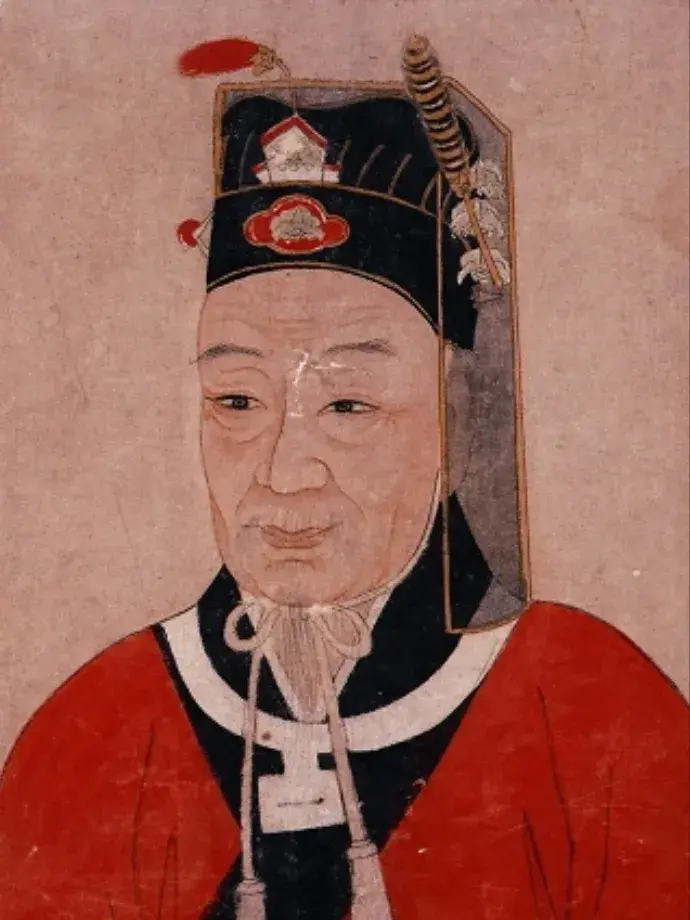
Life and Career
Elite Lineage and Dedication to Practical Statecraft
Shi Songzhi was born into the preeminent Siming Shi lineage of Qingyuan Prefecture. His great-great-grandfather relocated the family from Yuyao to Yin County. His granduncle Shi Hao served as royal mentor to Emperor Xiaozong and rose to Right Grand Chancellor and Duke of Wei. His uncle Shi Miyuan dominated the Southern Song imperial court as prime minister for twenty-six years through the reigns of Emperor Ningzong and Emperor Lizong. His father Shi Mizhong served as Scholar of the Zizheng Hall and Salt Intendant of Fujian, earning widespread respect for frugal governance. Raised in a household of supreme imperial influence, Shi Songzhi was immersed in classical learning from boyhood. However, rather than subscribing to abstract metaphysical speculation, he aligned himself with the pragmatic schools of Yongjia and Yongkang, drawing heavily upon the utilitarian statecraft of Lu Jiuyuan and Lü Zuqian. He cultivated a decisive, assertive temperament, placing paramount value on concrete military and financial results.
In 1220, the thirty-two-year-old Shi Songzhi earned his jinshi degree. With Shi Miyuan presiding over the court and placing relatives in prominent metropolitan ministries, Shi Songzhi had an unobstructed pathway to senior capital offices. When Shi Miyuan inquired about his career ambitions, Shi Songzhi responded without hesitation: "A true statesman should prove his mettle through practical achievements; I request a posting to the frontlines of the Xiangyang-Han River corridor." Astonished and impressed by his ambition, Shi Miyuan appointed him Judicial Staff Officer of Guanghua Army (modern Laohekou, Hubei). Arriving on the contested frontier, Shi Songzhi commenced two decades of continuous military service in the middle Yangtze defense zone.
Fortifying Xiangyang and Creating the Zaoyang Agro-Colonies
Throughout the Southern Song dynasty, the imperial defense perimeter stretched thousands of miles from the Huai River to Sichuan, with the middle reaches of the Yangtze River anchored at Xiangyang serving as the strategic hinge. Flanked by the Jing Mountains to the south and the Han River to the north, Xiangyang paired with Fancheng to form a dual stronghold that blocked northern cavalry corridors into the Jianghan Plain. Beginning as a minor judicial and logistical officer, Shi Songzhi was promoted to Administrator of Military Affairs in the Jingxi-Hubei Pacification Command and Vice Prefect of Xiangyang in 1227. Inspecting border outposts, he realized that successful frontier defense demanded a self-sustaining economic foundation rather than passive reliance on distant supply lines.
In 1228, Shi Songzhi assumed administrative command of the Zaoyang garrison. Located adjacent to Jin-controlled Dengzhou, Zaoyang had been devastated by repeated invasions, leaving fertile fields overgrown with brambles. Shi Songzhi initiated a massive military farming project (tuntian). He recruited tens of thousands of northern refugees, organized them into paramilitary agrarian settlements, provided draft oxen, seed grain, and farm tools, and trained able-bodied youths to farm in peacetime and wield weapons in crisis. Furthermore, he erected defensive redoubts along the Zaoyang-Xiangyang perimeter, dredged irrigation canals, and established scores of granaries. To ensure optimal tactical readiness, he secretly drafted precise topological maps of all frontier mountain defiles and memorized garrison troop rotations.
By 1230, the Zaoyang agro-colonies yielded immense grain harvests. In Xiangyang alone, the state granaries accumulated over 680,000 bushels of grain, while Zaoyang produced hundreds of thousands of bushels annually. This abundance completely eliminated the middle Yangtze theater's chronic dependency on grain shipments transported thousands of miles upriver from Jiangnan, providing local armies with sufficient reserves to withstand multi-year sieges. In recognition of this achievement, Emperor Lizong repeatedly promoted him to Assistant Director of Armaments, Vice Pacification Commissioner, and Administrator of Xiangyang, granting him full discretionary field command. When thousands of northern Han troops under former Jin generals Wang Min and Li Boyuan defected southward, other commanders urged their execution or expulsion. Shi Songzhi integrated their elite fighters into Song regular units and assigned the remainder to cultivate border wastelands, augmenting Song border strength while winning northern hearts.
The Eradication of Jin at Caizhou
Between 1232 and 1233, Mongol forces under Tolui bypassed Song border territory in southern Shaanxi to launch a surprise strike into Henan, crushing the Jin main field army at the Battle of Sanfengshan. Emperor Aizong of Jin abandoned Kaifeng and fled south to the isolated fortress of Caizhou (modern Runan, Henan). Trapped in desperation, remnant Jin regiments repeatedly raided Song border districts in Tangzhou and Dengzhou. Concurrently, the Mongol ruler Ogodei dispatched an envoy named Wang Ji to Xiangyang to propose a joint allied offensive against Caizhou, promising to restore former Song territories in Henan upon victory.
The Song imperial court was divided. While popular sentiment demanded revenge for the Jingkang Humiliation, cautious advisors warned that destroying Jin would expose Song borders to Mongol aggression. Analyzing the strategic chessboard from Xiangyang, Shi Songzhi recognized that the Jin Empire's collapse was inevitable. If Song refused to participate, the Mongols would take Caizhou alone, depriving Song of moral glory while positioning Mongol armies directly on the border. Conversely, active intervention would avenge the royal ancestors, extend buffer zones, and allow Song commanders to assess Mongol tactics firsthand.
In the autumn of 1233, Emperor Lizong ordered the Jinghu Command to support the siege of Caizhou. Shi Songzhi mobilized twenty thousand veteran shock troops under his premier field commanders Meng Gong and Jiang Hai, alongside three hundred thousand bushels of Zaoyang grain to relieve the starving Mongol siege army under Taachar. Reaching Caizhou, Meng Gong's regiments assaulted outer barbicans, diverted the Ru River into defensive trenches, and launched furious scaling operations against the southern gates. On February 9, 1234, as Emperor Aizong committed suicide, Song troops stormed the citadel. Meng Gong captured the Jin ministerial corps, dividing the fallen emperor's remains and imperial regalia to send to Lin'an for sacrifice at the imperial ancestral temple. The victory elevated Shi Songzhi's prestige, earning him promotion to Minister of Justice.
Foresight and Resistance to the Duanping Debacle
The extinction of the Jin Empire left a massive political vacuum across Henan. The three ancient Northern Song capitals—Kaifeng, Luoyang, and Shangqiu—stood largely deserted, while Mongol field forces withdrew north of the Yellow River to escape summer heat. Overwhelmed by triumphalist delusions, Grand Chancellor Zheng Qingzhi and Huaidong generals Zhao Kui and Zhao Fan persuaded Emperor Lizong to launch an expedition to annex the Three Capitals and establish a defensive perimeter along the Yellow River, an endeavor known as the "Duanping Campaign into Luoyang."
Emperor Lizong secretly solicited Shi Songzhi's consent, offering him prime ministerial honors if he committed his armies. Operating on the frontlines, Shi Songzhi was immune to court romanticism. He drafted urgent memorials outlining three critical vulnerabilities: first, decades of warfare had left Henan completely desolate, making local food procurement impossible; second, the Mongol cavalry withdrawal was a standard pastoral maneuver, and their iron regiments would inevitably return in autumn; third, Song treasuries were drained and transport lines overstretched, ensuring that an exposed vanguard would be surrounded. Pointing to severe local droughts and locust infestations across Jinghu, he refused to commit his troops, urging that Song forces instead fortify the natural barriers of the Huai and Han rivers.
Disregarding his warnings, Emperor Lizong dispatched sixty thousand troops north in the summer of 1234. The expedition quickly turned to disaster. After marching into a deserted Kaifeng, the exhausted vanguard reached Luoyang without supplies. The Mongols breached the Yellow River dikes, flooded the approaches, and trapped Song columns in mountain ambushes at Longmen, annihilating the southern army. The disaster verified Shi Songzhi's strategic predictions, forcing Emperor Lizong to grant him comprehensive authority to gather survivors, rebuild border defenses, and shield the Yangtze valley from retaliatory Mongol thrusts.
Directing the Jinghu Theater and Empowering Meng Gong
In 1235, Ogodei Khan exploited the Duanping campaign as a pretext for a full-scale invasion of the Southern Song, launching simultaneous offensives into Sichuan, the Huai basin, and the middle Yangtze. In 1236, treason erupted inside Xiangyang; former northern defectors under Wang Min betrayed the city, opening the gates to Mongol cavalry. With Xiangyang and Fancheng lost, Mongol prince Kuochu swept southward toward the pivotal Yangtze hub of Jiangling, threatening to sever the empire in half.
At this moment of supreme crisis, Emperor Lizong promoted Shi Songzhi to Participant in Determining Governmental Matters and Military Superintendent of Jinghu and Jiangxi, establishing his headquarters at Wuchang. Displaying remarkable operational clarity, Shi Songzhi delegated total tactical authority to Meng Gong, charging him with rescuing Jiangling. Meng Gong mounted a brilliant riverine and cavalry counteroffensive, crushing Mongol forces across twenty-four distinct engagements, setting fire to enemy pontoon flotillas, and slaying thousands of Mongol warriors. The victory lifted the siege of Jiangling and secured the Yangtze river line.
Between 1237 and 1239, Shi Songzhi coordinated a sustained counteroffensive. Directing Meng Gong and Jiang Hai in combined strikes, Song forces recaptured Yingzhou, Jingmen, Xinyang, and Guanghua. In 1239, Meng Gong stormed Xiangyang and Fancheng, expelling all Mongol garrisons from the Han River basin. Under Shi Songzhi's leadership, the middle Yangtze theater survived the most ferocious invasion of the era, preserving the defensive integrity of the Southern Song realm.
Grand Chancellorship and Bureaucratic Centralization
In the ninth month of 1239, in recognition of his defensive triumphs, Emperor Lizong appointed Shi Songzhi Right Grand Chancellor and Commissioner of Military Affairs, granting him unified command over the regional armies of Lianghuai, Sichuan, and Jinghu. Ascending to the premiership, he implemented rigorous fiscal and military reforms. He eliminated thousands of sinecures, instituted strict performance evaluations for frontier generals, consolidated depreciated paper currency, and enforced an integrated tri-regional defense strategy combining the talents of Meng Gong in Jinghu, Du Gao in the Huai valley, and Yu Jie in Sichuan.
However, Shi Songzhi's imperious, autocratic temperament generated fierce enmity among civilian bureaucrats. Despising the idealistic moralizing of the ascendant Neo-Confucian (Daoxue) faction, he openly mocked scholars who engaged in metaphysical discourse while neglecting military realities. He ruthlessly purged political critics, exiling Censor Li Maoying and scholar Gao Side. When supervising the compilation of the imperial dynastic annals (Si Chao Di Ji), he altered historical evaluations to defend the record of his uncle Shi Miyuan, permanently alienating the intellectual establishment.
The Mourning Crisis and Twilight Years
In the ninth month of 1244, Shi Songzhi's father Shi Mizhong died in Lin'an. Under orthodox Confucian rites, an official was obligated to resign and observe twenty-seven months of filial mourning (dingyou). Facing ongoing Mongol hostility, Emperor Lizong issued an imperial decree of "severed grief" (duoqing), ordering Shi Songzhi to bypass mourning and remain at his post as prime minister.
The decree ignited a political tempest. Neo-Confucian scholars and imperial university students viewed the avoidance of mourning as a flagrant violation of filial piety and a cynical pretext for the Shi clan to perpetuate dynastic dominance. Over three hundred students from the Imperial University and Military Academy staged demonstrations outside the palace gates, while dozens of senior censors, including Wang Sui, Sun Yifeng, and Du Fan, submitted fiery impeachments accusing Shi Songzhi of usurping moral laws for personal ambition. Recognizing that the avalanche of outrage had rendered his governance untenable, Shi Songzhi repeatedly submitted his resignation.
In the eleventh month of 1244, Emperor Lizong revoked the order, stripping Shi Songzhi of his chancellorship and granting him nominal regional assignments to enable him to return home. Shi Songzhi retired to Yin County, constructing the rustic retreat of Yunshubi, Sanxi Bridge, and Diaoyutai, living in complete seclusion for thirteen years. Though Emperor Lizong attempted on three occasions to recall him to the premiership, unanimous resistance from the censorate blocked his reappointment.
In the spring of 1256, Emperor Lizong awarded him the dignity of Grand Academician of Guanwen Hall and Junior Tutor, enfeoffing him as Duke of Lu. Shi Songzhi passed away at his country estate in the eighth month of 1257 at the age of sixty-nine. Deeply saddened, Emperor Lizong canceled imperial audiences, posthumously elevated him to Junior Preceptor (Shaoshi), and conferred the posthumous name Zhuansu. In 1275, during the collapse of the dynasty, censors stripped him of his honors. Operating at the fulcrum of the Mongol invasions, Shi Songzhi combined strategic genius with authoritarian ambition, standing as one of the most formidable yet polarizing marshals of the Southern Song dynasty.