Joins the Rebellion with His Father
Following the outbreak of the An-Shi Rebellion, Shi Chaoyi campaigns under his father Shi Siming and commands garrisons at Jizhou and Xiangzhou in Hebei.
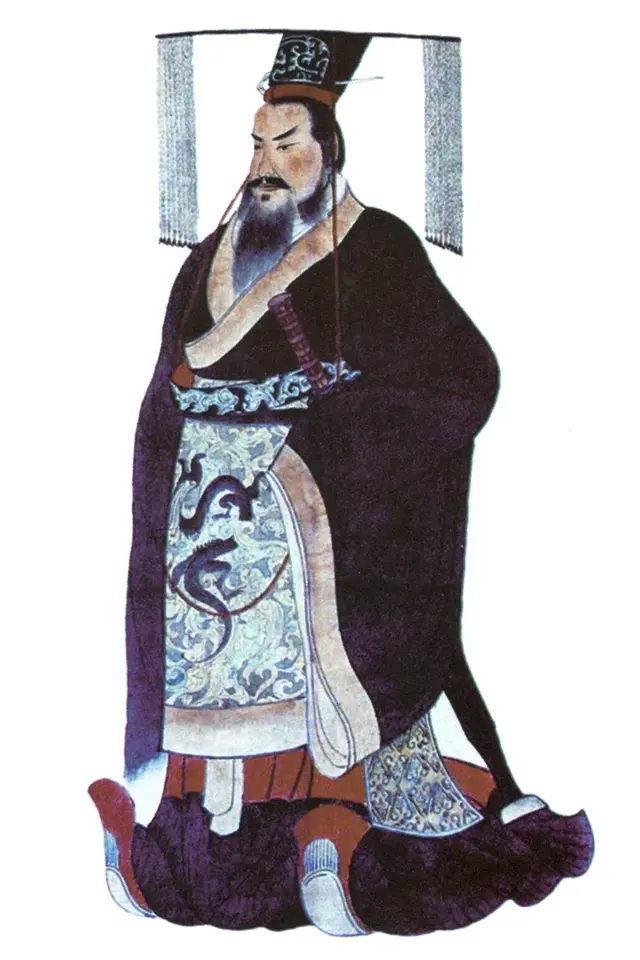
?–763 CE
史朝义
Shi Chaoyi (史朝义), a native of Ningyi Prefecture in Yingzhou (around present-day Chaoyang, Liaoning Province) of Göktürks (突厥族) origin, was the eldest son of Shi Siming and the last ruler of the insurgent Great Yan regime during the late An-Shi Rebellion in the Tang dynasty. Following the outbreak of the An-Shi Rebellion in the fourteenth year of the Tianbao era (755), he campaigned alongside his father Shi Siming and…
Shi Chaoyi (史朝义), a native of Ningyi Prefecture in Yingzhou (around present-day Chaoyang, Liaoning Province) of Göktürks (突厥族) origin, was the eldest son of Shi Siming and the last ruler of the insurgent Great Yan regime during the late An-Shi Rebellion in the Tang dynasty. Following the outbreak of the An-Shi Rebellion in the fourteenth year of the Tianbao era (755), he campaigned alongside his father Shi Siming and garrisoned key military prefectures in Hebei including Jizhou and Xiangzhou; when Shi Siming proclaimed himself Emperor of Great Yan in the second year of the Qianyuan era (759), Shi Chaoyi was created Prince of Huai. Known for his gentle, humble temperament and solicitude toward his soldiers, he won wide devotion within the army, yet because his mother was of lowly status he was spurned by Shi Siming, who favored his younger son Shi Chaoqing (born to Empress Xin) and repeatedly contemplated killing Shi Chaoyi to install Shi Chaoqing as Crown Prince. In the spring of the second year of the Shangyuan era (761), after Shi Chaoyi's vanguard suffered defeat at Jiangziban during an advance on Shanzhou and Shi Siming threatened to execute him under military law, Shi Chaoyi was prevailed upon by his subordinate generals Luo Yue and Cai Wenjing to stage a mutiny at Luqiao Relay Station, capturing and strangling Shi Siming, ascending the throne in Luoyang with the era name Xiansheng, and secretly ordering the execution of Shi Chaoqing and Empress Xin in Fanyang. Because the regional military governors under the Yan regime were veteran generals of An Lushan who disdained bowing to a junior, the regime rapidly fractured from within. In the tenth month of the first year of the Baoying era (762), Emperor Daizong of Tang dispatched Li Kuo (Prince of Yong) and Pugu Huai'en (Military Governor of Shuofang) at the head of a combined Tang and Uyghur army to recapture Luoyang; routed at Hengshui and driven north across the Yellow River, Shi Chaoyi saw his senior commanders—including Tian Chengsi, Xue Song, Zhang Zhongzhi, and Li Huaixian—surrender one after another to the Tang court. After breaking out of Mozhou in the first month of the second year of the Baoying era (763) and being barred from entering Fanyang, the utterly isolated Shi Chaoyi hanged himself in the woods near the Yiwulü Shrine at Wenquan Stockade, bringing the seven-year An-Shi Rebellion to its final conclusion.
Following the outbreak of the An-Shi Rebellion, Shi Chaoyi campaigns under his father Shi Siming and commands garrisons at Jizhou and Xiangzhou in Hebei.
After Shi Siming kills An Qingxu and proclaims himself Emperor of Great Yan, he invests his eldest son Shi Chaoyi as Prince of Huai to lead troops in the Henan campaigns.
Defeated by Tang general Wei Boyu at Jiangziban while attacking Shanzhou in the third month and threatened with execution by his furious father, Shi Chaoyi joins his generals Luo Yue and Cai Wenjing in a coup that strangles Shi Siming, ascending the throne in Luoyang with the era name Xiansheng.
In the tenth month, combined Tang and Uyghur armies rout Shi Chaoyi's 100,000-strong force at Hengshui north of Luoyang; Shi Chaoyi burns the Mingtang and flees north of the Yellow River as his Hebei military governors defect to the Tang.
Breaking out of besieged Mozhou with 5,000 cavalry in the first month to seek aid in Youzhou, he is betrayed by Tian Chengsi and shut out of Fanyang by Li Huaixian, finally hanging himself at the Yiwulü Shrine near Wenquan Stockade.
Shi Chaoyi was the eldest son of Shi Siming, founder of the later Yan regime, born to a concubine. According to the steppe customs of the Göktürks, Xi, and Khitan, no strict distinction was drawn between sons of principal wives and concubines, and the youngest son was often favored as heir. As the eldest son of a secondary consort, Shi Chaoyi was generous, modest, and compassionate toward the rank and file whenever he accompanied his father on campaign, earning the sincere allegiance of the officers and men. Shi Siming, by contrast, was suspicious, cruel, and given to indiscriminate slaughter, exterminating the nine kindreds of subordinates who displeased him and leaving his commanders in constant fear for their lives. Deeplydoting on his younger son Shi Chaoqing, born to Empress Xin, Shi Siming left Shi Chaoqing in charge of his base at Fanyang (southwest of present-day Beijing) after claiming the imperial title and frequently contemplated killing Shi Chaoyi to name Shi Chaoqing as Crown Prince—an intention that Shi Siming's attendants secretly leaked to Shi Chaoyi's circle.
In the second month of the second year of the Shangyuan era (761), after routing the main Tang army under Grand Guardian Li Guangbi at Mount Beimang and seizing Luoyang and Heyang, Shi Siming sought to press westward into Guanzhong to capture Chang'an. He dispatched Shi Chaoyi at the head of a vanguard force along the northern route to attack Shanzhou (present-day Sanmenxia, Henan Province), while personally leading the main army along the southern route. On the jiawu day (ninth day) of the third month, Shi Chaoyi's vanguard reached Jiangziban (also known as Jiangziling) within Shanzhou territory and was fiercely counterattacked by the Tang Shence Army commander Wei Boyu. After several repeated assaults were repulsed by Wei Boyu, Shi Chaoyi retreated and encamped at Yongning.
Arriving at Yongning, Shi Siming was beside himself with rage at what he deemed Shi Chaoyi's cowardice in battle. He summoned Shi Chaoyi along with his subordinate officers Luo Yue, Cai Wenjing, and Xu Jichang, intending to execute them all under military law before relenting and releasing them with a furious tirade: "Chaoyi is a coward and can never accomplish my great enterprise!" He immediately prepared to summon his favored younger son Shi Chaoqing from Fanyang to replace Shi Chaoyi as deputy commander. On the wuxu day (thirteenth day) of the third month, Shi Siming ordered Shi Chaoyi to construct a triangular fort at Yongning for storing military grain, stipulating that it be completed within a single day. Shi Chaoyi drove his exhausted soldiers to finish building the walls by evening, but before the mud plastering on the exterior had been completed, Shi Siming arrived to inspect the site and berated him furiously. When Shi Chaoyi explained that the soldiers had paused briefly from exhaustion, Shi Siming shouted: "Do you pity the soldiers and dare to defy my orders?" Sitting astride his saddle until the men finished plastering the walls in moments, Shi Siming rode off, looking back to snap: "In the morning when I take Shanzhou, in the evening I will behead this wretch!" Terrified, Shi Chaoyi saw no way to save himself.
That night, Shi Siming lodged at Luqiao Relay Station (east of present-day Luoning County, Henan Province), ordering his trusted favorite General Cao to command the night watch with bronze kettle-drums, while Shi Chaoyi stayed at an inn nearby. Having just been threatened with execution, Shi Chaoyi's officers Luo Yue and Cai Wenjing conferred and urged Shi Chaoyi: "After our recent defeat, you and we alike have no days left to live! Since antiquity there have been depositions and installations of rulers; let us summon General Cao to plan a great undertaking together." When Shi Chaoyi bowed his head in silence, Luo Yue pressed him sharply: "If Your Highness truly cannot bear to act, we shall defect to the Tang today and can no longer serve Your Highness!"
Driven into a corner, Shi Chaoyi wept and consented: "Handle this matter carefully, gentlemen, and do not startle or harm my father!" Luo Yue and his associates immediately sent Xu Jichang, son of the senior general Xu Shuji, to sound out General Cao; knowing that all the generals resented Shi Siming and fearing for his own life, General Cao dared not refuse. Later that night, Shi Siming woke in alarm on his couch at the relay station, telling his attendant jesters that he had dreamed of a herd of deer crossing a river only for the deer to die and the water to run dry. Shortly afterward, as Shi Siming went to the privy, Luo Yue led three hundred fully armed soldiers from Shi Chaoyi's guard into the relay station, unopposed by the night sentries under General Cao. Finding Shi Siming's bedchamber empty, Luo Yue slew several attendants until someone pointed toward the privy. Alerted by the commotion, Shi Siming leaped over the wall into the stables and mounted a horse to flee, but Luo Yue's follower Zhou Zijun shot him in the arm with an arrow, knocking him from his mount, and seized him with his hands bound behind his back.
When Shi Siming demanded to know who had started the mutiny, Luo Yue replied that he acted on the orders of Prince of Huai Shi Chaoyi. Lamenting that his own slip of the tongue that morning had invited disaster, Shi Siming complained that they were killing him too soon before he could reach Chang'an, calling out "Prince of Huai!" three times and pleading: "Imprison me if you must, but do not incur the infamy of killing your father!" Luo Yue escorted Shi Siming in chains to Liuquan Relay Station and returned to report to Shi Chaoyi that the deed was done. When Shi Chaoyi anxiously asked whether they had startled or harmed the Emperor, Luo Yue falsely assured him that he was unharmed. At the time, the Yan rear-guard commanders Zhou Zhi and Xu Shuji were encamped at Fuchang; when Xu Jichang arrived with news of the coup, Zhou Zhi collapsed to the ground in shock. As Shi Chaoyi led his troops back to Fuchang and Zhou Zhi and Xu Shuji came out to greet him, Luo Yue—suspecting Zhou Zhi of duplicity—persuaded Shi Chaoyi to have Zhou Zhi executed. Upon reaching Liuquan Relay Station, Luo Yue and his co-conspirators feared that the army's mood might waver if Shi Siming remained alive; they strangled Shi Siming, wrapped his corpse in a felt rug, and carried it back to Luoyang on the back of a camel.
Returning to Luoyang, Shi Chaoyi ascended the imperial throne and proclaimed the era name Xiansheng. To eliminate his rival in the north, he secretly dispatched envoys to Fanyang ordering Xiang Gong, Ashina Yu, and Cavalier Attendant-in-Ordinary Zhang Tongru to kill his younger half-brother Shi Chaoqing and Shi Chaoqing's mother Empress Xin. Luring Shi Chaoqing into preparing for a journey under the pretense that Shi Siming had summoned him to attend court, Xiang Gong sent armed men into the inner citadel of Fanyang; although Shi Chaoqing donned armor, mounted a tower, and shot several attackers dead, Ashina Yu feigned retreat until Shi Chaoqing descended and was captured and killed alongside his mother Empress Xin. Unaware of the secret edict, Zhang Tongru led his troops into street fighting inside the city for several days before being killed as well; Ashina Yu then ambushed and slew Xiang Gong, plunging Youzhou into more than two months of bloody factional warfare that claimed thousands of lives and left the prefecture in ruins until Shi Chaoyi appointed Li Huaixian as Military Governor of Youzhou to restore order. Although Shi Chaoyi treated his subordinates with courteous humility and entrusted state decisions to his ministers, he lacked strategic vision and commanding authority. At that time, the commanderies around Luoyang were devastated by famine and cannibalism, and the Yan military governors across Hebei were all veteran generals of An Lushan who had been peers of Shi Siming; ashamed to take orders from a junior like Shi Chaoyi, they ignored his summonses for troops, leaving Shi Chaoyi isolated and contemplating a withdrawal to Youzhou.
In the tenth month of the first year of the Baoying era (762), the newly enthroned Emperor Daizong of Tang appointed his eldest son Li Kuo (Prince of Yong, the future Emperor Dezong) as Commander-in-Chief of All Forces in the Realm and Pugu Huai'en (Military Governor of Shuofang) as Deputy Commander-in-Chief, mobilizing more than 100,000 Tang troops from Hedong, Shuofang, and Zhelu alongside Uyghur cavalry led by the Uyghur Left Shanyu to converge on Luoyang from Mianchi, Heyang, and Chenliu. Shi Chaoyi arrayed an army of 100,000 men behind trenches at Hengshui in the northern suburbs of Luoyang. On the thirtieth day of the tenth month, the allied Tang and Uyghur forces launched a general assault that shattered the Yan lines, slaying over 60,000 men, capturing more than 20,000 prisoners, and seizing countless cattle, horses, and weapons. Setting fire to the Mingtang in Luoyang before fleeing, Shi Chaoyi escaped eastward with only a few hundred light cavalry toward Bianzhou (present-day Kaifeng, Henan Province). When the Yan military governor of Bianzhou, Zhang Xiancheng, barred the gates against him and surrendered to the Tang, Shi Chaoyi detoured through Puzhou (seat north of present-day Juancheng County, Shandong Province) and crossed the Yellow River northward into Hebei.
After recovering Luoyang, Pugu Huai'en stationed the main Uyghur force at Heyang and sent his son Pugu Yang (Right Wing Cavalry and Infantry Commander) and Gao Fucheng (Shuofang Cavalry and Infantry Commander) with over 10,000 elite troops in rapid pursuit across the Yellow River. In the early eleventh month, Tang forces stormed Huazhou (seat east of present-day Hua County, Henan Province) and pursued Shi Chaoyi to Weizhou (present-day Weihui, Henan Province), defeating him again. When Shi Chaoyi's general Tian Chengsi joined him with 40,000 troops to offer battle, Pugu Yang routed their combined force in fierce fighting and pursued them east of Changle (present-day Nanle County, Henan Province). Gathering troops from Weizhou (seat northeast of present-day Daming County, Hebei Province) for another stand, Shi Chaoyi was defeated once more, prompting senior Yan generals including Xue Song and Zhang Zhongzhi (Li Baochen) to surrender their prefectures and counties to the Tang court.
Fleeing north to Beizhou (seat northwest of present-day Qinghe County, Hebei Province), Shi Chaoyi combined forces with his general Xue Zhongyi at the head of 30,000 men and marched south to counterattack, only to be ambushed and routed by Pugu Yang at Linqing (present-day Linqing, Hebei Province); reinforced by arriving Uyghur cavalry, the Tang army inflicted another heavy defeat on Shi Chaoyi's forces southeast of Xiabo (southeast of present-day Shenzhou, Hebei Province). Reaching the banks of the Zhang River without boats to cross, Shi Chaoyi's officers urged him to surrender, to his displeasure; Tian Chengsi then devised a ruse by ringing their wagons into a camp with women placed inside and baggage piled around them to lure the pursuing Tang soldiers into breaking ranks for plunder, enabling a hidden Yan detachment to counterattack and drive the pursuers back several dozen li, buying time for Shi Chaoyi to retreat behind the walls of Mozhou (seat north of present-day Renqiu, Hebei Province).
Pugu Huai'en soon concentrated Tang armies under Chief Cavalry and Infantry Commander Xue Jianxun, Cavalry and Infantry Commander Hao Tingyu, Yan-Yun Military Governor Tian Shengong, Hedong Military Governor Xin Yunjing, and Qing-Zi Military Governor Hou Xiyi to join Pugu Yang in laying siege to Mozhou. Besieged for more than forty days, Shi Chaoyi sortied eight times and was defeated in all eight engagements.
In the first month of the second year of the Baoying era (763), as Shi Chaoyi mustered his remaining elite troops for a desperate final battle, Tian Chengsi counseled him: "Your Majesty would do better to personally lead five thousand elite cavalry back to Youzhou, rally Li Huaixian's fifty thousand soldiers to march south, and strike with overwhelming momentum for certain victory; I beg to hold this city to the death, so that even Pugu Yang's strength will not take it quickly." Completely deceived, Shi Chaoyi grasped Tian Chengsi's hands in tears before riding out at night with 5,000 cavalry: "The lives of the hundred members of my household, my aged mother and young children, I entrust entirely to you today!" Tian Chengsi bowed his head to the ground weeping. Yet no sooner had Shi Chaoyi departed than Tian Chengsi assembled the garrison generals before dawn, recounted the countless slaughters and devastations they had committed across more than 150 cities in Hebei under the Yan banner, and persuaded them to turn danger into safety by surrendering. At daybreak, Tian Chengsi had men shout from the battlements that Shi Chaoyi had fled at midnight and personally escorted Shi Chaoyi's mother, wife, and children into Pugu Yang's camp to capitulate.
Pugu Yang, Hou Xiyi, and Xue Jianxun immediately led 30,000 light cavalry in hot pursuit, overtaking and routing Shi Chaoyi at Guiyi (northwest of present-day Xiong County, Hebei Province). When the battered Shi Chaoyi reached the walls of Fanyang, Youzhou Military Governor Li Huaixian had already surrendered to the Tang; Li Huaixian's subordinate Li Baozhong kept the gates tightly shut and called down from the ramparts: "Having recently accepted the mandate of the Son of Heaven, what could be more duplicitous than surrendering and rebelling within a single year!" When Shi Chaoyi pleaded that his men were starving, Li Baozhong had food sent out into the open fields. Once Shi Chaoyi and his troops had eaten, the Fanyang soldiers in his ranks quietly slipped away to return to their homes, leaving Shi Chaoyi to weep and curse Tian Chengsi: "That old slave has ruined me!"
After visiting his father Shi Siming's tomb at Liangxiang, Shi Chaoyi fled east toward Guangyang (northeast of present-day Fangshan District, Beijing), where the garrison likewise refused him entry. Resolving in desperation to flee north beyond the frontier to seek refuge among the Xi and Khitan tribes, he reached Wenquan Stockade (east of present-day Fengrun District, Tangshan, Hebei Province) when Li Huaixian's pursuing troops closed in around him. Abandoned by all and with nowhere left to turn, Shi Chaoyi hanged himself in the woods below the Yiwulü Shrine. Li Huaixian severed his head and forwarded it to the capital Chang'an, bringing the An-Shi Rebellion—which had raged for more than seven years—to an end.
FIGURES ASSOCIATED WITH THIS DYNASTY