Birth in Kuaiji
Born on the 8th day of the 9th lunar month in Kuaiji, Shaoxing, to an ancestral military lineage.
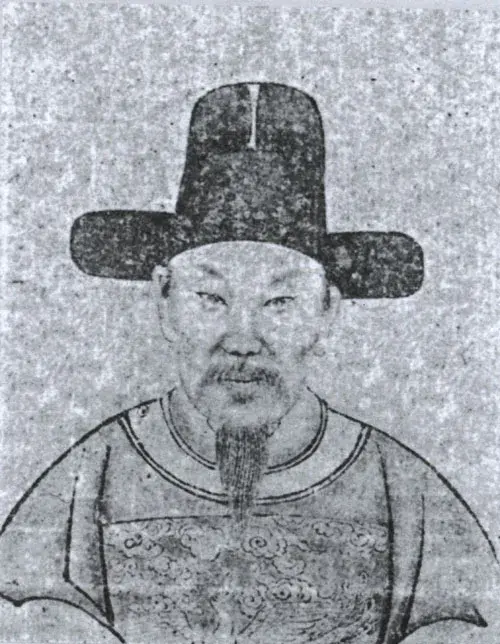
1507 CE–1557 CE
沈炼 (Shen Lian)
Shen Lian (沈炼, 1507–1557), courtesy name Chunfu (纯甫) and art name Qingxia (青霞), was a native of Kuaiji in Shaoxing Prefecture, Zhejiang. He was a prominent upright official and celebrated writer of the mid-Ming dynasty, recognized as one of the "Ten Talents of Yue". In his youth, Shen Lian studied under the renowned neo-Confucian philosopher Wang Shouren (Wang Yangming), developing exceptional intellectual vigor and an…
Shen Lian (沈炼, 1507–1557), courtesy name Chunfu (纯甫) and art name Qingxia (青霞), was a native of Kuaiji in Shaoxing Prefecture, Zhejiang. He was a prominent upright official and celebrated writer of the mid-Ming dynasty, recognized as one of the "Ten Talents of Yue". In his youth, Shen Lian studied under the renowned neo-Confucian philosopher Wang Shouren (Wang Yangming), developing exceptional intellectual vigor and an unyielding commitment to moral integrity. In 1538, he attained the imperial jinshi degree and subsequently served as county magistrate in Liyang, Chiping, and Qingfeng. Across these local postings, he systematically curbed predatory local elites, resolved accumulated wrongful convictions, and alleviated civilian labor burdens, winning profound popular affection. Later, he was promoted to Registrar in the Embroidered Uniform Guard, earning deep respect from Guard Commander Lu Bing. During the Gengxu Incident of 1550, when the Mongol cavalry of Altan Khan besieged the suburbs of Beijing, Shen Lian vigorously advocated an active defense, fiercely criticizing senior ministers who favored appeasement and tributary concessions. The following year, observing the rampant corruption and military mismanagement orchestrated by Senior Grand Secretary Yan Song, Shen Lian took a momentous stand by submitting his famous "Memorial on the Ten Crimes", exposing Yan Song's treasonous abuses of power, bribery, and subversion of frontier defenses. This petition enraged the Jiajing Emperor, who subjected Shen Lian to severe court flogging and banished him to Bao'an Subprefecture beyond the Great Wall. In exile, Shen Lian educated frontier youths and openly castigated corrupt officials. In 1557, Yan Song's son Yan Shifan directed frontier generals Yang Shun and Lu Kai to fabricate treasonous allegations of White Lotus involvement against him, leading to Shen Lian's execution in Xuanfu at age fifty-one. Following the accession of the Longqing Emperor, Shen Lian was fully exonerated, posthumously granted the title of Junior Lord of the Court of Imperial Entertainments, and bestowed the posthumous title Zhongmin during the Wanli era. Renowned for his uncompromising fortitude, his impassioned and heroic writings survive in the twelve-volume Qingxia Collection.
Born on the 8th day of the 9th lunar month in Kuaiji, Shaoxing, to an ancestral military lineage.
Enrolled as a county scholar and studied under Wang Shouren, earning high acclaim for his noble character.
Praised by Zhejiang Education Commissioner Wang Wensheng and ranked first in the regional prefectural tests.
Passed the provincial examination in Zhejiang, attaining the juren degree.
Passed the imperial metropolitan examination and was appointed Magistrate of Liyang County in South Zhili.
Reassigned to Chiping County in Shandong due to uncompromising friction with an inspecting censor.
Following filial mourning for his father, appointed Magistrate of Qingfeng County in Henan, winning great acclaim.
Promoted to Registrar of the Embroidered Uniform Guard in Beijing, handling judiciary documentation.
Altan Khan besieged Beijing; Shen Lian pleaded for combat, opposing court appeasement and rescuing refugees.
Impeached Senior Grand Secretary Yan Song; flogged at court, dismissed from office, and exiled to Bao'an.
Framed on fabricated charges by Yan Shifan's henchmen Yang Shun and Lu Kai, and executed in Xuanfu.
Longqing Emperor posthumously rehabilitated Shen Lian, granting him high rank and imperial sacrifice.
Imperial court granted the posthumous title Zhongmin, establishing memorial shrines.
Shen Lian was born in Dongguoli, Kuaiji County, Shaoxing Prefecture, Zhejiang. His ancestors had served as military officers alongside the founding Ming emperor Zhu Yuanzhang during the establishment of the dynasty, subsequently registering their household under the Shaoxing Guard. From an early age, Shen Lian applied himself rigorously to classical studies, demonstrating an exceptional memory and an expansive civic ambition. In 1522, at the age of sixteen, he became a licensed scholar in the Shaoxing county school, quickly gaining a reputation for brilliance.
During his formative years, Shen Lian demonstrated an exceptional temperament, passionately discussing historical events and expressing immense admiration for upright Northern Song figures such as Fan Zhongyan and Li Gang. While studying in Kuaiji, he read widely in classical canons, military treatises, astronomy, and geography, frequently lamenting frontier weaknesses with peers and earning high regard from county instructors.
During this period, the school of mind founded by Wang Yangming flourished across eastern Zhejiang. Shen Lian traveled to the Yangming Academy to study under Wang Shouren. Recognizing Shen Lian's extraordinary gifts and heroic resolve, Wang Shouren held him in high regard, commending his combination of practical administrative capability and uncompromising moral courage. Shen Lian was deeply influenced by the doctrine of the unity of knowledge and action, instilling within him a lifetime commitment to principled civic action regardless of peril.
In 1526, Zhejiang Education Commissioner Wang Wensheng inspected local scholars in Kuaiji. Reviewing Shen Lian's examination essays, Wang marvelled at his vigorous prose and moral conviction, predicting he would become an illustrious minister of state and ranking him first in the prefecture. In 1531, Shen Lian passed the provincial triennial examination to earn the juren degree.
The following year, Shen Lian journeyed to Beijing for the metropolitan examination. After failing to pass, he remained in the capital searching for his father, Shen Bi, who had abandoned family life years earlier to engage in trade and had fallen into poverty. Shen Lian wept and knelt before his father in an inn, deeply moving him with filial sincerity until his father agreed to return home. In 1533, when his mother, Lady Yu, fell gravely ill, Shen Lian attended her bedside continuously for three months without undoing his robe, earning wide community acclaim. In 1538, Shen Lian returned to Beijing and successfully attained the prestigious jinshi degree, formally launching his official career.
Upon receiving his jinshi degree, Shen Lian was appointed Magistrate of Liyang County in Changzhou Prefecture, South Zhili. Situated in the fertile Taihu Lake basin, Liyang was plagued by entrenched local gentry families who encroached on public lands, monopolized taxation, and exploited ordinary tenant farmers. Arriving at his post, Shen Lian enforced strict legal standards, investigated gentry abuses incognito, and resolutely brought influential offenders to justice.
Addressing massive backlogs of pending lawsuits, Shen Lian adjudicated cases day and night, eliminating forced confessions and exonerating hundreds of wrongfully accused individuals, which revitalized public trust. Concurrently, he organized the dredging of key waterways and repaired crumbling embankments, safeguarding vast agricultural acreage against drought and flooding. However, his unbending rectitude and refusal to flatter visiting inspecting officials provoked the ire of a powerful censor. In 1543, on fabricated pretexts of haughty protocol, Shen Lian was demoted and transferred to serve as Magistrate of Chiping County in Dongchang Prefecture, Shandong.
Chiping was situated on the western Shandong plains, where severe taxation and recurrent natural hardships had exhausted the populace. Upon arrival, Shen Lian eliminated corrupt surcharges, personally compiled standardized labor registers, and prohibited clerical extortion during tax collections. In civil disputes, he emphasized moral persuasion over punitive measures, resolving deep-seated clan rivalries through patient mediation. Within months, criminality subsided and agricultural life stabilized.
Local residents celebrated his governance, comparing his integrity to clear mirror waters. Shortly thereafter, upon the passing of his father in Beijing, Shen Lian retired to observe three years of filial mourning. In seclusion, he adhered strictly to ritual propriety, studying classical histories and refining his philosophical writings. In 1547, following the completion of mourning, the Ministry of Personnel reappointed him as Magistrate of Qingfeng County in Daming Prefecture, Henan.
Qingfeng had suffered successive poor harvests and rampant banditry. Shen Lian restructured local mutual surveillance networks, selected vigorous youths for patrol militias, and stationed lookouts at strategic passes, effectively curtailing raids. Believing that civilian stability required fiscal relief, he petitioned to remit long-overdue tax debts, released relief grain from public granaries, and organized unemployed migrants to reclaim fallow lands.
Shen Lian's balanced administration and incorruptible conduct earned universal local devotion. In 1549, his triennial bureaucratic assessment was ranked outstanding, prompting an imperial summons to Beijing. When he departed, hundreds of Qingfeng residents followed his carriage for miles in tears, physically holding onto his cart's shafts to express their gratitude and subsequently erecting an ancestral living shrine in his honor.
In 1549, the Ming imperial court evaluated capable administrators nationwide. The Embroidered Uniform Guard was overburdened with complex judicial investigations, requiring an upright civilian official versed in jurisprudence. Aware of Shen Lian's stellar reputation, Guard Commander Lu Bing petitioned the throne to appoint Shen Lian as Registrar in the Guard's administrative secretariat, ranking from the seventh civil grade.
In this post, Shen Lian was responsible for managing administrative correspondence, seals, and judicial case dockets. At that time, the Guard's imperial prison possessed formidable powers, and prison officers frequently tortured detainees to fabricate confessions at the behest of court magnates. Shen Lian insisted on strict compliance with the Ming Code, arguing tenaciously to clear innocent suspects and refusing to bend legal standards for high-ranking courtiers. Lu Bing held his integrity in high esteem, treating him as an honored guest and consulting him on sensitive legal matters.
Rejecting bribery and covert gifts prevalent in the capital, Shen Lian maintained a spartan lifestyle, sharing his modest monthly grain stipend with indigent colleagues. Within his office, he instituted transparent procedures for processing records, checking abuses by clerkly underlings and bringing rare integrity to imperial judicial administration.
Naturally candid and abhorring injustice, Shen Lian detested the sycophancy and duplicity permeating the imperial court. Senior Grand Secretary Yan Song held sweeping sway over emperor and court, while his son Yan Shifan engaged in the wholesale sale of public offices, receiving groveling homage from high-ranking ministers. The Yan family maintained close ties with Lu Bing, frequently hosting lavish banquets for Guard officers.
Whenever Shen Lian accompanied Lu Bing to these gatherings, he displayed absolute indifference to the extravagant spectacle of power. A lover of wine, Shen Lian engaged in outspoken political discussions with unvarnished candor. When Yan Shifan arrogantly demeaned guests, Shen Lian retorted with sharp wit, repeatedly embarrassing Yan Shifan in front of distinguished peers and earning the enduring hostility of the Yan faction.
In the autumn of 1550, Mongol chieftain Altan Khan led tens of thousands of horsemen across Gubeikou, advancing directly to the outskirts of Beijing in what became known as the Gengxu Incident. The capital garrison had long grown lax, lacking combat readiness, while masses of terrified rural refugees surged toward the city gates seeking sanctuary.
Fearing military defeat, Senior Grand Secretary Yan Song and Minister of War Ding Rukui adopted a defeatist posture, ordering the heavy iron gates of Beijing to remain locked and barring refugees from entering, leaving thousands outside to be slaughtered and plundered. Witnessing this catastrophe from the walls, Shen Lian was overcome with outrage. He openly rebuked Yan Song and Ding Rukui before the court, imploring the leadership to open the gates, screen and admit refugees, and organize defensive sorties.
Soon after, Altan Khan returned a captured palace eunuch bearing a haughty ultimatum affixed to his back, demanding massive annual payments and threatening total devastation if refused. The Jiajing Emperor convened an emergency court deliberation. Intimidated by Yan Song, most grand secretaries and ministers remained silent or hinted at accepting tributary concessions.
Zhao Zhenji, Director of the National University, stepped forward to fiercely denounce appeasement. Because of Yan Song's intimidating presence, not a single courtier dared echo Zhao's stance, until Shen Lian boldly raised his voice in full court assembly, passionately backing Zhao and condemning tributary capitulation as an indelible disgrace. Shen Lian immediately submitted a detailed battle memorial proposing to deploy elite troops at strategic passes to intercept the retreating enemy, but Yan Song suppressed the proposal.
After the Gengxu crisis subsided, Yan Song shifted full blame for military unpreparedness onto Minister of War Ding Rukui, who was summarily executed, while Yan Song consolidated his despotic grip on power. Witnessing systemic governance collapse, frontier neglect, and ongoing civilian suffering, Shen Lian resolved to challenge the corrupt chancellor at any personal cost.
On February 16, 1551 (12th day of the 1st lunar month), Shen Lian composed his historic "Memorial on the Ten Crimes", submitting it directly to the throne. In this blistering indictment, Shen Lian laid out ten capital offenses committed by Yan Song, documenting his treasonous exactions, betrayal of frontier defenses, sale of imperial offices, and subordination of dynastic security to personal enrichment.
The petition infuriated the Jiajing Emperor. Vain, authoritarian, and highly suspicious, the emperor viewed a seventh-rank registrar's direct attack on his premier minister as an intolerable challenge to imperial authority and a bid for personal notoriety. Yan Song wept profusely before the throne, spinning treacherous slanders against Shen Lian.
The Jiajing Emperor ordered Shen Lian arrested and imprisoned. Outside the Meridian Gate, Shen Lian was subjected to severe court flogging, beaten until his skin split and he lost consciousness. Stripped of official status, he was sentenced to perpetual penal servitude and exiled to Bao'an Subprefecture (modern Zhuolu, Hebei) beyond the Great Wall. Although courtiers mourned his fate, they were electrified by his fearless moral courage.
Shen Lian traveled with his family to distant Bao'an Subprefecture. Located along the wind-swept northern frontier, Bao'an was an impoverished border outpost with harsh weather and mixed ethnic settlements. Shen Lian remained undaunted by these bleak conditions, renting a dilapidated thatched cottage and tilling stony fields to sustain his family.
Observing crude local customs and minimal literacy, Shen Lian established a school in his dwelling, instructing frontier children in the Confucian classics, writing, and ritual propriety, gradually transforming regional mores. Border soldiers and commoners revered his renown, regularly visiting with firewood and provisions and addressing him respectfully as "Master Shen".
Even in exile, Shen Lian remained deeply invested in state defense. As Altan Khan's raids persisted and local commanders cowered behind fortress walls, Shen Lian frequently drafted strategic battle plans to assist local garrisons in constructing defensive outworks. Simultaneously, his loathing of the Yan faction never waned. In his rear garden, he fashioned straw mannequins resembling Li Linfu, Qin Hui, and Yan Song, regularly shooting arrows at them with comrades to vent righteous indignation.
In 1557, Yan Song's loyal confederate Yang Shun was appointed Supreme Commander of Xuanfu and Datong. After suffering a disastrous defeat at Yuzhou, Yang Shun massacred innocent civilians to claim fraudulent battlefield decapitations. Appalled, Shen Lian composed satirical poems exposing these crimes and prepared to report them. Informed by spies, Yan Shifan dispatched confidential orders to Yang Shun and Inspecting Censor Lu Kai demanding Shen Lian's elimination.
Fabricating treasonous charges that Shen Lian was conspiring with White Lotus sectarian rebels, Yang Shun summarily arrested Shen Lian and had him beheaded in the public market of Xuanfu at the age of fifty-one. His younger sons, Shen Gun and Shen Bao, were brutally tortured to death in prison, while his eldest son, Shen Xiang, was arrested and sentenced to military banishment.
The news of Shen Lian's brutal murder produced widespread grief and indignation throughout the empire. In Xuanfu and Bao'an, soldiers and merchants wept in the streets, secretly recovering his remains for burial. In 1562, Yan Song fell from imperial favor, and Yan Shifan was arrested and ultimately executed in 1565, dismantling the Yan faction.
In late 1566, the Jiajing Emperor passed away, and Crown Prince Zhu Zaiji ascended the throne as the Longqing Emperor. The new sovereign issued a general amnesty, vindicating loyal courtiers who had been wrongfully punished for offering candid advice during the previous reign.
In 1567, the imperial court issued an edict fully rehabilitating Shen Lian. The Longqing Emperor commended his supreme loyalty, posthumously granting him the official titles of Fengyi Grand Master and Junior Lord of the Court of Imperial Entertainments, funding the renovation of his tombs in Xuanfu and Shaoxing, and providing imperial subsidies to his surviving family. Furthermore, his eldest son, Shen Xiang, was awarded enrollment in the National University, later rising to become Prefect of Yao'an in Yunnan, where he achieved notable administrative success.
In 1573, the newly enthroned Wanli Emperor extended further imperial favors, admitting Shen Lian's fourth son, Shen Zhi, to the National University. In 1610, the Ministry of Rites formally conferred upon Shen Lian the posthumous title Zhongmin ("Loyal and Mourned"), establishing dedicated memorial shrines in Shaoxing, Qingfeng, and Bao'an, where state sacrifices were conducted annually. Shen Lian's heroic legacy endured as an immortal model of scholar-official defiance against tyrannical corruption.
Submitted in the first lunar month of 1551, Shen Lian's "Memorial on the Ten Crimes" (Shi Zui Shu) stands as one of the most politically impactful anti-corruption memorials in Ming dynastic history. At the time, Senior Grand Secretary Yan Song dominated court affairs, muzzling dissent so thoroughly that ministers and censors dared not speak a word. From the junior post of a seventh-rank registrar in the Embroidered Uniform Guard, Shen Lian boldly delivered a devastating indictment detailing ten capital transgressions:
First, accepting colossal bribes from frontier generals, which led to the falsification of intelligence and collapse of northwestern border defenses; second, demanding precious gifts and extortionate tributes from imperial clan princes, subverting ancestral clan protocol; third, monopolizing the selection of civil officials through the Ministry of Personnel and operating an open trade in public offices; fourth, extorting customary gift silver from provincial governors and censors, exhausting local tax resources; fifth, planting partisan sycophants across the Six Offices of Scrutiny and Thirteen Circuits of Censors to smother truthful counsel.
Sixth, shielding predatory relatives and household retainers who oppressed civilians and dominated commercial monopolies in the capital; seventh, manipulating imperial Daoist sacrificial rituals to amass illicit imperial bounties; eighth, deliberately undermining border garrisons to profit from crisis-driven military expenditures; ninth, cowardly retreating from battlefield confrontations while framing frontline commanders; tenth, corrupting dynastic laws and undermining the institutional foundations of the Ming realm.
Composed with soaring eloquence and grounded in concrete evidence, this memorial struck at the core of the Yan regime. While it brought brutal punishment and exile upon Shen Lian, it shattered Yan Song's facade of loyal stewardship, providing a vital moral precedent that inspired subsequent protests by figures such as Yang Jisheng and Zou Yinglong.
During the autumn of 1550, the incursions of Altan Khan's Mongol cavalry posed a severe military crisis for the Ming dynasty. In this emergency, Shen Lian demonstrated outstanding military foresight and profound compassion for the populace. As enemy raiding parties plundered Tongzhou and Changping, sending thousands of panicked suburban residents fleeing toward Beijing's walls, Senior Grand Secretary Yan Song advocated keeping all city gates bolted, leaving refugees outside to prevent enemy infiltrations.
Stationed atop the walls, Shen Lian witnessed the slaughter of defenseless civilians below. Stepping forward, he vigorously confronted high officials, arguing passionately for opening controlled access checkpoints to admit and screen refugees. He personally assisted in organizing the reception and housing of thousands of civilians, saving countless lives.
When Altan Khan issued his arrogant ultimatum demanding tributary concessions, Shen Lian stood firm against the court's prevailing defeatism, joining Director of the National University Zhao Zhenji in rejecting capitulation. That night, Shen Lian drafted an urgent strategic plan urging the mobilization of relief forces from Xuanfu and Datong to trap the retreating invaders in mountain defiles. Although his proposal was suppressed by Yan Song, his courage and leadership earned him enduring reverence among the soldiers and civilians of the capital.
Shen Lian was not only a celebrated martyr of moral integrity but also one of the most distinctive and expressive literary figures of the mid-Ming dynasty, recognized as one of the "Ten Talents of Yue". Endowed with a bold and expansive nature and nurtured by Wang Yangming's philosophy of mind, his poetic and prose compositions broke free from the rigid archaism prevalent in contemporary literary circles.
The poems Shen Lian composed during his exile in Bao'an expressed genuine personal emotions with stark simplicity, unvarnished power, and profound sorrow for the nation. His verses frequently utilized vigorous imagery such as sharp swords, soaring dragons, surging rivers, and roaring waves. Masterpieces such as Baoguo Yin ("Chant of Serving the Country"), Luoye ("Fallen Leaves"), and Biansai Zayong ("Frontier Miscellaneous Verses") possess extraordinary rhythmic vitality and visceral emotional resonance.
In prose, Shen Lian maintained that literature must serve practical governance and moral education rather than empty rhetorical ornament. In works such as his preface to Deng Yuting Wenji and Wen Fu, he championed the tenet that "literature conveys the Dao", repudiating formulaic eight-legged examination writing and hollow antiquarian imitation. He argued that prose should express sincere convictions with clarity and vigor, addressing actual statecraft concerns.
The prominent Ming essayist Mao Kun composed an appreciative preface for his literary works, praising his writing as an authentic reflection of his indomitable spirit. Following Shen Lian's death, his eldest son, Shen Xiang, gathered his scattered manuscripts and published them as the twelve-volume Qingxia Collection, which remains a celebrated treasure of Ming patriotic literature.
The History of Ming (Ming Shi, Volume 209, "Biography of Shen Lian") records: "Shen Lian was upright by nature, loathing evil as a mortal enemy, yet remarkably uninhibited.... After Lian died, all under heaven mourned him. When Yan Song fell and the Longqing Emperor ascended the throne, an imperial edict posthumously granted Lian the office of Junior Lord of the Court of Imperial Entertainments, enrolling one son into the National University. In the early Wanli era, he was granted the posthumous title Zhongmin and a shrine was built in Bao'an. Lian possessed remarkable talents; his writings were singular and magnificent, widely recited across the realm."
The Comprehensive Mirror of Ming History (Ming Tongjian, Volume 61) states: "Shen Lian of Kuaiji, Registrar of the Embroidered Uniform Guard, had always prided himself on moral fortitude. Seeing Yan Song's tyrannical grasp of power, his loyal indignation flared, and he submitted a memorial detailing his ten crimes.... When Lian was exiled to Bao'an, the frontier folk had long revered his name and flocked to study with him. Lian taught them poetry, history, archery, and horsemanship, transforming local customs. Upon his death, the frontier populace wailed in grief, conferring upon him the private posthumous title Wenlie."
Prominent late-Ming scholar Wang Shizhen praised him in Yanzhou Sibu Gao ("Epitaph for Master Qingxia"): "The master was indeed an extraordinary champion of this world! Rising as a virtuous local magistrate, he oversaw imperial legal dockets with unbending stature, speaking out on vital state affairs and looking upon death as a homecoming. Though he perished in a remote borderland, his heroic spirit fills the universe. In hundred generations to come, any coward who hears of his conduct will find fortitude and noble purpose."
The Qing editors of the Annotated Catalog of the Complete Library of the Four Treasuries (Siku Quanshu Zongmu Tiyao) commented: "Shen Lian's moral integrity shines brilliantly in the historical records, and his writing is vigorous and expansive, mirroring his character. The impassioned and defiant expressions in his collection emanated from his deepest genuine nature, entirely beyond the reach of ordinary literary craftsmen who merely chisel phrases."
FIGURES ASSOCIATED WITH THIS DYNASTY