Birth
Born on the 25th day of the 2nd month in Meicheng, Jiande; raised by his mother Lady Xie in Chun'an
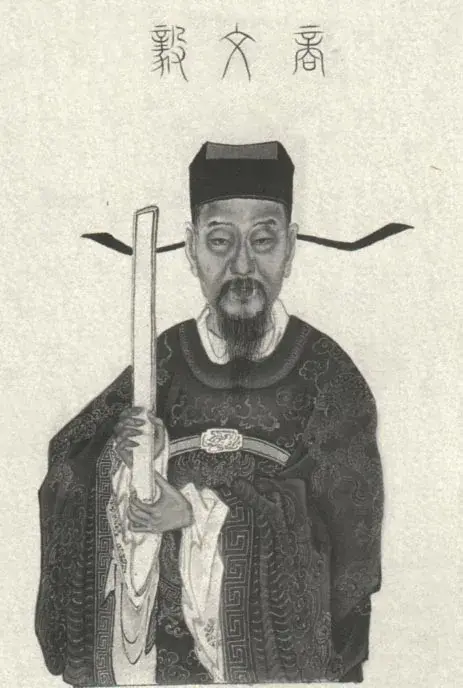
商辂
Shang Lu (商辂, March 16, 1414 – August 17, 1486), courtesy name Hongzai, art name Su'an, a native of Chun'an County in Yanzhou Prefecture, Zhejiang, was an eminent statesman and Senior Grand Secretary of the mid-Ming dynasty. Placing first in the Zhejiang provincial examination in 1435 and first in both the metropolitan and palace examinations in 1445, he was the only scholar in the nearly three-hundred-year history of the…
Shang Lu (商辂, March 16, 1414 – August 17, 1486), courtesy name Hongzai, art name Su'an, a native of Chun'an County in Yanzhou Prefecture, Zhejiang, was an eminent statesman and Senior Grand Secretary of the mid-Ming dynasty. Placing first in the Zhejiang provincial examination in 1435 and first in both the metropolitan and palace examinations in 1445, he was the only scholar in the nearly three-hundred-year history of the Ming dynasty to achieve the civil "Triple First" (sanyuan jidi). Entering the Grand Secretariat after the Tumu Crisis of 1449, he staunchly supported Yu Qian in defending Beijing against the Oirat Mongols and protected upright officials during the Jingtai reign. Stripped of office after the Coup at the Gate in 1457, he was recalled to the Grand Secretariat by the Chenghua Emperor in 1467 and served as Senior Grand Secretary from 1475 to 1477. During his tenure, he led the court protest at the Wenhua Gate to secure the joint burial of Empress Dowager Ciyi, safeguarded the young prince Zhu Youtang (the future Hongzhi Emperor), restored the imperial title of the Jingtai Emperor, and compelled the abolition of the notorious Western Depot headed by the eunuch Wang Zhi. He died in 1486 at the age of seventy-three and received the posthumous name Wenyi.
Born on the 25th day of the 2nd month in Meicheng, Jiande; raised by his mother Lady Xie in Chun'an
Ranked first (jieyuan) in the Zhejiang provincial examination
Ranked first in the metropolitan examination (huiyuan) and first in the palace examination (zhuangyuan), appointed Hanlin Compiler
Selected to study secret palace texts in the Eastern Pavilion and appointed Classics Mat lecturer
Entered the Wenyuan Pavilion after the Tumu Crisis, opposing relocation of the capital and supporting Yu Qian's defense of Beijing
Welcomed Emperor Emeritus Yingzong back at Juyong Pass and was promoted to Hanlin Academician
Promoted to Left Vice Minister of War; defused Lu Zhong's false plot against the Southern Palace and submitted memorials on frontier defense and famine relief
Intervened between 1454 and 1456 to save the lives of Zhang Lun, Zhong Tong, Liao Zhuang, and Lin Cong
Imprisoned and reduced to commoner status after refusing Shi Heng's demand to alter the amnesty clauses following the Coup at the Gate
Recalled by the Chenghua Emperor to the Grand Secretariat as Left Vice Minister of War and Hanlin Academician; secured the reinstatement of Luo Lun
Led nearly two hundred officials in weeping at the Wenhua Gate to secure the joint burial of Empress Dowager Ciyi; promoted to Minister of War
Submitted memorials to relieve popular hardship and was appointed Minister of Revenue
Became Senior Grand Secretary, safeguarded Prince Zhu Youtang as Crown Prince, and secured the posthumous restoration of the Jingtai Emperor's title
Led the cabinet in impeaching Wang Zhi for eleven crimes, forcing the temporary closure of the Western Depot, and retired as Junior Guardian
Died at home in Chun'an on the 18th day of the 7th month at age seventy-three; posthumously promoted to Grand Preceptor and canonized as Wenyi
Shang Lu was born on March 16, 1414, in Meicheng, Jiande, where his father Shang Tang served as a prefectural clerk, and was brought back to his ancestral village of Zhishan in Chun'an before his first birthday by his mother Lady Xie. Educated strictly by his mother, he began studying the Classic of Filial Piety and the Analects at age six. In his youth he studied late into the night by the light of burning pine splints and practiced calligraphy with soot mixed in water.
Entering the Hangzhou Prefectural School in 1434, Shang Lu took first place (jieyuan) in the Zhejiang provincial examination in 1435. After failing the metropolitan examination of 1436 and observing mourning for his father in 1439, he enrolled in the Imperial University in 1442, where Libationer Li Shimian recognized his extraordinary talent. In the spring of 1445, Chief Examiners Qian Xili and Ma Yu ranked Shang Lu first in the metropolitan examination (huiyuan), and on the fifteenth day of the third month, Emperor Yingzong personally placed him first in the first class of the palace examination (zhuangyuan), appointing him Compiler in the Hanlin Academy. He thus became the only civil examination candidate in the entire Ming dynasty to capture first place at all three levels of the examination system. In 1447, he was selected to study in the Eastern Pavilion and serve as lecturer at the Classics Mat.
In the eighth month of 1449, Emperor Yingzong was captured by the Oirat leader Esen in the Tumu Crisis. Shang Lu joined court officials at the Wenhua Gate in petitioning Prince Cheng (Zhu Qiyu) to assume the regency and drafted the edict installing Emperor Yingzong's eldest son Zhu Jianshen as Crown Prince. Recommended by Chen Xun and Gao Gu, Shang Lu and Peng Shi entered the Wenyuan Pavilion to participate in state deliberations. When Exposition Official Xu Youzhen advocated abandoning Beijing and moving the capital south to Nanjing, Shang Lu angrily rebuked him and stood firmly behind Vice Minister of War Yu Qian. He proposed summoning elite cavalry from Xuanfu and Liaodong to pincer the invaders and posting rewards in the enemy camp for Esen's head, contributing significantly to the successful defense of Beijing. In the eighth month of 1450, he traveled to Juyong Pass to welcome the returning Emperor Emeritus Yingzong and was promoted to Hanlin Academician.
In the fifth month of 1452, the Jingtai Emperor deposed Crown Prince Zhu Jianshen in favor of his own son Zhu Jianji; unable to prevent the change, Shang Lu was promoted along with the cabinet to Left Vice Minister of War and Grand Secretary of the Left Secretariat of the Heir Apparent. In the seventh month, when Imperial Bodyguard Commander Lu Zhong falsely accused the Emperor Emeritus in the Southern Palace of plotting a restoration with eunuchs Ruan Lang and Wang Yao, the Jingtai Emperor prepared to launch a purge. Taking advantage of Lu Zhong's feigned madness after being rebuked by a diviner, Shang Lu and the eunuch Wang Cheng persuaded the Emperor that the ravings of a madman should not be allowed to injure fraternal ties, thereby averting harm to Emperor Emeritus Yingzong. Between 1454 and 1456, when Zhang Lun, Zhong Tong, and Liao Zhuang were imprisoned and beaten nearly to death for advocating the restoration of the former Crown Prince or ceremonial visits to the Southern Palace, and when Supervising Secretary Lin Cong was condemned to death by Wang Wen, Shang Lu spoke out forcefully in each case to save their lives.
In the first month of 1457, the Jingtai Emperor fell critically ill without an heir. On the evening of the seventeenth day, Shang Lu drafted a joint memorial at the Ministry of Rites stating: "Your Majesty is the son of Emperor Xuanzong, and ought to re-establish the grandson of Emperor Xuanzong as heir." Before the memorial could be submitted the next morning, Shi Heng, Xu Youzhen, and Cao Jixiang staged the "Coup at the Gate" during the night and restored Emperor Yingzong to the throne. Summoned on the morning of the eighteenth to draft the restoration edict, Shang Lu refused Shi Heng's private demand to alter the general amnesty clause to facilitate a wider purge, declaring: "This is the established institution of our ancestors; I dare not change it." Enraged, Shi Heng had censors impeach Shang Lu and throw him into the Imperial Bodyguard prison. Although Shang Lu appealed to the draft memorial in the Ministry of Rites and the eunuch Xing An reminded Emperor Yingzong that Shang Lu had opposed abandoning Beijing in 1449, Emperor Yingzong stripped him of office and reduced him to a commoner.
In the second month of 1467, the Chenghua Emperor (Zhu Jianshen) summoned Shang Lu back to Beijing, restoring him as Left Vice Minister of War and Hanlin Academician in the Grand Secretariat. In the sixth month, Shang Lu submitted an eight-point memorial on governance and secured the recall of upright officials such as Luo Lun who had been banished for remonstrance. When Censor Lin Cheng impeached Shang Lu in 1468 over the Jingtai succession change, the Chenghua Emperor wanted to punish the censors severely, but Shang Lu pleaded for leniency toward remonstrating officials to keep the avenues of speech open. Impressed by his magnanimity, the Emperor promoted him to Minister of War in the tenth month and accepted his petitions to exonerate victims of the 1457 purge such as Chen Xun and Xiao Zi.
In the sixth month of 1468, Emperor Yingzong's principal consort, Empress Dowager Ciyi (née Qian), passed away. The Chenghua Emperor's biological mother, Empress Dowager Zhou, opposed burying Empress Dowager Ciyi with Emperor Yingzong in the Yuling Mausoleum. Shang Lu, Senior Grand Secretary Peng Shi, and Minister of Rites Yao Kui submitted repeated memorials insisting on joint burial in accordance with Emperor Yingzong's testament. When the Emperor hesitated under his mother's pressure, Shang Lu, Peng Shi, and Yao Kui led nearly two hundred civil and military officials in kneeling and weeping outside the Wenhua Gate from morning until late afternoon. Deeply moved, the Chenghua Emperor pleaded with his mother until Empress Dowager Zhou relented, allowing Empress Dowager Ciyi to be buried in the Yuling Mausoleum. In 1470, when eunuchs managing Empress Dowager Zhou's imperial estates seized farmland in Suzhou and provoked a popular disturbance, Shang Lu declared in court: "The Son of Heaven takes all under heaven as his family; what need is there for imperial estates?" The Emperor consequently dropped plans to exile the Suzhou villagers.
After Peng Shi died in the fourth month of 1475, Shang Lu became Senior Grand Secretary as Minister of Revenue and Grand Secretary of the Wenyuan Pavilion. That year, the Chenghua Emperor learned that his six-year-old son Zhu Youtang, born to Consort Ji, had been secretly raised in the West Palace to escape the jealousy of Consort Wan. Shang Lu promptly arranged for the Ministry of Rites to name the prince, petitioned to move Consort Ji to the nearby Yongshou Palace to protect mother and child, and ensured that Zhu Youtang (the future Hongzhi Emperor) was formally installed as Crown Prince in the eleventh month. In the twelfth month, Shang Lu spoke passionately at the Wenhua Hall of the Jingtai Emperor's merit in saving the dynasty in 1449, persuading the Chenghua Emperor to restore his imperial title and confer the posthumous name Emperor Jing.
Promoted to Junior Guardian of the Heir Apparent and Minister of Personnel in 1476 and Grand Secretary of the Jinshen Hall in the fourth month of 1477, Shang Lu confronted the eunuch Wang Zhi, whom the Chenghua Emperor had placed in charge of the newly established Western Depot in early 1477. Using henchmen such as Wei Ying, Wang Zhi fabricated treason cases, raided the homes of senior capital officials, and arrested frontier commanders without imperial writs.
In the fifth month of 1477, Shang Lu led fellow Grand Secretaries Wan An, Liu Xu, and Liu Ji in submitting a famous memorial listing eleven major crimes of Wang Zhi, warning that "if Wang Zhi is not removed, the safety of the empire cannot be known." When the furious Emperor sent the eunuch Huai En to demand who had instigated the memorial, Shang Lu sternly enumerated Wang Zhi's unlawful arrests of high officials and frontier generals until Huai En yielded. Reinforced by a joint impeachment from Minister of War Xiang Zhong and the Nine Ministers, the Chenghua Emperor ordered the Western Depot closed the next day. However, Wang Zhi soon retaliated by accusing Shang Lu of accepting a bribe from a military officer, while Censor Dai Jin petitioned to reopen the Western Depot. Seeing that Wang Zhi retained the Emperor's favor, Shang Lu resolutely requested retirement. In the sixth month, he was granted the title of Junior Guardian and returned home with state postal transport.
Living in retirement in Chun'an for ten years, Shang Lu died on August 17, 1486, at the age of seventy-three. The Chenghua Emperor suspended court for a day, posthumously promoted him to Grand Preceptor, and conferred the posthumous name Wenyi. His works include the Shang Wenyi Gong Ji, Shang Wenyi Shugao Lüe, and Zheshan Bizhu.
Following the Tumu Crisis in the eighth month of the fourteenth year of the Zhengtong era (1449), the Oirat leader Esen held Emperor Yingzong captive and advanced on the capital, leaving Beijing dangerously vulnerable and the court in panic. When Hanlin Lecturer Xu Youzhen cited astrological portents to urge relocating the capital south to Nanjing, Shang Lu, then a junior Grand Secretary in the Wenyuan Hall, indignantly denounced the proposal for demoralizing the army and undermining the realm. He staunchly backed Vice Minister of War Yu Qian's plan to defend the capital, prompting the imperial decree that anyone advocating retreat would be executed. When Esen breached Zijing Pass and besieged Beijing in the tenth month, Shang Lu assisted Yu Qian day and night in coordinating the defense: he proposed incinerating exposed grain stores in Tongzhou to deny supplies to the invaders, urged summoning elite cavalry units under General Yang Hong from Xuanfu and General Cao Yi from Liaodong to mount coordinated counterattacks, and had bounties for Esen and Bayan Temür posted near the enemy camps to demoralize their ranks, contributing decisively to the victory of the capital defense.
Following the crisis, Shang Lu analyzed systemic frontier weaknesses and submitted multiple memorials between the second and third years of the Jingtai era exposing the predation of grand defending eunuchs, who embezzled treasury funds, docked soldiers' rations, commandeered garrison troops for private labor, and expropriated military agricultural lands (tuntian). Addressing the loss of frontier towns such as Dushi, Maying, and Longmen, as well as the seizure of fertile garrison plots in Yansui, Xuanfu, and Datong by noble families and palace eunuchs, Shang Lu's memorial on frontier affairs demanded rigorous official investigations to return all encroached lands to local garrison soldiers and peasant cultivators, thereby restoring the economic foundation and defensive readiness of the Nine Frontier Commands.
During the Chenghua reign, Emperor Xianzong showered favor on Consort Wan and imperial eunuchs, who seized ancestral peasant holdings in the capital region and southern provinces under the guise of donated and solicited lands to establish directly managed "imperial estates" (huangzhuang). In the sixth year of the Chenghua era (1470), eunuchs managing the estates of Empress Dowager Zhou illegally expropriated civilian fields in Zhili and Jiangnan, provoking popular unrest. Enraged, Empress Dowager Zhou pressured Emperor Xianzong to exile more than eighty civilian households to frontier garrisons. When the draft decree reached the Grand Secretariat, Shang Lu sternly remarked: "Throughout history, there has never been a starving empress dowager! The emperor regards the entire realm as his household; what need is there for private imperial estates? Eunuchs abuse their power to seize peasant holdings; how could ordinary civilians ever dare encroach on state land?" His principled rebuke swayed the Grand Secretaries and forced Emperor Xianzong to rescind the exile order, directing the Censorate to inspect military pastures and punish noble encroachment.
In matters of state ritual and moral integrity, Shang Lu consistently demonstrated fairness and magnanimity. In the fourth year of the Chenghua era (1468), he led civil officials in a four-hour kneeling protest outside Wenhua Gate to insist that Empress Dowager Qian be buried alongside Emperor Yingzong in the Yu Mausoleum. In the eleventh year of the Chenghua era (1475), he helped protect Prince Zhu Youtang (the future Emperor Xiaozong) when he was recognized as heir apparent, and urged Emperor Xianzong to restore the posthumous imperial title of the Jingtai Emperor. Regarding personal adversaries, such as Qian Pu, who mocked him in the satirical essay The Bald Woman, and Li Chun, who had fiercely attacked him over the Jingtai succession, Shang Lu harbored no malice after returning to power and treated them with cordial dignity. When Consort Wan sent lavish gifts requesting an inscribed praise for her father's portrait, Shang Lu refused, stating he would never accept private gifts without an imperial command. Upon his retirement, when his colleague Liu Ji praised the prosperity of his family, Shang Lu modestly remarked: "I possess no extraordinary talent; my only virtue was that while serving in the Grand Secretariat, I never allowed the court to wrongfully execute a single person."
FIGURES ASSOCIATED WITH THIS DYNASTY