Birth in Yangzhou
Born into a scholar-gentry lineage in Yizheng, Jiangsu, receiving classical and mathematical training from his father.
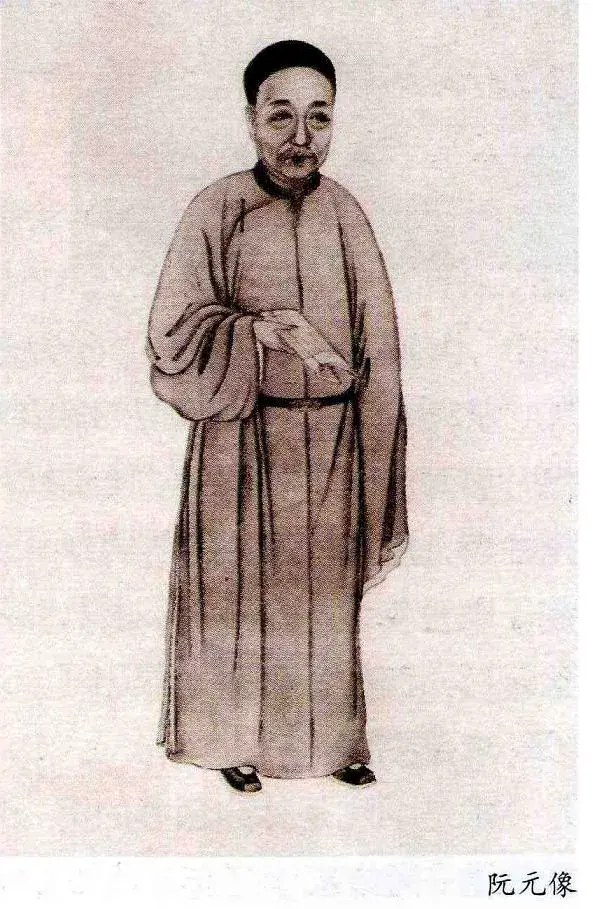
阮元
Ruan Yuan (1764–1849), courtesy name Boyuan, art names Yuntai and Master of Investigating the Classics (Yanjing Laoren), posthumous name Wenda, native of Yizheng, Jiangsu, was a towering scholar-official, philologist, epigrapher, and bibliographer during the mid-Qing dynasty. Celebrated across the empire as a "Grand Secretary of Three Reigns, Viceroy of Nine Provinces, and Literary Master of an Era," he passed the imperial…
Ruan Yuan (1764–1849), courtesy name Boyuan, art names Yuntai and Master of Investigating the Classics (Yanjing Laoren), posthumous name Wenda, native of Yizheng, Jiangsu, was a towering scholar-official, philologist, epigrapher, and bibliographer during the mid-Qing dynasty. Celebrated across the empire as a "Grand Secretary of Three Reigns, Viceroy of Nine Provinces, and Literary Master of an Era," he passed the imperial civil service examination (jinshi) in 1789, entering the Hanlin Academy. Deeply trusted by Emperors Qianlong, Jiaqing, and Daoguang, Ruan held pivotal metropolitan and regional positions for over five decades, serving as Education Intendant of Shandong and Zhejiang, Governor of Zhejiang, Jiangxi, and Henan, Director-General of Water Transport, and Governor-General of Huguang, Liangguang, and Yungui, before culminating his career as Grand Secretary of the Tiren Library and Grand Preceptor (Taifu). Throughout his distinguished administrative career, Ruan championed empirical evidential research (kaozheng), serving as the supreme patron and organizer of late Qianjia Han Learning. He established two of the most illustrious academies of the late Qing: the Gujing Jingshe at West Lake in Hangzhou and the Xuehai Tang at Yuexiu Mountain in Guangzhou, transforming traditional examination cramming into rigorous scientific research centers. Ruan directed the compilation and publication of monumental reference works, including Collected Exegeses of the Classics (Jingji Zangu, 106 fascicles), Collation Notes to the Thirteen Classics with Commentaries and Subcommentaries (Shisanjing Zhushu Jiaokanji, 245 fascicles), the colossal Qing Exegeses of the Classics (Huangqing Jingjie, 1,400 fascicles), and the pioneering scientific history Biographies of Astronomers and Mathematicians (Chouren Zhuan, 46 fascicles). In epigraphy and calligraphy, his treatises On Northern and Southern Calligraphic Schools established the theoretical foundation of the late Qing Stele Movement. In regional administration, he organized water-transport reforms, suppressed maritime piracy along the southeastern coast, and managed foreign trade and opium interdiction in Guangzhou. Upon his death at eighty-six, Emperor Daoguang conferred the posthumous title "Wenda" and honored him in the Temple of Eminent Statesmen.
Born into a scholar-gentry lineage in Yizheng, Jiangsu, receiving classical and mathematical training from his father.
Ranked eighth in the second tier of jinshi examinations, admitted to Hanlin Academy as a Bachelor and later Compiler.
Promoted to Junior Supervisor of the Household and dispatched to Shandong, inspecting local academies and collecting ancient epigraphs.
Transferred to Zhejiang to reform local scholarship along evidential lines, beginning the compilation of Chouren Zhuan.
Elevated to Governor of Zhejiang upon Jiaqing's personal rule, leading coastal defense against piracy and organizing water conservancy.
Established the celebrated Gujing Jingshe academy on Solitary Hill at West Lake, recruiting leading philologists Wang Chang and Sun Xingyan.
Appointed Director-General of Water Transport, reforming grain fleet administration; subsequently served as Governor of Jiangxi and Henan.
Appointed Governor-General of Guangdong and Guangxi, supervising the compilation of the provincial gazetteer and founding Xuehai Tang.
Transferred to Yunnan and Guizhou, pacifying southwestern ethnic uprisings, settling border disputes, and dredging Kunming waterways.
Summoned to the capital as Grand Secretary of Tiren Palace, supervising the Ministry of Punishments and lecturing the emperor.
Granted honorable retirement due to declining health, conferred the exalted rank of Grand Guardian and later Grand Preceptor.
Passed away peacefully in his Yangzhou residence at age eighty-six, bestowed the posthumous title of Wenda.
Ruan Yuan was born on February 21, 1764 (the twentieth day of the first month of the twenty-ninth year of the Qianlong reign), in Yizheng County, Yangzhou Prefecture, Jiangsu. His grandfather, Ruan Yutang, was an accomplished military commander who served as Regional Vice Commander (canjiang) in Hunan. His father, Ruan Chengxin, was a devoted scholar skilled in classical exegesis, historical geography, and mathematical astronomy, who personally oversaw Ruan Yuan's early education.
Ruan exhibited remarkable intellectual precocity, learning to read classical poetry at five and memorizing entire classical treatises by six. Under his father's instruction, he mastered not only the Confucian classics but also mathematics, philology, and epigraphical bronze-stone inscriptions.
In 1786, Ruan passed the Jiangnan provincial examination, earning the juren degree. In 1789, at twenty-six, he succeeded in the metropolitan examination, placing eighth in the second class of jinshi.
Selected as Hanlin bachelor (shujishi), he ranked first in the graduation examination, earning an appointment as Senior Compiler (bianxiu). During an audience at the Qianqing Palace, Emperor Qianlong was profoundly impressed by his refined bearing and scholarly maturity, praising him as a rare young talent and propelling him into a meteoric civil career.
In 1793, at twenty-nine, Ruan was appointed Junior Supervisor of the Household and dispatched as Education Intendant (xuezheng) of Shandong. Rejecting the rigid, superficial requirements of examination essays, Ruan campaigned vigorously for evidential Han Learning (Hanxue).
He inspected Confucian shrines in Qufu and Zou County, protecting historical sites and gathering ancient bronze and stone rubbings across the province, publishing the twenty-four-fascicle Epigraphy of Shandong (Shanzuo Jinshi Zhi), which pioneered the methodology of using archaeological inscriptions to verify and correct dynastic histories.
In 1795, Ruan was reassigned as Education Intendant of Zhejiang. Recognizing that southern scholars were trapped in empty Song-dynasty moralizing, Ruan insisted that students ground their reading in ancient phonology and Han-Tang commentaries. To provide standard reference materials, he established an editorial bureau in Hangzhou, mobilizing dozens of philologists to compile Collected Exegeses of the Classics (Jingji Zangu, 106 fascicles), categorizing hundreds of thousands of pre-Tang lexical glosses.
In 1799, Emperor Jiaqing assumed personal rule and promoted Ruan to Governor of Zhejiang. In 1801, Ruan raised public and private funds to establish the Gujing Jingshe academy on Gushan Island by Hangzhou's West Lake. Ruan authored the academy's charter, hiring masters Wang Chang and Sun Xingyan to instruct elite scholars solely in classical collation, epigraphy, and mathematics, entirely barring examination eight-legged essays. The academy became a preeminent nursery of evidential scholarship, training masters such as Xu Yangyuan, Chen Huan, and Hao Yixing.
As Governor of Zhejiang, Ruan demonstrated remarkable martial and administrative versatility. At the turn of the nineteenth century, maritime pirate coalitions led by Cai Qian and Zhu Fen terrorized the southeastern coast, raiding coastal towns and threatening maritime trade.
Ruan organized active counter-offensives, establishing naval shipyards in Dinghai to construct over thirty heavily armed warships (tingchuan) equipped with modern cannon. He boldly elevated seasoned naval officer Li Changgang to Commander-in-Chief.
Under Ruan's logistical coordination, the Qing naval forces repeatedly defeated Cai Qian's fleets at Mount Songmen and Shitang, pacifying the Zhejiang waters. Simultaneously, Ruan directed the reinforcement of the Haining sea dikes and the dredging of West Lake.
In 1814, Ruan was elevated to Director-General of Water Transport (Caoyun Zongdu), stationed at Huai'an, Jiangsu. The Grand Canal system, vital for provisioning the northern capital, had become paralyzed by silting, extortion, and rampant embezzlement. Ruan instituted strict accounting audits, banned illegal transit tolls, and rebuilt flood embankments at Qingjiangpu, ensuring the unhindered annual transit of hundreds of thousands of grain boats.
In 1817, Emperor Jiaqing promoted Ruan to Governor-General of Liangguang (Liangguang Zongdu) with concurrent supervision of the maritime customs at Canton. Guangzhou was the sole open port for Western trade, where expanding British commercial power and opium smuggling created acute diplomatic frictions.
Ruan governed with vigilant firmness. When armed British East India Company vessels violated imperial river protocols by entering the Pearl River, Ruan enforced strict trade suspensions and coastal blockades, compelling British warships to withdraw past the Humen straits. Concurrently, he cracked down on opium distribution networks and punished corrupt customs brokers.
Recognizing the technical sophistication of the West, Ruan established a translation office in Guangzhou to translate European treatises on maritime navigation and artillery.
In education, Ruan founded the famed Xuehai Tang academy at Mount Yuexiu in 1820. Following the model of the Gujing Jingshe, Xuehai Tang focused exclusively on philology, astronomy, and classical epigraphy, training eminent southern scholars such as Chen Li and Zhu Ciqi. During this viceregal tenure, Ruan supervised the revised 334-fascicle Guangdong Tongzhi and sponsored the publication of Qing Exegeses of the Classics (Huangqing Jingjie, 1,400 fascicles), preserving the collected intellectual output of the Qing evidential movement.
In 1826, Ruan was reassigned as Governor-General of Yungui (Yungui Zongdu). Yunnan and Guizhou were rugged frontier provinces plagued by inter-ethnic conflict and difficult mountain terrain.
Ruan prioritized reconciliation, conciliation, and institutional education, establishing charitable academies in tribal regions to promote civil administration. He directed the extensive dredging of the six river channels feeding Lake Dian in Kunming, reclaiming tens of thousands of acres of agricultural land. He also supervised the compilation of the 216-fascicle Yunnan Tongzhi.
In 1835, at seventy-two, Ruan was summoned to Beijing to serve as Grand Secretary of the Tiren Library (Tirenge Daxueshi), overseeing the Ministry of Justice and lecturing at the Imperial Classics Colloquium (Jingyan). Emperor Daoguang treated him with profound reverence, praising his lifelong financial incorruptibility and administrative wisdom.
In 1838, Ruan retired to his estate at Leitang in Yangzhou due to chronic rheumatism, conferred the title of Grand Guardian (Taibao). In 1846, marking the sixtieth anniversary of his provincial examination success, Daoguang elevated him to Grand Preceptor (Taifu), the highest honor for a civil servant.
On November 27, 1849, Ruan passed away at his Kangshan residence in Yangzhou at eighty-six. Emperor Daoguang issued an imperial eulogy, granting an imperial funeral stipend and conferring the posthumous name "Wenda," enshrining him in the Temple of Eminent Statesmen.
Following his retirement to Yangzhou, Ruan Yuan resided in his Leitang retreat, adopting the literary sobriquets 'Old Man of Scripture Examination' (Yanjing Laoren) and 'Old Man of Serene Disposition' (Yixing Laoren). Even in retirement, he remained immersed in scholarship, collating rare editions and publishing his lifetime writings as the Collected Works of the Scripture Examination Chamber (Yanjing Shi Ji).
On November 27, 1849 (the thirteenth day of the tenth month of Daoguang 29), Ruan Yuan passed away peacefully at his Kangshan residence in Yangzhou at the venerable age of eighty-six.
Deeply grieving the loss of his eminent statesman-scholar, Emperor Daoguang issued an imperial eulogy, allocated three thousand taels of silver for funeral honors, and conferred upon him the esteemed posthumous title of Wenda ('Cultured and Eminent'). He was enshrined in the Temple of Worthies in Beijing and local shrines in Zhejiang and Yangzhou. Having served three emperors over seven decades across nine provincial administrations, Ruan was celebrated as the ultimate embodiment of the Confucian scholar-official and the towering beacon of late Qianjia evidential scholarship.
Ruan Yuan's greatest monument in Chinese philology was his monumental organization and publication of Qing evidential scholarship.
Recognizing that the finest treatises of the Qianjia period were scattered across individual family collections, Ruan gathered scholars at Xuehai Tang to compile Qing Exegeses of the Classics (Huangqing Jingjie, 1,400 fascicles). Collecting foundational works from over 180 leading scholars—including Gu Yanwu, Dai Zhen, Duan Yucai, and Wang Niansun—the compendium stands as the definitive archive of classical Chinese evidential scholarship.
Earlier, as Governor of Zhejiang, Ruan assembled leading textual critics, including Duan Yucai and Zang Yong, to collate Song and Yuan editions of the Confucian canon, producing Collation Notes to the Thirteen Classics with Commentaries and Subcommentaries (Shisanjing Zhushu Jiaokanji, 245 fascicles). His republished "Ruan Edition" of the Thirteen Classics remains the standard authoritative edition in worldwide Chinese studies.
Ruan revolutionized early modern Chinese education by creating the "Evidential Research Academy" model.
Frustrated by traditional academies that focused narrowly on competitive civil examination essays, Ruan established the Gujing Jingshe in Hangzhou (1801) and Xuehai Tang in Guangzhou (1820). These institutions prohibited examination drill, focusing entirely on textual criticism, historical phonology, mathematics, and epigraphy.
The academies were self-governing scholarly institutes where senior fellows (xuezhang) guided collaborative research projects. This institutional framework nurtured generations of elite scholars—including Chen Huan, Hao Yixing, Chen Li, and Rong Hong (Yung Wing)—serving as a crucial institutional precursor to modern Chinese research universities.
Ruan was one of the earliest Chinese statesmen to recognize the cultural and historical significance of natural science and mathematics.
Collaborating with mathematicians Qian Daxin, Ling Tingkan, Li Rui, and Zhou Xijue, Ruan spent years combing dynastic records to compile Biographies of Astronomers and Mathematicians (Chouren Zhuan, 46 fascicles), the first comprehensive history of Chinese and Western science in the Chinese language.
The work contained critical biographies and scientific evaluations of over 270 historical Chinese astronomers and mathematicians—including Zu Chongzhi, Monk Yixing, Shen Kuo, and Guo Shoujing—alongside thirty-seven European scientists, such as Matteo Ricci, Tycho Brahe, and Johannes Kepler. The work established the discipline of Chinese scientific history and provided nineteenth-century Chinese intellectuals with a vital intellectual foundation for engaging modern Western science.
In aesthetics and art history, Ruan was the foundational theorist of the late Qing "Stele Movement" (Beixue Pai).
In his seminal treatises On Northern and Southern Calligraphic Schools (Nanbei Shupai Lun) and On Northern Steles and Southern Modelbooks (Beibei Nantie Lun), Ruan challenged centuries of orthodox adulation of Wang Xizhi's running script. He demonstrated that Chinese calligraphy had historically diverged into a delicate Southern modelbook tradition (tiexue) and a monumental, archaic Northern stele tradition (beixue).
Ruan championed the rugged, archaic vitality of Han and Northern Wei stone inscriptions, urging calligraphers to break free from effeminate modelbooks. His theories sparked a cultural renaissance championed by Bao Shichen and Kang Youwei, completely transforming late imperial Chinese calligraphy.
Ruan combined transcendent scholarship with formidable administrative capability.
In Zhejiang, his strategic naval mobilization and appointment of Admiral Li Changgang eradicated the pirate empire of Cai Qian, restoring maritime security across the southeastern coast. In Liangguang, he maintained resolute border control against British trade infractions while suppressing opium smuggling networks. In Yunnan, his engineering of the Lake Dian drainage channels permanently mitigated regional flooding.
FIGURES ASSOCIATED WITH THIS DYNASTY