Life
Family Heritage and Diverse Mentorship
Ren Bonian was born in the twentieth year of Daoguang (1840 CE) in a rural village in Xiaoshan County, Shaoxing Prefecture, Zhejiang Province. His father, Ren Shenghe, was a rural rice merchant and artisan painter who specialized in lifelike folk portraiture, frequently commissioned to paint ancestral images for local villagers. Immersed in this artistic environment from early childhood, Ren Bonian demonstrated an extraordinary talent for visual observation and draftsmanship, sketching with charcoal and brushes alongside his father.
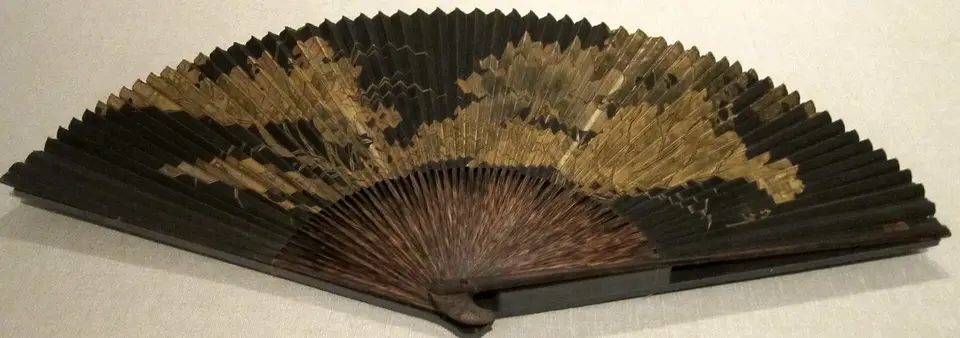
Around age fifteen or sixteen, following family economic decline, the adolescent Ren Bonian journeyed alone to the thriving commercial port of Shanghai. Roaming the bustling streets of the Old City God Temple, he was captivated by the celebrated works of fellow provincial painter Ren Xiong (styled Weichang). Ren Bonian began painting folding fans in Ren Xiong's distinctive archaic manner to sell on street corners. By pure happenstance, Ren Xiong encountered the youth selling these fans. Far from taking offense at the imitation, Ren Xiong was captivated by the youth's dynamic brushwork and structural vigor, instantly accepting him as an indoor disciple to impart orthodox brush and ink methodologies.
In the eleventh year of Xianfeng (1861 CE), the Taiping Army under Loyal King Li Xiucheng took Shaoxing, and Ren Bonian's father died of illness amidst the conflict. The young painter was recruited into the Taiping forces as a military banner-bearer. Following the fall of Tianjing in 1864, Ren returned to Zhejiang, relocating to Ningbo to make a living painting fans and carving seals. In Ningbo, he reunited with Ren Xiong's younger brother, the distinguished painter Ren Xun. Recognizing Ren Bonian's natural velocity but lack of disciplined formal structure, Ren Xun systematically instructed him in Chen Hongshou's ancient iron-wire linework and meticulous gongbi delineations, elevating his art to profound maturity.
Rise in Shanghai and the Guxiang Studio
In the seventh year of Tongzhi (1868 CE), Ren Bonian accompanied Ren Xun to Suzhou, where he was introduced to the prominent Shanghai painter Hu Gongshou. Instantly recognizing that Ren's brilliance was destined for a grander arena, Hu urged him to relocate to Shanghai. In the winter of 1868, at age twenty-eight, Ren Bonian permanently established his residence near Sanpailou by the Yu Garden in Shanghai, founding his professional studio, the Guxiang Shi (Chamber of Ancient Fragrance).
Shanghai had swiftly emerged as China's premier international treaty port and financial hub. The concentration of gentry, compradors, wealthy merchants, and urban commoners generated an unprecedented commercial art market. Through extraordinary technical versatility, relentless work ethic, and an engaging, accessible pictorial style, Ren Bonian quickly achieved supremacy within the competitive Shanghai art market.
Over his three decades in Shanghai, Ren established deep bonds with peers including Xu Gu, Pu Hua, Zhang Xiong, Gao Yong, and Qian Huian. His repertoire was boundless: folklore legends, Zhong Kui, Buddhist deities, classical scholars, alley cats, songbirds, and blooming fauna. His compositions were daring, his colors luminous and fresh, seamlessly bridging the philosophical refinement of traditional scholar-officials with the auspicious aesthetic aspirations of the urban middle class. Connoisseurs and patrons crowded his studio day and night.
Creative Fellowship and Dean of the Shanghai School
In the ninth year of Guangxu (1883 CE), forty-year-old Wu Changshuo arrived in Shanghai and was introduced to Ren Bonian. The two artists recognized each other's complementary brilliance, forming an unbreakable friendship. At that time, Wu was already an acclaimed epigrapher and seal carver but had not yet mastered large-scale ink painting; conversely, Ren Bonian had attained absolute technical mastery in painting but recognized that his calligraphy lacked ancient epigraphic monumentality.
Ren Bonian profoundly admired Wu's seal-carving erudition, encouraging Wu to paint freely and sharing his trade secrets on water, ink, and compositional flow. In return, Wu carved dozens of signature seal stones for Ren and introduced him to the structural aesthetics of Han-Wei stone stelae. Ren painted a series of legendary portraits of Wu, including the iconic Portrait of the Destitute Officer (Suanhan Wei Xiang), Cooling off in the Banana Shade, and Begging for Food. Wu's subsequent emergence as a giant of expressive bird-and-flower painting owed immense inspiration to Ren's guidance. Beyond Wu Changshuo, Ren trained numerous disciples including Ni Tian and Xu Xiaocang, cementing his status as the undisputed leader of the Shanghai School.
Late Masterworks and Enduring Legacy
In the thirteenth year of Guangxu (1887 CE), leading Shanghai publishers lithographed Ren Bonian Xiansheng Zhenji Huapu, which resounded across Jiangnan and inspired multiple editions in Meiji-era Japan. In 1888, commissioned by the Shanghai Circuit Intendant and wealthy financiers, Ren created the monumental twelve-panel gold-leaf screen Immortals Offering Longevity Blessings (Qunxian Zhushou Tu), depicting fifty-six distinct deities in opulent colors and mineral pigments, representing the pinnacle of decorative gongbi mastery.
However, continuous decades of relentless creative exertion took a severe physical toll. In his later years, Ren developed an addiction to opium, while the fraudulent loss of his family properties in Shaoxing caused severe emotional distress. On December 19, 1896 CE (fourth day of the eleventh lunar month in the twenty-first year of Guangxu), Ren passed away from acute pneumonia at his Shanghai residence at age fifty-six. Bereft at his passing, Wu Changshuo and Gao Yong organized his funeral and transported his coffin back to his ancestral soil in Shaoxing.
Major Contributions
Modernizing Chinese Figure and Portrait Painting
Ren Bonian's greatest contribution to Chinese art was his total revitalization of figure painting, which had languished in lifeless, stylized stagnation since the mid-Qing dynasty. He transformed early Qing decorative conventions by fusing Chen Hongshou's expressive, angular iron-wire linework with the observational speed of Western pencil sketching and anatomical awareness.
Breaking away from the rigid, frontal formula of traditional ancestral portraiture, Ren captured fleeting psychological states and momentary physical gestures. His masterpiece Portrait of the Destitute Officer (Suanhan Wei Xiang) depicted Wu Changshuo clad in the narrow, constricting official robe of a petty sub-prefect, slightly bowed with hands clasped, portraying the delicate tension between intellectual dignity and bureaucratic humiliation. Modern master Xu Beihong acclaimed: "Master Bonian painted figures by capturing the soul beyond the mortal frame; since Qiu Shizhou, there has been no equal." This revolution laid the foundational groundwork for twentieth-century realistic ink figure painting pioneered by Xu Beihong and Jiang Zhaohe.
Pioneering Fresh Aesthetic Dimensions in Flower-and-Bird Painting
In flower-and-bird painting, Ren Bonian achieved an equally monumental synthesis. He assimilated Xu Xi's ancient five-dynasty boneless technique, Chen Chun's and Xu Wei's expressive splashing ink, and Hua Yan's elegant spontaneity, while integrating the fluid luminance of Western watercolor pigments.
Technically, he pioneered a wet-brush wash technique that allowed light ink, dense black, and bright pigments to blend and bleed directly onto raw xuan paper. His brushwork was lightning fast, generating sparkling atmospheric luminosity and seasonal vitality. His perching wild birds, purple wisteria, bamboo, and autumnal chrysanthemums captured the spontaneous joy of everyday nature while preserving literati poetic resonance, permanently rescuing flower-and-bird art from dry academicism.
Establishing the Professionalism and Popularization of Modern Art
As a quintessential professional master nurtured by late Qing Shanghai's commercial society, Ren Bonian elevated the dignity and autonomy of the professional painter. Traditional Confucian ideology had long denigrated professional artists as mere "craftsmen" (huajiang), treating commercial painting with hypocrisy.
Ren Bonian fully embraced professional independence, establishing the Guxiang Studio with published commission rates. He sensitively accommodated the cultural tastes of a modernizing metropolis, integrating folk auspicious iconography—such as door gods, Zhong Kui, and festive scenes—with the loftiest literati brushwork, achieving a sublime harmony between high art and popular culture (da su da ya). His commercial success secured economic freedom for artists, directly propelling the Shanghai School into the most influential painting movement in modern Chinese history.