Life and Career
Classical Pedagogy and Censorial Integrity
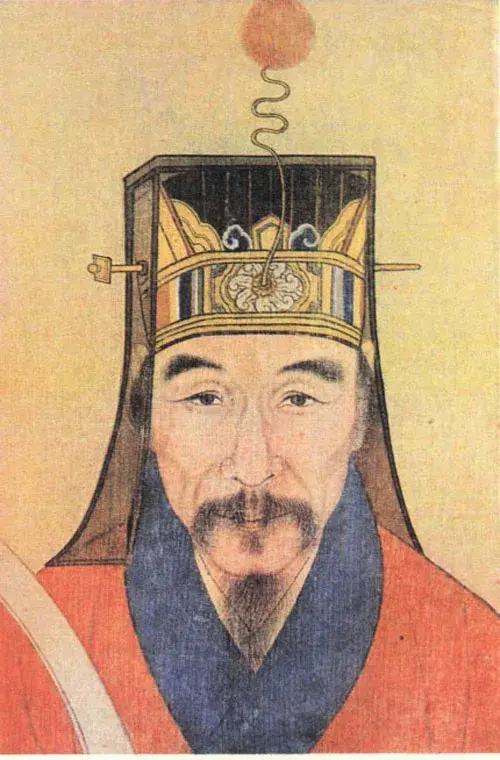
Qu Shisi was born in 1590 into an illustrious lineage in Changshu. His grandfather, Qu Jingchun, had served as Grand Secretary of the Wenyuan Pavilion and Minister of Rites. Endowed with extraordinary literary talents, Qu Shisi studied under the renowned stylist Qian Qianyi, internalizing Donglin principles of moral statecraft and ethical rectitude. In 1616, at age twenty-seven, he passed the metropolitan examinations and was assigned as Magistrate of Yongfeng and later Jishui in Jiangxi. In local administration, he abolished arbitrary taxes and redressed judicial injustices, earning deep public affection.
During the Tianqi reign, imperial eunuch Wei Zhongxian dominated court affairs. Qu Shisi aligned firmly with the moralist Donglin faction and was dismissed by eunuch-aligned officials. Following the accession of the Chongzhen Emperor and the downfall of Wei Zhongxian, Qu was recalled as Supervising Secretary of the Office of Scrutiny for Revenue. In this post, he submitted vigorous memorials denouncing fiscal corruption and military incompetence on the northern border, incurring the hostility of Grand Secretary Wen Tiren. Slandered by political adversaries through guilt-by-association with Qian Qianyi, Qu was imprisoned. Although subsequently acquitted through the intervention of righteous colleagues, he was stripped of office and retired to Changshu with a high reputation for unflinching courage.
Enthroning the Yongli Emperor and Administering the South
In the spring of 1644, peasant insurgents captured Beijing and the Chongzhen Emperor took his life, after which the Manchus swept through the Shanhai Pass. Qu Shisi rushed to Nanjing to join the Hongguang court, serving as Imperial Diarist and Assistant Censor-in-Chief before being dispatched to govern Guangxi. Following the fall of Nanjing in 1645 and the destruction of the Longwu court in Fujian in 1646, the south collapsed into chaotic factionalism. In this existential crisis, Qu Shisi demonstrated decisive leadership. Collaborating with Governor-General Ding Kuichu at Zhaoqing in Guangdong, he enthroned Zhu Youlang, Prince of Gui, as the Yongli Emperor.
The Yongli Emperor appointed Qu Shisi Grand Secretary of the Wenyuan Pavilion and Minister of War and Personnel. Facing bitter factional infighting and depleted finances, Qu lived frugally, laboring to unify disparate loyalist bands. Establishing Guangxi as the strategic redoubt of the dynasty, he established his headquarters at Guilin, reorganizing fortifications and mobilizing local forces to provide the fledgling court with institutional stability.
The Epic Defense of Guilin
In the spring of 1647, Qing commanders Kong Youde and Geng Jimao conquered Hunan and advanced into Guangxi. Guilin stood virtually defenceless; senior commander Ding Kuichu fled west, and terror swept the garrison. Resolving to die for his country, Qu Shisi remained alone in the citadel. Ascending the battlements, he posted public notices proclaiming: "As long as Shisi remains in this city, Guilin shall not fall! I live with this fortress, and I die with this fortress!"
Qu executed deserters to enforce order and urgently summoned General Jiao Lian from Quanzhou. Deeply moved, Jiao rushed back with two thousand veteran fighters. Coordinating defense from the walls, Qu deployed ambushes and launched decisive sorties, routing the Qing vanguard and slaying over a hundred hostile officers. The repulse of Kong Youde army was hailed nationwide as the Triumph of Guilin, granting the Yongli administration a vital strategic reprieve. Over the next three years, Qing forces launched three massive sieges against Guilin, each shattered by Qu strategic planning and the tenacity of commanders Jiao Lian and Li Chengdong.
The Citadel Falls and Heroic Sacrifice
In the autumn of 1650, the Qing government mobilized joint Eight Banner armies and the regional forces of Kong Youde, Geng Jimao, and Shang Kexi to encircle the southern provinces. External loyalist detachments were defeated at Quanzhou and Yanguan, isolating Guilin. On December 27, 1650, heavy artillery shattered Guilin Shuixi Gate, and Qing troops stormed into the city.
Aides implored Qu Shisi to disguise himself and escape, but he refused with dignity: "As governor, I am duty-bound to defend this soil; the city is lost, and here is where I must die." Donning full court regalia, he sat quietly in his official hall alongside Grand Coordinator Zhang Tongchang, awaiting the conquerors. Kong Youde, coveting Qu formidable reputation, sought to win his allegiance with ministerial titles. Qu struck the table and denounced him: "Having received immense favor from the Great Ming and reached supreme rank, shall I bend the knee to traitors? You may take my head, but my loyalty cannot be usurped!"
For over forty days, Kong Youde maintained Qu in custody, exhausting every blandishment without success. On January 8, 1651, Kong ordered their execution. Qu Shisi and Zhang Tongchang walked shoulder to shoulder to the execution grounds at Xianhe Rock beneath Mount Fengdong, laughing and composing farewell verses: "To die with composure has been known since ancient times; why should a white-haired elder falter? Leaving behind pure and eternal spirit, my righteousness fills the boundless universe." Facing the sword calmly, he was martyred at age sixty-one. In 1776, the Qianlong Emperor praised his steadfast loyalty, conferring upon him the imperial posthumous title Wenzhong.