Imperial Birth
Born in the palace of Xianyang as the youngest son of Qin Shi Huang.
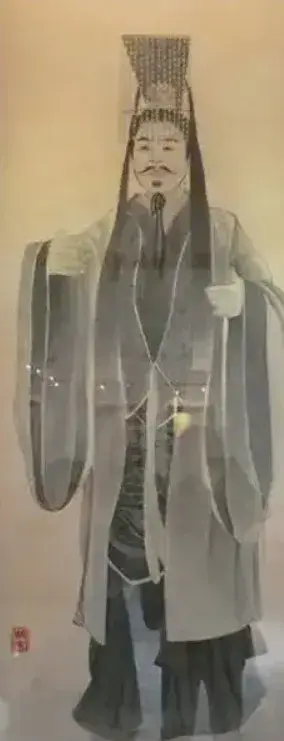
210 BCE–207 BCE
胡亥
Huhai (胡亥) (230–207 BC), posthumously remembered as Qin Er Shi (秦二世, the Second Emperor of Qin), was the eighteenth son of Qin Shi Huang and the catastrophic final sovereign of the unified Qin Empire. In 210 BC, following the sudden death of Qin Shi Huang at the Shaqiu Terrace during his imperial tour, the eunuch Zhao Gao orchestrated a palace coup in collusion with Chancellor Li Si. Suppressing the late sovereign's…
Huhai (胡亥) (230–207 BC), posthumously remembered as Qin Er Shi (秦二世, the Second Emperor of Qin), was the eighteenth son of Qin Shi Huang and the catastrophic final sovereign of the unified Qin Empire. In 210 BC, following the sudden death of Qin Shi Huang at the Shaqiu Terrace during his imperial tour, the eunuch Zhao Gao orchestrated a palace coup in collusion with Chancellor Li Si. Suppressing the late sovereign's genuine testament, they forged an imperial decree ordering the suicide of the legitimate heir apparent Fusu and General Meng Tian, securing the imperial throne for Huhai. Upon ascending the throne, Huhai unleashed a horrific reign of terror. Guided by Zhao Gao's draconian advice, he executed twelve imperial princes in the marketplaces of Xianyang and crushed ten princesses to death in Du County, eliminating all potential dynastic rivals. To gratify megalomaniacal vanity, he mobilized hundreds of thousands of conscript laborers to accelerate the construction of the Epang Palace and the Mount Li Mausoleum, instituting exorbitant tax levies and merciless penal mutilations. His misrule triggered the Dazexiang Uprising led by Chen Sheng and Wu Guang in 209 BC, sparking empire-wide rebellion. Dominated by Zhao Gao—who famously tested the compliance of ministers by "pointing at a deer and calling it a horse" before framing and executing Chancellor Li Si—Huhai was blinded to military reality. In 207 BC, following the annihilation of Qin's main army at the Battle of Julu, Zhao Gao dispatched his son-in-law Yan Le to storm the Wangyi Palace, forcing twenty-four-year-old Huhai to commit suicide, precipitating the immediate collapse of the Qin dynasty.
Born in the palace of Xianyang as the youngest son of Qin Shi Huang.
Studied legal statutes and clerical script under Chief of Chariots Zhao Gao.
Accompanied Qin Shi Huang on his fifth eastern inspection tour across the empire.
Returned to Xianyang and ascended the throne as the Second Emperor of Qin (Qin Er Shi).
Zhao Gao presented a stag at court and called it a horse to test and purge dissenting officials.
Accompanied the eastern inspection tour; seized the throne via Zhao Gao and Li Si's forged edict forcing Fusu's suicide.
Toured eastern provinces, executing royal siblings and senior ministers to enforce imperial dread.
Chen Sheng and Wu Guang launched an armed peasant uprising, sparking widespread revolts across China.
Believed Zhao Gao's slander, executing Chancellor Li Si in the marketplace and making Zhao Gao Prime Minister.
Besieged in Wangyi Palace by Zhao Gao's rebel guards; forced to commit suicide by sword at age twenty-four.
Huhai was born in 230 BC. Pampered and frivolous, he enjoyed the special favor of his father Qin Shi Huang. In the winter of 210 BC, the First Emperor undertook his fifth imperial progress across eastern China, taking Huhai among his entourage. In July 210 BC, the First Emperor fell fatally ill and passed away at Shaqiu (modern Guangzong, Hebei).
Before expiring, the Emperor had sealed a letter to his eldest son Fusu, commanding him to transfer military authority to Meng Tian and travel to Xianyang to preside over the funeral ceremonies. However, the Chief of Chariots Zhao Gao held the imperial seals. Scheming to preserve his personal ascendancy, Zhao Gao intimidated and persuaded Chancellor Li Si to join an insurrectionary plot. They destroyed the authentic decree, forged an imperial mandate proclaiming Huhai as Crown Prince, and dispatched an envoy bearing a fraudulent decree commanding Fusu and Meng Tian to commit suicide for filial impiety. Fusu dutifully took his own life, paving the way for Huhai to enter Xianyang and ascend the throne as Qin Er Shi.
Aged only twenty-one, Huhai was entirely unequipped to govern an empire. Zhao Gao advised the young emperor: "Magnify the penal statutes, execute offenders with collective punishment, exterminate the senior grandees, and estrange the royal relatives, thereby enhancing your imperial awe." Huhai enthusiastically adopted this bloody doctrine.
In Xianyang, twelve imperial princes were summarily decapitated in the public market. In Du County, ten imperial princesses were subjected to horrific dismemberment and bodily crushing. Prince Jianglü and his two brothers were cornered into suicide within the inner halls, while Prince Gao, knowing death was inevitable, petitioned to be buried alongside the First Emperor at Mount Li to shield his descendants from slaughter. Renowned founding ministers such as Meng Yi, Feng Quji, and Feng Jie were driven to suicide or wiped out to three degrees of kinship.
Simultaneously, Huhai doubled down on monumental labor drafts. Over 700,000 convicts were driven day and night to build the lavish Epang Palace and the imperial mausoleum, while 500,000 troops were garrisoned at the capital, sustained by grain dragged from across the empire. The agrarian peasantry was stripped of livelihoods, sowing boundless hatred among the populace.
In July 209 BC, an army of nine hundred conscripted peasants led by Chen Sheng and Wu Guang were detained by heavy floods at Dazexiang. Facing execution under Qin law for missing arrival deadlines, they raised the banner of insurrection. Across the former six kingdoms, rebel armies sprang up to reclaim their ancestral lands. When provincial messengers arrived at Xianyang with reports of crisis, Huhai flew into a rage, imprisoning all who spoke the truth and rewarding those who falsely assured him that mere bandits had been suppressed.
In 208 BC, as rebel armies breached the Hangu Pass, Chancellor Li Si joined Senior Chancellor Feng Quji in petitioning for a suspension of palace construction to relieve peasant unrest. Zhao Gao seized this opportunity to accuse Li Si of treasonous collusion with rebel commanders. Huhai subjected Li Si to torture, ultimately ordering him sliced in half at the waist in the marketplace of Xianyang along with the extermination of his lineage. Zhao Gao was appointed Prime Minister with unchecked authority.
To gauge subservience among courtiers, Zhao Gao presented a stag before the throne, declaring it a horse. When Huhai laughingly remarked that the Chancellor was mistaken, Zhao Gao questioned the surrounding ministers. Those terrified by the eunuch's power affirmed it was a horse; those who truthfully stated it was a deer were subsequently eliminated on trumped-up charges. From that moment, no courtier dared challenge Zhao Gao, and Huhai was thoroughly isolated.
In 207 BC, Xiang Yu annihilated the principal Qin field armies at the Battle of Julu, compelling General Zhang Han to surrender. Liu Bang's vanguard simultaneously broke through the southern passes, directly menacing Xianyang.
Terrified that the Emperor would execute him for dynastic collapse, Zhao Gao conspired with his son-in-law Yan Le (Prefect of Xianyang) and his brother Zhao Cheng to stage a preemptive regicide. In August 207 BC, Yan Le led over 1,000 armed shock troops into the Wangyi Palace under the pretext of pursuing thieves, cutting down guards and storming Huhai's private apartments. Confronting the sovereign with a drawn blade, Yan Le declared: "You are arrogant and bloodthirsty; all under Heaven have revolted against you. You must take your own life!"
Huhai desperately bargained for his survival: he begged to see Zhao Gao, to be demoted to a commandery prince, to live as a simple marquis, or to become a commoner alongside his wife. Yan Le coldly replied: "I am acting under the Prime Minister's orders to execute you on behalf of the realm!" Acknowledging the hopelessness of his situation, Huhai wept bitterly and drew his sword to slit his throat at the age of twenty-four. Zhao Gao stripped him of the imperial seal and had his body hastily buried without imperial honors in the Yichun Garden, sealing the doom of the Qin dynasty.
Through unprovoked usurpation, fratricidal purges of capable princes and generals, and unrestrained megalomania, Huhai obliterated the political and administrative stability built by Qin Shi Huang, triggering the first great imperial collapse in Chinese history within three years of his coronation.
As the eighteenth and youngest son of Qin Shi Huang, Huhai studied Qin penal statutes and administrative documents under Zhao Gao for several years, forming a dependency that later enabled Zhao Gao's manipulation.
At Shaqiu in 210 BC, Huhai colluded with Zhao Gao and Li Si to fabricate a royal decree accusing Crown Prince Fusu and northern general Meng Tian of disloyalty, eliminating the empire's most capable military pillar.
In the spring of 209 BC, accompanied by Li Si, Huhai toured the eastern commanderies from Mount Tai and Kuaiji to Jieshi, adding supplemental inscriptions onto Qin Shi Huang's stone steles to proclaim his succession.
Disregarding peasant exhaustion, Huhai ordered the immediate resumption of the colossal Epang Palace complex and conscripted fifty thousand elite archers to garrison Xianyang, precipitating the Dazexiang uprising.
Persuaded by Zhao Gao that a young sovereign should conceal his voice and visage from senior ministers to maintain awe, Huhai withdrew into deep palace entertainments and surrendered state memorials to Zhao Gao.
When Li Si, Feng Quji, and Feng Jie remonstrated against excessive corvee and military campaigns in 208 BC, Huhai imprisoned his founding ministers and had Li Si executed at the waist in Xianyang market.
By failing to rebuke Zhao Gao when he presented a stag as a horse before the assembled officials in 207 BC, Huhai enabled the eunuch to purge all remaining loyalist voices in the central bureaucracy.
Huhai's three-year reign became the quintessential historical archetype in Chinese political thought for how unchecked autocratic tyranny and reliance on treacherous favorites can topple a mighty empire overnight.
FIGURES ASSOCIATED WITH THIS DYNASTY