Born on Steppe
Born on the northern Mongolian steppe as the eldest son of Ilterish Qaghan.
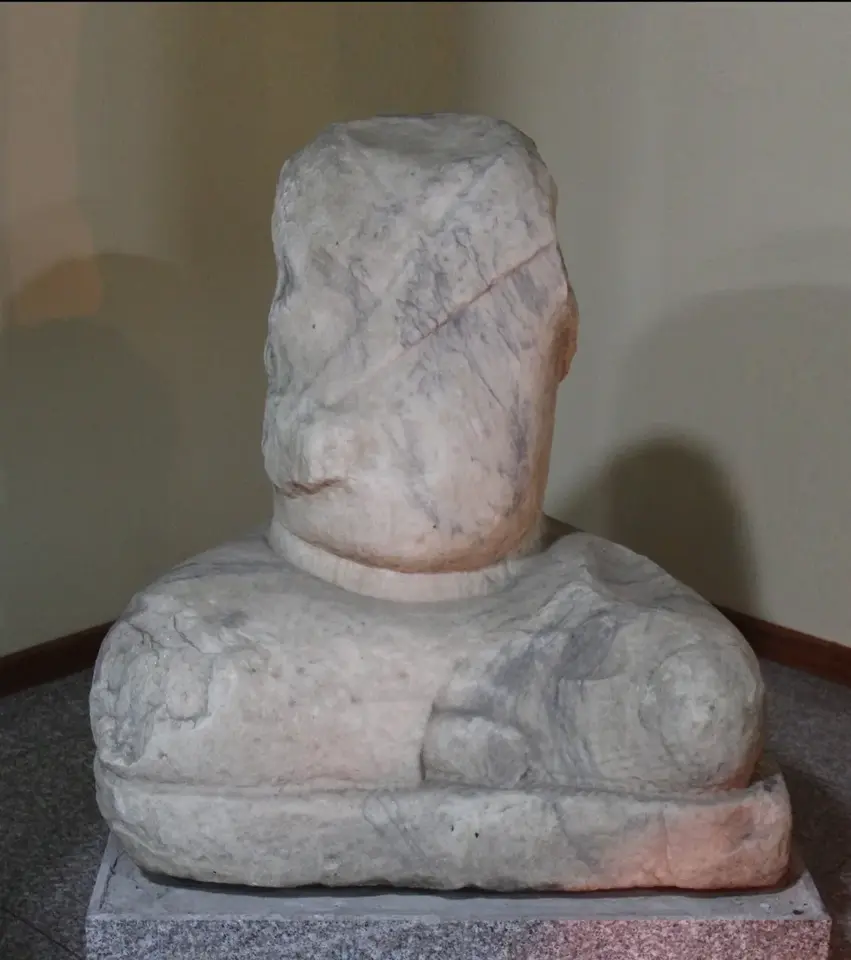
716 CE–734 CE
阿史那·默棘连
Ashina Mojilian (阿史那·默棘连, 683–734), historically revered as Bilge Qaghan (毗伽可汗), was the eminent ruler of the Second Turkic Khaganate and the eldest son of its founder, Ilterish Qaghan (骨咄禄). In his youth, Mojilian was invested as the Left Wise King and spent decades campaigning across the northern desert alongside his uncle Qapaghan Qaghan, acquiring extensive administrative prestige and military commanding experience.…
Ashina Mojilian (阿史那·默棘连, 683–734), historically revered as Bilge Qaghan (毗伽可汗), was the eminent ruler of the Second Turkic Khaganate and the eldest son of its founder, Ilterish Qaghan (骨咄禄). In his youth, Mojilian was invested as the Left Wise King and spent decades campaigning across the northern desert alongside his uncle Qapaghan Qaghan, acquiring extensive administrative prestige and military commanding experience. Following Qapaghan's sudden death in battle in 716, internal succession strife erupted in the nomad camp. Mojilian's younger brother Kul Tigin staged a decisive coup, eradicated rival factions, and placed Mojilian on the supreme throne. Upon ascending the throne, Ashina Mojilian relied heavily on the veteran statesman Tonyukuk to implement broad political rehabilitation and rally dispersed nomadic communities. After repelling a massive Tang Dynasty encirclement campaign in 720, Mojilian pragmatically sought lasting peace with Emperor Xuanzong, formalizing regular tribute missions and lucrative silk-horse border markets. He firmly rejected anti-Tang alliances proposed by the Tibetan Empire and safeguarded northern frontier stability. In 734, Mojilian was poisoned by a treacherous attendant, executing the rebel conspirators before dying at the age of fifty-two.
Born on the northern Mongolian steppe as the eldest son of Ilterish Qaghan.
Invested by Qapaghan Qaghan as the Left Wise King, taking charge of eastern tribal forces.
Following Qapaghan's death, Kul Tigin defeated rivals and enthroned Mojilian as Bilge Qaghan.
In coalition with Tonyukuk, crushed Tang imperial expeditionary columns across the northern frontier.
Pragmatically sent diplomatic envoys to Chang'an to establish long-term peace and frontier commerce.
Declined Tibetan invitations to jointly invade Tang, reporting hostile plans directly to Emperor Xuanzong.
Deeply grieved the death of his brother Kul Tigin, receiving Tang imperial condolences and master stone-carvers.
Fatally poisoned by court attendant Buyruk Chor, exterminating the traitor's family before dying.
Ashina Mojilian was born in the northern steppe as the eldest son of Ilterish Qaghan, the founder of the Second Turkic Khaganate. Following the death of Ilterish, Mojilian was still young, and the supreme khaganate throne passed to his uncle Qapaghan Qaghan. During Qapaghan's extensive military expansions, Mojilian received rigorous martial training in horsemanship and military strategy, exhibiting remarkable prudence and resilience. In the late Wu Zhou era, he was formally appointed Left Wise King, governing the eastern tribes and serving as one of the most prominent imperial princes within the nomadic confederation.
During his tenure as Left Wise King, Mojilian repeatedly commanded steppe cavalry on punitive campaigns against rival regional entities including the Khitans, the Xi tribes, and the Turgesh confederacies. Throughout these prolonged campaigns, he demonstrated exceptional organizational aptitude and operational command on the battlefield. Mojilian made deliberate efforts to build alliances among tribal chieftains and showed genuine concern for ordinary pastoralists. Although commanding substantial armed forces, he maintained disciplined loyalty toward his uncle, preserving his own political standing for the future succession.
In 716, Qapaghan Qaghan was ambushed and killed while returning from an expedition against the Bayirqu tribes in the north, plunging the khaganate into immediate chaos as Qapaghan's son Inel Qaghan seized the throne. Mojilian's younger brother, the Right Wise King Kul Tigin, decisively launched a preemptive strike, storming the royal camp and executing Inel alongside his co-conspirators. Kul Tigin and tribal grandees then offered the imperial crown to Mojilian, who took the regnal title Bilge Qaghan. Mojilian initially offered to yield the throne to his brother, but ultimately accepted the mandate under unanimous tribal insistence.
Upon taking power, Bilge Qaghan appointed Kul Tigin as Left Wise King, delegating full authority over all khaganate armies to his brother and establishing profound mutual trust between civil administration and military leadership. Confronted with widespread tribal rebellions caused by Qapaghan's past harshness, Bilge Qaghan released and restored his father-in-law, the veteran strategist Tonyukuk, appointing him chief imperial advisor. Under Tonyukuk's sage counsel, the court pardoned defected communities, abolished punitive confiscations, and rapidly restored internal governance across the steppe.
In 720, Emperor Xuanzong of Tang mobilized imperial armies under Shuofang Commander Wang Jun alongside Khitan and Xi allies in a coordinated offensive designed to annihilate the Second Turkic Khaganate. Facing imminent invasion, Bilge Qaghan adopted Tonyukuk's defensive strategy of deliberate withdrawal into the deep desert, allowing the allied forces to overextend and disintegrate before unleashing devastating cavalry counterstrikes that shattered the Tang vanguard. This military triumph permanently halted Tang offensive ambitions and consolidated Bilge Qaghan's hegemony over the northern desert.
Following this resounding victory, Tonyukuk cautioned Bilge Qaghan against pursuing protracted warfare against the vastly wealthier Tang Empire, which possessed abundant grain and unified imperial resources. Recognizing the imperative of long-term economic stability, Bilge Qaghan dispatched peace missions to Chang'an, adopting deferential diplomatic etiquette toward Emperor Xuanzong. The Tang court accepted the peace overture, reopening regular tribute and frontier horse markets. In 727, when the Tibetan Empire proposed a joint invasion of Tang territory, Bilge Qaghan refused and disclosed the conspiracy to Tang, solidifying mutual diplomatic trust.
In 731, the foundational military pillar of the khaganate, Kul Tigin, died of illness, leaving Bilge Qaghan overwhelmed with profound sorrow. Emperor Xuanzong expressed deep sympathy for the passing of this esteemed nomadic commander, dispatching high-ranking imperial envoys to conduct funeral rites and assigning court artisans and calligraphers to carve the famed Kul Tigin Stele. Three years later, the veteran statesman Tonyukuk also passed away. Having lost his closest political and military companions, Bilge Qaghan saw the core leadership of the khaganate substantially weakened as factional intrigues resurfaced.
In 734, a disaffected court official named Buyruk Chor was subverted by external intrigues and covertly administered lethal poison to Bilge Qaghan during a meal. Sensing the deadly poison taking effect, Bilge Qaghan marshaled his remaining strength to summon imperial bodyguards, apprehending Buyruk Chor and ordering the summary execution of the traitor and his entire conspiratorial lineage. Having eliminated the domestic threat, Bilge Qaghan succumbed to the poison at the age of fifty-two. He was succeeded by his son, Yiran Qaghan, marking the zenith of the Second Turkic Khaganate.
At the beginning of Bilge Qaghan's reign, the Second Turkic Khaganate was deeply fractured following years of aggressive warfare and oppressive taxation under Qapaghan Qaghan, prompting numerous northern nomadic groups to flee south toward Tang protection. Bilge Qaghan carefully absorbed the historical lessons of his predecessor's downfall, strictly prohibiting unprovoked plunder against weaker border tribes. He dispatched trusted delegates across the Mongolian Plateau to offer general pardons, distributed livestock to impoverished herdsmen, and fostered an environment of social stability that quickly revitalized nomadic population growth.
Economically, Bilge Qaghan actively encouraged pastoral animal husbandry and international transit trade, extending strong protections to Sogdian merchant caravans traveling along northern Silk Road branches. Heeding Tonyukuk's wise counsel, he abandoned plans to construct walled cities or Buddhist and Daoist temples in the wilderness, thereby preserving the mobility and martial ethos of the nomadic warriors. This strategic policy preserved the nomadic fighting vitality of the tribes while securing sufficient livestock reserves, successfully rescuing the khaganate from structural collapse.
The most remarkable achievement of Bilge Qaghan's rule lay in constructing a sustainable and mutually beneficial border policy with the Tang Dynasty. Beginning in 721, he sent more than ten official diplomatic missions to Chang'an, supplying prime warhorses, furs, and steppe resources in exchange for substantial imperial gifts of silk, tea, and metal farming tools. Emperor Xuanzong authorized official border markets along the Shuofang frontier, allowing border populations on both sides to enjoy decades of trade and peaceful coexistence free from the devastating ravages of military conflict.
In 727, when the Tibetan Empire offered lavish territorial inducements to forge an anti-Tang coalition, Bilge Qaghan held firmly to his treaties and forwarded the secret Tibetan correspondence directly to Chang'an. Emperor Xuanzong was deeply impressed by his diplomatic integrity, richly rewarding the Turkic envoys and expanding cross-border commerce privileges. Through his pragmatic statesmanship, Bilge Qaghan maintained over a decade of continuous peace across the northern frontier, creating an enduring legacy of cooperative coexistence between nomadic confederations and the central Chinese dynasty.
FIGURES ASSOCIATED WITH THIS DYNASTY