Birth | Born in the Rongyuan residence in Mao'er Hutong, Beijing; her birth date was later changed to November 13, 1906, in connection with her marriage to Puyi
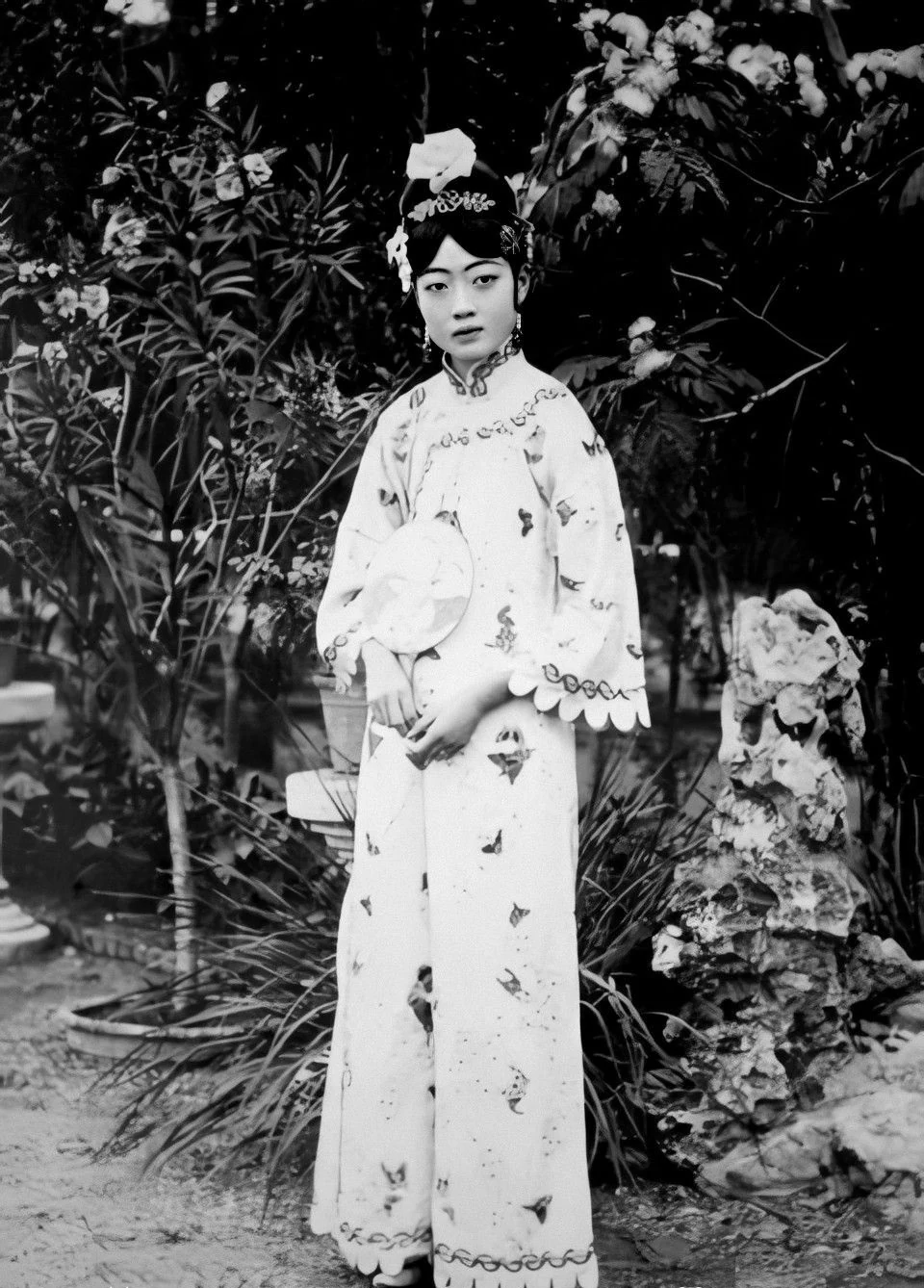
1906 CE–1946 CE
Empress
Wanrong
郭布罗·婉容
Wanrong (November 13, 1906–June 20, 1946), courtesy name Muhong and art name Zhilian, was a member of the Daur people and the Manchu Plain White Banner. She was the principal wife of Puyi, the last emperor of the Qing Dynasty, and was also described as the last empress in Chinese history. Born into a Manchu aristocratic family, Wanrong received an education combining Chinese and Western subjects from childhood and learned…
1906 CE–1946 CEQing Dynasty
PROFILE
Wanrong (November 13, 1906–June 20, 1946), courtesy name Muhong and art name Zhilian, was a member of the Daur people and the Manchu Plain White Banner. She was the principal wife of Puyi, the last emperor of the Qing Dynasty, and was also described as the last empress in Chinese history. Born into a Manchu aristocratic family, Wanrong received an education combining Chinese and Western subjects from childhood and learned English, piano, and painting. She married Puyi in 1922, entered the Forbidden City, and became empress in name. She later experienced expulsion from the palace, residence in Tianjin, and removal to Manchukuo. Amid political turmoil and personal tragedy, her condition deteriorated, and she ultimately died of illness in a prison in Yanji, Jilin, in 1946, at an unconfirmed age. Her life reflects the changing fortunes of members of the last imperial household after the end of the Chinese monarchy.
- Also known as
- Wanrong, the Last Empress; Wanrong; the Last Empress
- Courtesy name
- Muhong
- Art name
- Zhilian
- Period
- Late Qing and Republican period
- Date of Birth
- November 13 1906
- Date of Death
- June 20 1946
- Dynasty / Polity
- Qing Dynasty (the former Qing imperial household), Manchukuo
- Identity
- Empress
- Ethnicity / affiliation
- Daur people
- Clan
- Gobulo clan
- Banner affiliation
- Manchu Plain White Banner
- Native place
- Not reliably established in available sources
- Place of birth
- Unknown
- Tenure as empress
- Not reliably established in historical sources
- Posthumous name
- Not reliably recorded in the source text
- Major achievements
- Puyi's empress; one of the last imperial consorts whose life ended tragically amid the upheavals of modern China
- Courtesy / Art Name
- Muhong
- Era
- Late Qing and Republican period
- Dynasty
- The Qing court after the abdication, and the puppet state of Manchukuo
- Ethnicity
- Daur people
- Ancestral Home
- Not reliably established in available sources
- Place of Birth
- Place of birth unknown
- Place of Death
- Place of death unknown
- Lifespan
- Unknown
- Highest Office
- See Biography below
- Major Offices
- See Biography below
- Posthumous Name
- Not recorded in the extant sources
- Major Achievements
- Empress of Puyi, the last emperor and empress whose wanderings in modern times ended in tragedy
LIFE TIMELINE
Age five | The Xinhai Revolution broke out and the Qing Dynasty fell
Age seven | Followed Puyi to Tianjin and lived at Zhang Garden and later Jing Garden
Age twenty-five | Puyi became emperor and Wanrong was installed as "Empress of the Manchu Empire"
Age twenty-nine | Died of illness in prison in Yanji, Jilin
Aged eighteen | Feng Yuxiang launched his coup in Beijing, and she was expelled from the Forbidden City with Puyi and moved to the residence of the Prince Chun.
Age 19 | On February 24, 1925, Puyi fled by train to Tianjin and stayed in Zhang Garden, a three-story white Western-style house in the Japanese concession owned by Zhang Biao, a former Hubei military commander.
Age 25 | ### Manchukuo and Confinement At the end of 1931 Yoshiko Kawashima, acting on orders from the Kwantung Army, brought Wanrong to Manchuria.
Age 26 | In January 1932 Wanrong was, according to the source text, deceived by the Japanese into traveling from Tianjin through Dalian to Lüshun, where she reunited with Puyi.
Age 28 | On March 17 Wanrong returned by special train from Tianjin to Beijing, where she was welcomed by officials of the former Qing Imperial Household Department and a ceremonial contingent of the Republican government.
Aged twenty-nine | She bore a daughter by an imperial guard; the infant was thrown into a boiler and killed by Puyi, and Wanrong’s mind collapsed and she was placed under confinement.
Age 39 | In August 1945 Japan surrendered and Manchukuo collapsed.
Age 40 | On June 20, 1946, she died of illness in prison in Yanji, Jilin, at an unconfirmed age.
BIOGRAPHY
Biography
Family Background and Early Life Wanrong was born in 1906, the thirty-second year of the Guangxu era, into the Gobulo clan of the Manchu Plain White Banner. Her father, Rongyuan, was a reserve circuit intendant in the Ministry of War and held the hereditary rank of Light Chariot Commandant. Her birth mother, a member of the Aisin-Gioro family, belonged to the imperial clan and was the fourth daughter of Yuchang, a Grace Defender General of the Prince Ding household. Known as the "Fourth Gege," she died of puerperal fever while giving birth to Wanrong. Wanrong's stepmother Hengxiang, courtesy name Zhongxin and later known as Jin Zhongxin, was the second daughter of Yulang, a beile of the Prince Ding household, and was known as the "Second Gege." She treated Wanrong as her own daughter, and the two were very close. Wanrong also had an elder full brother Runliang, who later married Puyi's eldest younger sister Yunying, and a younger half-brother Runqi, who later married Puyi's third younger sister Yunying. By Wanrong's childhood the Qing Dynasty had already fallen. In 1913, the second year of the Republic, Rongyuan moved the family to Tianjin. He held comparatively progressive views, advocated equality between men and women, and believed that his daughter should receive the same education as a son. When Wanrong was older, she attended an American missionary school, where she studied English and piano and became especially fond of jazz. Rongyuan also hired private tutors to teach her reading, calligraphy, piano, and painting, and employed the American teacher Miss Isabel Ingram as her English tutor. Her years in Tianjin gave Wanrong an education combining Chinese and Western culture and shaped her later preference for modern urban life. ### Entering the Forbidden City: the Last Empress On March 10, 1922, Puyi issued an order stating that the daughter of reserve circuit intendant and Light Chariot Commandant Rongyuan was to be established as empress, while the daughter of reserve subprefect Duangong of the Erdet clan was to be made Consort Shu. In fact, Puyi had originally selected Wenxiu as empress, but the source text states that Wenxiu was considered plain in appearance, whereas the seventeen-year-old Wanrong had become known among Manchu and Mongol aristocratic circles for her beauty and bearing, and she was ultimately chosen. On March 17 Wanrong returned by special train from Tianjin to Beijing, where she was welcomed by officials of the former Qing Imperial Household Department and a ceremonial contingent of the Republican government. She returned to the family residence in Mao'er Hutong near Nanluogu Xiang, which the Imperial Household Department had refurbished, and spent eight months there before the wedding. On November 30 Wanrong's dowry entered the palace and the ceremony establishing her as empress was held. On December 1 the wedding ceremony took place and Wanrong formally entered the palace, becoming what the source text describes as the last empress in Chinese history. The Republican government specially permitted the empress's ceremonial sedan to enter the rear portion of the Forbidden City through the Donghua Gate. The wedding followed Qing imperial marriage ritual in full and lasted five days. At first, Puyi and Wanrong had a relatively good relationship. They exchanged notes in English almost every day, and Puyi gave her the English name "Elizabeth," the same name as the British queen referred to in the source text. Wanrong brought habits of Tianjin's foreign concessions into the Forbidden City: she enjoyed American films and Western food, rode a bicycle, and passed time reading, practicing calligraphy, and painting. She also grew lotuses for pleasure and wrote a verse praising them, saying that jealous people criticized their excessive beauty while those who understood them praised their purity. The source text states, however, that because Puyi suffered from sexual dysfunction, the couple had no children. Wanrong's hopes and expectations when she first entered the palace gradually faded. She became depressed and developed an opium habit. At first she smoked secretly on the pretext of treating illness, but after becoming addicted she could no longer conceal it. The source text further states that Wanrong suffered from hereditary mental illness and that her father Rongyuan had also suffered from such an illness. Puyi allowed her to use opium as treatment, but her dependence and condition worsened. ### Leaving the Forbidden City and the Tianjin Years In October 1924 Feng Yuxiang launched the Beijing coup. On November 5 Puyi was expelled from the Forbidden City. Wanrong, Consort Shu Wenxiu, and the dowager consorts in the palace also left and moved to the Prince Chun Mansion of Puyi's father Zaifeng. On February 24, 1925, Puyi fled by train to Tianjin and stayed in Zhang Garden, a three-story white Western-style house in the Japanese concession owned by Zhang Biao, a former Hubei military commander. In Tianjin, Wanrong and Puyi lived on the second floor while Wenxiu and servants lived below. Because of rivalry for Puyi's favor, Wanrong and Wenxiu frequently quarreled over minor matters, and Puyi generally sided with Wanrong. Wanrong became increasingly miserable in what the source describes as a false and tedious environment, and her opium addiction deepened. Tianjin provided fashionable diversions such as theater, dancing, skating, and ball games, but shopping in major department stores attracted her most. With Puyi paying the bills, she spent freely and bought whatever caught her eye, useful or not. This gradually became part of the rivalry with Wenxiu. Puyi later called it "competitive buying" in his autobiography From Emperor to Citizen, describing Wanrong as a Tianjin young lady who knew more ways to spend money on useless things than he did: if she bought something, Wenxiu wanted the same; if he bought it for Wenxiu, Wanrong wanted something again and spent even more, as if this were necessary to demonstrate her status as empress. According to the source text, Puyi treated Wanrong attentively in Tianjin, often taking her to fashionable venues and going out daily for recreation and polo. In May 1930 alone, Wanrong went out six times: first to the racecourse; second to the racecourse with a stop at the Yi Li Company for shopping; third to the racecourse and a meal at Kiessling; fourth to the racecourse and then to Kiessling for ice cream and bayberries; fifth with Puyi to Gordon Road to visit Zaifeng and then to the racecourse; and sixth with one of Puyi's sisters to stroll through Zhongjie in central Tianjin. In 1931, the twentieth year of the Republic, massive flooding affected sixteen provinces in what the source identifies as the 1931 Yangtze-Huai floods. Wanrong donated a pearl necklace and silver dollars for disaster relief, while Puyi donated a building. The donations attracted wide public attention, and newspapers in Beijing, Tianjin, and Shanghai printed photographs of Wanrong and the donated necklace. In the same year Wenxiu formally divorced Puyi. Puyi believed the scandal had resulted from Wanrong's rivalry with Wenxiu and blamed her. At the same time, Puyi sought restoration, and Japan encouraged him to go to the Northeast and establish Manchukuo. Wanrong strongly opposed this, which made Puyi increasingly hostile toward her. Their marriage deteriorated, and Wanrong relied on opium to relieve her distress, becoming physically emaciated. ### Manchukuo and Confinement At the end of 1931 Yoshiko Kawashima, acting on orders from the Kwantung Army, brought Wanrong to Manchuria. In January 1932 Wanrong was, according to the source text, deceived by the Japanese into traveling from Tianjin through Dalian to Lüshun, where she reunited with Puyi. By then Puyi had become a puppet under the control of the Japanese Kwantung Army, and Wanrong entered the same political trap. In Changchun her life was arranged by the Japanese, her movements were monitored, and she was unable even to leave the compound freely. Unable to tolerate Japanese control and humiliation, Wanrong resolved to escape. Wellington Koo, the first foreign minister of the Nanjing Nationalist government according to the source text, recorded in his memoirs that while he was staying in Dalian, a representative of the Manchukuo Imperial Household Department from Changchun, disguised as an antiques dealer, came to see him. The man said he had been sent by the empress and reported that she was surrounded by Japanese maids who monitored and informed on every action, leaving her life miserable. Wanrong asked Koo to help her escape Changchun. Koo was unable to assist because of his own circumstances, but the episode was presented as evidence of her predicament in Manchukuo. Regarding Wanrong's affair, the source text states that in 2006 Qunzhong Publishing House in Beijing disclosed previously deleted material from Puyi's autobiography From Emperor to Citizen, including an account that Puyi had Wanrong's illegitimate daughter thrown into a furnace. Puyi had written that Wanrong later became addicted to opium and engaged in behavior he could not tolerate. According to the restored material, Wanrong had an affair with a guard in Changchun and gave birth to a daughter, who was killed immediately after birth when Puyi had her thrown into a furnace. Wanrong became obsessed with the loss of the child and suffered a complete mental collapse. Thereafter she lived on opium and was confined by Puyi. In August 1945 Japan surrendered and Manchukuo collapsed. Wanrong fled with Puyi and was captured at Tonghua. She was subsequently moved through several prisons while mental illness and opium dependence compounded her declining physical condition. On June 20, 1946, she died of illness in prison in Yanji, Jilin, at an unconfirmed age. According to years of research by An Longzhen, deputy director of the Yanbian Prefecture local gazetteer compilation committee, Wanrong's burial site may have been in Yanji, Jilin.
Gobulo Wanrong, courtesy name Muhong, was of the Manchu Plain White Banner and born in Beijing; her father Rongyuan was a minister of the imperial household. She was well educated from childhood and learned English from a private tutor. In 1922 Puyi married, and Wanrong was made empress, entering the palace with the Consort Wenxiu. The dynasty had by then been in abdication ten years; Puyi still lived under the articles of favourable treatment in the rear palaces of the Forbidden City, where ceremonial followed the old forms while funds and appointments grew steadily tighter.
In 1924 Feng Yuxiang's coup in Beijing revised those articles and drove Puyi from the Forbidden City; Wanrong went with him first to the residence of the Prince Chun and then to the Japanese concession at Tianjin. In the Tianjin years she frequented the social circles of the commercial port and the concessions, and her dress grew fashionable. In 1931 the Consort Wenxiu sued for divorce, a matter widely reported in the press, and Wanrong's estrangement from Wenxiu and the quarrels within Puyi's household became a subject of public comment.
Puyi afterward went to the northeast under Japanese patronage to found the state of Manchukuo, and Wanrong was taken to Changchun as its empress. Her life there was unhappy, her relations with Puyi growing distant and her movements much restricted, and she fell into an opium habit. With Manchukuo's collapse in 1945 she was taken prisoner as Puyi fled and was held in prisons at Yanji and Dunhua.
She died at Yanji in 1946 at about forty, the place of her burial long unknown. As the last empress in Chinese history her life is closely bound up with the political changes of the late Qing and early Republic: from her investiture in the Forbidden City to exile in Tianjin and Changchun and imprisonment after the war, her career is often used to illustrate the position of the imperial family in that age.
Her wedding was conducted under the articles of favourable treatment for the Qing house and could no longer match the scale of the dynasty's heyday. In the palace she had an English tutor and studied the language daily, Puyi sometimes joining the lessons. After the move to Tianjin her social life and spending became a topic in the small newspapers. After Wenxiu's divorce Puyi grew colder still toward Wanrong, and the discord of the household was widely rumoured. In Manchukuo her movements were closely watched, and she tried more than once to escape her position without success. Taken prisoner after the war, weakened in body and craving opium, she was in especially hard case. Accounts differ slightly on her dates, some giving 1906 to 1946; her burial place was long unknown, and later ages have commemorated her with cenotaphs and memorial sites.
In the palace Wanrong studied Western languages along with painting and calligraphy, and the photographs and letters of her Forbidden City and Tianjin years have since become material for the study of court life at the end of the Qing. Her last years are known chiefly from the recollections of those who attended her, and for that reason the accounts of her death and burial differ.
Major Activities
Installation as the Last Empress and the Imperial Wedding In 1922 Puyi selected an empress. He initially chose Wenxiu, but Wanrong was ultimately established as empress because, according to the source text, she was considered more beautiful and came from a distinguished family. The imperial wedding was held on December 1 of that year, making Wanrong what the source describes as the last empress in Chinese history. Under the Republican government's arrangements for the former Qing household, the ceremony reproduced Qing imperial wedding ritual and lasted five days, becoming the last grand ceremonial marriage of the former Qing imperial house after the end of the monarchy. ### Charity and Disaster Relief In December 1923 Wanrong donated 600 silver dollars to Beijing's Temporary Wotou Relief Association to aid disaster victims and received public praise. During the 1931 Yangtze-Huai floods, she donated a pearl necklace and silver dollars, while Puyi donated a building. Newspapers in Beijing, Tianjin, and Shanghai printed her portrait and images of the necklace, giving Wanrong one of the few strongly positive public images of her life described by the source. ### Cultural Education and Lifestyle Wanrong received an education combining Chinese and Western learning from childhood. She knew English, played the piano, liked jazz, and could write poetry. Much of her correspondence with Puyi was in English, and she often signed the name "Elizabeth." In the Forbidden City she rode a bicycle and used a camera; photographs show her smoking and Puyi lighting a cigarette for her. She grew lotuses for pleasure and wrote a verse saying that the jealous criticized their excessive beauty while those who understood them praised their purity. Wanrong also exerted a lasting influence on modern costume culture. Traditional Manchu robes were loose, heavy, and without high side slits. Influenced by Western aesthetics and modern lifestyles, Wanrong advocated structural reforms of the qipao dress. In 1932, on the occasion of her birthday, she instructed imperial tailor Li Chunfang to reform tailoring techniques, replacing traditional flat straight cuts with three-dimensional cutting tailored to female bodily curves, raising side slits to the waistline, selecting softer understated fabric shades, and integrating machine stitching with fine hand embroidery. Over subsequent years she commissioned dozens of reformed qipao garments, and her fashion innovations rapidly spread from the imperial court to society and cosmopolitan centers like Shanghai, directly encouraging the formation and popularity of modern Chinese qipao design. ### Opposition to Puyi's Reliance on Japan In 1931 Puyi decided, under encouragement from the Japanese Kwantung Army, to go to the Northeast and establish Manchukuo. Wanrong strongly opposed the decision. She was nevertheless brought to Manchuria by Yoshiko Kawashima and fell under Japanese control. In Changchun her movements were monitored and her life was restricted. She attempted to seek outside help, including through Wellington Koo, to escape but was unsuccessful. ### Tragic End The source text states that Wanrong had an affair with a guard in Changchun and gave birth to a daughter, whom Puyi had killed by throwing her into a furnace. Wanrong then suffered a mental collapse, was confined, and lived under heavy opium dependence. After Japan surrendered in 1945 she fled with Puyi, was captured at Tonghua, and was transferred among prisons. She died of illness in Yanji prison in Jilin on June 20, 1946.
Personal Relations
- Birth mother: a member of the Aisin-Gioro clan, fourth daughter of Yuchang of the Prince Ding household; died of puerperal fever while giving birth to Wanrong
- Stepmother: Hengxiang (Jin Zhongxin), second daughter of Beile Yulang of the Prince Ding household; treated Wanrong with great affection
- Full elder brother: Runliang, who married Puyi's eldest younger sister Yunying
- Younger half-brother: Runqi, who married Puyi's third younger sister Yunying ### Marriage - Husband: Puyi, the last emperor of the Qing Dynasty; their relationship changed from early intimacy to severe deterioration, and he eventually confined her ### Associates and Conflicts - Wenxiu: Puyi's Consort Shu; repeatedly competed with Wanrong for favor and divorced Puyi in 1931
- Yoshiko Kawashima: acting on orders from the Kwantung Army, brought Wanrong to Manchuria ### Contemporaries - Wellington Koo: diplomat of the Republic of China; Wanrong tried unsuccessfully to seek his help in escaping Manchukuo
- Miss Isabel Ingram: Wanrong's private English tutor
Historical Assessment
Late Qing / Contemporary Accounts - In From Emperor to Citizen, Puyi recalled Wanrong's extravagant spending in Tianjin as "competitive buying" and stated that she had engaged in behavior he could not tolerate, placing part of the responsibility for her tragedy on her own character and actions.
- Newspapers in Beijing, Tianjin, and Shanghai published Wanrong's portrait when she made disaster-relief donations and praised her charitable acts; public opinion at that time briefly viewed the last empress with sympathy and approval.
- Wellington Koo's memoirs recorded Wanrong's difficult life under Japanese surveillance in Manchukuo and expressed sympathy for her circumstances, presenting evidence of the tragic character of her political situation. ### Republican Period - After Wenxiu's divorce, public opinion often blamed Wanrong's rivalry for driving Wenxiu away, and Puyi also resented her for it.
- During the Manchukuo period, Wanrong was controlled by the Japanese, and outside descriptions increasingly shifted from simply "empress" to the "empress of a puppet," often emphasizing pity for her circumstances.
- Wanrong's attempt to flee Manchukuo was regarded by Wellington Koo and others who knew of it as an act of courage, although her historical position and circumstances prevented it from succeeding. ### People's Republic of China Period - An Longzhen's The Last Empress Wanrong, published by Huaxia Publishing House in 1994 after years of research, argued that Wanrong's burial place may have been in Yanji, Jilin, providing a proposed location for her final resting place.
- In 2006 Qunzhong Publishing House released previously deleted material from From Emperor to Citizen, including the account that Puyi had Wanrong's illegitimate daughter thrown into a furnace, thereby presenting a fuller version of the tragedy described in the source.
- Modern film and television productions such as The Last Emperor (1987) and The Last Empress have portrayed Wanrong as a symbol of historical tragedy, generating broad public attention and sympathy. ### Modern Assessments - Historians described in the source generally regard Wanrong as a representative case of the fluctuating fate of former Qing imperial family members after the end of the monarchy, with her personal tragedy closely intertwined with political turmoil and family circumstances.
- Some researchers have argued that Wanrong's opium dependence and mental illness reflected both hereditary factors and the constraints of her marriage and political environment and should not simply be attributed to personal moral decline.
- As the last empress in Chinese history as described by the source, Wanrong's life has become an important case for studying social change from the late Qing into the Republic, the fate of the Qing imperial household, and the position of women caught in political upheaval.
FIGURES ASSOCIATED WITH THIS DYNASTY
Bibliography
Bibliographic information is not yet available for this entry.