Birth into Clan
Born into a prominent and morally exemplary gentry lineage in Jinxi, Fuzhou.
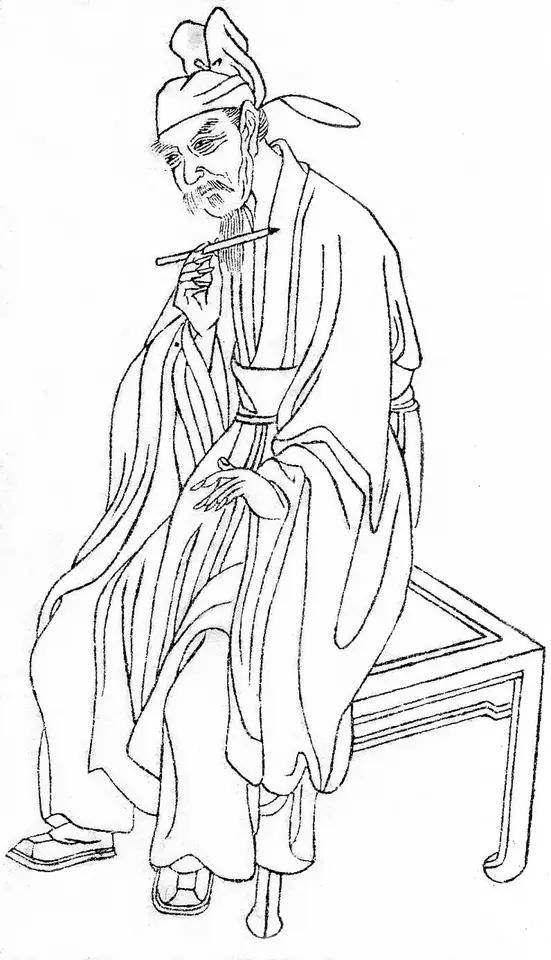
陆九渊
Lu Jiuyuan (陆九渊, 1139–1193), courtesy name Zijing, styled Master Xiangshan, was a preeminent Chinese philosopher, statesman, and educator of the Southern Song Dynasty. He was the pioneering progenitor of the Neo-Confucian School of Mind (Xinxue). Lu posited the seminal philosophical axiom that "the mind is identical to the cosmos, and cosmic pattern is identical to the mind" (the universe is my mind, and my mind is the…
Lu Jiuyuan (陆九渊, 1139–1193), courtesy name Zijing, styled Master Xiangshan, was a preeminent Chinese philosopher, statesman, and educator of the Southern Song Dynasty. He was the pioneering progenitor of the Neo-Confucian School of Mind (Xinxue). Lu posited the seminal philosophical axiom that "the mind is identical to the cosmos, and cosmic pattern is identical to the mind" (the universe is my mind, and my mind is the universe), laying the ontological and epistemological groundwork for the School of Mind that later flourished under Wang Shouren (Wang Yangming) during the Ming Dynasty. In administrative governance, Lu served with distinction as the prefectural governor of Jingmen, executing decisive fiscal reforms, rectifying corrupt litigation, reinforcing urban defenses, and pacifying a strategic frontier borderland.
Born into a prominent and morally exemplary gentry lineage in Jinxi, Fuzhou.
Passed the highest imperial metropolitan examination (jinshi), achieving second place in the department examination.
Appointed Subprefectural Magistrate of Chongren, implementing rigorous community security and ethical education.
Convened the historic Goose Lake Debate (Ehu Zhi Hui) with Zhu Xi, establishing the monumental philosophical divergence of Neo-Confucianism.
Invited by Zhu Xi to deliver a famed guest lecture on righteousness versus personal gain at the White Deer Grotto Academy.
Established his retreat and academy at Mount Xiangshan in Guixi, lecturing to thousands of scholars and forming the Xiangshan School.
Appointed Military Prefect of Jingmen Military Prefecture; constructed fortified urban walls and eradicated oppressive surcharges.
Passed away peacefully in his official residence at Jingmen at the age of fifty-four.
Lu Jiuyuan was born into a distinguished household renowned for generations of communal discipline, mutual harmony, and moral integrity. From early youth, he exhibited profound intellectual independence and contemplative curiosity. At the age of four, when questioning his father regarding the spatial boundaries of heaven and earth, he meditated deeply upon the nature of physical infinity.
By the age of thirteen, while reading ancient chronicles and coming upon the temporal and spatial definition of the universe—where "the four cardinal directions plus zenith and nadir constitute spatial bounds (yu), and the passage of past, present, and future constitutes temporal continuity (zhou)"—he experienced sudden philosophical illumination, declaring that human affairs and cosmic order are intrinsically encompassed within the human mind itself.
In the eighth year of the Qiandao reign (1172), Lu Jiuyuan sat for the imperial metropolitan examinations (jinshi). His rigorous civil papers, characterized by profound ethical conviction and pragmatic institutional proposals, deeply impressed the imperial examiners, placing him second among all degree holders in his testing division.
In the first year of the Chunxi reign (1174), Lu received his first administrative posting as the Subprefectural Magistrate (wei) of Chongren. In this post, he refused to govern through punitive terror, choosing instead to conduct field investigations into agrarian disputes, reconcile divided lineages, inspect local granaries, and suppress extortionate local runners. Local banditry subsided, and the populace celebrated his fair and transparent governance.
In the fifth intercalary month of the second year of Chunxi (1175), Lu Zuqian convened the celebrated Goose Lake Debate (Ehu Zhi Hui) at Goose Lake Temple in Xinzhou, hoping to reconcile the diverging pedagogical and ontological theories between Zhu Xi and Lu Jiuyuan. Zhu Xi argued for the gradual, comprehensive accumulation of textual learning and empirical investigation of all things (gewu zhizhi) as the foundational path toward understanding principle.
In direct contrast, Lu Jiuyuan and his elder brother Lu Jiuling argued that the human mind was fundamentally endowed with luminous moral perfection. Lu insisted on "first establishing that which is fundamentally greater within oneself" (xianli qi da zhe) and condemned exhaustive commentary-memorization as fragmented trivia that obscured innate spiritual clarity. Although neither side fully conceded, the debate forged the two classic poles of Song Neo-Confucian thought.
In the eighth year of Chunxi (1181), Zhu Xi served as Prefect of Nankang Military Prefecture and restored the celebrated White Deer Grotto Academy. Recognizing Lu Jiuyuan's exceptional ethical magnetism, Zhu invited Lu to ascend the lecture dais and speak before the assembled masters and scholars.
Lu delivered a profound discourse on the Confucian principle: "The gentleman is conversant with righteousness; the petty man is conversant with personal gain." Lu demonstrated how civil examination aspirants, even while studying noble classics, could be entirely entrapped in petty careerism if their underlying motivation remained material advancement. Zhu Xi was so profoundly moved that he transcribed the lecture onto stone steles for all future academy students.
In the fourteenth year of Chunxi (1187), Lu Jiuyuan was granted leave and returned to his native Jiangxi. He built a lecture retreat at Mount Xiangshan in Guixi County, gathering hundreds of eager disciples from across the empire.
Lu taught not through rigid textual drill, but through dialectical inquiry, personal reflection, and the cultivation of inner moral autonomy. He urged students to discard blind subservience to superficial scholastic dogmas and awaken to their innate conscience. His academy flourished as a supreme center of dynamic pedagogical renewal, formally giving rise to the Xiangshan philosophical lineage.
In the second year of Shaoxi (1191), Lu Jiuyuan was summoned to serve as Military Prefect of Jingmen Military Prefecture (zhi Jingmen jun). Jingmen occupied an exceptionally vulnerable frontier corridor bordering the Jurchen Jin Empire, yet lacked defensive perimeter walls and was burdened with chaotic taxation and chronic litigation.
Upon his arrival, Lu decisively abolished extortionate local excise duties, rectified local grain price distortions, settled long-accumulated legal backlogs, and mobilized the local community to construct an extensive stone fortress wall. Within two years, Jingmen was transformed into a prosperous, fortified stronghold capable of repelling northern cavalry incursions.
In the twelfth month of the third year of Shaoxi (late January 1193), Lu Jiuyuan fell severely ill from overwork during an inspection of frontier fortifications. Fully conscious of his impending death, he bathed, donned clean robes, and sat in quiet meditation, passing away peacefully on January 18, 1193.
When his funeral cortege departed Jingmen for burial in his native Jinxi, thousands of local citizens wept along the roadways. In the second year of Jiading (1209), the Southern Song imperial court conferred upon him the posthumous title of Wen'an. In the Chunyou reign (1241), his spirit tablet was officially enshrined in the Imperial Confucian Temple, cementing his enduring legacy as a supreme master of Chinese philosophy.
Lu Jiuyuan was the foundational architect of the Neo-Confucian School of Mind (Xinxue). By affirming that "the mind is identical to principle" (xin ji li), Lu dismantled the duality between external objective patterns and internal ethical subjective consciousness.
His philosophical stance restored paramount moral sovereignty and spiritual autonomy to the human subject, liberating ethical agency from scholastic pedantry and providing the direct conceptual foundation for the transformative Ming Dynasty philosophical revival led by Wang Shouren.
Lu rejected rote memorization and mechanical literary recitation, championing an educational model grounded in independent thinking, ethical self-examination, and direct daily praxis.
At the Xiangshan Academy, his open lectures stimulated deep intellectual dialogue across social classes. He demanded that scholars cultivate authentic integrity rather than seeking mechanical examination credentials, profoundly altering the pedagogical landscape of the Southern Song and subsequent dynasties.
Throughout imperial Chinese history, Lu Jiuyuan has been venerated as one of the twin peaks of Song intellectual thought. The official History of Song (Song Shi) recorded that Lu Jiuyuan possessed extraordinary intellectual brilliance and heroic moral clarity, with words that penetrated the heart of ethical essence, stripping away trivial scholastic ornamentation to awaken authentic moral will.
Zhu Xi himself acknowledged that Lu was like an unyielding divine sword, cutting through superficial entanglements wherever he directed his sharp edge. In later centuries, Wang Shouren celebrated Lu as the true heir to Mencius, whose monumental contribution broke the chains of scholastic commentary and restored direct moral enlightenment to the world.
FIGURES ASSOCIATED WITH THIS DYNASTY