Garrison Marshal
Commissioned as Marshal of the Taiyuan Yingyang Garrison; formed a secret alliance with Li Yuan
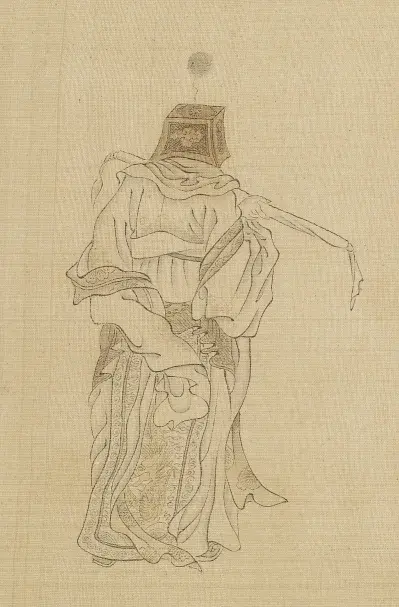
?–635 CE
刘政会
Liu Zhenghui (刘政会, ?–635) was a native of Zuocheng in Huazhou (modern Niutun Town, Hua County, Henan Province). He was an illustrious founding statesman of the Tang Dynasty and one of the honored Twenty-Four Meritorious Officials of the Lingyan Pavilion. During the Daye era of the late Sui Dynasty, Liu served as Marshal of the Yingyang Garrison in Taiyuan, becoming a close confidant of the Taiyuan Garrison Commander Li Yuan.…
Liu Zhenghui (刘政会, ?–635) was a native of Zuocheng in Huazhou (modern Niutun Town, Hua County, Henan Province). He was an illustrious founding statesman of the Tang Dynasty and one of the honored Twenty-Four Meritorious Officials of the Lingyan Pavilion. During the Daye era of the late Sui Dynasty, Liu served as Marshal of the Yingyang Garrison in Taiyuan, becoming a close confidant of the Taiyuan Garrison Commander Li Yuan. In 617, as Li Yuan finalized preparations to revolt, Sui deputy commanders Wang Wei and Gao Junya grew suspicious and plotted a counter-coup. Liu stepped forward in open court to deliver an emergency denunciation, publicly accusing Wang and Gao of treasonous collusion with the Eastern Turks. This swift exposure enabled Li Yuan to seize both officers, execute them, and formally launch the Jinyang Uprising. Following the march of Li Yuan's army westward into Guanzhong, Liu was appointed Vice Minister of the Imperial Guard and charged with defending Taiyuan, overseeing rearward logistics, grain transport, and frontier tribal diplomacy. In 619, warlord Liu Wuzhou invaded alongside Turkish cavalry, and Taiyuan was overwhelmed. Captured by the enemy, Liu refused to yield. In captivity, he secretly smuggled confidential reconnaissance reports across frontlines to Li Yuan, providing the Tang court with crucial intelligence that aided the recovery of Hedong. After Li Shimin eradicated Liu Wuzhou's forces in 620, Liu returned to the court with unblemished loyalty. He successively served as Minister of Justice, Minister of Imperial Entertainments, and Area Commander of Hongzhou, being enfeoffed as Duke of Xing with a hereditary fief of three hundred households. He died in 635. Emperor Taizong issued a personal edict praising his founding merits, posthumously conferring the title of Minister of Revenue, awarding the posthumous name Xiang, and ordering him to share sacrifices in the imperial temple of Emperor Gaozu. In 643, his portrait was installed in the Lingyan Pavilion, ranking twenty-first among founding heroes.
Commissioned as Marshal of the Taiyuan Yingyang Garrison; formed a secret alliance with Li Yuan
Delivered the denunciation document exposing Wang Wei and Gao Junya; aided Li Yuan's uprising
Named Vice Minister of Imperial Guard and entrusted with defending Taiyuan as rearward military nexus
Overpowered during Liu Wuzhou's invasion; refused to defect and smuggled intelligence reports to Chang'an
Rescued following Li Shimin's victory; reinstated with honors and promoted to Minister of Justice
Appointed Minister of Imperial Entertainments and enfeoffed as Duke of Xing with three hundred fief households
Dispatched as Area Commander of Hongzhou, winning popular acclaim through prudent civilian governance
Passed away in office, honored with posthumous title of Minister of Revenue and posthumous name Xiang, and later installed in Lingyan Pavilion in 643.
Liu Zhenghui hailed from an established scholarly and administrative family of Zuocheng in Huazhou. During the twilight of the Sui Dynasty, he entered imperial service as Marshal of the Yingyang Garrison in Taiyuan, overseeing regional military recruitment and weaponry registers. As Emperor Yang's misrule provoked widespread rebellions across northern China, Li Yuan was appointed Military Commander of Taiyuan, where Li Shimin, Liu Wenjing, and Pei Ji secretly prepared for an armed revolt.
Suspicious of Li Yuan's loyalties, Emperor Yang deployed tiger-brave commanders Wang Wei and Gao Junya as deputy commanders to surveil the garrison. In the fifth month of 617, realizing that Li Yuan was recruiting unauthorized troops, Wang and Gao plotted to assassinate him during an official prayer gathering at the Jinci Shrine.
Forewarned of the plot, Li Yuan resolved to strike first. On the morning of the Jiazi day, Li Yuan convened an administrative conference with Wang Wei and Gao Junya in the main hall of the commandery office.
Liu Zhenghui strode into the crowded hall holding a formal memorial, loudly announcing: "I bring an urgent secret denunciation of high treason!" Li Yuan feigned surprise and reached for the document. Suspecting a trap, Wang Wei stepped forward to intercept it, but Liu shouted: "The accused are none other than the two deputy commanders! Only the Duke of Tang possesses the authority to examine this roll; no subordinate may touch it!"
Li Yuan unrolled the document and read the charges aloud, which accused Wang Wei and Gao Junya of plotting to lead Eastern Turkish hordes south to destroy Taiyuan. Armed guards concealed by Li Yuan rushed the hall, putting both deputies in chains.
Liu's audacity eliminated the most immediate threat to the burgeoning rebellion. Days later, Li Yuan executed Wang and Gao, proclaimed the founding of the Grand General Office, and appointed Liu as Revenue Adjutant, managing financial reserves and grain supply.
Following the formal uprising, Li Yuan led his main army southwest across the Yellow River toward Chang'an, leaving the foundational base of Taiyuan under strategic guard. Relying upon Liu's administrative probity, Li Yuan appointed him Vice Minister of the Imperial Guard and Commander of Taiyuan.
In Taiyuan, Liu organized civilian militias, accommodated local Han and nomadic populations, secured border passes against Turkish raiders, and managed the continuous transport of grain and weapons to support the frontlines in Shaanxi.
In 618, Li Yuan ascended the throne as founding emperor of the Tang Dynasty. Celebrating the Taiyuan veterans, the emperor granted Liu and thirteen core comrades the privilege of exemption from one death penalty.
In 619, northern warlord Liu Wuzhou allied with the Eastern Turks, launching an invasion of Hedong. Prince of Qi Li Yuanji, who held superior military command in Taiyuan, fled to Chang'an in panic.
Refusing to desert his post, Liu rallied remaining garrisons to hold the city walls. Cut off from reinforcements and surrounded by superior numbers, the defenders were overwhelmed and Liu was captured in battle.
Recognizing Liu's prestige within the Tang court, Liu Wuzhou and his general Song Jingang offered him lavish ranks and riches to defect. Liu refused all overtures, maintaining unwavering allegiance to the Tang Dynasty.
While confined in prison camps, Liu studied the disposition of enemy detachments, grain reserves, and Turkish communication routes. He transcribed these military secrets onto silk strips.
Bribing prison guards, Liu sent a trusted household servant who carried the silk dispatches sewn into the lining of his clothing, navigating mountain defiles to reach Chang'an.
Emperor Gaozu was moved to tears upon reading Liu's reports, remarking to his court: "Though trapped in barbarian captivity, Liu Zhenghui's heart remains devoted to our throne; how could ancient heroes surpass such virtue?"
In 620, Prince of Qin Li Shimin defeated Song Jingang at the Battle of Baibi, driving Liu Wuzhou to flee to the Turks, where he was slain. Liu was liberated from captivity and returned to Chang'an.
Emperor Gaozu welcomed him, reinstated his official rank, promoted him to Minister of Justice, created him Duke of Xing, and granted him an imperial estate of three hundred households.
In 627, Emperor Taizong ascended the throne. Liu was reassigned as Minister of Imperial Entertainments, maintaining high rank among the founding circle.
Seeking to reform provincial administration in the south, the court assigned Liu as Area Commander of Hongzhou (modern Nanchang, Jiangxi). In southern China, Liu instituted orderly governance, mediated legal petitions with impartiality, and restored water control projects, winning the affection of regional gentry and commoners.
In 635, Liu passed away at his official headquarters in Hongzhou. Emperor Taizong issued a personal eulogy: "When we raised our righteous cause in Taiyuan, Liu Zhenghui rendered singular services; advancing from humble origins to high station, he maintained steadfast virtue from beginning to end."
The emperor posthumously elevated him to Minister of Revenue and conferred the posthumous name Xiang. In 640, an imperial decree ordered that he share sacrificial honors in Emperor Gaozu's ancestral temple. In 643, Taizong commissioned his portrait in the Lingyan Pavilion, ranking him twenty-first among the twenty-four founding heroes.
Under Emperor Gaozong, the court posthumously appointed him Area Commander of Bingzhou in 654 and altered his peerage to Duke of Yu in 668, confirming his permanent status as a first-rank founder of the realm.
In 617, with the Taiyuan uprising facing exposure, Liu demonstrated courage by delivering an emergency treason indictment against deputy commanders Wang Wei and Gao Junya. This intervention enabled Li Yuan to seize both imperial watchdogs and initiate the founding of the Tang Dynasty.
When Li Yuan led his main army into Guanzhong, Liu took responsibility for securing Taiyuan. He managed supply depots, pacified border tribes, and maintained logistic corridors, safeguarding the regime's base of operations.
Captured during Liu Wuzhou's 619 conquest of Taiyuan, Liu resisted torture and inducements to defect. He managed to smuggle intelligence on enemy troop deployments and supply shortages to Emperor Gaozu, aiding the counter-offensive that liberated Hedong.
In his later years as Minister of Justice and Area Commander of Hongzhou, Liu established a reputation for judicial restraint and administrative integrity. His governance in the south pacified rural populations and reinforced administrative discipline across the early Tang empire.
FIGURES ASSOCIATED WITH THIS DYNASTY