Birth in Luoyang
Born into a scholar-official lineage in Luoyang, showing precocious talent in classical learning and poetic composition.
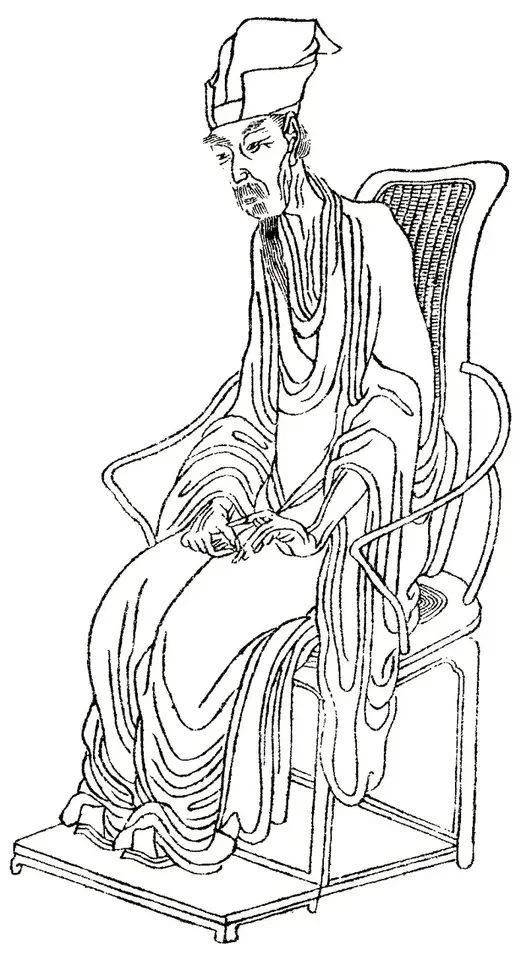
刘禹锡
Liu Yuxi (772–842), courtesy name Mengde, was an eminent poet, philosopher, and political reformer of the mid-Tang dynasty. Born into an erudite gentry family in Luoyang, he passed the highest imperial civil service examination (jinshi) in 793 in the same cohort as his lifelong confidant Liu Zongyuan. After demonstrating remarkable administrative talent in the military commission of Du You, he was appointed Investigating…
Liu Yuxi (772–842), courtesy name Mengde, was an eminent poet, philosopher, and political reformer of the mid-Tang dynasty. Born into an erudite gentry family in Luoyang, he passed the highest imperial civil service examination (jinshi) in 793 in the same cohort as his lifelong confidant Liu Zongyuan. After demonstrating remarkable administrative talent in the military commission of Du You, he was appointed Investigating Censor (jiancha yushi) in the imperial capital. During the brief reign of Emperor Shunzong in 805, Liu played a pivotal role as a chief intellectual architect of the Yongzhen Reform (Yongzhen Gexin), an ambitious administrative campaign aimed at curbing warlord autonomy, eliminating palace eunuch interference in military commands, and abolishing predatory tax exactions. Following the suppression of the reform and the accession of Emperor Xianzong, Liu was demoted to remote provincial prefectures, enduring over two decades of political exile across Langzhou, Lianzhou, Kuizhou, and Hezhou. Despite severe hardship and relentless partisan persecution, Liu maintained an indomitable, spirited optimism, producing a magnificent body of poetry characterized by its soaring resonance, historical introspection, and integration of folk melodies. Celebrated by Bai Juyi as the "Poetic Hero" (Shihao), Liu also formulated an advanced materialist cosmological philosophy in his treatise On Heaven (Tian Lun), articulating the dialectical principle that nature and human agency mutually prevail over and condition one another (tian ren jiao xiang sheng, huan xiang yong). In his later years, he served as Advisor to the Crown Prince in Luoyang, leaving an enduring legacy as one of the towering cultural and philosophical figures of the Tang dynasty.
Born into a scholar-official lineage in Luoyang, showing precocious talent in classical learning and poetic composition.
Passed the imperial examination alongside Liu Zongyuan; subsequently passed the Boxue Hongci examination.
Succeeded in the Ministry of Personnel Selection Examination; served in the secretariat of Huainan Military Commissioner Du You.
Appointed Investigating Censor in Chang'an, forging close intellectual bonds with Han Yu and joining Wang Shuwen's reform circle.
Promoted to Vice Director of the Bureau of State Farms (Tuntian Yuanwailang) during Shunzong's reign; demoted to Marshal of Langzhou following the political backlash.
Recalled to the capital; authored a satirical quatrain at Xuandu Temple mocking opportunistic officials, provoking another banishment to Lianzhou.
Relinquished office upon his mother's death; learned of Liu Zongyuan's demise at Hengyang and undertook the preservation of his literary manuscripts.
Appointed Prefect of Kuizhou; explored regional Yangtze River culture and developed the famed Bamboo Branch Lyrics (Zhuzhi Ci).
Transferred to Hezhou as Prefect; penned the immortal prose masterpiece Inscription on a Crude Dwelling (Loushi Ming).
Encountered Bai Juyi in Yangzhou while returning north; exchanged celebrated poems reflecting upon decades of political exile.
Appointed Director of the Bureau of Receptions (Zhuke Langzhong); revisited Xuandu Temple and wrote a defiant poem reaffirming his unyielding integrity.
Appointed Prefect of Suzhou; earned widespread civilian acclaim for mitigating severe flooding and implementing grain relief.
Appointed Advisor to the Crown Prince assigned to the Eastern Capital; formed an illustrious literary circle with Bai Juyi and Pei Du.
Passed away at his Luoyang residence at seventy-one; posthumously conferred the title of Minister of Revenue (Hubu Shangshu).
Liu Yuxi was born in 772 during the reign of Emperor Daizong of Tang. His ancestral lineage originated in Xingyang, Henan, and later migrated south to Jiaxing in Jiangnan to escape the devastation of the An Lushan Rebellion, before returning to the eastern capital of Luoyang.
His father, Liu Pei, was an erudite Confucian scholar who served as an administrative staff officer in provincial governments. Under strict familial instruction, Liu Yuxi devoted his youth to mastering the Confucian classics, imperial histories, and poetic metrics.
During his formative travels in the Jiangnan region, Liu studied poetic theory and Buddhist philosophy under eminent monastic scholars such as Jiaoran and Lingche. His literary brilliance earned wide acclaim throughout the Huai and Yangtze River valleys. In 793, at the age of twenty-two, Liu journeyed to Chang'an and passed the imperial examination (jinshi) in the same session as Liu Zongyuan, cementing an unbreakable lifelong fraternity.
Subsequently passing the prestigious Boxue Hongci and Personnel Selection examinations, Liu was assigned as proofreader in the Palace Library. His administrative acumen caught the attention of Du You, Military Commissioner of Huainan, who enlisted Liu as his chief secretarial officer, granting him invaluable practical experience in state finance and civil administration.
In 803, when Du You was summoned to the capital as Grand Councilor, Liu Yuxi was appointed Investigating Censor (jiancha yushi) in the Censorate. Within the imperial court, Liu maintained an uncompromising sense of justice and forged close ties with reforming peers including Liu Zongyuan and Han Yu.
During the twilight years of Emperor Dezong, imperial authority was severely compromised by rampant regional warlordism and the dominance of palace eunuchs who commanded the elite Shence Army. Seeking systemic renewal, Liu aligned with Wang Shuwen and Wang Pi, who organized a secret reformist circle around Crown Prince Li Song.
In January 805, Emperor Dezong passed away, and Crown Prince Li Song ascended the throne as Emperor Shunzong, declaring the Yongzhen era. Wang Shuwen took executive leadership of the government, rapidly elevating Liu Yuxi to Vice Director of the Bureau of State Farms (Tuntian Yuanwailang) with oversight of imperial salt and iron revenues.
The reformist administration launched an energetic reform program: abolishing the predatory palace procurement system (gongshi) used by eunuchs to extort urban merchants; halting arbitrary regional tributes; dismissing corrupt officials; and attempting to strip eunuchs of direct military commands.
However, the rapid measures provoked furious resistance from entrenched eunuch factions, conservative courtiers, and regional warlords. In August 805, the eunuch leadership orchestrated a palace coup, forcing the ailing Shunzong to abdicate in favor of Crown Prince Li Chun (Emperor Xianzong).
The reform movement suffered harsh retribution. Wang Shuwen was executed, and Wang Pi perished in exile. In September, Liu was demoted to Prefect of Lianzhou, but before reaching his post, punitive edicts stripped his honors and banished him to the distant outpost of Langzhou (modern Changde, Hunan) as Marshal (sima), an event known as the "Banishment of the Eight Marshals."
Confined to the remote and malarial borderlands of Langzhou under constant official surveillance, Liu refused to yield to despair. While many disgraced officials fell into chronic melancholia, Liu channeled his energies into local ethnography, classical research, and folk songs along the Yuan and Xiang rivers.
During his ten-year stay, he wrote numerous celebrated poems, including his famous Autumn Lyrics (Qiu Ci), boldly overturning centuries of conventional literary sorrow by declaring that the crisp clarity of autumn far surpassed the exuberance of spring, symbolized by a crane soaring through azure clouds.
In the spring of 815, Emperor Xianzong issued an amnesty recalling Liu Yuxi, Liu Zongyuan, and other exiled officials to Chang'an. Returning to the bustling metropolis after a decade in exile, Liu observed with disdain the opportunistic parvenus who had risen to power by subverting the reforms.
Visiting the famous Xuandu Daoist Temple in Chang'an, Liu composed his legendary quatrain Teasing the Flower Gazers: "Over the purple paths red dust sweeps against the face; no one fails to speak of having viewed the blossoms. The thousand peach trees in Xuandu Temple were all planted only after this Liu Lang had departed!" The verse caustically allegorized the new courtiers as fleeting peach blossoms planted during his absence.
The satire provoked immense outrage among conservative ministers. Within days, Emperor Xianzong ordered Liu banished to the remote southwest as Prefect of Bozhou (modern Zunyi, Guizhou), an impoverished region plagued by severe disease.
Learning that Liu's elderly mother of over eighty years could not possibly survive the arduous journey over mountainous terrain, Liu Zongyuan submitted an urgent memorial offering to exchange his own post at Liuzhou for Bozhou, even pleading to suffer execution in Liu's stead. Through the mediation of Grand Councilor Pei Du, Emperor Xianzong relented, reassigning Liu to Lianzhou (modern northern Guangdong).
In Lianzhou, Liu governed with diligence, establishing local schools, reforming customary vices, and sponsoring agricultural irrigation. In 819, his mother passed away in his official residence. Liu resigned his post in accordance with filial mourning rites to escort her casket back north.
While passing through Hengyang, Liu received the devastating news that Liu Zongyuan had passed away in Liuzhou. Overcome with grief, Liu fell to the earth weeping. Despite his own poverty and precarious health, Liu took custody of Liu Zongyuan's orphaned young son and undertook the painstaking editorial compilation of his friend's surviving manuscripts into the thirty-fascicle Collected Works of Liu Hedong.
In 821, following the conclusion of his mourning period, Liu was appointed Prefect of Kuizhou (modern Fengjie, Chongqing). Kuizhou commanded the strategic upper gorges of the Yangtze River. Here, Liu immersed himself in regional Ba-Yu ballads, refining local rhythmic patterns into the elegant Bamboo Branch Lyrics (Zhuzhi Ci).
In 824, Liu was transferred to Hezhou (modern Hexian, Anhui). Subjected to petty administrative harassment by local magistrates who repeatedly forced him into smaller and more destitute quarters, Liu calmly composed his prose masterpiece Inscription on a Crude Dwelling (Loushi Ming), celebrating virtue, intellectual refinement, and moral sovereignty above physical luxury.
In the winter of 826, the fifty-four-year-old Liu completed his tenure at Hezhou and sailed down the Yangtze toward the imperial capital. At Yangzhou, he met Bai Juyi, who was similarly returning from his prefectural post at Suzhou.
The two literary giants immediately established a deep bond of mutual reverence. Deeply moved by Liu's unyielding endurance over twenty-three years of political exile, Bai recited a tribute in his honor. Liu responded with his famous poem In Response to Letian at Our First Gathering in Yangzhou, featuring the immortal lines: "Beside the sunken ship, a thousand sails glide past; ahead of the ailing tree, ten thousand saplings spring to life."
In 828, Liu returned to Chang'an to take up the post of Director of the Bureau of Receptions. Revisiting Xuandu Temple fourteen years after his initial exile, he found the once-vibrant peach blossoms entirely withered into weeds.
Defiant as ever, Liu composed his famous sequel Revisiting Xuandu Temple: "Across hundred-acre grounds half is covered in moss; the peach blossoms have vanished, replaced by rapeseed blooms. Where has the Daoist who planted the peaches gone? The Liu Lang of former days has returned once more!" The poem electrified the imperial capital, demonstrating that two decades of exile had failed to extinguish his rebellious spirit.
In 831, resisting alignment with Li Deyu's faction, Liu served as Prefect of Suzhou. During severe regional floods, he personally directed drainage and emergency grain distributions, winning the enduring gratitude of the populace.
In 836, aged sixty-five, Liu retired from active provincial administration due to declining health, receiving the honorable sinecure of Advisor to the Crown Prince assigned to the Eastern Capital of Luoyang.
In Luoyang, Liu formed an intimate cultural circle with Bai Juyi and retired statesman Pei Du. They met regularly at the Longmen grottos and Xiangshan Temple, composing responsive verses and engaging in philosophical debates. Bai Juyi lauded Liu's poetic vigor as unmatched by any contemporary, honoring him with the title "Poetic Hero" (Shihao).
In July 842, Liu Yuxi passed away at his Luoyang residence at the age of seventy-one. Emperor Wuzong posthumously bestowed upon him the rank of Minister of Revenue (Hubu Shangshu), and he was interred in his family cemetery at Mount Mang near Luoyang.
Liu Yuxi devoted his career to institutional reform and state rejuvenation amidst the systemic crises of mid-Tang regional fragmentation and palace eunuch tyranny.
During the Yongzhen Reform of 805, Liu served as a chief strategist alongside Wang Shuwen, authoring reform edicts, auditing the imperial treasury, and curtailing palace monopolies. He dismantled the corrupt palace procurement system (gongshi) used by eunuch agents to pillage civilian commerce, directly striking at the economic foundations of court corruption.
Though the reform was cut short by aristocratic and eunuch reaction, Liu's uncompromising willingness to confront entrenched power structures established an enduring standard of bureaucratic integrity and reformist courage in Chinese political history.
In the field of philosophy, Liu Yuxi made foundational contributions to classical Chinese materialism. Confronting pervasive superstitions and fatalistic doctrines during his exile in Langzhou, he authored the three-part treatise On Heaven (Tian Lun).
Critiquing the teleological doctrines of divine retribution (tianren ganying), Liu maintained that nature (tian) is an objective material entity governed by intrinsic physical processes ("the way of heaven lies in natural growth"), whereas human society (ren) is governed by artificial institutions, morality, and law ("the way of humanity lies in legal governance").
Crucially, Liu formulated the thesis that "heaven and humanity mutually prevail over and condition one another" (tian ren jiao xiang sheng, huan xiang yong). In the natural sphere, physical laws surpass human control; but in the realm of civilization and social order, human rationality and collective labor master natural conditions. He insightfully observed that when positive law flourishes, society relies on human reason; when law collapses, people retreat into fatalism.
In Chinese poetry, Liu Yuxi stood out as a transformative innovator who rejected the melancholic and convoluted styles popular among mid-Tang poets, pioneering a robust, dynamic aesthetic termed "Poetic Heroism" (Shihao).
One of his greatest innovations was the creative synthesis of indigenous folk songs from the Yangtze and Chu regions with classical seven-character forms. In Kuizhou and Langzhou, he gathered regional folk tunes to compose Bamboo Branch Lyrics (Zhuzhi Ci) and Waves Sifting Sand (Langtao Sha).
These lyrics preserved the spontaneous vitality of popular song while infusing them with profound philosophical nuance. His line "East side sees sunshine, west side feels rain; they say it is sunless, yet there is sunshine" brilliantly played on homophonic puns to capture human emotional ambivalence, becoming an immortal gem of classical verse.
Liu Yuxi's historical meditations (huaigu shi) achieved unparalleled intellectual depth in Tang literature. Visiting historical capitals and ancient ruins across southern China, he composed masterpieces such as The City of Stone (Shitou Cheng), Black Garb Lane (Wuyi Xiang), and Reflections on Mount Xisai (Xisaisan Huaigu).
In Black Garb Lane, he observed: "Beside the Vermilion Sparrow Bridge wild grasses bloom; at the mouth of Black Garb Lane the setting sun slants down. Swallows that once nested in the halls of Wang and Xie now fly into the homes of ordinary folk." The verse illuminated the inevitable decay of entrenched aristocratic dynasties with exquisite poignancy.
His reflections combined geological permanence with political fragility, providing a profound warning against political hubris and regional division.
Beyond literature and statecraft, Liu Yuxi made significant contributions to traditional Chinese medicine. Witnessing widespread epidemics and the scarcity of medical care in southern borderlands, he collected, tested, and cataloged herbal remedies.
Emphasizing empirical clinical efficacy, Liu rejected unverified esoteric formulas, insisting on recording only treatments whose positive effects he had personally observed. In his later years, he compiled these verified prescriptions into Tested Prescriptions (Chuanxin Fang).
The compendium prioritized accessible treatments for common rural emergencies, including snakebites, seasonal pestilence, and dysentery. His work was subsequently incorporated into the Song dynasty's official pharmacopeia Taiping Huimin Heji Jufang, benefiting generations of rural patients.
Liu Yuxi performed an invaluable service to Chinese intellectual history through his devoted preservation of Liu Zongyuan's literary corpus.
Following Liu Zongyuan's death in Liuzhou in 819, Liu undertook the sacred responsibility of gathering, collating, and editing his late comrade's scattered manuscripts. Over several years of meticulous textual collation, he produced the thirty-fascicle Collected Works of Liu Hedong (Liu Hedong Ji), contributing an emotionally piercing preface.
Through Liu's selfless dedication, Liu Zongyuan's philosophical essays, political treatises, and landscape prose were rescued from wartime destruction, cementing their shared friendship as an eternal standard of scholarly devotion.
FIGURES ASSOCIATED WITH THIS DYNASTY