Life and Career
Lineage of Classical Exegesis and Precocious Erudition
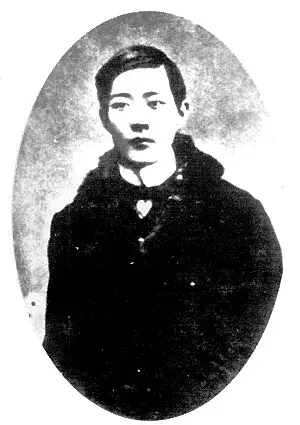
Liu Shipei was born on June 24, 1884, in Yangzhou, Jiangsu. His family represented the renowned "Yizheng Liu Lineage" of classical scholars. For three generations, his great-grandfather Liu Wenqi, grandfather Liu Yusong, and uncle Liu Shouceng had dedicated their scholarship to collating and annotating the Zuo Commentary, establishing their reputation as leaders of nineteenth-century Han evidential learning. His father, Liu Guizeng, was also an accomplished philologist, while his mother, Li Ruxuan, hailed from an educated Changzhou gentry family.
Liu was an intellectually gifted child. At four, his mother taught him basic ideograms; at five, he studied the Four Books and Five Classics under his father; and by eight, he could recite the Book of Songs, Book of Documents, Rites of Zhou, and the entire Zuo Commentary. At twelve, guided by his family's library of thousands of rare woodblock editions, he read Xu Shen's Shuowen Jiezi and pre-Qin philosophical texts, composing critical philological notes. In 1902, at eighteen, Liu passed the Jiangnan provincial examination as a Juren, earning wide literary renown. In 1903, he traveled to Beijing for the metropolitan examination but failed after submitting an essay criticizing contemporary administrative failures. Returning south through Shanghai, observing foreign concession privileges and imperial weakness, Liu underwent an ideological transformation, joining revolutionary circles alongside Zhang Taiyan and Cai Yuanpei.
Revolutionary Fervour and Japanese Exile
Between 1903 and 1905, Liu broke with the traditional examination path to engage in the anti-Qing revolutionary movement. Adopting the pseudonym Liu Guanghan (signifying the restoration of the Han nation), he joined the Restoration Society (Guangfuhui) and the Tongmenghui. In Shanghai, he collaborated with Lin Xie to launch the China Vernacular Newspaper (Zhongguo Baihuabao), authoring passionate articles in plain vernacular prose advocating popular sovereignty. During this period, he produced radical treatises including Rangshu, Zhongguo Minzu Zhi, and Zhongguo Minyue Jingyi, and proposed replacing the Qing dynastic calendar with an era based on the Yellow Emperor, mobilizing anti-Manchu nationalist sentiments.
In the spring of 1907, facing imminent arrest by Qing authorities, Liu and his wife He Zhen went into exile in Tokyo. Residing with Zhang Taiyan, Liu engaged with Western political philosophy and sociology at Waseda University. In Tokyo, Liu and He Zhen founded the journals Tianyi Bao and Hengbao, organized the Society for the Study of Socialism, and engaged in discussions with Japanese socialists such as Kotoku Shusui. Liu translated the opening chapter of Karl Marx and Friedrich Engels's The Communist Manifesto and introduced Peter Kropotkin's anarcho-communist theories, advocating the abolition of private property, class divisions, and state apparatuses, alongside complete gender equality and women's liberation.
Political Entanglements and Return to Scholarship
Despite his intellectual brilliance, Liu possessed a politically vulnerable and wavering temperament. By late 1908, experiencing severe financial hardship, marital distress, and factional discord within the Tongmenghui, Liu became disillusioned with revolutionary politics. Induced by agents of Liangjiang Viceroy Duanfang, Liu returned to China and entered Duanfang's administrative secretariat. Duanfang valued his scholarly acumen, commissioning him to catalog his immense collection of ancient bronzes and stone steles, leading to the compilation of archaeological catalogs such as Taozhai Jijin Lu. In 1911, Duanfang led troops into Sichuan to suppress the Railway Protection Movement and was killed by mutinous soldiers in Zizhou. Liu was briefly detained by the revolutionary army, but Sichuan military governor Yin Changheng released him in deference to his scholarship.
In the early Republic, Liu taught in Taiyuan at the invitation of Shanxi Governor Yan Xishan before moving to Beijing in 1913. Co-opted by Yuan Shikai's political network, Liu joined Yang Du in 1915 as one of the "Six Gentlemen of the Chou'anhui," advocating the restoration of an imperial monarchy. Following Yuan's downfall, Liu faced nationwide condemnation, retreating into seclusion to collate his family's classical manuscripts while battling advancing tuberculosis.
Professorship at Peking University and Untimely Death
In early 1917, Cai Yuanpei assumed the presidency of Peking University, implementing his policy of academic freedom and intellectual tolerance. Recognizing Liu's peerless scholarship in classical philology and ancient history, Cai appointed him Professor of Humanities at Peking University.
Returning to the lecture hall, Liu dedicated his remaining energy to teaching. He delivered courses on Medieval Chinese Literary History, Pre-Qin Intellectual History, the Rites of Zhou, and Han-Wei and Six Dynasties Prose. Lecturing entirely from memory without notes, he quoted pre-Qin texts fluidly, explaining archaic characters and institutional structures to packed lecture halls. New Culture Movement leaders such as Chen Duxiu, Hu Shi, and Lu Xun, though ideologically opposed to his politics, expressed deep respect for his scholarship. Students including Zhu Ziqing, Gu Jiegang, Luo Changpei, and Fan Wenlan were profoundly influenced by his analytical methodology.
Despite deteriorating health, Liu maintained an active teaching and writing schedule, analyzing Liu Xie's Wenxin Diaolong and the Wen Xuan while supporting impoverished students with his own funds. However, the progression of pulmonary tuberculosis proved irreversible. Confined to bed by late 1919, he continued dictating scholarly notes until his death on November 20, 1919, in Beijing at the age of thirty-six. Cai Yuanpei and Qian Xuantong organized his funeral and published his collected scholarly works as Liu Shenshu Xiansheng Yishu.
Major Achievements
Culmination of the Yizheng Liu Family Classical Tradition
Liu Shipei's primary achievement in traditional scholarship was completing and refining the four-generation evidential research tradition of the Yizheng Liu family. Centered on the Zuo Commentary, Liu examined transmitted annotations and authored dozens of specialized treatises, including Zuochuan Guyi Kao, Zhouli Guxue Kao, and Maoshi Cili Juyao.
Opposing the speculative and apocalyptic tendencies of the late Qing New Text School, Liu championed Old Text evidential rigor. He treated the Rites of Zhou and the Zuo Commentary as authentic historical sources for analyzing pre-Qin feudal and clan structures. He reconstructed ancient administrative institutions, official vehicles, ceremonial dress, and penal codes, bridging the divide between traditional philology and modern institutional history.
Establishing the Discipline of Medieval Chinese Literary History
In literary studies, Liu pioneered the academic discipline of Chinese literary history through his lectures on Medieval Chinese Literary History (Zhonggu Wenxue Shi) and Studies on Han-Wei and Six Dynasties Prose. Prior to his university courses, modern Chinese universities lacked systematic textbooks on literary development.
Utilizing his mastery of Six Dynasties literature, Liu identified the Wei-Jin period as a vital transformation in Chinese literary consciousness. He analyzed literary developments—including Jian'an vigour, Zhengshi thought, and Southern Dynasties parallel prose—through the lens of phonetic patterns, aristocratic family structures, and philosophical transitions among Confucianism, Buddhism, and Daoism. In Wenshuo and Wenzhang Yuanshi, he investigated the origins of literary genres and linguistic evolution. His Zhonggu Wenxue Shi was lauded by Lu Xun as an indispensable guide to medieval Chinese literature.
Proposing the Yellow Emperor Era and Nationalist Historiography
During the late Qing revolutionary period, Liu made influential contributions to modern nationalist historiography. In 1903, he published A Proposal for the Yellow Emperor Era (Huangdi Jinian Shuo), proposing that China replace the Qing imperial reign titles with an era counting from the birth of the Yellow Emperor. He argued that dynastic reign titles represented imperial private property, whereas the ancestral Yellow Emperor symbolized the sovereign heritage of the Chinese people. This proposal was adopted by the Tongmenghui and became an enduring symbol of the Republican revolution.
Concurrently, drawing upon Western sociology and anthropology, Liu authored Zhongguo Minzu Zhi and Zhongguo Minyue Jingyi (co-authored with Lin Xie). Utilizing Jean-Jacques Rousseau's concept of the social contract to re-evaluate pre-Qin thinkers, he reconstructed the historical migration and cultural integration of China's ethnic groups, establishing an early nationalist historical narrative.
Early Translation and Promotion of Anarchism and Socialism
Liu was one of the earliest Chinese intellectuals to translate and propagate Western socialist and anarchist thought. While editing Tianyi Bao in Tokyo in 1907, he published foundational theoretical treatises including Anarchist Views on Equality and On the Abolition of Social Classes.
He combined Peter Kropotkin's anarcho-communist mutual aid theories with pre-Qin Daoist concepts of non-action, envisioning a cooperative society free from state coercion and class exploitation. Alongside He Zhen, he published the first Chinese translation of Chapter One of Karl Marx and Friedrich Engels's The Communist Manifesto in Tianyi Bao. In his writings, he affirmed historical materialism and class struggle, while critiquing patriarchal oppression of women from the perspective of socioeconomic exploitation, making pioneering contributions to early Chinese socialist and feminist theory.