Southern Pacification
Served Xiao Liang as Vice Minister of the Chancellery, pacifying over fifty cities in Lingnan
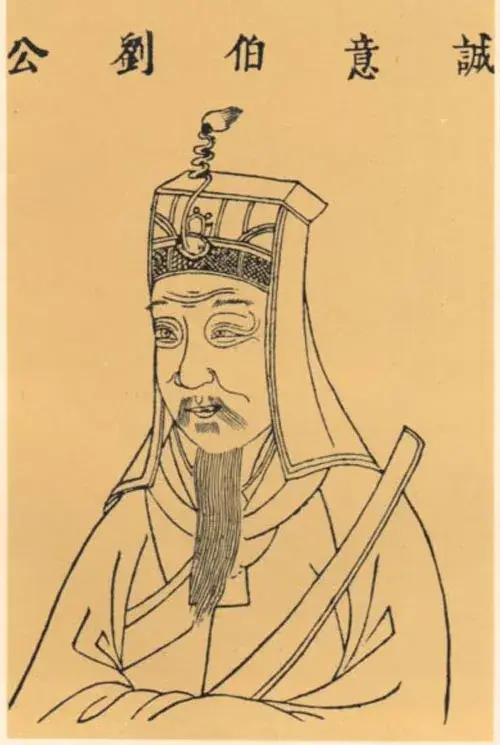
?–645 CE
刘洎
Liu Ji (刘洎, ?–645), courtesy name Sidao, was a native of Jiangling in Jingzhou (modern Jingzhou City, Hubei Province). He was an illustrious chancellor, administrative reformer, and outspoken remonstrator of the early Tang Dynasty during the Zhenguan reign of Emperor Taizong. In his early years, Liu served the southern Xiao Liang regime under Xiao Xian as Vice Minister of the Chancellery, successfully pacifying more than…
Liu Ji (刘洎, ?–645), courtesy name Sidao, was a native of Jiangling in Jingzhou (modern Jingzhou City, Hubei Province). He was an illustrious chancellor, administrative reformer, and outspoken remonstrator of the early Tang Dynasty during the Zhenguan reign of Emperor Taizong. In his early years, Liu served the southern Xiao Liang regime under Xiao Xian as Vice Minister of the Chancellery, successfully pacifying more than fifty commanderies across the Lingnan region. Following the collapse of Xiao Liang in 621, he surrendered his territories and forces to the Tang Dynasty, receiving appointment as Administrative Adjutant of Nankang Commandery. During the Zhenguan reign of Emperor Taizong, Liu advanced rapidly through civil merit, holding positions as Policy Advisor, Attendant Censor, Right Assistant Director of the Department of State Affairs, and Vice Minister of the Chancellery. In 644, he was promoted to Palace Attendant, entering the inner chancellery council. He submitted the influential Memorial on Selecting Capable Men for Department Vice Directors, reorganizing the clogged bureaucracy of the Department of State Affairs and personally supervising administrative case clearances. Liu was renowned for fearless remonstrance, openly rebuking Emperor Taizong for berating memorialists and defending the openness of imperial speech channels. Following the designation of Li Zhi as heir apparent, Liu submitted guidance memorials and served as tutor to the crown prince. In 645, during Emperor Taizong's military campaign against Goguryeo, Li Zhi supervised state administration at Dingzhou, with Liu assigned as Acting Minister of Revenue and Left Advisor to assist the young prince. When Emperor Taizong fell critically ill during the return march, Liu wept out of distress for the sovereign's health. Political rival Chu Suiliang seized the moment to falsely accuse Liu of declaring that the emperor's illness was inconsequential and that he intended to wield regent powers to execute dissenting ministers. Succumbing to paranoia in his illness, Emperor Taizong ordered Liu to commit suicide. In 684, during the regency of Wu Zetian, Liu was posthumously exonerated and his official titles were fully restored.
Served Xiao Liang as Vice Minister of the Chancellery, pacifying over fifty cities in Lingnan
Surrendered his commands to the Tang following the fall of Xiao Xian; appointed Adjutant of Nankang
Summoned to the central capital as Policy Advisor and enfeoffed as Baron of Qingyuan County
Promoted to Attendant Censor; submitted a reform memorial and became Right Assistant Director of State Affairs
Advanced to Vice Minister of the Chancellery, delivering critical counsel during court assemblies
Conferred rank of Silver-Blue Grand Master; submitted memorials to guide Crown Prince Li Zhi
Appointed Palace Attendant; openly remonstrated with Emperor Taizong against intimidating petitioners
Guided the crown prince during the Korean war, framed by Chu Suiliang during Taizong's illness, and forced to commit suicide; exonerated by Wu Zetian in 684.
Liu Ji, courtesy name Sidao, was born into a prominent southern gentry clan of Jiangling in Jingzhou. From youth, he demonstrated literary ability, legal scholarship, and administrative talent, exhibiting an unbending, outspoken temperament.
Amid the nationwide revolts marking the collapse of the Sui Dynasty, Xiao Xian, a great-grandson of Emperor Xuan of Western Liang, proclaimed himself Emperor of Liang at Yuezhou. Liu joined the new administration, rising to Vice Minister of the Chancellery. When southern commanderies hesitated to submit, Xiao Xian commissioned Liu to pacify the Lingnan region. Combining moral persuasion with military authority, Liu brought over fifty cities under Liang allegiance without bloodshed.
Before Liu could return to the capital, Emperor Gaozu dispatched Li Xiaogong and Li Jing with combined land and naval forces to subjugate Jiangling in 621, prompting Xiao Xian's surrender. Recognizing the shift in dynastic fortune, Liu led his southern jurisdictions to declare loyalty to the Tang, and the throne confirmed him as Administrative Adjutant of Nankang Commandery.
Recognizing his administrative competence, Emperor Taizong summoned Liu to Chang'an, appointing him Policy Advisor in 633 and granting him the noble title Baron of Qingyuan County.
In 637, Liu was reassigned as Attendant Censor. During this era of domestic peace, executive statecraft was concentrated within the Department of State Affairs. However, administrative dossiers had become severely bottlenecked, with civil servants evading responsibility and postponing sensitive rulings.
Liu diagnosed the institutional dysfunction and submitted his renowned Memorial on Selecting Capable Men for Department Vice Directors. He argued that docket backlogs were not caused by excessive volume, but by incompetent leadership. High-ranking aristocratic heirs occupied vice directorships through hereditary privilege, lacking technical competence and dreading criticism, while subordinate bureau heads accommodated superiors without exercising judgment.
Liu advocated selecting disciplined, legally proficient administrators as Left and Right Assistant Directors regardless of lineage, instituting performance audits. Emperor Taizong praised the proposals and appointed Liu Right Assistant Director. Taking office, Liu purged backlogged dockets and restored administrative momentum.
In 639, Liu was elevated to Vice Minister of the Chancellery and Senior Grand Master. At court, he voiced candid evaluations of imperial policy. During an imperial banquet at the Xuanwu Gate, Emperor Taizong exhibited his flying-white calligraphy. While courtiers held back, Liu stepped onto the imperial dais and lifted the brushwork. Taizong laughed, remarking to his ministers that historical chronicles praised Lady Ban for declining the imperial carriage, but today the court witnessed Grand Master Liu ascending the imperial couch, honoring him with gifts.
In 643, following the treasonous plot and deposition of Crown Prince Li Chengqian, rival factions contested the succession between Prince of Wei Li Tai and Prince of Jin Li Zhi. While Liu and Chancellor Cen Wenben initially recommended Li Tai to settle unrest, senior statesman Zhangsun Wuji secured the elevation of Li Zhi.
Once Li Zhi was installed as heir apparent, Liu put aside factional differences to nurture the new heir. He submitted the Memorial on Honoring Worthies and Studying Classics for the New Crown Prince, counseling the prince to honor Confucian mentors, master historical precedents, and understand the burdens of common taxpayers. Delighted, Taizong ordered Liu, Cen Wenben, and Ma Zhou to rotate in residence at the Eastern Palace to tutor the prince.
In 644, Liu was promoted to Palace Attendant, assuming the chancellorship. During an imperial audience, Taizong invited his inner circle to critique his recent governance. Senior chancellors including Zhangsun Wuji praised the reign, asserting that imperial virtue was flawless.
Liu stepped forward, offering grave remonstrance: "Your Majesty has recently reviewed ministerial petitions with impatience. Whenever an opinion conflicts with the imperial will, Your Majesty refutes the author with severe reprimands. While this displays rhetorical mastery, it terrifies memorialists. When civil servants dread royal interrogation, imperial communication corridors are severed!"
Liu explained that remonstrance stemmed from public duty; even when advice was imperfect, a sovereign must demonstrate tolerance. Taizong was moved, acknowledging Liu as a pillar of the state and pledging to welcome frank counsel.
In 645, Emperor Taizong embarked upon a military expedition against Goguryeo, leaving Crown Prince Li Zhi to supervise the government at Dingzhou. Taizong commissioned Liu as Acting Minister of Revenue and Left Advisor, partnering with Gao Shilian and Ma Zhou to direct the home government. At their departure, Taizong cautioned Liu that his outspoken candor invited political envy.
During the autumn retreat from the Korean peninsula, Taizong developed a severe illness. Hearing the news, Liu and Chancellor Ma Zhou rushed to the emperor's traveling headquarters. Exiting the sovereign's tent, Liu was overcome with grief over the monarch's condition, weeping openly in front of the camp.
Vice Minister Chu Suiliang, who harbored political rivalries against Liu, exploited the emperor's weakened state to lodge a treason indictment. Chu claimed that upon leaving the bedside, Liu declared the sovereign's illness was irremediable and that ministers must prepare to guide the young heir as regents like Yi Yin and Huo Guang, executing officials who harbored divided loyalties.
When Taizong recovered consciousness, he summoned Liu to account for the charges. Liu explained that his tears reflected sorrow for the emperor's suffering, and Ma Zhou corroborated that Liu made no disloyal remarks. However, Chu Suiliang insisted on his version. Succumbing to paranoia, Taizong condemned Liu to commit suicide.
Liu received the decree with indignation. Before execution, he requested brush and paper to draft a final memorial to the throne, but judicial guards, intimidated by Chu Suiliang, denied his request. Liu faced death with dignity. When Taizong later learned that Liu had been denied writing materials, he imprisoned the responsible guards.
Following Liu's execution, his household was stripped of status and sent into exile. In 656, his son, Liu Hongye, petitioned the court to exonerate his father, presenting evidence of Chu Suiliang's manufactured charges.
Although Emperor Gaozong was inclined to grant the petition, Policy Advisor Le Yanwei objected, arguing that overturning the late emperor's verdict would compromise Emperor Taizong's pristine reputation, and the appeal was shelved.
In 684, during the regency of Wu Zetian, the court revisited historical injustices. Wu Zetian issued an imperial edict formally clearing Liu's name, restoring his titles and Baron of Qingyuan peerage, and reburying his remains with full honors, vindicating the statesman four decades after his death.
In 637, Liu authored the Memorial on Selecting Capable Men for Department Vice Directors, targeting backlogs and avoidance of responsibility within the Department of State Affairs. By emphasizing technical legal competence over noble lineage and enforcing processing deadlines, he cleared stalled dockets and standardized administrative procedures for the early Tang bureaucracy.
As Palace Attendant, Liu confronted Emperor Taizong regarding the sovereign's tendency to interrogate and rebut outspoken critics. His arguments preserved the culture of dissent, reminding the throne that royal intimidation silenced honest administrators.
Following the elevation of Li Zhi, Liu drafted the Memorial on Honoring Worthies and Studying Classics for the New Crown Prince, establishing educational standards grounded in Confucian ethics and social realism. His rotational tutoring shaped the administrative perspective of the future Emperor Gaozong.
During the Korean campaign, Liu shouldered the duties of home government, maintaining supplies and public order. Although targeted by Chu Suiliang's accusations during the succession crisis, his loyalty and administrative record earned him posthumous exoneration and an enduring reputation for integrity.
FIGURES ASSOCIATED WITH THIS DYNASTY