Birth in Zhongli
Born in Zhongli, Haozhou; his mother was Zhu Yuanzhang's second elder sister, Grand Princess Caoguo Zhu Fonü; demonstrated early precocity.
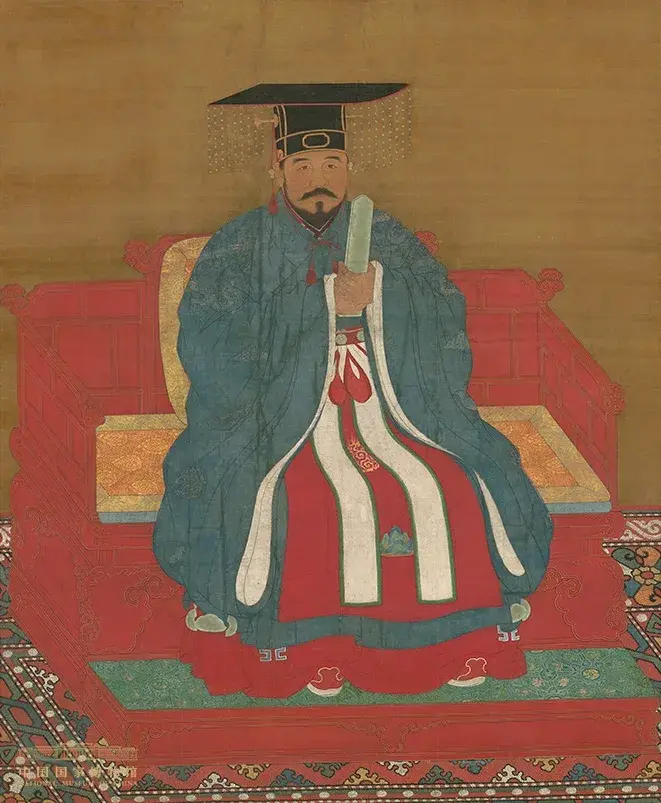
李文忠
Li Wenzhong (李文忠, 1339–1384), courtesy name Sibeng (思本) and childhood name Bao'er (保儿), was a native of Zhongli, Haozhou (modern Fengyang, Anhui). He was an illustrious founding general, supreme military strategist, and statesman of the Ming Dynasty, as well as the maternal nephew and adopted son of the dynastic founder Emperor Taizu (Zhu Yuanzhang). Having lost his mother in early youth amid the chaos of the late Yuan…
Li Wenzhong (李文忠, 1339–1384), courtesy name Sibeng (思本) and childhood name Bao'er (保儿), was a native of Zhongli, Haozhou (modern Fengyang, Anhui). He was an illustrious founding general, supreme military strategist, and statesman of the Ming Dynasty, as well as the maternal nephew and adopted son of the dynastic founder Emperor Taizu (Zhu Yuanzhang). Having lost his mother in early youth amid the chaos of the late Yuan rebellions, Li Wenzhong fled across eastern Huai alongside his father for several years before reaching Zhu Yuanzhang's encampment in Chuzhou. Embraced by his uncle, he was adopted as a son, granted the imperial surname Zhu, and trained rigorously in classical learning and martial arts. At age nineteen, he began commanding independent combat divisions, displaying tactical brilliance and fearless valor. He conquered and stabilized Eastern Zhejiang, repeatedly repulsing Zhang Shicheng's formidable hosts under Li Bosheng and crushing internal rebellions by Xie Zaixing, thereby establishing an impregnable southeastern strategic base for the nascent Ming realm. Following the proclamation of the Ming Dynasty in 1368 (the inaugural year of the Hongwu era), Li Wenzhong served as one of the preeminent commanders of the grand northern expeditions, campaigning across North China, the Central Plains, and the northwestern frontiers alongside Xu Da and Chang Yuchun. Upon Chang Yuchun's sudden death in 1369, Li Wenzhong took command of his armies as Vice General, advancing deep into the northern frontier to capture Kaiping, the Upper Capital of the Yuan. In 1370, he spearheaded an expeditionary force of one hundred thousand cavalry deep into the steppe to storm Yingchang, breaking the core of the Northern Yuan leadership. He captured Maidilibala, the eldest son and heir of Ayushiridara (Emperor Zhaozong of Yuan), along with empresses, concubines, and hundreds of high officials, securing three historic Song imperial jade seals and Yuan state treasures. In subsequent campaigns, he led grand armies into the Gobi Desert, subduing frontier tribes and projecting imperial might beyond the Great Wall. In 1370, he was elevated to Duke of Cao with the noble rank of Meritorious Official Assisting the Dynastic Destiny with Pure Loyalty and Exerted Valor. Beyond his peerless martial prowess, Li Wenzhong possessed profound erudition, refined literary culture, and dignified statesmanship, standing out as the foremost scholar-general among early Ming military nobility. Upon returning to the capital, he directed national military administration as Associate Commissioner-in-Chief of the Chief Military Commission and concurrently headed the National Guozijian Academy, reforming academic discipline and recruiting renowned Neo-Confucian scholars. He passed away from illness in 1384 at the age of forty-six. Emperor Taizu suspended court audiences in deep grief, personally offering sacrifices and posthumously creating him Prince of Qiyang with the posthumous name Wumin. He was enshrined in the Imperial Ancestral Temple and placed third in the Temple of Meritorious Officials (surpassed only by Xu Da and Chang Yuchun). Renowned for combining military mastery with civil culture and unyielding moral integrity, Li Wenzhong remains celebrated as one of the greatest founding generals in Chinese history.
Born in Zhongli, Haozhou; his mother was Zhu Yuanzhang's second elder sister, Grand Princess Caoguo Zhu Fonü; demonstrated early precocity.
The Red Turban Rebellion erupted; his mother died of illness, and his father Li Zhen carried Li Wenzhong through years of refugee flight across Eastern Huai.
Reached Zhu Yuanzhang's military camp in Chuzhou; overjoyed, Zhu Yuanzhang adopted him as a son, renaming him Zhu Wenzhong.
At age nineteen, led bodyguard units against Chizhou, crushing Zhao Pusheng's Tianwan fleet and dazzling the army.
Succeeded Hu Dahai in defending Jinhua and Yanzhou; crushed Xie Zaixing's rebellion and repulsed Zhang Shicheng's massive forces.
Formed battle lines with his back to the river at Xincheng, ambushing Li Bosheng's army and capturing tens of thousands.
Coordinated with Senior Grand General Xu Da to crush Zhang Shicheng, capturing Hangzhou and Shaoxing; restored his original surname Li.
Proclamation of the Ming; appointed Left Commissioner-in-Chief and served as Vice General under Xu Da to recover Shandong, Henan, and Shaanxi.
Chang Yuchun died suddenly at Liuhechuan; Li Wenzhong assumed command, stormed the Yuan Upper Capital Kaiping, and pursued enemies for hundreds of li.
Led one hundred thousand cavalry on a surprise raid on Yingchang, capturing the Northern Yuan heir and jade seals; created Duke of Cao.
Marched the eastern army into the deep Gobi Desert, clashing fiercely with Northern Yuan iron cavalry at the Tula River and Chenghai.
Led armies into Gansu to pacify Tibetan tribes at Taozhou, establishing military guards and agricultural colonies along the Hexi Corridor.
Directed the Chief Military Commission and headed the Guozijian; repeatedly remonstrated against harsh punishments, provoking imperial displeasure.
Died of severe illness in Nanjing at age forty-six; posthumously created Prince of Qiyang, named Wumin, and enshrined in the Imperial Ancestral Temple.
Li Wenzhong's father, Li Zhen, was an honest, diligent farmer from Zhongli, Haozhou, while his mother was the second elder sister of dynastic founder Zhu Yuanzhang (posthumously titled Grand Princess of Caoguo). In the twilight years of the Yuan Dynasty, government corruption and rampant natural disasters—droughts, locust plagues, and epidemics—swept across the Jianghuai basin, destroying countless peasant families. In the eleventh year of the Zhizheng era (1351), the Huainan Red Turban Rebellion erupted, plunging the realm into widespread warfare. When Li Wenzhong was twelve years old, his mother Zhu Fonü succumbed to illness and poverty. Amid roving bandits and brutal warlords, Li Zhen fled his hometown to protect his sole surviving child. The father and son wandered across various prefectures in eastern Huai, enduring pillaging by bandit bands and suffering bitter hunger and cold. Several times they stood on the verge of freezing or starving to death, but Li Zhen shielded young Li Wenzhong with his own body through every ordeal.
In the winter of the thirteenth year of the Zhizheng era (1353), fourteen-year-old Li Wenzhong and his father reached Chuzhou. By that time, Zhu Yuanzhang had emerged as a brilliant commander under Guo Zixing's insurgent banner, garrisoning Chuzhou with growing military renown. Learning of his brother-in-law's whereabouts, Li Zhen brought the ragged, emaciated boy to the Chuzhou army encampment. Having already lost his parents and elder brothers to starvation, Zhu Yuanzhang was overwhelmed with sorrow and joy upon beholding his surviving brother-in-law and nephew. Stroking Li Wenzhong's head, Zhu Yuanzhang wept bitterly: "My nephew is as precious as my own son!" On the spot, Zhu Yuanzhang adopted Li Wenzhong as his foster son, renaming him Zhu Wenzhong, and took him into the military headquarters to personally oversee his education and training.
Perceiving Li Wenzhong's extraordinary composure and sharp intellect, Zhu Yuanzhang placed immense hopes upon the youth. He engaged scholarly advisors in camp to instruct Li Wenzhong in the Zuo Zhuan, The Art of War, the Strategies of the Warring States, and core Confucian classics. Whenever Zhu Yuanzhang reviewed battle formations or inspected defense encampments, he kept Li Wenzhong by his side, imparting the nuances of camp layout, troop maneuvering, and psychological command. Endowed with natural brilliance and unyielding diligence, Li Wenzhong practiced horsemanship and archery by day and studied dynastic histories by candlelight at night, growing by age nineteen into an imposing, cultured young commander of exceptional tactical acumen.
In the eighteenth year of the Zhizheng era (1358), nineteen-year-old Li Wenzhong was appointed Commander of the Imperial Bodyguard, taking independent command of frontline troops. At that time, Zhao Pusheng, a ferocious general under Chen Youliang, occupied Chizhou and repeatedly harried Ming river defenses with land and naval units. Commissioned to reinforce Zhao Desheng, Li Wenzhong charged at the forefront of the assault, cutting through enemy battle lines to capture command banners. He decisively shattered Zhao Pusheng's naval ambush, slaying dozens of officers and capturing hundreds of prisoners. His calm tactical judgment and ferocious martial prowess stunned seasoned veterans across the army.
In the nineteenth year of the Zhizheng era (1359), seeking to secure the fertile revenues of Eastern Zhejiang, Zhu Yuanzhang dispatched Hu Dahai and Geng Zaicheng to open the region. Recognizing that Eastern Zhejiang was mountainous, infested with bandit strongholds, and bordered the rival warlord Zhang Shicheng, Zhu Yuanzhang entrusted this strategic theater to his nephew, appointing Li Wenzhong Associate Signatory of the Bureau of Military Affairs to command all regional forces from Yanzhou (modern Jiande, Zhejiang). When Zhang Shicheng dispatched his top commander Li Bosheng with tens of thousands of elite troops to besiege Zhuji, Li Wenzhong rushed to its relief. Observing that the enemy lines were overstretched and complacent, Li Wenzhong launched a daring night assault, sending elite commando units into the enemy rear to set fire to supply depots while personally leading armored cavalry in a frontal charge. Zhang Shicheng's army collapsed in panic, and Li Wenzhong pursued them for dozens of li, beheading over ten thousand enemy soldiers and securing Yanzhou.
In the twenty-second year of the Zhizheng era (1362), catastrophe struck Eastern Zhejiang. General Hu Dahai at Jinhua and Geng Zaicheng at Chuzhou were assassinated by treacherous defectors Jiang Ying and Li Youzhi, causing widespread panic across regional towns. Traitorous general Xie Zaixing then raised rebellion and allied with Zhang Shicheng, marching two hundred thousand troops along land and water routes to swallow Eastern Zhejiang. Amid the unfolding crisis, Li Wenzhong maintained serene composure. He quickly redeployed troops from Yanzhou to reassure the citizens of Jinhua, ruthlessly eliminated conspirators, and stabilized public and military morale.
In the twenty-fifth year of the Zhizheng era (1365), Zhang Shicheng's grand commander Li Bosheng gathered an overwhelming host of two hundred thousand troops to encircle Zhuquan (modern Zhuji, Zhejiang). With only a few thousand defenders, the citadel faced imminent fall. Li Wenzhong resolutely led sixteen thousand elite troops on a forced march to relieve the siege. Arriving at Xincheng, confronted with enemy numbers tenfold his own, Li Wenzhong deployed his army with their backs to the river, inspiring his men to fight with desperate abandon. Before the clash, he scouted enemy formations from high ground and sent hundreds of elite horsemen along hidden paths into the enemy rear, instructing them to ignite signal fires. As the main lines clashed in savage combat, flames rose behind the enemy camps, throwing their ranks into utter confusion. Li Wenzhong wielded a heavy broadsword, charging headlong into the fray. His troops fought with desperate ferocity, beheading over ten thousand foes, capturing hundreds of officers, and seizing countless weapons and mounts. This decisive triumph crushed Zhang Shicheng's military strength in Zhejiang, earning Li Wenzhong promotion to Manager of Governmental Affairs of the Zhejiang Branch Secretariat.
In the autumn of the twenty-sixth year of the Zhizheng era (1366), Zhu Yuanzhang initiated the grand campaign against Zhang Shicheng's capital of Pingjiang. Li Wenzhong directed the southeastern army from Hangzhou, capturing Yuhang, Hangzhou, and Shaoxing, and accepting the surrender of Pan Yuanming along with over one hundred thousand troops. Following this monumental conquest, Zhu Yuanzhang issued an imperial decree permitting Li Wenzhong to restore his birth surname, officially naming him Li Wenzhong.
On the fourth day of the first month of the inaugural year of the Hongwu era (1368), Zhu Yuanzhang ascended the throne in Nanjing, establishing the Ming Dynasty. The court appointed Li Wenzhong Left Commissioner-in-Chief of the Chief Military Commission and Grand Master for Splendid Happiness. In the autumn, Emperor Taizu launched a grand northern expedition with two hundred and fifty thousand troops led by Senior Grand General Xu Da and Vice General Chang Yuchun. Li Wenzhong was granted the seal of Vice General, marching through Shandong and Henan to secure the supply routes of the grand army and eliminate lingering Yuan detachments.
In the spring of the second year of the Hongwu era (1369), Li Wenzhong led an expeditionary corps into Shaanxi, capturing multiple prefectures before joining Xu Da at Fengxiang. In the sixth month, Chang Yuchun and Li Wenzhong led troops into the steppe to storm Kaiping, the Upper Capital of the Yuan (modern Zhenglan Banner, Inner Mongolia), forcing Emperor Huizong of Yuan to flee northward to Yingchang (near Lake Dalinor, Keshiketeng Banner, Inner Mongolia). In the seventh month, while the army was returning, legendary general Chang Yuchun suddenly fell violently ill and died at Liuhechuan. The unexpected tragedy sent shockwaves through the ranks. In deep grief, Emperor Taizu ordered Li Wenzhong to assume command of Chang Yuchun's army and advance deeper into the northern frontier as Vice General.
Assuming command of General Chang's forces, Li Wenzhong enforced strict military discipline and restored full morale. In the first month of the third year of the Hongwu era (1370), Emperor Taizu launched a two-pronged offensive to eliminate the Northern Yuan court: the western column under Xu Da struck at Dingxi against Wang Baobao (K\u00f6k\u00f6 Tem\u00fcr), while the eastern column of one hundred thousand troops under Li Wenzhong pushed out of Juyong Pass directly toward Yingchang.
Li Wenzhong advanced across frozen wastelands amid howling blizzards. Crossing Yehu Ridge and Chahan Na'or, his vanguard reached Kaiping. The surrendered Yuan general Luotuo Zhiyuan had assembled over ten thousand rebels at mountain strongholds, but Li Wenzhong laid a cavalry ambush, obliterating the hostile host. Driving hundreds of li deeper into the arid desert, Li Wenzhong crushed various Mongol divisions at Mount Luotuo. Marching day and night with astonishing speed, his army descended upon Yingchang like divine warriors, encircling the northern capital before the defenders realized their approach.
Emperor Huizong of Yuan had recently died of illness in Yingchang, and his heir Ayushiridara (Emperor Zhaozong) had just ascended the throne. Li Wenzhong ordered scaling ladders and siege artillery deployed on all four flanks, breaching the outer fortifications within a single day. Terror-stricken, Emperor Zhaozong abandoned the city and fled into the vast desert sands with only a few dozen horsemen. Li Wenzhong took possession of Yingchang, capturing Zhaozong's eldest son and heir Maidilibala, along with empresses, royal concubines, imperial princes, and hundreds of high officials. He captured three historic imperial jade seals of the Song Dynasty, along with the gold and jade imperial investiture tablets of the Yuan Dynasty and tens of thousands of camels and horses.
Not content with the capture of the capital, Li Wenzhong personally led five thousand elite horsemen pursuing the retreating remnants hundreds of li further north to Northern Qingzhou (around modern Linxi, Inner Mongolia), inflicting crushing casualties on Mongol relief forces and shaking the northern steppe. Returning in triumph in the eleventh month, Emperor Taizu received him at the Fengtian Hall in Nanjing with imperial banquets, personally pouring wine for his nephew and praising his exploits as "sweeping across the vast Gobi and restoring the ancient realm." Emperor Taizu enfeoffed him as Duke of Cao, granting him the title of Meritorious Official Assisting the Dynastic Destiny with Pure Loyalty and Exerted Valor, Specially Advanced Grand Master for Splendid Happiness, Pillar of State of the Right, and Associate Commissioner-in-Chief of the Chief Military Commission, with an annual stipend of three thousand piculs and an iron exemption certificate.
In the first month of the fifth year of the Hongwu era (1372), Emperor Taizu mobilized one hundred and fifty thousand troops in three columns for another campaign into the deep Gobi Desert. Li Wenzhong served as Vice General of the Left leading fifty thousand troops through Juyong Pass toward the Tula River (in modern Mongolia), while Xu Da led the center column toward Karakorum and Feng Sheng took the western route past Yumen Pass.
Driving over a thousand li into the northern wasteland, Li Wenzhong encountered tens of thousands of veteran Mongol horsemen led by Northern Yuan grand minister Manzi Harazhang along the Tula River. Harazhang formed defensive circles against high clay mounds. Li Wenzhong ordered an aggressive charge, personally wielding a lance into the melee. When his warhorse was struck down by arrows, Li Wenzhong continued fighting on foot with a broadsword. His guards fought fiercely to protect him and provided a fresh mount. Rallied by his courage, the Ming cavalry routed Harazhang's army, pursuing the broken enemy to Chenghai (southeast of Lake Khar-Us, modern Mongolia). The main Mongol host dispersed into the rugged northern mountains. Faced with severed supply lines across thousands of miles of arid desert and a sudden blizzard, Li Wenzhong maintained strict order and led his entire army back safely within the Great Wall. Although the enemy ruler escaped, Li Wenzhong's ability to crush elite enemy cavalry and withdraw an intact army through extreme desert conditions demonstrated masterly control over grand-scale warfare.
From 1373 to 1377, Northern Yuan raiders frequently harassed Datong, Xuanfu, and the Hexi Corridor. Li Wenzhong was dispatched repeatedly to inspect the northern frontiers, defeating Mongol commanders near Datong and establishing beacon towers and defensive fortifications outside Taiyuan and Yanmen Pass. In 1377, Tibetan tribes in Taozhou (modern Lintan, Gansu) rebelled, cutting off trade routes between the Central Plains and the Western Regions. Li Wenzhong and General Mu Ying led an expeditionary force westward, marching with lightning speed to pacify the tribes, eliminating rebellious leaders and establishing military guards and agricultural colonies at Taozhou, permanently stabilizing the strategic buffer zone between Gansu and the Tibetan Plateau.
Li Wenzhong was celebrated not only for matchless military feats, but also for supreme literary culture and administrative wisdom. Among the founding generals of the Ming, he stood alone in possessing the qualities required to serve as both general and prime minister. Possessing dignified elegance and profound magnanimity, he had studied dynastic histories and literary classics from youth. In military encampments, whenever combat paused, he invariably invited Confucian scholars to lecture on moral statecraft and compose poetry.
In the eleventh year of the Hongwu era (1378), prior to the restructuring of the Chief Military Commission into the Five Chief Military Commissions, Emperor Taizu placed Li Wenzhong in charge of the entire Chief Military Commission, directing national military registers, grain stipends, and military examinations. Li Wenzhong exercised strict discipline, auditing archives and standardizing the guard system. Most remarkably, recognizing Li Wenzhong's deep reverence for classical scholarship, Emperor Taizu appointed him Director of the Guozijian, placing him at the helm of the supreme national academy.
It was extraordinarily rare in Chinese history for a grand founding general to direct the highest civil academy of the realm. Administering the Guozijian, Li Wenzhong displayed none of the uncouth arrogance of typical military commanders. Instead, he treated scholars with reverence, hiring renowned Neo-Confucian masters from Jiangnan as academic doctors, overhauling academic regulations, and enforcing rigorous examinations. For impoverished students, Li Wenzhong frequently provided financial assistance from his own official salary; when encountering talented scholars, he warmly recommended them to Emperor Taizu for official appointments. Under his meticulous administration, the Guozijian flourished with academic vitality, earning Li Wenzhong universal acclaim from civil scholar-officials as "a master scholar-general of the age."
As the early Ming court evolved, Emperor Taizu grew increasingly suspicious and severe in his later years, employing draconian punishments and expanding secret tribunals. Following the eruption of the Hu Weiyong treason case in 1380, the emperor launched extensive purges, executing tens of thousands of meritorious generals and civil officials. Watching brother-officers and innocent scholars facing wholesale extermination caused Li Wenzhong immense grief and anxiety. Driven by pure loyalty to his uncle and an unyielding sense of responsibility toward the realm, Li Wenzhong bravely sought private audiences to admonish the throne, earnestly pleading with Zhu Yuanzhang to govern with benevolent mercy, exercise restraint in judicial executions, and abolish tortures by imperial secret police to reassure the empire.
Infuriated that his own foster son and nephew dared to challenge his imperial penal methods, Emperor Taizu accused Li Wenzhong of forming illicit factions with scholar-officials and harboring treacherous ambitions. The emperor went so far as to contemplate stripping him of nobility and throwing him into the imperial dungeon. Learning of the crisis, Empress Ma rushed to intervene, weeping before Zhu Yuanzhang: "Wenzhong is the sole surviving bloodline of your second elder sister! I still remember when he arrived in rags at Chuzhou; how can Your Majesty bear to harm your own nephew!" Zhu Yuanzhang relented and spared his life, but his suspicion toward Li Wenzhong deepened. He relieved Li Wenzhong of his positions in the Chief Military Commission and Guozijian, ordering him confined to his residence.
Living in isolated confinement, Li Wenzhong suffered from deep sorrow and anxiety, his health deteriorating rapidly. In the winter of the sixteenth year of the Hongwu era (1383), he contracted a severe internal illness and took to his bed. Zhu Yuanzhang dispatched Marquis of Huai'an Hua Zhong to lead imperial physicians to attend to him. However, after consuming the prescribed decoctions, Li Wenzhong's condition worsened dramatically with severe edema.
On the fifth day of the third lunar month in the seventeenth year of the Hongwu era (1384), founding hero Li Wenzhong closed his eyes forever in his Nanjing residence, passing away at the young age of forty-six.
When news of Li Wenzhong's passing reached the palace, Emperor Taizu was overwhelmed with grief, weeping bitterly, suspending court audiences for three days, and personally attending the memorial services. Suspecting that the imperial physicians had poisoned his nephew, Zhu Yuanzhang flew into a violent rage, executing the attending physicians along with their families and stripping Hua Zhong of his marquisate before exiling him. Emperor Taizu posthumously elevated Li Wenzhong to Prince of Qiyang with the posthumous name Wumin, granting a golden coffin and burial on the northern slopes of Mount Zhong in Nanjing (modern Jiangwangmiao, Xuanwu District). In 1393, the emperor decreed that Li Wenzhong be enshrined in the Imperial Ancestral Temple, his portrait displayed third in the Temple of Meritorious Officials, directly behind Xu Da and Chang Yuchun. His eldest son Li Jinglong inherited the noble title of Duke of Cao.
From 1359 to 1366, Li Wenzhong governed Eastern Zhejiang independently for seven years. Confronting repeated invasions by Zhang Shicheng's grand hosts and dangerous insurrections by treacherous defectors, Li Wenzhong formed battle lines with his back to the river at Xincheng, executing an ingenious ambush with sixteen thousand troops to rout Zhang Shicheng's main army of two hundred thousand.
This brilliant campaign shattered Zhang Shicheng's strategic ambition to push westward, preserved the vital tax and agricultural base of Eastern Zhejiang, and established an unshakeable southeastern foundation for Zhu Yuanzhang to eliminate rival warlords Chen Youliang and Zhang Shicheng.
In the third year of the Hongwu era (1370), Li Wenzhong led an army of one hundred thousand cavalry across a thousand li of frozen desert in a lightning strike against Yingchang, the temporary capital of the Northern Yuan. He stormed the outer ramparts within a single day, forcing Emperor Zhaozong to flee into the desert sands on a solitary mount.
This triumph resulted in the capture of Maidilibala, the eldest son and heir of Emperor Zhaozong, along with empresses, concubines, and hundreds of high officials. Securing three historic Song imperial jade seals and Yuan state tablets, the campaign dealt a crippling blow to the dynastic legitimacy and leadership of the Northern Yuan, ranking as one of the greatest strategic victories in early Ming history.
Between 1370 and 1377, Li Wenzhong repeatedly led tens of thousands of elite cavalry deep into the Gobi Desert to hunt down Northern Yuan forces. In fierce clashes along the Tula River and Chenghai, he fought on foot with a broadsword when his mount was felled, repulsing Manzi Harazhang's veteran divisions.
Subsequently inspecting defense works across Datong, Xuanfu, and Taiyuan and subduing rebellious Tibetan tribes in Taozhou, he established an integrated network of garrison guards, beacon towers, and agricultural settlements, forging a robust defensive shield stretching thousands of li across the northern border.
Li Wenzhong directed both the Chief Military Commission and the Guozijian, an unprecedented achievement among founding military figures of the early Ming. Revering classical scholarship, he recruited Neo-Confucian masters, enforced rigorous academic regulations, supported destitute scholars, and standardized national military registers.
His unyielding moral integrity was demonstrated when he risked his life to remonstrate against harsh penal purges, earning enduring acclaim as the finest model of a scholar-general who excelled in both civil administration and military strategy.
FIGURES ASSOCIATED WITH THIS DYNASTY