Birth in Jianpu
Born into an agrarian scholarly household in Jianpu, displaying early contemplative temperament and moral rectitude.
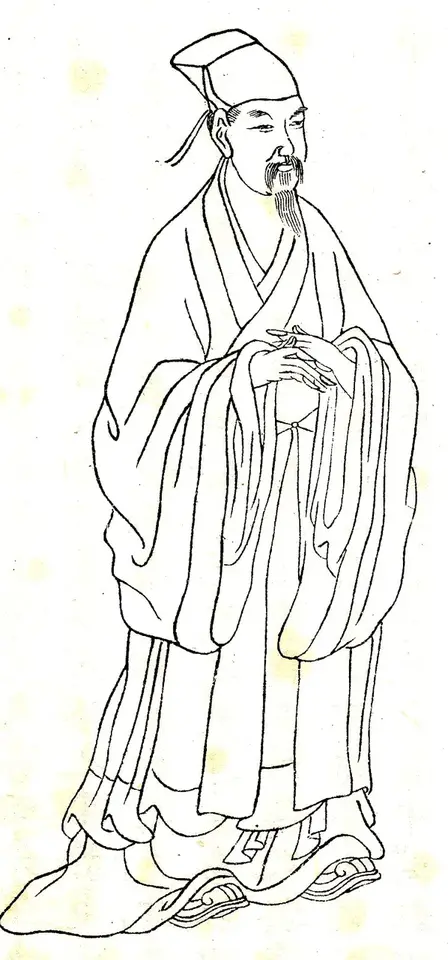
李侗
Li Tong (李侗, 1093–1163), courtesy name Yuanzhong and styled Master Yanping, was an eminent Chinese philosopher, educator, and Neo-Confucian thinker of the Southern Song Dynasty. Hailing from Jianpu in Nanjian Prefecture (modern Yanping District, Nanping, Fujian), he was a third-generation inheritor of the Cheng brothers' (Cheng Hao and Cheng Yi) school of Neo-Confucianism, studying under Luo Congyan, who had been a foremost…
Li Tong (李侗, 1093–1163), courtesy name Yuanzhong and styled Master Yanping, was an eminent Chinese philosopher, educator, and Neo-Confucian thinker of the Southern Song Dynasty. Hailing from Jianpu in Nanjian Prefecture (modern Yanping District, Nanping, Fujian), he was a third-generation inheritor of the Cheng brothers' (Cheng Hao and Cheng Yi) school of Neo-Confucianism, studying under Luo Congyan, who had been a foremost disciple of Yang Shi. Occupying a pivotal crossroads in the transmission of the "Southern Tradition of the Way" (Daonan), Li Tong was the primary mentor to Zhu Xi, the ultimate synthesist of Song Neo-Confucianism. Throughout his lifetime, Li Tong consistently shunned political ambition and refused official appointments, living in rustic seclusion in the mountains of Jianpu for over four decades. He cultivated an agrarian existence, devoting himself entirely to ethical contemplation. Li formulated the central meditative praxis of "silent sitting and purifying the mind" (mozuo chengxin), urging scholars to introspectively discern the pure moral consciousness "before the arousal of pleasure, anger, sorrow, or joy" (weifa). By guiding the young Zhu Xi away from Chan Buddhist mysticism toward authentic Confucian daily praxis, Li provided the essential foundational pillars for the emergence of the Min School of Neo-Confucianism. He was posthumously granted the title Baron of Jianpu and enshrined in the Imperial Confucian Temple.
Born into an agrarian scholarly household in Jianpu, displaying early contemplative temperament and moral rectitude.
Traveled on foot at age twenty-four to study under Luo Congyan, mastering the classical doctrines of the Cheng brothers.
Retired to rustic seclusion in the mountains of Jianpu following the Jingkang Incident, resolving never to enter civil office.
Steadfastly declined repeated recommendations from local and provincial magistrates to serve as imperial instructor.
Welcomed the twenty-four-year-old Zhu Xi, counseling him to discard Buddhist abstractions and pursue classical Confucian self-cultivation.
Guided Zhu Xi during extended visits in Yanping on the doctrine of "Principle is One, but its Manifestations are Diverse" (liyi fenshu).
Maintained extensive philosophical correspondence with Zhu Xi, defining the ethical equilibrium of the unaroused mind (weifa).
Passed away peacefully in Jianpu at age seventy-one; Zhu Xi presided over his funeral and compiled Yanping Dawen, and he was later enfeoffed as Baron of Jianpu and enshrined in the Confucian Temple.
Li Tong was born in the eighth year of the Yuanyou era (1093) in Jianpu County, Nanjian Prefecture. His family had long maintained traditions of agricultural labor and Confucian classical study. From his youth, Li displayed a quiet, solemn demeanor, disdaining superficial ornament and dedicating his thoughts to ancient ethical principles.
In 1116, at age twenty-four, Li learned that Luo Congyan (courtesy name Zhongsu, known as Master Yuzhang) had established a mountain retreat in Nanping to lecture on Confucian philosophy. Luo was a primary disciple of Yang Shi (Master Guishan), who in turn had brought the Cheng brothers' teachings from Henan into the southern provinces.
Carrying his books, Li Tong walked hundreds of miles to present himself as a disciple. Luo Congyan recognized Li's contemplative depth and sincerity, admitting him to his inner circle and systematically instructing him in the Book of Changes, the Spring and Autumn Annals, the Analects, the Mencius, and the Doctrine of the Mean, grounding him firmly in the Luoyang intellectual tradition.
During his apprenticeship with Luo Congyan, Li Tong concentrated on the practical cultivation of moral nature rather than mechanical philological drills. While contemporary scholars pursued literary style to attain success in imperial examinations, Li concentrated upon inner tranquility and ethical self-mastery.
Luo Congyan was fond of quiet meditation, and Li Tong likewise practiced disciplined sitting in his private quarters. Luo instructed him in a pivotal spiritual exercise: "In quietude, observe what constitutes equilibrium before the emotions of pleasure, anger, sorrow, and joy are aroused, and discern what ethical atmospheric condition prevails."
Following his master's instructions, Li adopted the practice of "silent sitting and purifying the mind" (mozuo chengxin). Daily he sat upright in serene contemplation, banishing selfish desires and external distractions to observe the pure, unclouded mind before the stirrings of partial passions. Through years of sustained inner cultivation, Li achieved profound spiritual clarity, comprehending the fundamental harmony between the human mind and cosmic principle.
Having attained intellectual maturity, Li Tong resolved to live a life of moral self-sufficiency, remaining detached from fame and worldly prestige. Following the collapse of the Northern Song and the court's relocation to Hangzhou, the imperial government issued frequent appeals to recruit virtuous scholars from the mountains.
Provincial surveillance commissioners and prefectural magistrates repeatedly visited Li's residence, offering nominations for imperial educational and civil posts. Li consistently declined every offer, maintaining a lifelong commitment to private scholarship without holding office.
Li constructed a modest thatch retreat named the Shuiyun Hermitage amidst bamboo groves and mountain streams in the countryside of Jianpu. He resided there for over forty years, farming the fields to sustain his daily sustenance. Wearing coarse linen garments and eating simple grain, he maintained joyful composure and spiritual serenity. He restricted social visits to kindred ethical thinkers, spending his days reading classics and refining his philosophical understanding.
In 1153, the twenty-four-year-old Zhu Xi, recently appointed Subprefectural Sheriff of Tong'an, fulfilled his late father Zhu Song's dying request by traveling on foot to visit Li Tong at Shuiyun Hermitage.
During his formative youth, Zhu Xi had been deeply fascinated by Chan Buddhism and Daoist metaphysics, causing his brilliant intellect to drift toward mystical abstractions. Recognizing Zhu's exceptional intellect alongside his perilous deviations, Li Tong engaged the young scholar in rigorous dialogue.
Li demonstrated that while Buddhist doctrines appeared lofty and transcendental, they severed moral relationships and abandoned daily social obligations. He admonished Zhu Xi to ground his scholarship in ordinary daily conduct (riyong chu xia gongfu) and guided him in practicing "silent sitting" to intuit the unaroused state of ethical balance. Profoundly moved by Li's insights, Zhu Xi renounced Buddhist metaphysics, committing his life to the transmission of Confucian orthodoxy under Li's tutelage.
Over the ensuing decade, Zhu Xi maintained frequent correspondence and personal visits with Li Tong. Li patiently resolved Zhu's philosophical inquiries concerning the investigation of things (gewu) and the balance between dynamic praxis and tranquil introspection, laying the foundational framework for Zhu Xi's subsequent synthesis of Neo-Confucianism.
In the tenth month of 1163 (the first year of the Longxing era), Li Tong fell ill at his home in Jianpu. In his final hours, he maintained complete emotional composure and dignity, bidding farewell to his assembled disciples and exhorting them to adhere to moral self-cultivation. He passed away peacefully at age seventy-one.
Upon receiving news of his teacher's death, Zhu Xi traveled to Jianpu in deep mourning to supervise the funeral arrangements and author the commemorative inscriptions. Zhu compiled their philosophical exchanges and correspondence into the celebrated treatise Yanping Dawen (Questions and Answers of Master Yanping).
In 1241, Emperor Lizong of Song honored the lineage of Neo-Confucian orthodoxy by posthumously conferring upon Li Tong the nobility of Baron of Jianpu (Jianpu Bo) and granting his spirit tablet enshrinement in the Imperial Confucian Temple, establishing his permanent place among the ancient sages.
Li Tong's foremost conceptual contribution to Song Neo-Confucianism was the development and systematic practice of "silent sitting and purifying the mind" (mozuo chengxin).
Li posited that universal principle resided not merely in external phenomena, but within the pristine, uncorrupted consciousness of the human mind. By sitting quietly and clearing personal biases and material desires, scholars could introspectively observe the pure moral mind in its unaroused state (weifa).
This introspective method enabled scholars to perceive the fundamental identity between mind and cosmic principle, avoiding the pitfalls of sterile scholastic textualism and providing Zhu Xi with the foundational meditative technique of "dwelling in reverent seriousness" (jujing).
Inheriting the philosophical proposition of "Principle is One, but its Manifestations are Diverse" (liyi fenshu) from the Cheng brothers, Li Tong enriched it with practical ethical dimensions.
Li maintained that while the creative principle of Heaven and Earth was indivisibly unified, its concrete expressions in social relationships—between ruler and minister, father and son, elder and younger—carried specific, unalterable moral obligations.
He strongly opposed mystical enlightenment divorced from familial duties, insisting that scholars must investigate principle within daily moral actions step by step, reconciling transcendent unity with concrete ethical practice.
Li Tong served as the essential generational conduit transmitting Northern Song Cheng-Zhu philosophy into the southern regions. Originating with the Cheng brothers in Luoyang, the doctrine passed through Yang Shi in Fujian, was inherited by Luo Congyan, and was preserved in its purest form by Li Tong during his four decades of seclusion.
Li's crowning historical achievement lay in guiding and forming Zhu Xi. By retrieving Zhu Xi from Buddhist speculative metaphysics and directing him toward classical Confucian self-examination, Li ensured that the philosophical traditions of Zhou Dunyi, Zhang Zai, and the Cheng brothers culminated in Zhu Xi's comprehensive philosophical system, elevating the Min School to become the reigning state orthodoxy of imperial China.
In the preface and eulogies to Yanping Dawen, Zhu Xi remembered his master's moral stature: "The Master possessed broad moral generosity and tranquil dignity. Viewed from afar, he was awe-inspiring; approached closely, he was warm and benevolent. Listening to his words, one felt in the presence of the authentic disciples of the ancient sages. Through silent sitting and purifying the mind, he enabled all scholars to comprehend the true path of self-cultivation."
In the Records of Song and Yuan Confucians (Song Yuan Xue'an), Qing scholar Huang Zongxi affirmed Li's central historical role: "The three masters—Yang Shi, Luo Congyan, and Li Tong—represent the authentic orthodox transmission of Luoyang learning to the south. Master Yanping withdrew into the mountain forests, finding complete self-sufficiency in examining the unaroused state and mentoring Master Zhu, thereby causing the Southern Tradition of the Way to illuminate the world."
Quan Zuwang similarly praised him: "Master Li of Yanping was pure to the utmost degree, entirely free from pretense or artificiality, truly an immaculate Confucian scholar of the Cheng lineage." Modern scholarship recognizes Li Tong as an indispensable catalyst whose steadfast, solitary contemplation over four decades laid the intellectual foundation for the global flourishing of Zhu Xi's philosophy.
FIGURES ASSOCIATED WITH THIS DYNASTY