Born | Born at Xiagui in Hua Prefecture, present-day Weinan, Shaanxi.
961 CE–1023 CE
Crown Prince
Kou Zhun
寇准
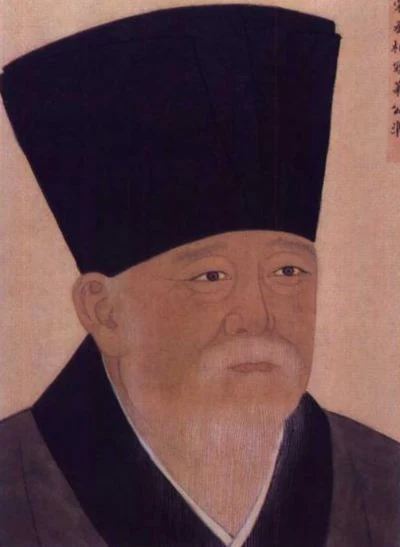
Kou Zhun (961–1023), courtesy name Pingzhong, was a native of Xiagui in Hua Prefecture, present-day Weinan in Shaanxi, and a leading chief minister of the Northern Song. Together with Bai Juyi and Zhang Renyuan he was later called one of the “Three Worthies of Weinan,” although the Chinese entity notes that this designation is a later local-cultural construction not found in the standard histories. Kou Zhun was renowned for…
961 CE–1023 CENorthern Song
PROFILE
Kou Zhun (961–1023), courtesy name Pingzhong, was a native of Xiagui in Hua Prefecture, present-day Weinan in Shaanxi, and a leading chief minister of the Northern Song. Together with Bai Juyi and Zhang Renyuan he was later called one of the “Three Worthies of Weinan,” although the Chinese entity notes that this designation is a later local-cultural construction not found in the standard histories. Kou Zhun was renowned for directness and bold remonstrance, and Emperor Taizong of Song compared him to Wei Zheng. In 1004, the first year of Jingde, a Liao army advanced south. Kou Zhun rejected proposals to move the capital, urged Emperor Zhenzong of Song to take the field personally, and helped bring about the Chanyuan Treaty, after which Song and Liao maintained peace for roughly a century. His uncompromising personality also brought repeated attacks from political enemies and several rises and falls in office. He died in exile at Leizhou in 1023, the first year of Tiansheng. Under Emperor Renzong of Song, his titles were restored; he was posthumously made Secretariat Director and Duke of Lai and given the posthumous name Zhongmin.
- Other name
- Duke of Lai
- Courtesy name
- Pingzhong
- Period
- Northern Song
- Date of Birth
- 961
- Date of Death
- October 24 1023
- Dynasty / polity
- Northern Song
- Identity
- Crown Prince
- Ethnicity / people
- Not recorded in historical sources
- Native place
- Xiagui, Hua Prefecture (present-day Weinan, Shaanxi)
- Place of birth
- Xiagui, Hua Prefecture (present-day Weinan, Shaanxi)
- Place of death
- Not recorded in historical sources
- Highest office
- See Biography and Major Activities
- Principal achievement
- Upright statesman and leading chief minister; strongly urged Emperor Zhenzong to campaign personally at Chanyuan and helped bring about peace; later repeatedly demoted.
LIFE TIMELINE
Age twenty | Passed the jinshi examination, appointed Court of Judicial Review evaluator and magistrate of Badong County in Gui Prefecture.
Age twenty-three | Magistrate of Cheng'an County, Daming Prefecture.
Age twenty-four | Promoted to Palace Assistant and concurrent administrator of Yun Prefecture.
Age twenty-eight | Summoned by Emperor Taizong, tested on the “Essay on Defending against the Rong,” appointed Right Remonstrator, staff member of the Historiography Institute, and fiscal assistant in the Three Financial Commissions.
Age twenty-nine | Promoted to Director in the Ministry of Revenue and Hanlin academician attached to the Bureau of Military Affairs; Emperor Taizong compared him to Wei Zheng.
Age thirty-one | Appointed Left Grand Master of Remonstrance and Deputy Military Affairs Commissioner.
Age thirty-three | Removed from the Bureau of Military Affairs and sent out to govern Qingzhou.
Age thirty-four | Recalled and appointed Assistant Grand Councilor.
Age thirty-six | Removed as Assistant Grand Councilor and sent to govern Dengzhou.
Age forty-two | Acting administrator of Kaifeng Prefecture.
Age forty-four | Appointed chief minister together with Bi Shi'an; strongly urged Emperor Zhenzong to campaign personally and helped bring about the Chanyuan Treaty.
Age forty-six | Removed as chief minister and sent to govern Shanzhou.
Age fifty-four | Appointed Military Affairs Commissioner and Participant in Determining Government Matters.
Age fifty-five | Removed as Military Affairs Commissioner and appointed administrator of Henan Prefecture concurrently Western Capital Regent.
Age fifty-nine | Appointed Vice Director of the Secretariat concurrently Minister of Personnel, Participant in Determining Government Matters, and Grand Academician of Jixian Hall.
Age sixty | A secret plan for the crown prince to supervise government was exposed; Kou was removed as chief minister, enfeoffed Duke of Lai, demoted to govern Xiangzhou, and then further demoted to Army Major at Daozhou.
Age sixty-two | Further demoted to Revenue Manager of Leizhou.
Age sixty-three | Appointed Army Major of Hengzhou but died at Leizhou before he could depart.
Posthumously restored as Kaifu Yitong Sansi and Grand Preceptor to the Crown Prince | Posthumously restored as Kaifu Yitong Sansi and Grand Preceptor to the Crown Prince; posthumously made Secretariat Director and restored as Duke of Lai.
Given the posthumous name Zhongmin. | Given the posthumous name Zhongmin.
BIOGRAPHY
Biography
Family Background and Early Years
Kou Zhun was born in the seventh month of 961, the second year of Jianlong, at Xiagui in Hua Prefecture. His great-grandfather Kou Bin, grandfather Kou Yanliang, and father Kou Xiang were all posthumously enfeoffed as dukes because of Kou Zhun's later prominence. He was regarded as intelligent and studious from childhood. A tradition says that at age five he could compose poetry and wrote a quatrain on Mount Hua declaring that only Heaven stood above the mountain and no other peak equaled it. The poem appears in anecdotal works such as Guolao Tanyuan and is not necessarily reliable history, but it reflects his reputation for precocity.
In 980, the fifth year of Taiping Xingguo, Kou Zhun passed the jinshi examination at age twenty. He became an evaluator in the Court of Judicial Review and magistrate of Badong County in Gui Prefecture. His administrative ability began to attract notice there. In 983 he became magistrate of Cheng'an County in Daming Prefecture. When taxes and labor services came due, he reportedly avoided issuing repeated formal notices and instead posted village names at the county gate; the people did not dare miss the deadline. The Chinese entity presents this as characteristic of his direct administrative style.
Repeated Rise and Fall under Emperor Taizong
In 984 Kou Zhun was promoted to Palace Assistant and concurrent administrator of Yun Prefecture. In the fifth month of 988 Emperor Taizong summoned him and tested him with an essay on frontier defense. Satisfied with the result, the emperor appointed him Right Remonstrator, staff member of the Historiography Institute, fiscal assistant in the Three Financial Commissions, and later salt-and-iron adjudicator. Kou spoke forcefully about administrative advantages and disadvantages, increasing the emperor's regard. The History of Song records that Taizong asked his chief ministers what office should be given to Kou Zhun. When they proposed assistant in Kaifeng Prefecture, Taizong rejected it as too low; after they suggested Hanlin academician attached to the Bureau of Military Affairs, he considered the matter at length and agreed, revealing his high expectations.
In the seventh month of 989 Kou was promoted to Director in the Ministry of Revenue and Hanlin academician attached to the Bureau of Military Affairs, received gold and purple insignia, and was assigned to personnel selection. During one palace discussion, Emperor Taizong rose angrily when their views conflicted. Kou Zhun reportedly grasped the emperor's robe and made him sit again until the issue had been decided. Taizong praised this boldness and said that obtaining Kou Zhun was like Emperor Wen of Tang obtaining Wei Zheng. The History of Song places the incident in the second year of Duangong and treats it as a high point in imperial trust.
In 991 Kou was appointed Left Grand Master of Remonstrance and Deputy Military Affairs Commissioner, soon becoming associate administrator of the Bureau of Military Affairs. He repeatedly argued before the emperor with Zhang Xun, head of the bureau. After an incident in which a madman greeted Zhang's entourage shouting “long live,” Zhang encouraged Wang Bin to submit a separate accusation. Zhang and Kou attacked one another, angering the emperor. Zhang was demoted, and Kou was also removed from the bureau in the sixth month of 993 and sent to Qingzhou in the tenth month. Taizong reportedly missed him and asked attendants whether Kou was happy in Qingzhou. They replied that while the emperor did not forget Kou, they heard Kou spent his days drinking and did not know whether he remembered the emperor. Taizong remained silent.
In the ninth month of 994 Kou was recalled and appointed Assistant Grand Councilor. During a severe drought Taizong asked about failures of government. Others blamed natural cycles, but Kou cited the Hongfan and argued that drought reflected injustice in punishment. The emperor became angry and withdrew, but soon summoned Kou to explain. Kou requested that senior ministers attend and then contrasted the cases of Zu Ji and Wang Huai: Zu, with a smaller amount of corruption, had been executed, while Wang Huai, younger brother of Assistant Grand Councilor Wang Mian, had misappropriated a very large amount of state funds yet was merely beaten and restored to office. Taizong rebuked Wang Mian and recognized Kou's usefulness. In the seventh month of 996, however, Kou was again removed as Assistant Grand Councilor and sent to govern Dengzhou.
The Chanyuan Treaty and the Chancellorship
During the Xianping era Kou Zhun successively governed Heyang, Tongzhou, Fengxiang Prefecture, and acted in charge of Kaifeng Prefecture. In the eighth month of 1004, the first year of Jingde, he and Minister of Personnel Bi Shi'an were appointed chief ministers; Kou received the title Grand Academician of Jixian Hall and Participant in Determining Government Matters. In the ninth month, Emperor Shengzong of Liao and Empress Dowager Xiao personally led a large army south, surrounding Yingzhou and attacking Qizhou. Hebei was in crisis and the court was alarmed. Assistant Grand Councilor Wang Qinruo proposed moving the court to Shengzhou, present-day Nanjing, while Chen Yaosou of the Bureau of Military Affairs proposed moving to Yizhou, present-day Chengdu. Kou Zhun strongly rejected both proposals, arguing that those who gave such advice deserved punishment, that the emperor possessed military authority and loyal generals, and that a personal imperial expedition would force the enemy to retreat; abandoning the ancestral temples for distant Chu or Shu would be disastrous.
When Emperor Zhenzong reached Chanzhou, present-day Puyang in Henan, Kou urged him to ascend the northern gate tower to supervise the army. The soldiers shouted “long live” so loudly that the sound carried for many li, raising morale. The Song officer Zhang Huan killed the Liao commander Talan with a concealed crossbow shot, further damaging Liao morale. Negotiations followed and produced the Chanyuan Treaty, under which Song and Liao recognized a fraternal interstate relationship and Song annually transferred one hundred thousand taels of silver and two hundred thousand bolts of silk to Liao. The Chinese entity identifies the treaty, which sustained peace for about a century, as Kou Zhun's greatest historical achievement.
In 1005 Kou received additional offices as Vice Director of the Secretariat and Minister of Works. As chief minister he lived lavishly and especially enjoyed night banquets and heavy drinking, keeping candles burning through the night even in his bedchamber. Emperor Zhenzong treated him generously, arousing Wang Qinruo's jealousy. Wang attacked the treaty as a humiliating agreement made beneath the city walls and described Kou's decision to bring the emperor forward as a dangerous “single throw.” In the second month of 1006 Kou was removed as chief minister, promoted nominally to Minister of Justice, and sent to govern Shanzhou.
Later Career, Demotions, and Exile
Over the next decade Kou moved between provincial and central posts. In 1014, the seventh year of Dazhong Xiangfu, he became Military Affairs Commissioner and Participant in Determining Government Matters. He quarreled with Lin Te of the Three Financial Commissions and supported Transport Commissioner Li Shiheng against him, displeasing Emperor Zhenzong, who remarked to Wang Dan that Kou remained as forceful and angry as ever. In the fourth month of 1015 Kou was removed as Military Affairs Commissioner, appointed Military Commissioner of Wusheng Army and Participant in Determining Government Matters, and sent to govern Henan Prefecture concurrently as Western Capital Regent.
In the sixth month of 1019, the third year of Tianxi, Kou Zhun again became chief minister. Emperor Zhenzong was seriously ill, Empress Liu was intervening in government, and Ding Wei was dominant at court. Kou and the eunuch Zhou Huaizheng secretly planned to request that the crown prince supervise government, depose Empress Liu, and remove Ding Wei. In the sixth month of 1020 the plot was exposed. Kou was dismissed as chief minister, appointed Grand Preceptor to the Crown Prince, and enfeoffed Duke of Lai. In the seventh month he was demoted to Minister of the Court of Imperial Sacrifices and sent to govern Xiangzhou; in the eighth he was transferred to Anzhou and then, while traveling, demoted again to Army Major at Daozhou.
In the second month of 1022 Emperor Zhenzong died and Empress Dowager Liu governed as regent. Kou was further demoted to a low-ranking court title and Revenue Manager at Leizhou. Later Ding Wei was himself convicted and demoted to the same type of office at Yazhou. When Ding passed through Leizhou, Kou sent a steamed sheep to greet him on the road but refused to meet him personally. In the ninth month of 1023 the court appointed Kou Silver-and-Blue Guanglu Grand Master, acting Libationer of the National University, and Army Major of Hengzhou. Before the order arrived, Kou had already died from illness at Leizhou on the seventh day of the month, aged sixty-three.
Posthumous Honors
In 1033, the second year of Mingdao, Emperor Renzong of Song began ruling personally and restored Kou Zhun's titles of Kaifu Yitong Sansi and Grand Preceptor to the Crown Prince. In the eleventh month Kou was posthumously made Secretariat Director and restored as Duke of Lai. In 1035, the second year of Jingyou, he received the posthumous name Zhongmin, glossed in the Chinese entity as “loyal” for risking oneself in service to the ruler and “sorrowful” for suffering anxiety while assisting the state. In 1052 Emperor Renzong ordered Hanlin academician Sun Bian to compose his spirit-way stele and personally wrote the two-character heading “Manifest Loyalty.” A temple was established for Kou at Leizhou in 1095, and in 1135 an imperial plaque reading “Manifest Loyalty” was bestowed.
His Argument on the Qiang and Rong, His Settling of the Heir, and His Pulling the Emperor's Robe
From the end of the Tang some of the minority peoples had lived south of the Wei. Wen Zhongshu, as governor of Qinzhou, drove them north of the Wei and set up stockades to limit their coming and going; and Taizong, seeing his memorial, was displeased and said that in ancient times the Qiang and Rong had even lived among the Chinese at Yi and Luo, that these minority peoples were hot-tempered and hard to soothe, and that if once they were stirred up they would gravely trouble Guanzhong. Kou Zhun said that Song Jing of Tang had given no rewards for frontier exploits and had thereby won the peace of the Kaiyuan era, and that frontier officers who sought merit and so bred disaster were much to be warned against; and Taizong accordingly sent Kou Zhun to the north of the Wei to soothe the peoples and transferred Wen Zhongshu to Fengxiang. Earlier Feng Zheng and others had memorialized asking that an heir be named, at which Taizong was angry and banished Feng Zheng to Lingnan, and none within or without the court dared speak. Kou Zhun, newly recalled from Qingzhou, had audience of Taizong, whose foot was then badly hurt and who himself lifted his robe to show him, asking why he had come so late; and Kou Zhun answered that he had not dared return to the capital until summoned by the emperor. The emperor asked which of his sons could inherit; and Kou Zhun said that in choosing an heir for the state the emperor should not take counsel with women or eunuchs, nor with his trusted ministers, but should choose one who would answer the wish of the realm. The emperor bowed his head in thought a long while, dismissed those about him and asked whether the prince of Xiang would do; and Kou Zhun said that no one knew a son like his father, and that if after thought the emperor judged him fit he should decide at once. Taizong then made the prince of Xiang governor of Kaifeng, changed his fief to that of Shou and made him heir apparent. When the heir returned from paying his respects in the ancestral temple the people of the capital crowded the roads and cheered, saying that here was a young son of Heaven; and Taizong, hearing it, was displeased and said to Kou Zhun that men's hearts had turned to the heir so quickly and asked where that left him. Kou Zhun bowed and congratulated him again, saying that this was the blessing of the state; and Taizong went into the palace and told the empress and the consorts, and all in the palace came to congratulate him, and coming out again he had Kou Zhun to drink with him until he was drunk before it ended. Kou Zhun once memorialized on business in the hall and fell out with Taizong in words, at which the emperor rose in anger to go back to the palace, and Kou Zhun pulled his robe and asked him to sit down, and the business was finished before the court withdrew; and Taizong commended him, saying that in getting Kou Zhun he had got what Emperor Wen of Tang had in Wei Zheng.
The Southern Suburb of 996 and His Loss of the Chancellorship
In the second year of Zhidao, at the sacrifice to Heaven in the southern suburb, all officers within and without the court were promoted. Kou Zhun's favourites mostly got the quiet and important posts of the courts and secretariats, while those he disliked and did not know were only demoted one grade in their promotion. Peng Weijie had always ranked below Feng Zheng; and when Feng Zheng was transferred as vice gentleman of the ministry of works and Peng Weijie as vice gentleman of the ministry of military farms, Peng Weijie still stood below Feng Zheng in the lists of titles in memorials, at which Kou Zhun in anger posted a notice in the public hall warning Feng Zheng not to disturb the rules of the court. Feng Zheng was much enraged and memorialized that Kou Zhun acted on his own authority, listing besides several cases of unjust appointments of Lingnan officers; and the transport commissioner of Guangdong, Kang Jian, also memorialized that Lü Duan, Zhang Ji and Li Changling had all been recommended by Kou Zhun, that Lü Duan owed him kindness, that Zhang Ji could fawn on him and that Li Changling was timid and dared not oppose him, so that Kou Zhun did as he pleased and confounded the law. Taizong in anger, seizing the occasion of Kou Zhun's charge of the temple sacrifices, summoned Lü Duan and the rest to account; and Lü Duan said that Kou Zhun was by temper firm and self-confident and that they had not wished to contend much for fear of injuring the dignity of the state, and bowed twice and asked pardon. When Kou Zhun came in to answer the emperor and the emperor spoke of Feng Zheng's business, Kou Zhun defended himself; and the emperor said that to argue it in open court would lose the dignity of a chief minister, yet Kou Zhun argued on and on and even took the register of the officers of the secretariat to dispute right and wrong before the emperor, at which he was the more displeased and sighed that even rats and sparrows understood a man's mind, let alone men; and so he stripped Kou Zhun of the chancellorship. At that time the salt and iron, the expenditure and the revenue offices had been joined in one commissionership, and Zhenzong ordered Kou Zhun to settle it, whereupon he had six judges to divide the business, and the structure became for the first time proportionate.
His Government at Leizhou and His Shrine
Kou Zhun spent the last eighteen months of his life at Leizhou, where he did good to the people of the place and was deeply revered by them. In his exile there he spread the culture of the central plain, teaching the local people the pronunciation of the central speech and so promoting their intercourse with the centre; he taught improved methods of farming, led the people of Leizhou to repair the waterworks and cut channels to irrigate good fields; he explained astronomy and geography to the people and broke down strange doctrines; and he also built the Zhenwu hall, took pupils and taught letters and arts, doing much for the civilization of Leizhou. Though his remains were taken back to Luoyang in the western capital, the people of Leizhou, to remember this loyal and devoted minister, set up a shrine to him in the western hall where he had lodged; before it stands his image, and in the hall are displayed his deeds, reproductions of the furniture he used there, and a well called the Laiquan, which he drank from and which has not dried in a thousand years; its water is clear and cold and men call it the Lai spring, and in 1317 the surveillance commissioner Yu Lian repaired the well and the presented scholar Wang Zuo inscribed the stone tablet "Laiquan well." His tomb is at Weinan in Shaanxi, its mound four metres high, fifteen long north to south and eight broad east to west, with a stone tablet reading "the tomb of Kou Laigong of Song" before it, declared a key cultural relic of the first order by the Shaanxi provincial people's committee on 6 August 1956.
Major Activities
The Chanyuan Treaty
In 1004 a major Liao army invaded southward. Wang Qinruo and Chen Yaosou advocated moving the capital to avoid danger, but Kou Zhun rejected the proposal and urged Emperor Zhenzong to campaign personally. At Chanzhou he pressed the emperor to appear on the city defenses, greatly raising Song morale. After Liao commander Talan was killed by a concealed crossbow, the Liao side became more willing to negotiate. Kou originally wished to exploit the situation to recover the Sixteen Prefectures of Yanyun, but Emperor Zhenzong wanted an end to war and concluded the Chanyuan Treaty. Although critics called it a humiliating agreement made under military pressure, it brought roughly a century of peace between Song and Liao, allowing the Northern Song to recover and develop economically and culturally.
Direct and Fearless Remonstrance
Kou Zhun was famous for directness. In 989, when Emperor Taizong rose angrily during a discussion, Kou pulled at the emperor's robe and had him sit again until the matter was decided. In 994, when Taizong asked about the cause of a drought, Kou directly blamed unequal justice and cited the contrasting punishment of Wang Huai and Zu Ji. Late in life he opposed Empress Liu's participation in government and secretly planned for the crown prince to supervise state affairs. Although the plan failed and led to his exile, the Chinese entity presents it as another example of his uncompromising character.
Opposition to Southerners in Office
The Chinese entity states that early Song political culture included a tradition against appointing southerners as chief ministers and that many northern officials looked down on southern scholars; Kou Zhun shared this prejudice. In 1005, fourteen-year-old Yan Shu and twelve-year-old Jiang Gai were summoned for examination. Yan wrote quickly and well, and Emperor Zhenzong wanted to grant him jinshi status. Kou objected that Yan was from beyond the Yangtze, but the emperor replied by asking whether Zhang Jiuling had not also been a southerner and overruled the objection. In the 1015 examinations, Zhenzong intended to rank Xiao Guan first. Kou argued that Xiao was a southerner and that a man from the “lower country” should not head the assembled scholars, so the northern candidate Cai Qi was instead placed first. The Extended Continuation of the Comprehensive Mirror in Aid of Governance is cited as evidence of this regional prejudice.
Literary Achievement
Kou Zhun was skilled in poetry and prose. His seven-character quatrains are described as subtle, restrained, and elegant, with a late-Tang flavor rather than the stylistic habits associated with Song poetry. Southern Song critic Hu Zi praised the melancholy quality of his poetic thought and attributed it to emotional richness. Three juan of the Poetry Collection of Kou Zhongmin survive. An early line attributed to Kou, saying that the sea lay only ten li away though many mountains remained to cross, was later viewed as prophetic because he died at Leizhou, about ten li from the sea.
His Provincial Record, His Literary Achievement, and Several Anecdotes
Whether in provincial office or in the chief posts of the centre, Kou Zhun's outstanding political ability was throughout informed by a clear concern for the people, and in his administration their interests were usually served. The collection of taxes and the calling out of labour service were the headaches of a local officer: at such times they would send documents to the villages to press them, so that resentment boiled over, farming was delayed and often the expected result was not obtained; whereas Kou Zhun, as magistrate of Badong, "extended good faith" to the people and only posted a notice at the county gate listing the tax due from each village and the name of the man responsible, and so achieved his end without troubling them, which made him easy in his provincial posts and won him the people's heartfelt affection. His record in the provinces was otherwise notable: during his banishment at Leizhou he spread the culture of the central plain and taught the local people its speech, taught improved farming and led them to repair the waterworks and cut channels for irrigation, explained astronomy and geography and broke down strange doctrines, and built the Zhenwu hall and took pupils in letters and arts. In letters too he achieved much: he showed uncommon talent as a boy and began writing verse early, and before entering office wrote many poems, most of them expressing his zeal for service and his ambitions; the three years at Badong were the height of his poetry, much of it sad and elegiac in tone, and he was himself rather proud of what he wrote then, collecting the poems as the Badong Collection. As one of the late-Tang style poets of the early Song he wrote with something of the painful deliberation of Jia Dao and Yao He; in form he preferred the recent-style poems, with very few in the ancient style, and among the recent-style pieces the five-character regulated and the seven-character quatrain were the majority; in language he was comparatively plain and easy, not seeking rare and novel words and seldom using allusion. As against the Nine Monks his verse is broad and far-reaching, clear and natural, not so niggling and cramped and dull as theirs, and every flower and tree, every insect and bird in his lines is given feeling and life. He was not a writer of lyrics, but the few he wrote are readable, delicate and sad, all on spring melancholy and the sorrow of parting. Several anecdotes may be added: Ding Wei, who had risen from Kou Zhun's own household to be assistant in the government, served him with care, and once at a meal in the secretariat rose to wipe the soup from Kou Zhun's beard, at which Kou Zhun laughed and asked whether an assistant in the government was there to wipe his superior's beard, so that Ding Wei was much ashamed and from that time worked the harder to oust and injure him; and Zhang Yong, hearing at Chengdu that Kou Zhun was chancellor, told his staff that Kou was a rare talent but wanted learning and statecraft, and afterwards, when Kou Zhun was posted to Shanzhou and Zhang Yong happened to be returning from Chengdu, Kou Zhun received him with honour and asked as he saw him off what he had to teach him, and Zhang Yong said slowly that the life of Huo Guang should not go unread; and Kou Zhun, not understanding, fetched the book and, coming to the phrase "without learning or method," laughed and said that this was Master Zhang's meaning. Kou Zhun held the offices of general and chancellor for thirty years without building himself a private house, and the recluse Wei Ye gave him a poem saying that with office he sat among the tripods of state but had no ground on which to raise a tower; and when Kou Zhun was later moved south, a Liao envoy arriving at a palace feast asked, looking at each of the chief ministers in turn, which was the chancellor with no ground to raise a tower, and none of those present answered. Such records show both his firmness and his self-regard, and the position in which he came to lack support in the politics of the time, and should be read together with the account of his loss of office and banishment.
Personal Relations
- Great-grandfather: Kou Bin, posthumously Duke of Yan.
- Grandfather: Kou Yanliang, posthumously Duke of Chen.
- Father: Kou Xiang, posthumously Duke of Jin and posthumously Secretariat Director.
- Mother: Lady Zhao, posthumously Grand Lady of Cao State.
- Younger brother: Kou Yong, assistant in the Court of Judicial Review.
- Wife: Lady Xu, Lady of Jin State.
- Wife: Lady Song, Lady of Jin State, daughter of Song Wo and younger sister of the Kaibao empress.
- Son: Kou Sui, adopted as heir.
- Daughter: Lady Kou, married Wang Shu, Military Affairs Commissioner.
- Daughter: Lady Kou, married Bi Qingchang, director of the Court of the Imperial Treasury.
- Bi Shi'an: fellow chief minister who recommended Kou for discussion of military affairs and recognized his ability.
- Li Hang: considered Kou genuinely useful but in need of further tempering.
- Zhang Yong: contemporary official and associate.
- Emperor Taizong of Song, Zhao Guangyi: greatly valued Kou Zhun and compared him to Wei Zheng.
- Emperor Zhenzong of Song, Zhao Heng: relied on Kou but repeatedly demoted him because of his uncompromising character; their relationship was complex.
- Wang Qinruo: political rival whose attacks contributed to Kou's first removal as chief minister.
- Ding Wei: political rival whose actions contributed to Kou's exile to Leizhou.
- Liu E, Empress Liu: became a bitter opponent because Kou resisted her intervention in government and secretly planned her removal.
- Zhang Xun: colleague in the Bureau of Military Affairs; political conflict led to both men's demotion.
Historical Assessment
Northern Song / Contemporaries
- Emperor Taizong of Song said that obtaining Kou Zhun was like Emperor Wen of Tang obtaining Wei Zheng. (History of Song, “Biography of Kou Zhun”)
- Wang Dan criticized Kou for wanting others both to remember his favors and fear his authority, describing these as failings that a great minister should avoid. (History of Song)
- A popular song said that if the realm was to be peaceful one should remove the Ding in front of one's eyes, and if the realm was to be well ordered one should summon old Kou, reflecting popular support for him. (History of Song)
Song and Yuan Periods
- Southern Song writer Hu Zi described Kou's poetry as melancholy and emotionally rich in Tiaoxi Yuyin Conghua.
- Southern Song writer Ye Li composed lines about the Leizhou and Yazhou exiles and the steamed sheep Kou sent to Ding Wei, recalling their encounter in exile.
- The compilers of the History of Song, including Toqto'a, wrote that Kou displayed the bearing of an ancient great minister under Emperor Taizong and that his insistence on the emperor's personal expedition during the Chanyuan crisis turned danger into safety.
Ming and Qing Periods
- Ming thinker Li Zhi wrote that Kou, Duke of Lai, achieved at Chanyuan a merit that even great generals of antiquity could not surpass.
- Wang Fuzhi praised Kou's service to the state at Chanyuan while also emphasizing the danger of treating the crisis as a “single throw.”
- Qing historian Bi Yuan characterized Kou as upright but competitive and linked his repeated political setbacks to that disposition.
Modern Period
- Deng Guangming is cited in the Chinese entity as calling Kou Zhun one of the most outstanding political figures of the early Northern Song and crediting the Chanyuan Treaty with more than a century of Song–Liao peace.
- Modern scholarship is described as commonly viewing Kou as more upright than politically subtle and seeing his political tragedy as closely tied to his personality.
FIGURES ASSOCIATED WITH THIS DYNASTY
Bibliography
- History of Song, “Biography of Kou Zhun.”