Birth | Descendant of the royal house of Geumgwan Gaya; son of Kim Seohyeon and Lady Manmyeong
595 CE–673 CE
Military commander
Kim Yu-sin
金庾信
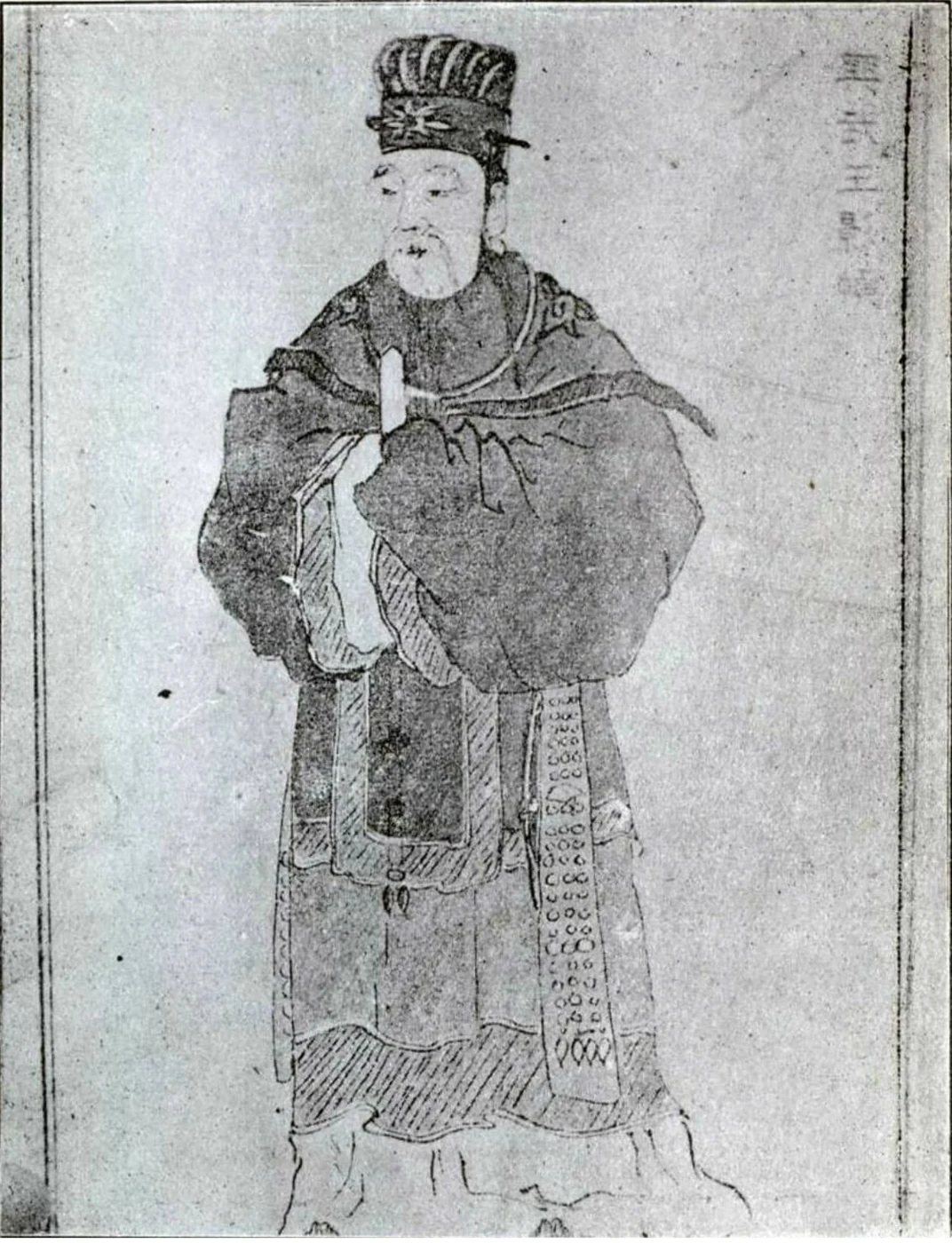
Kim Yu-sin (595–673) was a general of the Silla kingdom on the Korean Peninsula and later received the posthumous royal title Heungmu. A descendant of the royal house of Geumgwan Gaya, his family entered Silla service from his grandfather's generation and intermarried with the Silla royal house. He became both brother-in-law and father-in-law of King Muyeol Kim Chunchu, and both maternal uncle and brother-in-law of King Munmu…
595 CE–673 CETang Dynasty
PROFILE
Kim Yu-sin (595–673) was a general of the Silla kingdom on the Korean Peninsula and later received the posthumous royal title Heungmu. A descendant of the royal house of Geumgwan Gaya, his family entered Silla service from his grandfather's generation and intermarried with the Silla royal house. He became both brother-in-law and father-in-law of King Muyeol Kim Chunchu, and both maternal uncle and brother-in-law of King Munmu (Kim Beop-min). At fifteen he became a Hwarang follower and displayed military ability; in 629 he won early distinction under his father in the capture of Nangbi Fortress from Goguryeo. In 642 he became military governor of Amnyang Province and blocked Baekje attacks, later defeating Baekje forces repeatedly. In 660 he led fifty thousand Silla troops in alliance with Tang forces to destroy Baekje and defeated Gyebaek's forces at Hwangsanbeol. In 667 he articulated the strategic principle described in the source as "establishing the state through loyalty and trust" during the final campaign against Goguryeo. He served under five Silla reigns, rose to the highest rank of Taedaegakgan, and received praise from Emperor Gaozong of Tang. Even near death in 673 he continued to advise the king on statecraft. His funeral received the honors of military music and drums, and he was later posthumously elevated to royal status.
- Other name
- Kim Yu-sin
- Period
- Tang
- Date of Birth
- 595
- Date of Death
- 673
- Dynasty / regime
- Tang
- Identity
- Military commander
- Ethnicity / group
- Not recorded in historical sources
- Native place
- Not recorded in historical sources
- Place of birth
- Not recorded in historical sources
- Place of death
- Not recorded in historical sources
- Highest office
- See Biography and Major Activities
- Major achievements
- Silla general; led forces for decades against Baekje and Goguryeo; principal Silla commander in the wars of conquest
LIFE TIMELINE
Age 15 | Became a Hwarang follower and led a group called the "Yonghwa Hyangdo"
Age 18 | Became a gukseon, or Hwarang leader
Age 34 | Campaigned with his father Kim Seohyeon against Goguryeo's Nangbi Fortress; as a central-banner commander charged the enemy and killed an opposing commander, helping take the fortress
Age 47 | Appointed military governor of Amnyang Province and blocked Baekje incursions
Age 49 | Promoted to sopan, the third-ranked office, and repeatedly defeated Baekje
Age 50 | Defeated a Baekje army at Ipo Fortress and took two thousand heads according to the source
Age 52 | Suppressed Bidam's rebellion and, together with Kim Chunchu, assisted Queen Jindeok in governing the state
Age 53 | Used a feigned defeat at Daeryang Fortress to rout Baekje troops; captured twelve cities including Akseong and killed more than twenty thousand according to the source; promoted to ichan, the second-ranked office
Age 65 | Appointed sangdaedeung, described in the source as Silla's highest office; led fifty thousand Silla troops with Tang forces to destroy Baekje and defeated Gyebaek at Hwangsanbeol
Age 66 | King Munmu (Kim Beop-min), ascended the throne and promoted Kim Yu-sin to Great General
Age 67 | Transported provisions to Tang forces besieging Pyongyang and defeated Goguryeo pursuers on the return march
Age 69 | Joined King Munmu in suppressing Baekje remnant forces and defeated them at Dusol Fortress
Age 72 | Presented the strategy described as "establishing the state through loyalty and trust" for the campaign against Goguryeo
Age 73 | After Goguryeo's fall, granted the rank Taedaegakgan, an estate of five hundred households, a carriage and staff, and the privilege of not hurrying in court
Age 78 | Died on the first day of the seventh lunar month, aged seventy-nine by traditional counting; buried at Geumsan Plain and commemorated with a stele
BIOGRAPHY
Biography
Family Background and Early Years
Kim Yu-sin's great-grandfather was King Guhyeong, the final ruler of Geumgwan Gaya, also known in the source by variant names. After Geumgwan Gaya surrendered to Silla in 532, Silla incorporated its royal house into the true-bone aristocracy, later called the "new Kim clan" and associated with the Gimhae Kim lineage. Kim Yu-sin's grandfather Kim Muryeok entered Silla service and in 554 played a decisive role in the Battle of Gwansan Fortress, where Baekje was defeated and King Seong of Baekje was killed; the source gives a figure of more than ten thousand enemy dead.
His father Kim Seohyeon formed a relationship outside formal marriage with Lady Manmyeong, granddaughter of Galmunwang Ipjong, brother of King Beopheung and father of King Jinheung. The source states that after a pregnancy lasting twenty months she gave birth to Kim Yu-sin. His name was said to reflect both a dream in which Kim Seohyeon saw Mars and Saturn descend to him and his admiration for the Chinese writer Yu Xin: the character Yu resembled the cyclical sign geng, while Xin resembled the sound of chen.
At fifteen Kim Yu-sin became a Hwarang follower and impressed the others with his military and organizational ability; his group was called the "Yonghwa Hyangdo." Growing up while Baekje and Goguryeo repeatedly attacked Silla, he reportedly entered a mountain cave alone and swore to Heaven that he would destroy the two enemy states. Legend says that he then encountered an immortal named Nanseung who taught him secret methods.
Early Military Distinction
In 629, Kim Yu-sin joined his father Kim Seohyeon in an attack on Goguryeo's Nangbi Fortress. Serving as a central-banner commander, he charged the enemy at a moment when the situation was unfavorable and Silla morale was low, killed an opposing commander, reversed the battle, and helped capture the fortress, with the source reporting more than five thousand enemy dead. This was his first major display of battlefield courage and decisiveness.
In 642, after Baekje captured Daeya Fortress, an important western gateway of Silla, Queen Seondeok appointed Kim Yu-sin military governor of Amnyang Province. He successfully blocked further Baekje advances. In 644 he was promoted to sopan, the third-ranked office, and repeatedly defeated Baekje. In 645, when Baekje attacked Ipo Fortress, Kim Yu-sin led Silla troops to victory and the source records two thousand enemy dead.
Regency and Suppression of Rebellion
In 647 Bidam's rebellion broke out and Queen Seondeok died during the crisis. Kim Yu-sin suppressed the rebellion and, together with his brother-in-law Kim Chunchu, assisted Queen Jindeok in state affairs. In the tenth lunar month, Baekje forces besieged Musan, Gammul, and Dongjam forts. Kim Yu-sin led ten thousand troops against them and defeated the Baekje army, with more than three thousand killed according to the source.
In 648, Kim Yu-sin used a feigned defeat at Daeryang Fortress to lure and defeat Baekje forces, captured eight Baekje generals, and took one thousand heads according to the source. He then advanced into Baekje territory, captured twelve fortresses including Akseong, and the source reports more than twenty thousand enemy dead. He later took nine additional towns including Jinrye, with nine thousand more killed and six hundred captured. He also killed Baekje officials including Jwapyeong Eunsang and Dalsol Jagyeon and 8,980 soldiers according to the source. He was promoted to ichan, the second-ranked office.
Wars of Conquest
In 660, Kim Chunchu appointed Kim Yu-sin sangdaedeung, described in the source as the highest office in Silla. Tang forces crossed the sea at Silla's request to attack Baekje. Kim Yu-sin led fifty thousand Silla troops in coordination with the Tang expedition and, on the way, fought Gyebaek's five thousand Baekje troops at Hwangsanbeol. He defeated them, joined the Tang forces, and participated in the destruction of Baekje.
The source also records an anecdote in which Tang commander Su Dingfang intended to execute Silla supervisor Kim Munyeong because the Silla army had arrived late. Kim Yu-sin threatened battle with the Tang forces. Su Dingfang's subordinate Dong Baoliang stepped on Su's foot to warn that the Silla troops were preparing to resist, after which Su spared Kim Munyeong.
Later Years and Final Advice
In 661, after Queen Jindeok's death, Kim Yu-sin's nephew Kim Beop-min ascended the throne as King Munmu. The new ruler continued to rely on him and promoted him to Great General. In 662 Kim Yu-sin led a difficult supply mission deep into Goguryeo territory to provision Tang forces besieging Pyongyang and defeated Goguryeo pursuers on his return. In 664 he joined King Munmu in suppressing Baekje remnant forces, defeating them at Dusol Fortress; the source says both Baekje people and Japanese forces surrendered, after which the Silla king allowed the Japanese to return home.
In 667 Tang and Silla launched another campaign against Goguryeo, which fell the following year. Because of advanced age, Kim Yu-sin could no longer personally command in the field, but the principal commanders Kim Heumsun, his younger brother, and Kim Inmun, his nephew, consulted him before departure. Kim Yu-sin advised that a general was the shield of the state and the ruler's claws and teeth; success required alignment with Heaven, terrain, and popular support. He argued that Silla had survived through loyalty and trust, Baekje had fallen through arrogance, and Goguryeo stood in danger through pride, so Silla's upright position could prevail with the aid of a powerful allied emperor.
After Goguryeo's fall, King Munmu rewarded Kim Yu-sin with the extraordinary rank Taedaegakgan, an estate of five hundred households, a carriage and staff, and permission not to hurry when approaching the throne. The source states that Emperor Gaozong of Tang also issued an edict praising him and considered summoning him to the Tang court, although the visit did not occur.
After the destruction of Baekje and Goguryeo, conflict developed between Tang and Silla in the Silla–Tang War. Kim Yu-sin had long argued that Silla should protect its national interests within the alliance and remain wary of Tang, using the analogy that even a dog will bite its master if its foot is stepped on. He therefore had his son Kim Wonsul participate in aiding Goguryeo remnants against Tang. When the Silla army was defeated and Wonsul fled, King Munmu asked Kim Yu-sin what should be done. Kim Yu-sin replied that Tang intentions were difficult to predict and strategic positions should be defended, but that Wonsul had both disgraced the royal command and violated family discipline and should be executed. King Munmu did not accept his recommendation.
Kim Yu-sin died on the first day of the seventh lunar month in 673. In his final advice to King Munmu, he modestly denied personal merit and credited the ruler's unwavering trust for whatever service he had rendered. He said that the Three Han had become one family and the people had become united, but warned that rulers often began well and failed to preserve their achievements. He urged King Munmu to remember how difficult success had been, recognize the equal difficulty of preserving it, distance petty men, keep worthy men close, maintain harmony at court, and ensure peace among the people.
After his death, King Munmu granted one thousand bolts of silk, two thousand seok of grain, and one hundred military musicians and drummers for the funeral. Kim Yu-sin was buried at Geumsan Plain, a commemorative stele was erected, and households were assigned to guard the tomb. During the reign of King Heungdeok, he was posthumously elevated to the title Great King Heungmu.
Major Activities
Military Campaigns
Kim Yu-sin spent much of his life in war, chiefly against Baekje and Goguryeo. He helped capture Goguryeo's Nangbi Fortress in 629, became military governor of Amnyang Province in 642 to block Baekje, and repeatedly defeated Baekje forces thereafter. In 660 he led fifty thousand Silla troops in alliance with Tang and defeated Gyebaek at Hwangsanbeol in the campaign that destroyed Baekje. In 662 he delivered supplies to Tang forces around Pyongyang and defeated Goguryeo pursuers on his return. In 667 he advised the campaign that ended in Goguryeo's destruction the following year.
Political Activities
Kim Yu-sin suppressed Bidam's rebellion in 647 and joined Kim Chunchu in assisting Queen Jindeok's government. In 660 he became sangdaedeung, described in the source as Silla's highest office. In 668 he was elevated to Taedaegakgan with an estate of five hundred households and exceptional court privileges. During the Silla–Tang War he advocated protecting Silla's interests and maintaining caution toward Tang.
Strategic Thought
The source summarizes Kim Yu-sin's strategic outlook as "establishing the state through loyalty and trust." He argued that Silla survived through loyalty and trust while Baekje fell through arrogance and Goguryeo was endangered by pride. His final advice similarly stressed the difficulty of preserving success, distancing petty men, keeping worthy men close, and maintaining harmony at court and peace among the people.
Family and Royal Marriage Ties
Kim Yu-sin's family was closely tied to Silla's royal house. His younger sister Kim Munhui, later Queen Munmyeong, married King Muyeol Kim Chunchu and gave birth to King Munmu (Kim Beop-min). Kim Yu-sin himself married Lady Jiso, a daughter of King Muyeol. He was thus both a royal son-in-law and the maternal uncle of King Munmu, giving him unusually close ties to the ruling family.
Anecdotes and Legends
One story says that in his youth Kim Yu-sin frequented a courtesan. His mother reprimanded him for wasting himself in drinking houses rather than seeking achievement that would honor ruler and parents. Kim Yu-sin swore never again to pass the establishment's door. Later, after becoming drunk while away, his horse carried him there out of habit. The woman Cheongwan came out to greet him, both pleased and resentful. Kim Yu-sin immediately realized what had happened, cut down the horse he was riding, abandoned the saddle, and returned home. Cheongwan composed a "Song of Resentment," and the location was later associated with Cheongwan Temple.
A Korean Daoist collection, the Woljeong Seonsaengjip, records a supernatural story in which Kim Yu-sin was threatened by a female ghost using the string of a zither while on campaign near Goksan. A scholar surnamed Jeong helped drive away the ghost and taught Kim Yu-sin a method of feigning death. Kim Yu-sin survived but thereafter became mentally unsettled and, according to the story, died suddenly three years later.
Personal Relations
- Great-grandfather: King Guhyeong, final ruler of Geumgwan Gaya
- Grandfather: Kim Muryeok
- Father: Kim Seohyeon
- Mother: Lady Manmyeong
- Younger brother: Kim Heumsun
- Younger sisters: Kim Bohui; Kim Munhui, later Queen Munmyeong and wife of King Muyeol Kim Chunchu; Kim Jeonghui
- Wives: Lady Jiso, daughter of King Muyeol Kim Chunchu; Lady Jaemae
- Sons: Kim Samgwang, Kim Wonsul, Kim Wonjeong, Kim Jang-i, Kim Wonmang as legitimate sons; Kim Gunseung as a secondary son
- Daughters: four
- Queen Seondeok: one of the five reigns under which Kim Yu-sin served; appointed him military governor of Amnyang Province in 642
- Queen Jindeok: Kim Yu-sin assisted her government after Bidam's rebellion
- King Muyeol Kim Chunchu: Kim Yu-sin's brother-in-law and father-in-law; appointed Kim Yu-sin sangdaedeung in 660
- King Munmu (Kim Beop-min): Kim Yu-sin's nephew and son-in-law; promoted him to Great General and Taedaegakgan
- Emperor Gaozong of Tang: issued an edict praising Kim Yu-sin and reportedly wished to summon him to court
- Su Dingfang: Tang commander and ally in the conquest of Baekje; reportedly considered executing Silla supervisor Kim Munyeong
- Gyebaek: Baekje commander and Kim Yu-sin's opponent at Hwangsanbeol in 660
- Bidam: Silla rebel suppressed by Kim Yu-sin in 647
- Kim Inmun: nephew who sought Kim Yu-sin's advice before the final Goguryeo campaign
Historical Assessment
Tang and Contemporary Assessments
- King Munmu (Kim Beop-min): “Yu-sin inherited the achievements of his ancestors and became a minister of the state. When sent out he served as a general, and when at court as chief minister; his achievements were abundant. Had we not relied on your single household, whether the state would have risen or fallen could not have been known.”
- Emperor Gaozong of Tang issued an edict praising Kim Yu-sin and reportedly wished to summon him to court.
- King Gyeongdeok: “Receiving vital force from Ao Mountain and rising in spirit from the eastern waters, he grasped the civil tally though born from a ministerial household, and bore martial strategy to raise the royal house high. In the end he pacified two enemies and brought lasting peace to the people of the eastern realm; he faithfully served three reigns and extended order over Jinhan.”
Goryeo Period
- Kim Busik's Samguk Sagi: “Consider how Silla treated Yu-sin: intimate with him without distance, entrusting him without divided confidence; his plans were carried out and his words obeyed, so he was not made resentful by failure to employ him. This may be called the auspiciousness of ‘Youthful Folly’ at the fifth line. Thus Yu-sin was able to realize his purpose, coordinate plans with the great state, unite the three lands into one family, and end his life with achievement and fame. Eulji Mundeok had wisdom and strategy, and Jang Bogo had righteousness and courage, yet without the writings of China they would have vanished without renown. As for Yu-sin, his countrymen praised him and his fame has not disappeared even to the present. That scholar-officials know him is understandable, but even grass-cutting boys and herdboys know him. Therefore there must have been something about the man that set him apart from others.”
Joseon Period
- The official Dongguk Tonggam: “Heaven produced a martial hero to bring broad relief to the people; Yu-sin was born in response to his age, and the rarity of his meeting with his ruler was like fish and water. With a loyal and indignant heart he applied grand and heroic strategy; planning within the command tent, he omitted no calculation. Campaigning east and west, he swept forward like wind and lightning and met no equal. At the battle of Nangbi, the suppression of Bidam, and the victory at Daeya, once the righteous banner was raised the villains were annihilated; in dozens of other battles before and after, he was never defeated. Victories followed one another, and his achievements were by no means small. When he attacked Baekje, Uija surrendered; when he attacked Goguryeo, Go Jang was taken captive. He completed the work of unification, gave his ruler rich possession of the eastern lands, and freed the people permanently from the danger of weapons. For more than twenty years thereafter he combined the offices of general and chief minister and bore responsibility for the state's safety, standing as a Great Wall of the realm. Was he not one who possessed the talent, found the right ruler and the right time, and thereby completed his achievement? Moreover, his words at the point of death—‘Few have a good end; keep close to gentlemen and distant from petty men’—truly had the form of a great minister's counsel to his ruler. Having passed through every hardship and danger, he devoted himself until his strength was exhausted; in achievement and fame, loyalty and integrity, he was complete from beginning to end. Among the figures of Silla's nine hundred years, few can be compared with Yu-sin. How worthy he was!”
Modern Assessments
- Shin Chae-ho, a pioneering modern Korean nationalist historian: “Kim Yu-sin's military achievements were basically falsely recorded—then why call him Kim Yu-sin? Kim Yu-sin was not a wise and brave famous general, but a sinister and fierce politician; the great achievements of his life lay not on the battlefield, but in using schemes to throw neighboring states into disorder.”
- Korean scholarship commonly treats Kim Yu-sin as a major figure in Silla's unification wars and as a national hero.
- One form in the International Taekwon-Do Federation's twenty-four-pattern system is named "Yu-Sin" in his honor.
- Kim Yu-sin is also included among the twelve mountain deities honored in the Gangneung Danoje Festival.
FIGURES ASSOCIATED WITH THIS DYNASTY
Bibliography
Bibliographic information is not yet available for this entry.