PROFILE
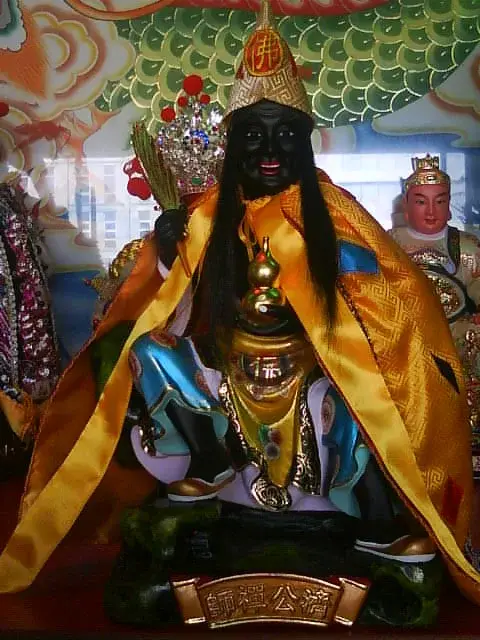
Jigong (济公, 1148–1209 CE), monastic name Daoji and secular name Li Xiuyuan (alternatively Li Xinyuan), styled Huyin and Fangyuan Sou, was a native of Yongning Village in Tiantai County, Taizhou (modern Tiantai County, Zhejiang Province). He was an illustrious Chan Buddhist master of the Yangqi branch of the Linji school during the Southern Song dynasty, universally known in his lifetime as the "Mad Monk Ji" (Ji Dian) and venerated across East Asia as the "Living Buddha Jigong." A direct descendant of Li Zunxu—military governor and imperial consort of Emperor Taizong's daughter—Daoji was born into an aristocratic household steeped in Buddhist devotion. Following the death of his parents, he renounced worldly life at Tiantai's Guoqing Temple and later proceeded to Lin'an (modern Hangzhou) to receive full monastic ordination under Chan Master Xiatang Huiyuan at Lingyin Temple. Following Huiyuan's parinirvana, he relocated to Jingci Temple on South Screen Mountain, serving as the temple's recording scribe (shuji).
Daoji was renowned for his antinomian behavior and unconventional spiritual conduct, dressing in tattered robes, worn shoes, and a broken bamboo fan while frequenting urban markets, consuming alcohol and meat, healing the sick, and aiding the impoverished. Beneath his outward eccentricities lay profound meditative realization and boundless compassion; when orthodox monks sought to expel him, Abbot Huiyuan famously sheltered him by declaring that "the Buddhist Dharma is vast—can it not accommodate a single eccentric monk?" When Jingci Temple was destroyed by fire in the fourth year of Jiatai (1204 CE), Daoji authored a stirring fundraising memorial and secured timber from distant mountainous regions to rebuild the monastic complex. Passing away while seated in meditation in the second year of Jiading (1209 CE), his relics were enshrined at Hupao Spring on Daci Mountain. Endowed with extraordinary literary gifts, his surviving verses collected in Juanfeng Yigao possess the sublime aesthetic ethos of the Jin and Song dynasties. In subsequent centuries, his deeds were mythologized into the incarnation of the Taming Dragon Arhat, inspiring monumental vernacular novels including Zui Puti and Jigong Quanzhuan, cementing his status as an immortal cultural archetype of popular justice and compassionate salvation.
- Secular Name
- Li Xiuyuan (李修缘)
- Dharma Name
- Daoji (道济)
- Literary Name
- Huyin (湖隐), Fangyuan Sou (方圆叟)
- Period
- Southern Song dynasty
- Ancestral Home
- Yongning Village, Tiantai County, Taizhou (present-day Tiantai, Zhejiang Province)
- Birth Date
- 1148 CE (Eighteenth Year of Shaoxing)
- Death Date
- June 19, 1209 CE (Sixteenth day of the fifth lunar month, Second Year of Jiading)
- Age at Death
- 62
- Historical Status
- Eminent Southern Song Linji Chan monk, poet, and revered folk folk-hero venerated as the Living Buddha Jigong
BIOGRAPHY
Chronology
- 1148 CE (18th Year of Shaoxing) | Noble Birth in Tiantai | Born into an aristocratic family in Yongning Village as a descendant of Song consort Li Zunxu; educated in classics and inner texts.
- 1166 CE (2nd Year of Qiandao) | Monastic Renunciation | Renounced worldly ties after the death of both parents, receiving tonsure under Master Fakong Yiben at Guoqing Temple.
- 1169 CE (5th Year of Qiandao) | Ordination at Lingyin Temple | Arrived in the Southern Song capital of Lin'an and received full ordination from Master Xiatang Huiyuan at Lingyin Temple, receiving the dharma name Daoji.
- 1176 CE (3rd Year of Chunxi) | Protection by Master Huiyuan | Impeached by monastic peers for violating dietary taboos; Abbot Huiyuan shielded him with the dictum "the Dharma is vast—can it not accommodate a single eccentric monk?"
- 1186 CE (13th Year of Chunxi) | Relocation to Jingci Temple | Transferred across West Lake to Jingci Temple following Huiyuan's death; appointed recording scribe (shuji) by Abbot Dehui.
- 1204 CE (4th Year of Jiatai) | Reconstruction of Jingci Temple | After Jingci Temple was devastated by fire, authored the celebrated Muzi Shu and oversaw the transportation of gigantic cedar logs downriver.
- 1209 CE (2nd Year of Jiading) | Parinirvana at West Lake | Composed his death gatha and passed away in seated meditation on the sixteenth day of the fifth lunar month; his relics were entombed at Hupao Spring.
Life
Aristocratic Heritage and Hermitage at Chicheng Mountain
Daoji was born in the eighteenth year of Shaoxing (1148 CE) during the reign of Emperor Gaozong of the Southern Song dynasty in Yongning Village, located outside the northern gate of Tiantai County, Taizhou. The Li lineage was exceptionally prominent throughout the Song era; Daoji's forebear Li Zunxu had been the husband of Princess Wanshou (seventh daughter of Emperor Taizong), rising to Military Commissioner of Zhen'an and posthumously honored as Prince of Linhai. The Li household had maintained devout Buddhist traditions for generations. Daoji's father Li Maochun and mother Lady Wang reached their forties without an heir, praying earnestly at Guoqing Temple until Daoji's birth, whereupon the presiding abbot named the boy Li Xiuyuan.
During his youth, Li Xiuyuan grew up along the scenic banks of the Zhe Stream and pursued classical studies at Ruixia Cave on Chicheng Mountain. Mount Tiantai had long been celebrated as the cradle of both Tiantai Buddhism and Shangqing Daoism, and this syncretic intellectual environment profoundly shaped his early worldview. Possessing remarkable intellect and an innate spiritual disposition, he immersed himself in historical classics and Buddhist sutras, entirely disinterested in imperial examinations. When both of his parents died in succession during his late adolescence, Li Xiuyuan was stricken by the transience of mortal existence. Surrendering his familial estate, he entered Guoqing Temple and received tonsure from Master Fakong Yiben.
Apprenticeship at Lingyin Temple and Unfettered Zen Practice
Finding the formal rituals of rural monasteries restrictive to his direct quest for self-realization, Daoji traveled to the Southern Song capital of Lin'an (modern Hangzhou). There he entered Lingyin Temple under the guidance of Chan Master Xiatang Huiyuan (conferred the title Master Fohai), an eminent seventh-generation master of the Yangqi branch of the Linji school. Huiyuan immediately recognized Daoji's spiritual acumen and administered the full monastic precepts, bestowing upon him the dharma name Daoji and the art names Huyin and Fangyuan Sou.
Following his ordination, Daoji embraced the unconstrained Linji ethos that transcends external dogmas. Rather than engaging in rigid seated meditation or formal scriptural recitation, he strolled freely through the vibrant urban streets of Lin'an and along the shores of West Lake. Clad in patched robes, shredded sandals, and clutching a ragged palm-leaf fan, he frequently drank wine and consumed meat in local taverns. His antinomian antics astounded orthodox monastic elders, and townspeople dubbed him "Mad Monk Ji" (Ji Dian).
Offended by his flagrant disregard of monastic vinaya regulations, the monastery's head monks petitioned Abbot Huiyuan to flog Daoji and expel him from the order. Huiyuan calmly brushed aside the petition, brushing eight characters across the document: "The Buddhist Dharma is vast—can it not accommodate a single eccentric monk?" Huiyuan instructed the assembly that vinaya codes exist to guide unawakened mortals, whereas supreme masters must not be bound by rigid forms. Under Huiyuan's compassionate protection, Daoji continued his unique spiritual practice in peace.
Relocation to Jingci Temple and Monastic Reconstruction
In the thirteenth year of Chunxi (1186 CE), Master Xiatang Huiyuan passed away. Unable to endure the hostility of conservative monks at Lingyin Temple, Daoji crossed West Lake to take up residence at Jingci Temple on South Screen Mountain. Jingci Temple was then presided over by Master Dehui, who held Daoji's profound literary mastery in high esteem and elevated him to the position of recording scribe (shuji), charging him with drafting official documents, sermons, and fundraising appeals.
In the fourth year of Jiatai (1204 CE), a disastrous fire swept Lin'an and consumed Jingci Temple, reducing magnificent halls and scripture libraries to smoldering ashes. Reconstructing this imperial monastery required massive financial patronage and enormous timber. Daoji took upon himself the arduous task of mobilizing funds. He composed a breathtaking fundraising appeal (Muzi Shu), whose elegant rhetoric and heartfelt passion moved imperial relatives, high ministers, and affluent merchants to donate lavishly. Furthermore, Daoji personally journeyed to the dense timberlands of Fuyang, Yanzhou, and Quzhou, coordinating logistics and utilizing seasonal river tides along the Qiantang River to transport thousands of giant logs directly to West Lake, enabling the majestic monastery to rise renewed from its ashes.
Passing into Parinirvana and the Relic Stupa at Hupao
Following the restoration of Jingci Temple, Daoji's fame resonated throughout Jiangnan, yet he remained humble and accessible. He walked daily among ordinary citizens, treating illnesses with medicinal herbs, counseling despairing souls, and curbing the arrogance of corrupt officials through sharp wit.
On the sixteenth day of the fifth lunar month in the second year of Jiading (June 19, 1209 CE), Daoji foresaw his impending passing. He bathed, donned clean robes, and sat erect in his quarters at Jingci Temple. Calling for brush and ink, he penned his immortal farewell gatha:
"For sixty years a wild and turbulent flow,
Beating against east walls, striking west walls below.
Now gathered back together in calm repose,
Water meets blue sky, serene and without woes."
Tossing aside the brush, Daoji entered parinirvana at sixty-two. Tens of thousands of weeping citizens gathered to pay their respects. His body was cremated, yielding lustrous multicolored sarira relics. His dharma nephew Beijian Jujian composed his epitaph (Huyin Fangyuan Sou Sheliming), and a grand relic stupa was erected at Hupao Spring on Mount Daci, establishing an enduring pilgrimage site for generations of devotees.
Major Contributions
Embodying Antinomian Zen and Transcending Rigid Precepts
Daoji's singular significance within the annals of Chinese Buddhism lies in his absolute embodiment of Southern Chan's core principle of direct awakening beyond scriptural dogmas. In the late Southern Song, monastic institutions had become increasingly bureaucratic and preoccupied with external ritualism, alienating the sangha from common societal realities.
Inheriting the teachings of Sixth Patriarch Huineng that "the Buddha-nature is fundamentally pure and awakening is found within the mind," Daoji adopted playful eccentricity as an expedient device (upaya) to dismantle worldly fixations on monastic appearances. By mingling with laborers, courtesans, and peddlers, he demonstrated that true sanctity resides in compassionate action rather than sterile ascetism. As Ming philosopher Li Zhi noted, his secular frolics were themselves profound meditative absorption. Daoji warned shallow imitators: "Wine and meat pass through the intestines, while the Buddha resides in the heart; yet if ordinary men imitate my conduct, they will plunge straight into demonic paths," emphasizing the supreme necessity of inner purity over mere outward rebellion.
Literary Brilliance and Zen Poetic Artistry
Daoji was not merely an awakened monk but an extraordinarily gifted poet and essayist. Although he lived amidst street life, his writing was marked by spontaneous elegance and profound depth. Beijian Jujian praised his literary craft in his epitaph: "Wild yet unconstrained, stern yet incorruptible; his words required no polishing, and though not confined to rigid meters, they routinely attained sublime heights, carrying the unrestrained ethos of eminent monks of the Jin and Song dynasties."
Daoji authored ten volumes of discourses and poetry preserved in Juanfeng Yigao and temple gazetteers. His poems eschewed monastic dryness, employing fresh vernacular idioms infused with razor-sharp philosophical wit. His famous couplet on the Cold Spring Pavilion—"Cold Spring has clear water but no gulls or egrets, leaving only a hollow name behind in the mortal world"—satirized empty vanity, while his verses on Feilai Peak harmonized the majesty of nature with sudden enlightenment. Modern literary scholars rank his poetic caliber on par with the Four Southern Song Masters.
Rebuilding Jingci Temple through Grand Mobilization
The reconstruction of Jingci Temple following the catastrophic fire of 1204 CE stands as a testament to Daoji's administrative prowess and charisma. At a time when the Southern Song treasury was exhausted, undertaking the total restoration of an imperial monastery appeared impossible.
Relying on his immense personal integrity and widespread public adoration, Daoji bridged social divides between the imperial palace, provincial magistrates, and commercial guilds. His fundraising prose captivated figures such as Consort Relative Yang Cishan. When timber transport stalled at river rapids, Daoji personally directed log-rafts down the Qiantang River, successfully resolving the most formidable logistical obstacle of the era. The revitalized Jingci Temple stood as a monument to his practical genius.
Evolution of the Arhat Legend and Popular Folk Culture
Following Daoji's parinirvana, his popular deification unfolded rapidly across southern China. Because of his miracles of healing, exorcism, and protection of the downtrodden, the Southern Song populace identified him as an arhat incarnate, referring to him as the Living Buddha Jigong and the human manifestation of the Taming Dragon Arhat (Xianglong Luohan).
During the Ming and Qing periods, oral legends were compiled into popular vernacular chapter-novels. Shen Mengtuo authored Zui Puti (Drunken Bodhi) in twenty chapters during the late Ming, portraying Jigong's carefree virtue. In the mid-Qing, professional storytellers expanded the narrative into the monumental two-hundred-and-forty-chapter Jigong Quanzhuan. In these epics, Jigong wields his magic palm-leaf fan to vanquish demons, right injustices, and rescue commoners, solidifying his role as an immortal folk hero inscribed in China's national cultural heritage.
Relationships
- Li Zunxu: Forebear, imperial consort to Emperor Taizong's daughter, military commissioner and posthumous Prince of Linhai; established the family's Buddhist heritage.
- Li Maochun: Father, philanthropic gentry figure in Tiantai County who raised Daoji in Buddhist and Daoist principles.
- Xiatang Huiyuan: Ordination master, celebrated abbot of Lingyin Temple; recognized Daoji's spiritual brilliance and sheltered his antinomian behavior from conservative monks.
- Dehui: Abbot of Jingci Temple; accommodated Daoji after Huiyuan's death and appointed him as temple recording scribe (shuji).
- Beijian Jujian: Monastic nephew and literary confidant; composed Daoji's authoritative funerary epitaph Huyin Fangyuan Sou Sheliming, preserving his authentic history.
Historical Evaluation
- Monastic nephew Beijian Jujian recorded in Huyin Fangyuan Sou Sheliming: "The Elder was a distant descendant of Consort Li Wenhe of Tiantai. He received precepts under Master Fohai of Lingyin. Wild yet unconstrained, stern yet incorruptible, his words required no polishing; though not always strictly conforming to formal rules, they routinely attained sublime heights, carrying the unrestrained ethos of eminent monks of the Jin and Song dynasties. Wandering freely over half the world, he spent forty years in eccentric travel, visiting every sacred mountain from Tiantai to Yandang and Lu Shan. On the sixteenth day of the fifth month of the second year of Jiading, he sat and passed away at sixty-two."
- Ming iconoclastic philosopher Li Zhi evaluated in Xu Cangshu: "Daoji was expansive and unrestrained, spending his days in drunken madness, yet his resolve to rescue and benefit humanity sprang from absolute sincerity. Examining his surviving writings, his words flow with innate authenticity, transcending the mundane to enter holiness. He was truly an irreplaceable spiritual genius in Buddhist history."
- Qing scholar Ji Xiaolan wrote in Notes of the Thatched Cottage of Close Scrutiny: "The Mad Monk Ji known across the world was none other than Song master Daoji. Mad yet compassionate, compassionate yet mad, boundless loving-kindness was embodied in his playful meditative absorption. This is why his name remains universally beloved across hundreds of generations."
Related Entries
- Jingci Temple
- Lingyin Temple
- Xiatang Huiyuan
- Beijian Jujian
- Zui Puti
- Hupao Spring