Birth in Gaolan
Born into an elite Tiele military family; developed martial strength and equestrian skills from early childhood.
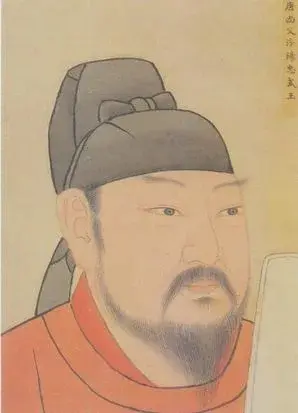
浑瑊
Hun Jian (浑瑊, 736–799), originally named Hun Rijin (浑日进), was a native of Gaolan Prefecture (south of modern Qingtongxia, Ningxia), a scion of the tribal chieftains of the Hun clan among the Nine Tiele Surnames, and a celebrated military strategist, general, and foremost restoration pillar of the mid-Tang dynasty. Originating from an elite northern frontier military lineage whose ancestors submitted to the Tang court…
Hun Jian (浑瑊, 736–799), originally named Hun Rijin (浑日进), was a native of Gaolan Prefecture (south of modern Qingtongxia, Ningxia), a scion of the tribal chieftains of the Hun clan among the Nine Tiele Surnames, and a celebrated military strategist, general, and foremost restoration pillar of the mid-Tang dynasty. Originating from an elite northern frontier military lineage whose ancestors submitted to the Tang court during the Zhenguan era, his family held hereditary governorship over Gaolan Prefecture for generations. His father, Hun Shizhi, rose to Opening of the Office Equal to the Three Excellencies and Prince of Ningshuo Commandery, renowned for martial achievements within the Shuofang Army. From childhood, Hun Jian was remarkably skilled in equestrian archery and tactics, enlisting at age eleven to accompany his father on frontier campaigns, where his valor in subduing the Helu tribe and capturing the stone fortress of Shibao won him early military renown. When the An Lushan Rebellion erupted in 755, Hun Jian followed premier generals Li Guangbi and Guo Ziyi in campaigns across Hebei and the Central Plains. At the Battle of Jiumen, he personally shot down rebel champion Li Lijie; he subsequently rode to Lingwu to protect Emperor Suzong, spearheaded the Battle of Xiangji Temple to liberate Chang'an and Luoyang, and fought in dozens of pitched battles under Pugu Huai'en to extinguish the rebel remnants of Shi Chaoyi, earning promotion to Minister of the Court of Imperial Sacrifices. During the Dali era, he was stationed at Binning, repeatedly repelling massive Tibetan invasions and securing the Guanzhong frontier. In 783, during the Jingyuan Mutiny, Emperor Dezong fled in panic to the small town of Fengtian, where rebel leader Zhu Ci laid siege with one hundred thousand troops. Assuming supreme command of the defense, Hun Jian led the exhausted garrison to dig deep trenches, incinerated the enemy's towering cloud bridges, pulled arrows from his own flesh to rally the defenders, and held out for over a month until reinforcements arrived. He subsequently escorted Dezong to Liangzhou, mobilized forces to capture Xianyang, and coordinated with Li Sheng to liberate Chang'an, earning the title of Prince of Xianning Commandery and appointment as Chancellor. In 787, during the treacherous ambush at the Treaty of Pingliang, he escaped alone by leaping an unsaddled horse across siege moats. Later assigned as Military Commissioner of Shuofang, he rebuilt the strategic fortress of Yanzhou, pacified the northwest, and rose to Director of the Imperial Secretariat. Passing away in 799 at age sixty-four, he was posthumously created Prince of Yang, granted the honors of Grand Preceptor, and awarded the posthumous title Zhongwu.
Born into an elite Tiele military family; developed martial strength and equestrian skills from early childhood.
Accompanied his father on border campaigns, performing exceptional vanguard deeds among young conscripts.
Fought in campaigns against Helu and stormed the stone fortress of Shibao, appointed Palace Commander.
Followed Li Guangbi to Hebei, shot and killed rebel hero Li Lijie at Jiumen, promoted to General of the Right Brave Guard.
Spearheaded the Shuofang cavalry under Guo Ziyi at Xiangji Temple, recapturing Chang'an and Luoyang.
Participated in dozens of engagements to crush Shi Chaoyi, earning foremost combat credit and made Minister of Sacrifices.
Smashed a massive Tibetan invasion force at Mogu gorge outside Fengtian, appointed Attendant Gentleman to the Crown Prince.
Held Fengtian against Zhu Ci's hundred thousand troops, incinerating siege towers and saving Emperor Dezong.
Appointed Chancellor, coordinated with Li Sheng to recapture the capital, ennobled as Prince of Xianning Commandery.
Ambushed by Tibetan general Shang Jiezan during peace talks, vaulted bareback over ditches to escape.
Died in office at age sixty-four; posthumously honored as Prince of Yang and Grand Preceptor with the posthumous title Zhongwu.
Hun Jian, originally named Hun Rijin, traced his descent from the ruling chieftains of the Hun tribe, one of the Nine Tiele Surnames that originated in the northern steppe. During the Zhenguan reign of Emperor Taizong, his ancestor, the Great Erkin Hun Atanzhi, recognized the shifting geopolitical balance and led over ten thousand tribesmen to offer allegiance to the Tang dynasty. The imperial court established Gaolan and Qilian Prefectures in modern Ningxia to settle the tribe, with the Hun lineage hereditarily governing Gaolan. His great-grandfather Hun Yuanqing and grandfather Hun Dashou were seasoned Tang military commanders; his father Hun Shizhi served in the Shuofang Army, rising through martial merit to Opening of the Office Equal to the Three Excellencies and Prince of Ningshuo Commandery. Reared in this frontier martial environment, Hun Jian was immersed in archery, horsemanship, and battle tactics from his earliest years.
Blessed with immense physical stamina and heroic spirit, Hun Jian could draw heavy war bows and strike targets from galloping horses by the age of ten. In 746, when he was just eleven years old, he accompanied his father on autumn frontier operations. Zhang Qiqiu, the Military Commissioner of Shuofang, looked at the young boy and joked: "Did you bring your wet nurse along to camp?" Unfazed, Hun Jian answered with dignified composure. In the subsequent skirmishes against nomadic raiders, Hun Jian donned light armor and charged on horseback, earning the formal military commendation for juvenile assault warriors, winning the admiration of seasoned commanders across the camp.
In 748, imperial forces launched extensive northwestern campaigns. Hun Jian followed the Shuofang army to defeat the Helu tribe, breaking their defensive line with ferocious charges. He subsequently joined the assault on the steep Tibetan stronghold of Shibao in Qinghai, scaling sheer precipices under showers of boulders, before aiding in the recovery of Longju Island. His bravery stood foremost among all regiments, earning him official appointment as Assault Lieutenant. Soon afterward, Military Commissioner An Sishun dispatched him to lead a detached cavalry force into Karluk territory, traversing the arid Humei desert and crossing the treacherous Tieluosi mountain range to rout the insurgent Abusi tribe. He subsequently joined allied columns in constructing the border garrisons of Yongqing and Tian'an, rising to Palace Commander at the young age of twenty.
In the eleventh lunar month of 755, An Lushan launched his catastrophic rebellion from Fanyang, driving armored cavalry toward Luoyang and plunging northern China into chaos. In 756, River East Military Commissioner Li Guangbi marched into Hebei to suppress the rebels, with Hun Jian commanding cavalry detachments in his vanguard. In the fierce battle south of Jiumen, rebel commander Shi Siming mobilized his primary army, sending forward his most dreaded warrior, Li Lijie, who brandished a long spear and challenged the imperial lines. Witnessing his troops hesitate, Hun Jian spurred his horse into the clearing, drew his bow at full gallop, and drove an arrow through Li Lijie's left shoulder, knocking him dead from the saddle. Deprived of their champion, the rebel battle line fractured, allowing Li Guangbi to execute a general assault that swept the field. Hun Jian was rewarded with promotion to General of the Right Brave Guard.
In the seventh month, Emperor Suzong established his court at Lingwu to rally loyalist forces. Receiving the summons, Hun Jian led his Shuofang cavalry on a forced march to reach the sovereign. Near the Tiande garrison, his column encountered invading Tibetan forces attempting to exploit the imperial crisis; Hun Jian set an ambush along the valleys, smashing the enemy advance and securing substantial baggage before arriving at Lingwu. In 757, Vice Field Marshal Guo Ziyi assembled one hundred and fifty thousand troops to initiate the counteroffensive against the two capitals, placing Hun Jian in a vital frontline command role during the fateful Battle of Xiangji Temple.
At Xiangji Temple, hundreds of thousands of combatants fought from noon until twilight in blinding dust. Hun Jian led elite Shuofang horsemen around the enemy flank, charging into the rebel lines more than ten times, severing An Shouzhong's retreat path and facilitating the liberation of Chang'an. He immediately pursued fleeing columns into Henan, storming Xinxiang and serving as foremost assault officer in the recovery of the Eastern Capital Luoyang, earning elevation to Acting Director of the Imperial Stud and Commissioner of the Wufeng Army.
In 759, nine imperial military commissioners commanding six hundred thousand men laid siege to An Qingxu at Yecheng. As the imperial army encircled the city, Shi Siming arrived with relief forces to offer battle south of the fortress. Amid the fighting, a violent dust storm blinded the armies, plunging the field into uncontrollable chaos as allied units collapsed in panic. Amid the rout, Hun Jian kept his composure, rallied his regiments, and executed a disciplined, fighting retreat that covered the withdrawal of imperial supply trains to the Yellow River, preserving the only intact division from the disaster.
Between 762 and 763, Hun Jian served under Pugu Huai'en in the grand campaign to eradicate Shi Chaoyi. Marching along the Taihang mountain passes, his division fought across dozens of bloody engagements from Shanluo through Zhengzhou and Bianzhou to Hebei. Repeatedly wounded in action, Hun Jian bandaged his injuries and returned to the frontline, winning foremost battle honors across the army. Following the final pacification of the An Lushan Rebellion, Emperor Daizong conferred upon him the high rank of Minister of the Court of Imperial Sacrifices, awarded the revenue of two hundred households, and promoted him to Opening of the Office Equal to the Three Excellencies.
Although the domestic rebellion was quelled, internal warlord autonomy and external Tibetan expansion subjected the Tang empire to continuous peril. In 763, Tibetan armies took advantage of internal exhaustion to capture Chang'an, forcing Emperor Daizong to flee to Shanzhou. In his general amnesty edict, Daizong named Hun Jian among the foremost savior generals of the realm. Stationed at Shanzhou to hold the Yellow River crossings, Hun Jian actively supported Guo Ziyi in reoccupying the capital. Shortly thereafter, Pugu Huai'en rebelled at Fenzhou, inducing hundreds of thousands of Tibetan and Uyghur horsemen to threaten Guanzhong.
Refusing all rebel overtures, Hun Jian preserved his unyielding loyalty to the throne. He deployed along the Tongzhou and Hezhong perimeter, establishing a mobile defensive network between Binzhou and Ningzhou. In 765, Pugu Huai'en died suddenly, the Uyghurs re-allied with Guo Ziyi, and Tibetan forces retreated westward. Seizing the initiative, Hun Jian launched a fierce cavalry pursuit, decapitating thousands of enemy troops and capturing senior commanders across the mountain passes, stabilizing the Guanzhong frontier.
In 768, Tibet concentrated one hundred thousand troops for another grand invasion, reaching Fengtian and menacing the capital basin. Hun Jian met the invaders in the rugged Mogu gorge outside the walls. Facing massive enemy cavalry, he deployed crossbow volleys to break their initial charge, then led heavy armored shock cavalry down the hillsides to sever the Tibetan battle line, routing the host and killing thousands. The court promoted him to Attendant Gentleman to the Crown Prince, maintaining his command over Fengtian.
In 779, as Guo Ziyi retired to court, he submitted an urgent memorial recommending Hun Jian to take charge of military administration across Binning and Qingzhou. Following the accession of Emperor Dezong, Hun Jian was entrusted with metropolitan defense, garrisoning East Wei Bridge and Tonghua Gate. Confronting recurring raids by Tangut and Tuyuhun tribes, Hun Jian enforced strict discipline while implementing fair civilian policies, earning universal reverence across the Guanzhong region and receiving the noble title of Duke of Xianning Commandery.
In the tenth month of 783, unrest erupted among soldiers of the Jingyuan garrison passing through Chang'an en route to the Huaxi front. Incensed by meager provisions, the troops mutinied, seized the capital, and installed former general Zhu Ci as emperor. Emperor Dezong escaped in disguise through a stormy night, seeking refuge behind the frail walls of Fengtian. The citadel was low and dilapidated, garrisoned by fewer than several hundred troops and devoid of grain reserves, leaving the survival of the dynasty hanging by a thread.
Stationed at an external garrison, Hun Jian galloped day and night with a dozen personal bodyguards to reach the emperor. Seeing Hun Jian ride into the gates, Emperor Dezong wept aloud with relief, grasping his hands: "The preservation of the dynastic altars rests entirely upon your shoulders!" Dezong immediately named Hun Jian Commander-in-Chief of the capital defense, placing arriving commanders like Han Yougui under his unified command.
Soon afterward, Zhu Ci proclaimed himself emperor of Da Qin and marched one hundred thousand veterans to encircle Fengtian. The rebels dug circumvallation ditches and deployed massive siege catapults. Hun Jian never removed his armor day or night, wielding shovels alongside common soldiers to dig interior trenches and patch battered walls. To counter rebel sappers, Hun Jian buried large ceramic jars around the perimeter to detect subterranean digging, successfully flooding and setting fire to enemy tunnels to incinerate rebel shock teams.
In November, the rebels constructed towering siege apparatuses known as cloud bridges. Towering dozens of feet above the battlements, reinforced with heavy rawhide, and housing hundreds of armored archers, these massive wheeled towers were pushed toward the eastern gate. Terrified by the advancing behemoth, imperial soldiers panicked. Hun Jian remained calm, having secretly dug deep concealed ditches across the approach path. When the cloud bridge rolled over the trap, its massive wheels plunged into the earth, tilting the structure helplessly. Hun Jian ordered assault squads to fling pitch-soaked straw and torches from the battlements, igniting an inferno that consumed the cloud bridge and crushed thousands of attackers.
During the relentless wall assaults, Hun Jian fought in the thick of hand-to-hand combat. Struck in the shoulder and cheek by arrows, he pulled the shafts from his wounds with his own hands, his armor drenched in blood, continuing to bellow commands and strike down assailants. Inspired by his heroic sacrifice, the defenders fought with suicidal bravery. Outnumbered ten to one, Hun Jian held the isolated citadel for over a month, blunting Zhu Ci's grand assault and buying crucial time for imperial relief armies to assemble.
As loyalist armies under Li Sheng and Han Yougui converged on Fengtian, Zhu Ci was forced to abandon the siege. However, general Li Huaiguang, who had arrived to relieve the capital, grew resentful and entered into secret treasonous correspondence with Zhu Ci, turning against the court. In early 784, Emperor Dezong was forced to retreat under Hun Jian's protective escort to Liangzhou (Hanzhong).
During the hazardous trek across the snowy Qinling plank roads in mid-winter, blizzards blocked the trails and food ran out. Hun Jian scouted the advance paths personally, shared his rations with hungry conscripts, and repelled pursuing cavalry, bringing the sovereign safely to Hanzhong. In recognition of his selfless loyalty, Dezong promoted him to Acting Minister of Works, appointed him Chancellor, and advanced him to Prince of Xianning Commandery.
At Liangzhou, Hun Jian was appointed Commander-in-Chief of the Western Route Army, advancing northward through Luogu Pass to coordinate with Eastern Route Commander Li Sheng at East Wei Bridge. Hun Jian scored unbroken victories, liberating Xianyang and cutting Zhu Ci's logistical links to Li Huaiguang. In May, Li Sheng breached the eastern gates while Hun Jian spearheaded assaults from the west, crushing the rebel garrison. Zhu Ci fled in panic and was killed by his own men. In July, Hun Jian escorted Emperor Dezong back to Chang'an. The emperor declared Hun Jian and Li Sheng the foremost restorers of the Tang dynasty, presenting him with an iron tally granting permanent imperial protection and having his portrait painted in the Lingyan Pavilion.
Following the restoration, recurring Tibetan raids battered the western marches. However, confronted with impenetrable defenses organized by Hun Jian and Li Sheng, Tibetan premier Shang Jiezan realized military conquest was impossible and devised a treacherous plot to assassinate the Tang high command under the guise of peace talks. In 787, Shang Jiezan requested a grand peace summit at Pingliang to demarcate borders and sign a permanent non-aggression treaty. Eager for peace, Emperor Dezong consented, appointing Hun Jian as Chief Alliance Envoy.
Suspicious of Tibetan intentions, Hun Jian secretly advised Prime Minister Li Mi to assign five thousand armored cavalry for escort protection. However, court ministers dismissed his concerns as excessive militarism, ordering that the delegation travel with minimal ceremonial guards. Unwilling to disobey imperial orders, Hun Jian arrived at Pingliang with an unarmed diplomatic suite and around a thousand ceremonial guards. On the day of the ceremony, the alliance pavilions were erected in the open plain.
As the envoys ascended the altar to read the oaths and pour ceremonial wine, Shang Jiezan waved a red banner, springing a pre-positioned ambush. Tens of thousands of Tibetan armored cavalry surged from hidden ravines, encircling the pavilion and slaughtering unarmed Tang officials. Dozens of high-ranking delegates were killed or captured. Shang Jiezan rode forward shouting: "Capture Chancellor Hun alive!" Picked enemy horsemen charged directly at Hun Jian.
Facing mortal peril, Hun Jian displayed superhuman battlefield instincts. Unarmed and unarmored, he sidestepped a thrusting spear, seized a terrified, unsaddled battle horse, vaulted onto its bare back, and clamped his knees against the beast's flanks. Ahead lay deep defensive trenches and spiked barricades dug by the ambushers. Pulling the reins with raw strength, Hun Jian spurred the horse to leap across the wide moat, clearing the chasm in mid-air. Leaning low over the neck of his steed under a storm of arrows, he broke through three successive cordons of enemy pursuers, galloping dozens of li to reach the safety of the Tang base camp. His miraculous escape ruined Shang Jiezan's scheme to capture the Tang commander-in-chief, and Emperor Dezong wept with joy upon his return, ordering full mobilization to punish the invaders.
The treachery at Pingliang demolished all illusions of peace, thrusting the northwestern frontier into continuous alert. Recognizing that only Hun Jian possessed the stature to command the frontier, Emperor Dezong appointed him Military Commissioner of Shuofang, Area Commander of Lingzhou, and Commander of the Northern Defenses, placing absolute authority over the northwest in his hands.
At that time, the strategic frontier city of Yanzhou (modern Yanchi, Ningxia) lay in ruins from recurrent raids, leaving imperial salt ponds exposed and opening a direct invasion corridor toward Shanxi and Chang'an. In 789, Hun Jian led his army into the wilderness to supervise the total reconstruction of Yanzhou. Operating through freezing winds and shifting sands, he organized garrison troops and allied nomadic tribes to rebuild stone ramparts, dredge irrigation canals, and establish defensive beacon towers, completing the entire fortress complex in two years. With Yanzhou secured, history recorded that "Lingwu, Yinxia, and Hexi achieved peace, and the barbarians dared not invade deeply."
In 796, Hun Jian was promoted to Director of the Imperial Secretariat, standing as the supreme elder statesman of the empire. Emperor Dezong treated him with unparalleled affection, hosting banquets in his honor and presenting imperial poems. In the seventh month of 799, worn down by decades of combat wounds, Hun Jian passed away in his official residence at the age of sixty-four. Emperor Dezong suspended court audiences for three days in profound mourning, composed funeral elegies personally, posthumously honored him as Prince of Yang and Grand Preceptor, and conferred the posthumous honorific title Zhongwu. Serving as general and chancellor across four decades, Hun Jian saved the Tang dynasty from destruction at its darkest hour, revered throughout history alongside Guo Ziyi and Li Sheng as an immortal savior of the empire.
In 783, during the Jingyuan Mutiny, Zhu Ci's hundred thousand rebel troops laid siege to the tiny walled enclave of Fengtian, where Emperor Dezong was trapped with minimal defenses. Assuming supreme command, Hun Jian shouldered the burden of preserving the dynasty.
Confronting the enemy's towering cloud bridges that threatened to overlook the battlements, Hun Jian engineered concealed ditch networks that trapped and overturned the assault engines, then deployed incendiary teams to burn them to ashes. In the desperate hand-to-hand fighting atop the walls, he was struck multiple times by arrows, pulling the shafts from his body and continuing to command with blood pouring down his face. Holding out against ten-to-one odds for over a month, Hun Jian broke Zhu Ci's offensive, preserved the life of the sovereign, and secured the strategic turning point that enabled imperial forces to crush the rebellion.
In 787, Tibetan general Shang Jiezan orchestrated a perfidious ambush during formal treaty talks at Pingliang, deploying tens of thousands of horsemen to envelop the diplomatic delegation and massacre nearly a thousand Tang delegates. Surrounded without armor or weapons, Hun Jian faced certain death or capture.
In that desperate moment, Hun Jian seized an unsaddled, runaway battle horse, leaped onto its bare back, and guided the mount at full gallop directly toward the enemy's spiked barricades and wide trenches. He spurred the horse into a tremendous leap across a deep chasm, clearing the barrier and racing through a dense hail of arrows to escape. His extraordinary courage and equestrian agility frustrated the enemy's strategic objective of capturing the Tang supreme commander to dictate terms to the empire.
Following the Pingliang ambush, Hun Jian assumed overall military command of the northwest. Understanding that cavalry patrols alone could not prevent predatory nomadic strikes, he focused on building fortified infrastructure and self-sufficient agricultural colonies.
Hun Jian spearheaded the massive reconstruction of Yanzhou in the harsh desert terrain of Ningxia. Overcoming water scarcity and sandstorms, he completed the fortified city in two years, establishing agricultural waterways, beacon networks, and secure storage for salt wealth. The restored fortress severed the invasion route between the Ordos Loop and the Guanzhong basin, establishing an enduring defensive barrier that granted decades of peace to Lingwu, Yinxia, and the Hexi Corridor.
Throughout the An Lushan Rebellion, Hun Jian served as the spearhead of the Shuofang Army. From his early feat of shooting down the rebel champion Li Lijie at Jiumen, he demonstrated peerless combat valor. At the Battle of Xiangji Temple, he led armored cavalry to pierce the rebel lines, severing their rear and clinching the liberation of Chang'an.
During the subsequent recovery of Luoyang and the Battle of Xinxiang, he led assaults across river obstacles, consistently fighting in the forward wave. When nine military commissioners suffered catastrophe at Yecheng, Hun Jian was the sole general who preserved his division intact through a fighting retreat. His unbroken combat record over dozens of major engagements placed his renown alongside that of Guo Ziyi and Li Guangbi as a premier hero of the mid-Tang restoration.
FIGURES ASSOCIATED WITH THIS DYNASTY