贺知章
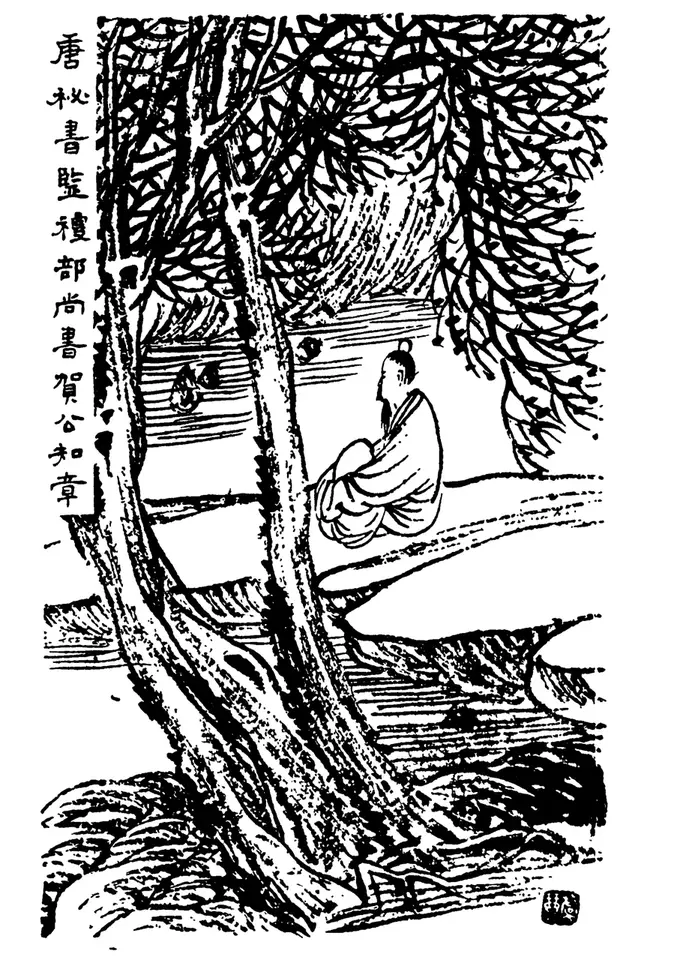
Historical portrait of He Zhizhang
Image creditsYu Qin · Public domainImage source

659 CE–744 CE

PoetCalligrapherand Official of the Tang Dynasty

He Zhizhang (贺知章)

贺知章

He Zhizhang (贺知章), courtesy name Jizhen (季真), who styled himself the "Madman of Siming" (Siming Kuangke), "Extra-Quota Director of the Palace Library" (Bishu Waijian), and Shichuang (石窗) in his later years, was a native of Yongxing County in Yuezhou (modern Xiaoshan District, Hangzhou, Zhejiang, having moved in his youth to Shanyin in Yuezhou) and a celebrated poet, calligrapher, and official of the Tang dynasty, widely…

659 CE–744 CETang Dynasty (唐朝)

PROFILE

He Zhizhang (贺知章), courtesy name Jizhen (季真), who styled himself the "Madman of Siming" (Siming Kuangke), "Extra-Quota Director of the Palace Library" (Bishu Waijian), and Shichuang (石窗) in his later years, was a native of Yongxing County in Yuezhou (modern Xiaoshan District, Hangzhou, Zhejiang, having moved in his youth to Shanyin in Yuezhou) and a celebrated poet, calligrapher, and official of the Tang dynasty, widely known as "Director He" (He Jian or He Bijian). Famous in his youth for his poetry and prose alongside Zhang Ruoxu, Zhang Xu, and Bao Rong as the "Four Scholars of Wuzhong," he placed first in the jinshi examination in the first year of the Zhengsheng era (695 CE)—the earliest documented top graduate (zhuangyuan) in Zhejiang history—and initially served as Erudite of the Four Gates School and Erudite of the Court of Imperial Sacrifices. Recommended by Zhang Yue in the tenth year of the Kaiyuan era (722 CE) to enter the Lizheng Palace Academy to compile the Six Statutes (Liudian) and Literary Compendium (Wenzuan), he subsequently served as Vice Chamberlain for Ceremonials, Vice Minister of Rites and Academician of the Academy of Scholarly Worthies, Right Mentor of the Household of the Heir Apparent, Reader-in-Waiting, and Vice Minister of Works, becoming Adviser to the Heir Apparent and Substantive Director of the Palace Library in 738 CE. Upon meeting Li Bai at Ziji Palace in Chang'an and reading his Hard Roads of Shu, he hailed Li Bai as a "banished immortal" and unfastened his golden tortoise tally to trade for wine. In the third year of the Tianbao era (744 CE), he petitioned to become a Daoist priest and retire to his hometown; Emperor Xuanzong granted him a bend of Mirror Lake (Jianhu) and composed farewell poems in his honor. Soon after returning to Shanyin and composing his famous Two Impromptu Poems on Returning Home, he died at the age of eighty-six and was posthumously honored as Minister of Rites in 758 CE.

Courtesy Name
Jizhen (季真)
Pseudonym
Madman of Siming (四明狂客), Extra-Quota Director of the Palace Library (秘书外监), Shichuang (石窗)
Dynasty
Tang Dynasty (唐朝)
Birthplace
Yongxing County, Yuezhou (越州永兴县, modern Xiaoshan District, Hangzhou, Zhejiang; moved early to Shanyin, Yuezhou)
Highest Office
Adviser to the Heir Apparent, Grandee of the Fifteenth Order, and Substantive Director of the Palace Library (太子宾客、银青光禄大夫兼正授秘书监; posthumously Minister of Rites 礼部尚书)
Major Offices
Erudite of the Four Gates School (国子四门博士), Erudite of the Court of Imperial Sacrifices (太常博士), Vice Chamberlain for Ceremonials (太常少卿), Vice Minister of Rites (礼部侍郎), Academician of the Academy of Scholarly Worthies (集贤院学士), Right Mentor of the Household of the Heir Apparent (太子右庶子), Imperial Reader-in-Waiting (侍读), Vice Minister of Works (工部侍郎)
Identity
Poet, Calligrapher, and Official of the Tang Dynasty

LIFE TIMELINE

Relationship graph

BIOGRAPHY

Chronology

  • 695 CE (1st year of Zhengsheng) | Placed First in the Jinshi Examination | Passed the jinshi examination in first place under Empress Wu Zetian; initially appointed Erudite of the Four Gates School and later Erudite of the Court of Imperial Sacrifices.
  • 722 CE (10th year of Kaiyuan) | Entered the Lizheng Palace Academy | Recommended by Zhang Yue to join the Lizheng Palace Academy to compile the Six Statutes and Literary Compendium, then promoted to Vice Chamberlain for Ceremonials.
  • 725 CE (13th year of Kaiyuan) | Vice Minister of Rites and Jixian Academician | Appointed Vice Minister of Rites and Academician of the Academy of Scholarly Worthies; subsequently served as Right Mentor of the Heir Apparent, Reader-in-Waiting, and Vice Minister of Works.
  • 738 CE (26th year of Kaiyuan) | Director of the Palace Library | Appointed Adviser to the Heir Apparent, Grandee of the Fifteenth Order, and Substantive Director of the Palace Library, earning the popular sobriquet "Director He."
  • 742 CE (1st year of Tianbao) | Trading the Golden Tortoise for Wine | Met the poet Li Bai at Ziji Palace in Chang'an, acclaimed him as a "banished immortal" after reading Hard Roads of Shu, and traded his golden tortoise ornament for wine.
  • 744 CE (3rd year of Tianbao) | Retirement to Mirror Lake | Petitioned after an illness to become a Daoist priest and return home; Emperor Xuanzong granted him a bend of Mirror Lake and held a grand court farewell, after which he composed Two Impromptu Poems on Returning Home and died at eighty-six.
  • 758 CE (1st year of Qianyuan) | Posthumous Minister of Rites | Emperor Suzong posthumously honored him as Minister of Rites in remembrance of his service as Reader-in-Waiting in the Eastern Palace.

Biography

Top Graduate and Service in the Imperial Academies

He Zhizhang, courtesy name Jizhen, was a native of Yongxing County in Yuezhou (modern Xiaoshan District, Hangzhou, Zhejiang) who moved in his early years to Shanyin in Yuezhou (modern Shaoxing, Zhejiang). Renowned for his poetry and prose from his youth, he shared equal literary fame with Bao Rong, Zhang Xu, and Zhang Ruoxu as the "Four Scholars of Wuzhong." In the first year of the Zhengsheng era (695 CE) during the reign of Wu Zetian, He Zhizhang passed the imperial examination in first place (zhuangyuan), becoming the earliest documented zhuangyuan in the history of Zhejiang. Following his success, he was first appointed Erudite of the Four Gates School in the Directorate of Education and later promoted to Erudite of the Court of Imperial Sacrifices, enjoying the high esteem of Chief Minister Lu Xiangxian.

In the tenth year of the Kaiyuan era (722 CE) of Emperor Xuanzong, Minister of War and Commissioner for Compiling Books at Lizheng Palace Zhang Yue recommended He Zhizhang for appointment to the Lizheng Palace Academy, where he participated in compiling major court works including the Tang Six Statutes (Tang Liudian) and the Literary Compendium (Wenzuan); before the compilations were completed, he was promoted to Vice Chamberlain for Ceremonials. In the thirteenth year of Kaiyuan (725 CE), when Emperor Xuanzong reorganized the Lizheng Academy into the Academy of Scholarly Worthies (Jixianyuan), He Zhizhang was appointed Vice Minister of Rites and Academician of the Academy of Scholarly Worthies on the same day—a dual honor that drew widespread admiration at court. Shortly thereafter, when Chief Ministers Yuan Qianyao and Zhang Yue hosted a banquet at the Academy of Scholarly Worthies, Emperor Xuanzong composed an imperial poem for the occasion, to which He Zhizhang responded with a matching verse. He subsequently served as Right Mentor of the Household of the Heir Apparent, Imperial Reader-in-Waiting to Crown Prince Li Heng (later Emperor Suzong), and Vice Minister of Works.

The "Madman of Siming" and Trading the Golden Tortoise for Wine

In the twenty-sixth year of Kaiyuan (738 CE), He Zhizhang was transferred to Adviser to the Heir Apparent and Grandee of the Fifteenth Order while concurrently serving as Substantive Director of the Palace Library (Bishujian) in charge of the imperial archives and book collections, for which contemporaries universally addressed him as "Director He" (He Jian). Easygoing, uninhibited, and witty by nature, He Zhizhang grew even more unconventional in his old age, wandering the alleys of the capital and styling himself the "Madman of Siming" (Siming Kuangke) and "Extra-Quota Director of the Palace Library" (Bishu Waijian). Whenever he grew elated over wine, he would seize a brush to compose verses and write large characters across walls and screens. In his Song of the Eight Immortals of the Wine Cup, Du Fu placed He Zhizhang first among the eight tipsy worthies, vividly depicting him riding his horse like a rocking boat and falling asleep at the bottom of a well after tumbling in blurry-eyed.

In the first year of the Tianbao era (742 CE), when the poet Li Bai first arrived in the capital Chang'an, he encountered He Zhizhang at the Daoist temple Ziji Palace. Having long admired Li Bai's poetry, He Zhizhang struck up a warm conversation with him and asked to see his latest works. Upon reading Li Bai's Hard Roads of Shu (Shudao Nan) and Song of the Roosting Crows, He Zhizhang marveled at his genius and exclaimed that Li Bai was a "banished immortal descended from heaven." That evening, He Zhizhang invited Li Bai to a tavern to drink; discovering upon taking his seat that he had brought no money, He Zhizhang unfastened the golden tortoise pouch hanging at his waist—an official insignia of the third rank or above—and pledged it to pay for the wine, creating the celebrated literary anecdote of "trading the golden tortoise for wine." He Zhizhang then warmly recommended Li Bai to Emperor Xuanzong, leading to Li Bai's summons to the Hanlin Academy.

Retirement to Mirror Lake and Poetic and Calligraphic Legacy

In the early months of the third year of Tianbao (744 CE), the octogenarian He Zhizhang fell seriously ill and became delirious. Upon recovering consciousness, he submitted a memorial requesting permission to be ordained as a Daoist priest and return to his native place, offering his family residence in Shanyin to be converted into a Daoist monastery (named Qianqiu Monastery by imperial decree) and requesting several hundred mu of Mirror Lake (Jianhu, also called Zhougong Lake) as a pond for releasing living creatures. Emperor Xuanzong approved his petition, bestowed upon him a bend of Mirror Lake for his retirement, appointed his son He Zeng (also named He Fu), Chief of Service in the Service for Palace Internal Arrangements, as Marshal of Kuaiji Commandery so that he could attend his father at home, composed two imperial farewell poems in his honor, and ordered the Crown Prince and all court officials to hold a grand farewell banquet for him at Changle Slope east of Chang'an. Returning to Qianqiu Monastery outside Wuyun Gate in Shanyin, He Zhizhang built the "One-Bend Pavilion" (Yiqu Ting) and composed his immortal Two Impromptu Poems on Returning Home (Huixiang Oushu Ershou), passing away shortly thereafter at the age of eighty-six. In the first year of the Qianyuan era (758 CE), Emperor Suzong issued an edict posthumously honoring him as Minister of Rites.

He Zhizhang left a lasting mark on both High Tang poetry and Chinese calligraphy. Nineteen titles (twenty poems and one fragment) of his verse survive today; excelling in five-character and seven-character quatrains (jueju), he carried forward Chen Zi'ang's emphasis on classical vigor and genuine human emotion while breaking free from the ornate conventions of early Tang court object-poems. His masterpiece Ode to the Willow (Yong Liu) likens the February spring breeze to a pair of scissors fashioning slender willow leaves, while Two Impromptu Poems on Returning Home captures the universal poignancy of returning home in old age with effortless, unadorned language. In calligraphy, He Zhizhang excelled in cursive (caoshu) and clerical (lishu) scripts, writing cursive characters ofthree to five hundred words at a stretch with flying brushstrokes that fused zhangcao antiquity with dynamic rhythm. The Tang calligraphy critics Dou Ji and Dou Meng praised his finest strokes as "vying with the Creator beyond the reach of human artifice." A close friend of Zhang Xu and Zhong Shaojing and a calligraphic mentor to the painter Wu Daozi, he left behind the famous cursive handscroll of the Classic of Filial Piety (Xiaojing, preserved in Japan) and the cliff inscription Record of Longrui Palace on Feilai Rock at Mount Wanwei in Shaoxing.
Personal Relationships

  • Son: He Zeng (also named He Fu, a name bestowed by Emperor Xuanzong), who served as Chief of Service in the Service for Palace Internal Arrangements and was transferred to Marshal of Kuaiji Commandery in 744 CE to care for his retiring father.
  • Patron and Colleague: Zhang Yue, Chief Minister and Commissioner for Compiling Books at Lizheng Palace, who recommended He Zhizhang into the Lizheng Academy in 722 CE.
  • Literary Friend: Li Bai, great High Tang poet, whom He Zhizhang hailed as a "banished immortal" at Ziji Palace in Chang'an, treated to wine by pledging his golden tortoise tally, and recommended to Emperor Xuanzong.
  • Calligraphic Friend: Zhang Xu, master of "wild cursive" script, paired with He Zhizhang among both the "Four Scholars of Wuzhong" and the "Eight Immortals of the Wine Cup."
  • Student in Calligraphy: Wu Daozi, the foremost painter of the High Tang, who studied brushwork under He Zhizhang and Zhang Xu.

Historical Evaluations

  • Li Bai, Remembering Director He over Wine (Duijiu Yi He Jian): "In Siming there was a mad guest, the dashing He Jizhen; at our first meeting in Chang'an, he called me a banished immortal."
  • Liu Xu et al., Old Book of Tang (Jiu Tangshu, "Biography of He Zhizhang"): "Zhizhang was uninhibited by nature and excelled in conversation and jest, so that the worthies and eminent men of the time all admired him... In his late years he grew even more unbridled and free of convention, styling himself the 'Madman of Siming' and 'Extra-Quota Director of the Palace Library,' roaming through the lanes and alleys."
  • Dou Ji, Rhapsody on Calligraphy (Shushu Fu, with commentary by Dou Meng): "Blessed by lakes and hills, the mad guest was dashing and free; his falling brush was exquisitely peerless, his fragrant verses without equal, like the radiant colors of a spring forest that dispel sorrow at a single glance... Whenever elated he called for a brush, delighting in writing large characters of three or five hundred words... suddenly achieving marvels that vied with Nature itself, beyond the reach of human skill."
  • Lü Zong, Continued Evaluations of Calligraphy (Xu Shuping): "He Zhizhang's cursive script darts like a flying brush, galloping onward without exhaustion."

Related Entries

  • Li Bai
  • Zhang Xu
  • Zhang Yue
  • Wu Daozi
  • Emperor Xuanzong of Tang

FIGURES ASSOCIATED WITH THIS DYNASTY

Bibliography

  • Liu Xu et al., Old Book of Tang (Jiu Tangshu), Vol. 190B, "Biographies of Literary Scholars: He Zhizhang"
  • Ouyang Xiu and Song Qi, New Book of Tang (Xin Tangshu), Vol. 196, "Biographies of Recluses: He Zhizhang"