Birth in Hainan
Born in Zhuneng Lane, Qiongshan County; lost his father at age four and was raised by his mother Lady Xie.
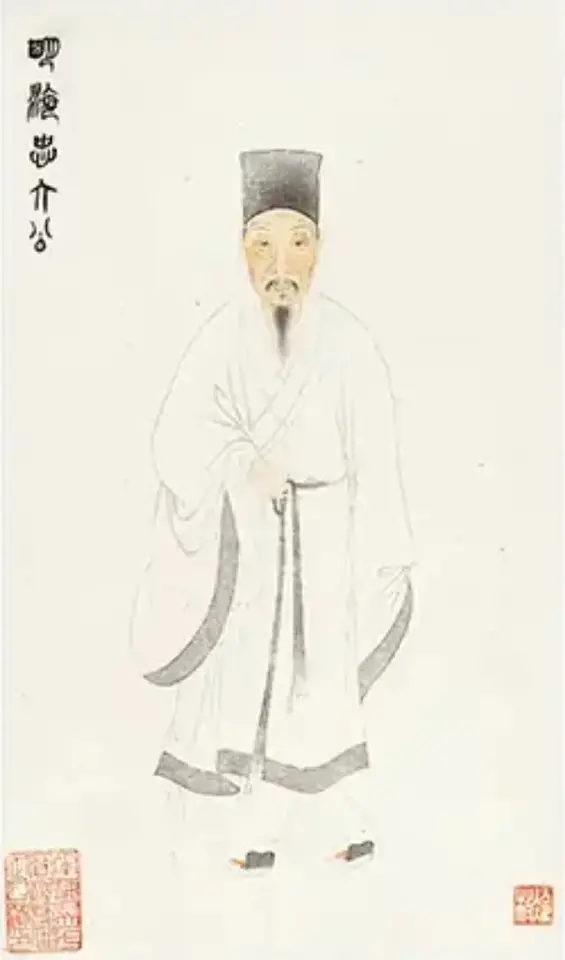
1514 CE–1587 CE
海瑞
Hai Rui (1514–1587), courtesy name Ruxian and art name Gangfeng, was a native of Qiongshan, Guangdong (modern Hainan). He was a distinguished statesman of the Ming dynasty, celebrated in Chinese historical memory as the archetype of official incorruptibility, uncompromising moral rectitude, and fearless remonstrance. Passing the provincial examinations in 1549, Hai served as Educational Instructor of Nanping, County…
Hai Rui (1514–1587), courtesy name Ruxian and art name Gangfeng, was a native of Qiongshan, Guangdong (modern Hainan). He was a distinguished statesman of the Ming dynasty, celebrated in Chinese historical memory as the archetype of official incorruptibility, uncompromising moral rectitude, and fearless remonstrance. Passing the provincial examinations in 1549, Hai served as Educational Instructor of Nanping, County Magistrate of Chun'an, and Magistrate of Xingguo. In local office, his principled refusal to kneel before superior inspectors earned him the moniker "Master Pen-Rack," while his enforcement of the Single Whip tax method and strict suppression of corrupt gentry endeared him to commoners. In 1566, while serving as a Secretary in the Ministry of Revenue, Hai purchased a coffin, bade farewell to his household, and submitted the historic Memorial on Good Government and Lasting Peace (Zhi'an Shu). The memorial criticized the Jiajing Emperor's decades-long neglect of state affairs and obsession with Daoist alchemy, famously punning that "Jiajing means every household is cleaned out of wealth." Imprisoned and condemned to death, Hai was liberated upon the Longqing Emperor's accession and elevated to Governor of Yingtian. In Jiangnan, Hai compelled powerful landlords, including retired Grand Secretary Xu Jie, to return tens of thousands of mu of usurped farmland to dispossessed peasants, while mobilizing 130,000 laborers to dredge the silted Wusong River and end decades of regional flooding, earning the popular title "Hai the Clear Sky" (Hai Qing Tian). In his twilight years, Hai served as Minister of Personnel and Right Censor-in-Chief in Nanjing, demanding strict application of ancient anticorruption statutes. He died in his official residence in 1587, leaving behind an estate of merely eight silver taels and several worn garments. His funeral was mourned by tens of thousands of citizens in white robes, and the Wanli Emperor conferred the posthumous title Zhongjie.
Born in Zhuneng Lane, Qiongshan County; lost his father at age four and was raised by his mother Lady Xie.
Passed the Guangdong provincial examination as a Juren; composed the statecraft treatise Strategy on Pacifying the Li People.
Appointed Educational Instructor of Nanping, Fujian; refused to kneel before the visiting education intendant, hailed as "Master Pen-Rack".
Appointed Magistrate of Chun'an, Zhejiang; audited land registers, punished the son of Commander Hu Zongxian, and rebuffed Yan Maoqing.
Transferred to Xingguo, Jiangxi; reformed agrarian corvee taxes and founded community schools, honored with living shrines.
Promoted to Secretary in the Ministry of Revenue; witnessed dynastic paralysis and systemic corruption in Beijing.
Purchased a coffin and submitted the Memorial on Good Government and Lasting Peace, denouncing the emperor; imprisoned in the imperial death cells.
Emperor Longqing ascended the throne, pardoning Hai Rui and restoring his official posts with swift promotions.
Elevated to Right Assistant Censor-in-Chief and Governor of Yingtian; enforced land restitution against Xu Jie and dredged the Wusong River.
Target of concerted attacks from regional scholar-gentry; resigned his post to live in retirement in Hainan for sixteen years.
Recalled by Emperor Wanli at age seventy-one; appointed Right Assistant Censor-in-Chief and Right Censor-in-Chief of Nanjing.
Promoted to Minister of Personnel of Nanjing, advocating strict penalties against official embezzlement.
Passed away in his Nanjing yamen on November 13 at age seventy-three, mourned by thousands of weeping citizens lining the Yangtze (posthumously conferred the rank of Grand Guardian of the Heir Apparent and the title Zhongjie in 1588).
Hai Rui was born on January 22, 1514 (the 27th day of the 12th lunar month, 8th year of Zhengde) in Zhuneng Lane, Qiongshan County, Qiongzhou Prefecture, Guangdong (modern Hainan Province). According to the Hai Clan Genealogy, his ancestor Hai Da'er had transferred from Guangzhou to Hainan during the early Ming dynasty. His great-grandfather Hai Da and grandfather Hai Zhao had both held office, the latter serving as Magistrate of Dexing in Jiangxi. His father, Hai Han, was a scholar who passed away when Hai Rui was four years old. His mother, Lady Xie, widowed at twenty-eight, committed herself to raising her only son. Enduring severe poverty, Lady Xie supported the household through continuous weaving and needlework. She enforced a demanding home education, prohibiting Hai Rui from idle street games or frivolous levity and requiring him to study classical texts from dawn until nightfall. Under this maternal regimen, Hai Rui developed an austere moral conviction and uncompromising integrity.
In his youth, Hai studied under the Hainan scholar Liang Yun, absorbing Cheng-Zhu Neo-Confucian doctrines of moral self-cultivation and practical statecraft. In 1549 (the 28th year of Jiajing), thirty-five-year-old Hai passed the Guangdong provincial examination as a Juren. During the examinations, he authored his celebrated policy essay Pingli Ce (Strategy on Pacifying the Li People), proposing highway construction through mountain bottlenecks, the creation of community schools, the abolition of predatory levies, and the establishment of fair trade markets to pacify indigenous conflicts on Hainan Island. However, in subsequent imperial metropolitan examinations in Beijing, his straightforward prose failed to conform to the ornate conventions of eight-legged essay examiners.
In 1553, Hai Rui was appointed Educational Instructor of Nanping County in Shaowu Prefecture, Fujian. Facing administrative laxity, Hai restored academic discipline and prohibited bribery. During this tenure, the Education Intendant of Fujian conducted an inspection of the county academy. While local magistrates and fellow instructors prostrated themselves upon the courtyard flagstones, Hai Rui stood erect in his ceremonial robes in the center of the hall, flanked by two kneeling assistants. The visual arrangement resembled a traditional three-pronged porcelain pen rack. Hai proclaimed: "This sanctuary is a sacred Confucian temple dedicated to Master Kong, not an administrative courtroom; instructors who serve as moral guides to scholars cannot debase their standing through servile prostration!" The inspector, though discomfited, found no statutory grounds for punishment. The incident spread throughout official circles, earning Hai Rui the title "Master Pen-Rack" (Bi Jia Xiansheng).
In 1558, Hai Rui was promoted to Magistrate of Chun'an County in Zhejiang. Chun'an was a mountainous and impoverished county burdened by exorbitant corvee duties. Hai personally surveyed arable acreage across the rugged hills, identified thousands of mu of covert estates concealed by gentry landlords, and instituted the Single Whip tax method (Yitiaobian Fa). In Chun'an, Hai demonstrated fearless defiance of high-ranking power holders. When the son of Supreme Commander Hu Zongxian passed through the county relay station and beat the local postal stationmaster over inadequate delicacies, Hai had the young aristocrat detained and confiscated thousands of silver taels hidden in his luggage. Hai remitted the bullion to the county granary, writing directly to Hu Zongxian: "Your Excellency is celebrated across the realm for austere frugality; this traveler masquerading as your son and beating civil officers must be an imposter, whom this magistrate has disciplined on your behalf." Hu Zongxian accepted the fait accompli without retaliation. Shortly thereafter, when Censor Yan Maoqing, an ally of Senior Grand Secretary Yan Song, toured Zhejiang and demanded banquet provisions from local magistrates, Hai provided only coarse vegetarian soup, posting a notice outside the station declaring that Chun'an was a destitute mountain county unable to accommodate extravagant retinues. Humiliated, Yan Maoqing bypassed the county, arranging Hai's transfer to Xingguo County in Jiangxi. In Xingguo, Hai repeated his reforms, auditing arable land, establishing charity granaries, and earning such veneration that grateful locals erected living shrines in his honor.
In 1564, following the recommendation of Minister of Personnel Yan Ne, Hai Rui was promoted to Beijing as a Secretary in the Yunnan Bureau of the Ministry of Revenue (a post of the sixth rank). The Ming empire faced a systemic administrative crisis. The Jiajing Emperor (Zhu Houcong), who had occupied the throne for forty-five years, had abandoned public imperial audiences for more than two decades, secluding himself in the West Park to cultivate Daoist immortality elixirs and write devotional green-ink poetry. Grand Secretaries Yan Song and Xu Jie offered flattering compliance, while border defenses degraded, coastal Wokou piracy disrupted maritime provinces, and recurrent famines devastated rural populations. Terrified of imperial wrath, court ministers maintained complicit silence.
Convinced that the dynasty faced destruction, Hai Rui resolved to offer his life to awaken the sovereign. In February 1566, fifty-two-year-old Hai purchased a cedar coffin using his personal savings. He said farewell to his mother and children, dismissed his few household servants, and donned his ceremonial robes to submit his comprehensive statecraft memorial, the Memorial on Good Government and Lasting Peace (Zhi'an Shu), through the Transmission Office.
In this document, Hai offered a direct critique of imperial conduct: "Your Majesty has resided in the West Park for more than twenty years, abandoning imperial audiences to pursue Daoist elixirs and illusory immortality. Imperial shrines remain neglected, communications between sovereign and court are severed, administrative discipline has dissolved, and the people of the empire are plunged into destitution." Hai then delivered his most memorable historical critique: "Officials are rapacious and garrisons are feeble; the people have found no justice under Your Majesty for a great duration! Courtiers flatter your inclinations, and none dare speak the truth! The very reign title 'Jiajing' signifies that every household is cleaned out of wealth and sustenance!" Hai concluded: "Were Your Majesty to awaken, rectify administration, and restore governance, the realm might yet be preserved. My life is of no consequence; I lay bare my heart, praying only that Your Majesty will heed this plea!"
Reading the memorial, the Jiajing Emperor flew into a rage, hurling the papers to the floor and shouting to the eunuch attendants: "Seize this man immediately! Do not allow him to escape!" Attendant Eunuch Huang Jin knelt and replied: "Your Majesty, this man is celebrated for foolish honesty. Having anticipated imperial execution, he purchased a cedar coffin, bade farewell to his aged mother and family, and awaits your command in his yamen. He will not attempt escape." Stunned, the emperor read the memorial repeatedly over subsequent weeks, sighing to his grand secretaries: "This man compares himself to the upright Bi Gan, yet I am no King Zhou of Shang." Nevertheless, stung by the public humiliation, Jiajing ordered Hai stripped of office, transferred to the Imperial Prison of the Ministry of Punishments, subjected to severe interrogation, and sentenced to execution in the autumn assizes. In the dank subterranean cells, Hai endured interrogation with equanimity, passing his days reading and composing poetry while awaiting execution.
On January 23, 1567, the Jiajing Emperor passed away in the West Park. Emperor Longqing (Zhu Zaiji) ascended the throne, issuing an imperial pardon for ministers punished for outspoken remonstrance. When prison wardens learned of the imperial amnesty and prepared a banquet to congratulate Hai Rui, Hai assumed he was being led to the execution ground, consuming the provisions with stoic calm. When informed of Jiajing's death and his imminent liberation, Hai collapsed onto the cell floor and wept, grieving with such intensity that he vomited blood and lost consciousness. His loyalty to the dynastic sovereign, transcending personal suffering, moved those present.
Following his release, Hai was restored to his ministerial post, serving as Seal Office Assistant Director, Court of Judicial Review Assistant Director, and Senior Assistant Director. In the summer of 1569 (Longqing 3), the court appointed Hai Rui as Right Assistant Censor-in-Chief and Governor of Yingtian, stationed in Suzhou and overseeing ten affluent prefectures across the lower Yangtze basin (including Suzhou, Songjiang, Changzhou, and Zhenjiang).
Across the lower Yangtze, powerful gentry clans and retired imperial officials had accumulated vast estates through mortgage foreclosures and fraudulent commendations, reducing millions of freeholders to landless tenancy. Even retired Senior Grand Secretary Xu Jie possessed an estimated 240,000 mu of fertile farmland across Songjiang. Upon arriving in Suzhou, Hai erected a public petition chest outside his yamen, issuing notices inviting dispossessed peasants to submit grievances directly. Within a month, thousands of petitions inundated the governorship.
Hai Rui issued his celebrated Land Restitution Edicts. He decreed that all estates acquired through usury, intimidation, or fraudulent tax shelter must be restored to their original owners. Toward Xu Jie, who had previously protected Hai during the 1566 crisis, Hai showed no personal favoritism, writing: "Your past protection of Hai Rui was an act of personal virtue; this commissioner's demand that your household restore usurped acreage is an execution of public law. If your clan will not surrender half your holdings, how can we satisfy the expectations of the populace?" Compelled by Hai's resolve, Xu Jie surrendered tens of thousands of mu and yielded abusive retainers to the law. Over his brief tenure, Hai restored hundreds of thousands of mu of fertile farmland to peasant cultivators across southern Jiangsu, dismantling gentry monopolies.
Beyond land restitution, Hai orchestrated hydraulic engineering projects to resolve chronic flooding across the Lake Tai basin. The silted channels of the Wusong River regularly backed up floodwaters, submerging hundreds of thousands of mu of rice fields. Hai conducted personal hydrological surveys in winter rain along the watercourses. Rejecting corrupt contracting systems, he mobilized 130,000 peasant laborers under a public-relief labor program (Yigong Daizhen). Hai camped on the sodden dykes, supervising the widening and dredging of over 130 li of the Wusong River bed, while clearing the Baimao River and constructing durable floodgates to discharge Lake Tai runoff directly into the ocean. The drainage network secured millions of mu of prime agrarian land from flooding, ensuring harvest stability for decades. Grateful citizens hung his portrait in their homes, revereing him as "Hai the Clear Sky" (Hai Qing Tian).
Hai Rui's land reforms and anti-corruption policies provoked a backlash from regional gentry and metropolitan censors. Officials such as Supervising Secretary Dai Fengxiang attacked Hai, denouncing him as "impractical, obstinate, and subversive of scholarly standing." Under pressure from gentry factions, Emperor Longqing transferred Hai to manage the grain reserves in Nanjing in early 1570. Recognizing that court factions rejected his reforms, Hai resigned his post and returned to Hainan.
For sixteen years (1570–1585), Hai lived in seclusion in Qiongshan County. Despite national fame, he lived in poverty, residing in a small three-room cottage, cultivating vegetables, weaving his own straw shoes, and rejecting gifts from regional officials. When Grand Secretary Zhang Juzheng instituted the Single Whip tax reforms during the Wanli reign, he drew upon Hai's methods in Chun'an, but hesitated to employ Hai's unyielding temperament in senior office.
In 1585 (Wanli 13), following Zhang Juzheng's death, Emperor Wanli recalled seventy-one-year-old Hai to imperial service as Right Assistant Censor-in-Chief in Nanjing, and subsequently Minister of Personnel of Nanjing (a post of the first rank). Despite his advanced age, Hai remained unbending in his principles. He proposed reviving the severe anti-corruption statutes of Ming Taizu—under which officials embezzling more than sixty taels of silver were executed and flayed—striking fear into corrupt bureaucratic circles.
On November 13, 1587 (the 14th day of the 10th lunar month, 15th year of Wanli), Hai Rui passed away in his official residence in Nanjing at age seventy-three. Assistant Censor Wang Jimo, a confidant who oversaw the funeral arrangements, opened Hai's chests to discover that the first-rank minister possessed only eight taels and two mace of silver, several worn hempen robes, and two old wooden hampers. Colleagues contributed personal funds to purchase a modest coffin.
When the news of his passing reached the streets, markets across Nanjing closed in spontaneous mourning. When his funeral convoy embarked along the Yangtze River toward Hainan, tens of thousands of citizens dressed in white mourning robes lined the riverbanks for miles, burning incense and weeping. Emperor Wanli suspended court proceedings, conferring the posthumous title Zhongjie (Loyal and Principled), elevating him to Grand Guardian of the Heir Apparent, and constructing an imperial mausoleum in Binye Village in Qiongshan for perpetual veneration.
Hai Rui's most celebrated historic achievement was submitting the Memorial on Good Government and Lasting Peace (Zhi'an Shu) in 1566. Confronting an autocrat who had secluded himself for decades in pursuit of Daoist immortality, Hai Rui, as a low-ranking secretary, risked execution to address imperial misconduct. Purchasing his own coffin and saying farewell to his household, he exposed the moral and fiscal bankruptcy of the court, delivering the famous indictment that "Jiajing means every household is cleaned out of wealth." His memorial challenged bureaucratic sycophancy, exemplifying the Confucian duty to place righteousness and the welfare of the common people above personal survival.
During his tenure as Governor of Yingtian, Hai Rui carried out an aggressive program of land restitution against regional gentry families in Ming history. Confronting entrenched landlord networks that had foreclosed upon smallholders across the Lake Tai basin, Hai enforced statutory reviews of disputed deeds. He required powerful clans, including the household of former Senior Grand Secretary Xu Jie, to restore hundreds of thousands of mu of usurped farmland to peasant cultivators. By curbing gentry tax evasion and reestablishing smallholder farming, Hai provided temporary economic relief to the agrarian population of the lower Yangtze.
Hai Rui achieved lasting engineering contributions through his dredging of the Lake Tai drainage basin. Investigating hydrological conditions along the riverbanks in freezing rain, Hai developed an integrated drainage strategy to channel excess floodwaters into the ocean. Rejecting corrupt subcontractor systems, he mobilized 130,000 displaced laborers under an organized public works program, completing the excavation and deepening of over 130 li of the Wusong River and clearing the Baimao channel. This engineering feat preserved millions of mu of farmland across Suzhou, Changzhou, and Songjiang, laying the hydraulic foundation for regional agricultural productivity.
Hai Rui remains the supreme symbol of bureaucratic incorruptibility in Chinese history. Over a thirty-year official career culminating in first-rank ministerial office, he maintained monastic simplicity, refusing bribes, gifts, and customary administrative surcharges. He lived on coarse grains and wore rough cotton garments, his purchase of two catties of pork for his mother's birthday becoming legendary news throughout the province. Upon his death, he left an estate of merely eight silver taels, requiring friends to pay for his burial. His life established a lasting standard of administrative rectitude, inspiring centuries of Chinese public ethics.
FIGURES ASSOCIATED WITH THIS DYNASTY