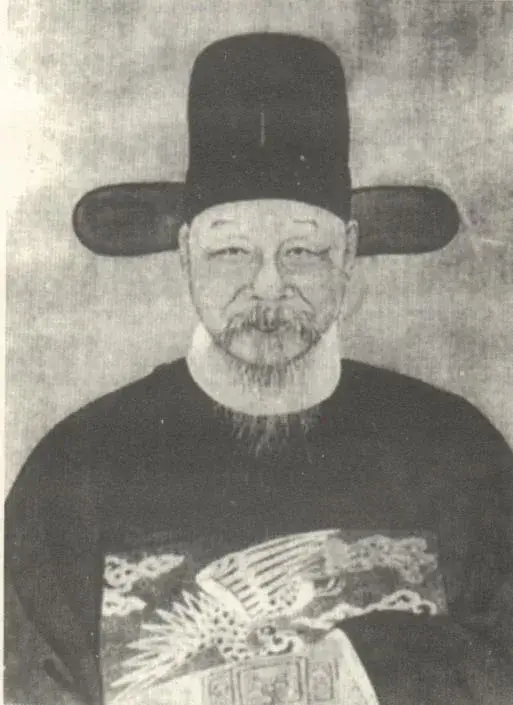
Biography
Early Brilliance and Entering Officialdom (1550–1580)
Gu Xiancheng was born on September 17, 1550, in Jingli, Wuxi County, Changzhou Prefecture, South Zhili (modern Wuxi, Jiangsu Province), into an established agrarian-scholarly family. His lineage had long maintained a tradition of agricultural labor combined with Confucian schooling. Endowed with acute intelligence, an astonishing memory, and a disciplined demeanor, Gu Xiancheng demonstrated an early determination to emulate the ancient sages. He pursued foundational classical training under the tutelage of regional scholar Zhang Qi before entering the academy of Xue Yingqi, a prominent master of the Cheng-Zhu school of Neo-Confucianism, where he absorbed the imperative of integrating internal self-cultivation with practical service to society.
In 1576, at the age of twenty-seven, Gu Xiancheng journeyed to Nanjing to take part in the Yingtian provincial examinations. Distinguishing himself through profound essays and immaculate ethical disquisitions, he secured first place, earning the prestigious rank of Jieyuan and gaining wide admiration throughout Jiangnan. In the spring of 1580, he traveled to the imperial capital Beijing for the metropolitan examinations, graduating twentieth in the second class of Jinshi recipients. Upon graduation, he was commissioned by the Ministry of Personnel as a Secretary in the Guangdong Bureau of the Ministry of Revenue, embarking upon his career within the imperial government.
Upon assuming administrative duties, Gu Xiancheng immediately demonstrated absolute dedication to personal integrity and bureaucratic independence. At that time, Senior Grand Secretary Zhang Juzheng wielded nearly dictatorial power over the civil administration. When Zhang fell mortally ill in 1580, capital officials sought to ingratiate themselves with his inner circle by organizing mass Daoist and Buddhist prayer services, compiling lengthy registries of participating courtiers. When a departmental colleague added Gu Xiancheng's name to the petition without his knowledge, Gu firmly crossed his own signature off the registry with ink. He calmly proclaimed that imperial officials must conduct state affairs according to established dynastic laws rather than pandering to powerful patrons, instantly establishing his reputation for fearless rectitude throughout the capital.
Remonstrance and Provincial Exile (1582–1592)
Following the death of Grand Secretary Zhang Juzheng in 1582, Gu Xiancheng was reassigned as Secretary in the Ministry of Personnel. Shortly thereafter, he took a three-year leave of absence due to illness, returning to the capital in 1586 to fill a vacancy in the Bureau of Honors. During this interval, his younger brother Gu Yuncheng, then serving as Secretary in the Ministry of Rites, submitted an outspoken memorial criticizing imperial inertia and was demoted to a distant provincial outpost. While fellow bureaucrats expressed grave concern for the Gu family's prospects, Gu Xiancheng remained completely steadfast, commending his younger brother for upholding his duty as an imperial remonstrator without fear of personal consequence.
In 1587, the court convened the grand triennial Capital Evaluation of metropolitan officials, presided over by Censor-in-chief Xin Zixiu. When Xin Zixiu included Minister of Works He Qiming in the list of ministers censured for administrative incompetence, powerful figures within the Grand Secretariat intervened, instigating Supervising Secretary Chen Yujiao to lodge counter-charges against Xin. The controversy culminated in the simultaneous dismissal of both Xin Zixiu and He Qiming, accompanied by severe imperial reprimands against four censors who had dared to investigate the matter. Outraged by the court's willingness to sacrifice righteous censors to shield bureaucratic favorites, Gu Xiancheng composed his famous memorial, "In Defense of Xin Zixiu," fearlessly excoriating the Grand Secretariat for obfuscating the boundary between honorable ministers and self-serving sycophants.
The memorial caused an immense stir at court, infuriating both the cabinet and the Wanli Emperor, who accused Gu Xiancheng of reckless arrogance and seeking personal celebrity through insolence. The emperor summarily demoted Gu Xiancheng by several ranks, banishing him to the remote, malarial border region of Guiyang in southern Huguang as a magistrate's clerk. Accepting his banishment with serene dignity, Gu Xiancheng devoted himself to resolving local litigation and clearing backlogged dockets. He was subsequently transferred to serve as judicial judge (Tuiguan) in Chuzhou, Zhejiang, but took leave upon the passing of his mother Lady Qian to observe filial mourning. Upon completing the mourning period, he was assigned as judge in Quanzhou, Fujian, where his impartial administration and relief of excessive tax burdens earned him the highest rating for integrity in the empire.
Personnel Administration and Imperial Expulsion (1592–1594)
Recognizing Gu Xiancheng's exceptional administrative talent and impeccable moral reputation, Personnel Minister Lu Guangzu petitioned the throne in 1592 for his recall to Beijing, securing his appointment as Secretary in the Bureau of Evaluations and soon elevating him to Vice Director. In 1593, during the historic Guisi Capital Evaluation, Gu collaborated closely with newly appointed Personnel Minister Sun Long and Evaluations Director Zhao Nanxing. Resolutely disregarding political pressure, they systematically dismissed, demoted, or reprimanded dozens of corrupt officials, sycophants, and partisan allies of Senior Grand Secretary Wang Xijue, cleansing the central administration of corrupt patronage networks.
Predictably, the purged factions rallied to mount a venomous counter-strike, securing an imperial decree that dismissed Zhao Nanxing from office. Refusing to let his colleague bear the blow alone, Gu Xiancheng submitted multiple urgent memorials demanding that he be dismissed alongside Zhao, though the emperor ignored his pleas. Gu was subsequently promoted to Director of the Bureau of Civil Appointments, holding ultimate authority over bureaucratic promotions across the empire. During the bitter succession conflict known as the "Dispute over the Fundamental Basis of the State" (Guoben Zhi Zheng), the Wanli Emperor sought to bypass his eldest son Zhu Changluo in favor of Zhu Changxun, the son of his favored consort Lady Zheng, proposing to enfeoff all three imperial sons as princes simultaneously to postpone naming an heir apparent. Gu Xiancheng allied with Revenue Minister Li Shida to vehemently oppose the scheme, forcing the emperor to abandon the simultaneous enfeoffment.
Concurrently, when Senior Grand Secretary Wang Xijue attempted to install his partisan Luo Wanhua as Minister of Personnel, Gu Xiancheng stood firm, successfully securing the appointment of the universally respected Chen Younian. In 1594, upon Wang Xijue's retirement, the court held the grand deliberation (Tingtui) to select a replacement grand secretary. Gu Xiancheng nominated former grand secretary Wang Jiaping, an uncompromising moralist who had previously resigned over the succession dispute. This choice thoroughly enraged the Wanli Emperor, who interpreted the nomination as a deliberate challenge to imperial prerogative. The emperor issued an imperial edict accusing Gu of forming an illicit cabal, summarily stripping him of his official registry and expelling him from public service.
Restoration of Donglin and Academies of Protest (1604–1612)
Following his expulsion from office in the autumn of 1594, Gu Xiancheng returned to his ancestral home in Wuxi. Over the subsequent decade, reform-minded courtiers submitted dozens of memorials urging his reinstatement to high office, but the emperor stubbornly refused to acknowledge them. Realizing that bureaucratic politics offered no avenue for imperial salvation, Gu Xiancheng turned his energies to moral philosophy and educational reform. In 1604, noting that the historic Donglin Academy—where Northern Song Neo-Confucian master Yang Shi had once lectured—lay in ruins, he joined his brother Gu Yuncheng, along with Gao Panlong, An Xifan, Qian Yiben, Xue Fujiao, Ye Maocai, and Liu Yuanzhen, in raising funds to reconstruct the compound.
Upon the academy's completion, Gu Xiancheng drafted the rigorous "Donglin Covenant," establishing biannual regional assemblies and monthly discussion sessions that attracted scholars, students, and retired officials from across the realm. Lecturing personally in the Yiyong Hall, Gu insisted that philosophical inquiry must directly address the moral health of the state, composing his immortal couplet for the academy gate: "The sound of wind, the sound of rain, the sound of reading: every sound enters the ear; domestic affairs, national affairs, affairs of all under heaven: every affair concerns the heart." Under his leadership, the Donglin Academy became the epicenter of a nationwide intellectual movement dedicated to revitalizing Confucian ethical standards and subjecting central policies, fiscal abuses, and administrative malpractice to outspoken public critique.
This unprecedented mobilization of public opinion enraged corrupt courtiers and eunuch factions, who began denouncing the Donglin scholars as a subversive faction. In 1608, when Huai River Governor Li Sancai was slandered by court sycophants for resisting predatory imperial mining taxes, Gu Xiancheng authored open letters to Grand Secretary Ye Xianggao and Personnel Minister Sun Piyang defending Li's integrity. When the correspondence was published in the capital gazette, reactionary ministers launched vicious attacks, accusing Gu of functioning as an "invisible premier" who dictated court policy from the provinces. Unmoved by the political storm, Gu Xiancheng continued his lectures and philosophical writing at the academy until his death from illness on June 21, 1612, at the age of sixty-three.
Posthumous Persecution and Final Vindication (1612–1628)
In the years following Gu Xiancheng's death, the factional struggles of the late Ming intensified dramatically. During the brief reign of Emperor Taichang (1620) and the early years of Emperor Tianqi, the court honored Gu's exemplary integrity by posthumously promoting him to Chief Minister of the Court of Imperial Sacrifices (Taichang Si Qing). However, this brief resurgence was violently suppressed with the rise of the notorious eunuch dictator Wei Zhongxian, who seized total control of the imperial government and initiated a ruthless purge against the reformist scholar-gentry.
Branding all who opposed his tyranny as members of a treasonous "Donglin Faction," Wei Zhongxian compiled the defamatory San Chao Yao Dian and Donglin Dianjiang Lu, unleashing terrifying arrests, torture, and executions against leading Donglin figures such as Yang Lian, Zuo Guangdou, and Gao Panlong, while ordering the physical destruction of the Donglin Academy. Despite having been dead for over a decade, Gu Xiancheng was branded as the ideological mastermind of the movement; in 1625, the imperial court issued a decree stripping him of his posthumous honors, ancestral titles, and official rank.
This dark chapter ended in 1628, when the newly enthroned Chongzhen Emperor executed Wei Zhongxian, dismantled the eunuch clique, and issued sweeping imperial decrees rehabilitating the persecuted Donglin martyrs. Gu Xiancheng was fully restored to historical honor, posthumously promoted to Vice Minister of Personnel, and granted the illustrious posthumous title Duanwen ("Upright and Cultured"). The imperial government funded the reconstruction of the Donglin Academy and established the Gu Duanwen Memorial Shrine in Wuxi, enshrining Gu Xiancheng as an enduring paragon of civic duty and scholarly integrity in Chinese history.
Key Achievements
Restoration of the Donglin Academy and Its Moral Mission
In 1604, Gu Xiancheng transformed late Ming intellectual history by orchestrating the comprehensive reconstruction of the historic Donglin Academy in Wuxi, which had lain abandoned for more than two centuries. Collaborating with Gao Panlong and fellow reformers, he drafted the foundational "Donglin Covenant," creating a structured curriculum centered upon ethical self-cultivation, classical analysis, and public responsibility, elevating the academy far above conventional examination-prep institutions.
To counter the growing political apathy and cynicism of the scholar-gentry, Gu Xiancheng authored the renowned couplet for the academy's lecture hall: "The sound of wind, the sound of rain, the sound of reading: every sound enters the ear; domestic affairs, national affairs, affairs of all under heaven: every affair concerns the heart." This celebrated motto redefined the social obligation of Chinese intellectuals, insisting that scholarly reflection must culminate in active engagement with public welfare and national governance. By creating a national network of regular scholarly assemblies, he mobilized a generation of principled scholars who stood as a powerful ethical barrier against late Ming autocracy.
Philosophical Critique of Radical Intuitionism
Within late Ming intellectual history, Gu Xiancheng played an indispensable role in redirecting Chinese philosophy away from speculative excess toward practical statecraft. During his era, the widespread popularity of Wang Yangming's School of Mind had deteriorated into radical intuitionism, where late followers embraced Daoist and Chan Buddhist quietism, dismissed classical moral norms, and abandoned societal responsibilities. Gu Xiancheng launched a sustained philosophical critique of this trend, directing his arguments particularly against the radical formulation that "the mind's essence is beyond good and evil."
Gu argued that erasing the distinction between good and evil represented a dangerous subversion of fundamental Confucian ethics that paralyzed social morality. Opposing the passive belief in "ready-made innate moral knowledge," he advocated rigorous personal cultivation through "concrete practice" and "active moral vigilance." By insisting that philosophical inquiry must yield concrete benefits for state administration, hydraulic engineering, military logistics, and agrarian economics, Gu Xiancheng spearheaded the resurgence of early modern Chinese practical learning (Shixue), laying the intellectual groundwork for Qing-era giants like Gu Yanwu and Huang Zongxi.
Pioneering Independent Public Discourse and Ministerial Accountability
As the acknowledged intellectual leader of the late Ming reformist movement, Gu Xiancheng established an unprecedented precedent for independent scholar-led oversight of imperial governance. Operating entirely as a private citizen from his lecture halls in Jiangnan, he challenged the arbitrary authority of the inner court, coining the famous critique: "Whatever outsiders deem right, the imperial court inevitably declares wrong; whatever outsiders deem wrong, the imperial court inevitably declares right."
Furthermore, he proclaimed the revolutionary principle that "judgments of right and wrong under heaven must originate from the people under heaven," arguing that political legitimacy and moral judgment resided in broad societal consensus rather than the autocratic whim of the monarch or his inner circle. Through extensive correspondence and published commentaries, he provided vital moral support to upright magistrates combating predatory imperial mining taxes and administrative corruption. This fearless assertion of scholar-gentry independence established an enduring model of moral resistance against autocratic tyranny in pre-modern China.