Born | Born; the year of birth is inferred and not explicitly recorded in the sources
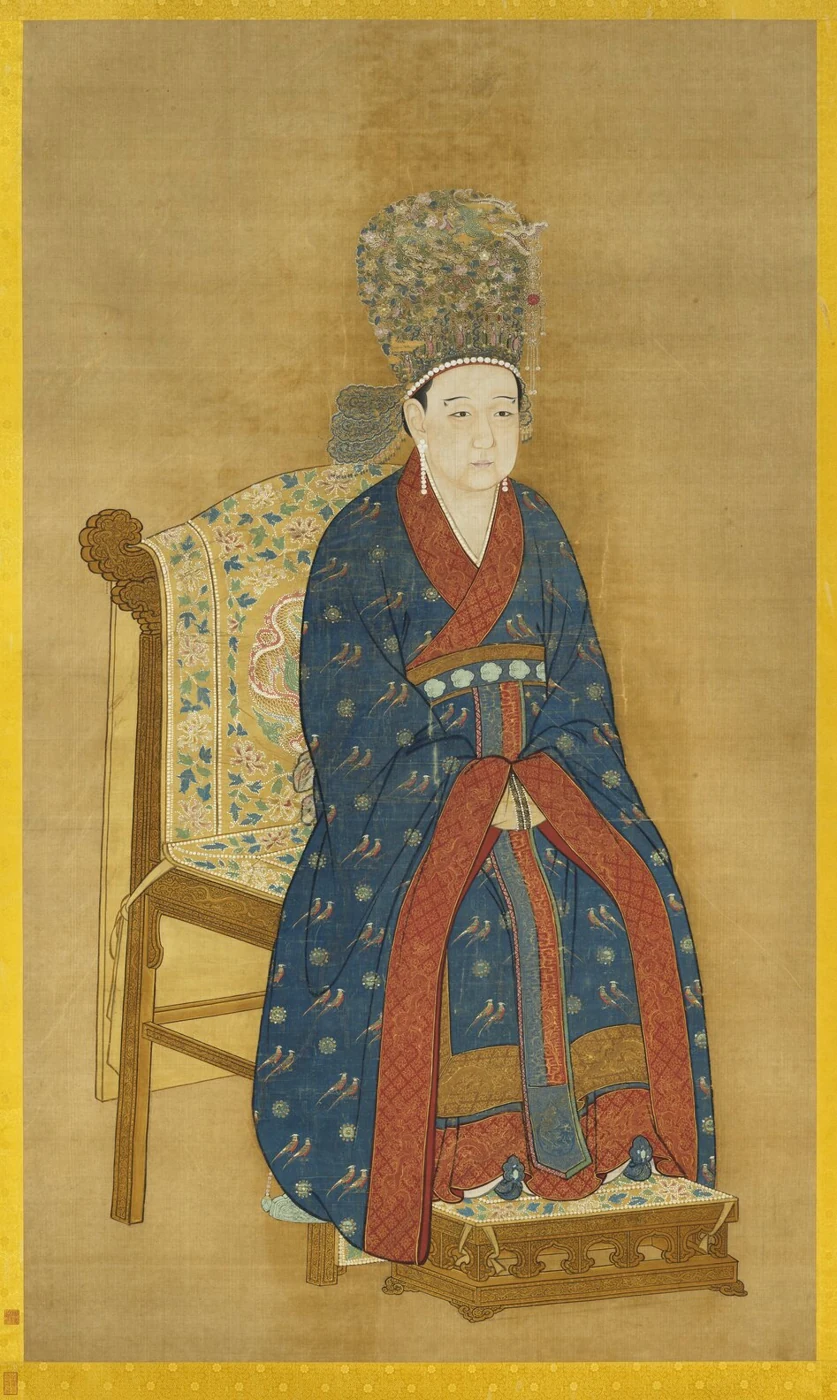
1162 CE–1232 CE
Empressregent
Empress Yang
杨氏(宋宁宗皇后)
Empress Yang (1162–1233), posthumously Empress Gongshengrenlie, was the successor empress of Emperor Ningzong of Song, Zhao Kuo, and an important political figure in the later Southern Song. Born to humble circumstances, she entered the palace while young as the adopted daughter of a court musician and later won the favor of Empress Dowager Wu, who presented her to Ningzong. She was made Noble Consort in 1197, the third year…
1162 CE–1232 CESouthern Song
PROFILE
Empress Yang (1162–1233), posthumously Empress Gongshengrenlie, was the successor empress of Emperor Ningzong of Song, Zhao Kuo, and an important political figure in the later Southern Song. Born to humble circumstances, she entered the palace while young as the adopted daughter of a court musician and later won the favor of Empress Dowager Wu, who presented her to Ningzong. She was made Noble Consort in 1197, the third year of the Qingyuan era, and empress in 1202, the second year of the Jiatai era. In Ningzong's later years, she formed an alliance with the powerful Grand Councilor Shi Miyuan. After Ningzong died in 1224, the seventeenth year of the Jiading era, they issued a falsified imperial order that displaced the imperial son Zhao Hong and enthroned Zhao Yun as Emperor Lizong. She then ruled from behind the curtain as empress dowager. Active across the reigns of Ningzong and Lizong, she exerted a lasting influence on Southern Song politics. She was also accomplished in poetry and calligraphy and was known in Song art history as “Yang Meizi”; poems and inscriptions associated with her appear on works by court painters such as Ma Yuan and Xia Gui. She died on January 18, 1233 (seventh day of the twelfth lunar month of Shaoding 5), received the posthumous title Empress Gongshengrenlie, and was interred with Ningzong at Yongmao Mausoleum.
- Other Names
- Empress Yang, Yang Meizi, Empress Yang Gongsheng
- Period
- Song · Southern Song
- Date of Birth
- 1162
- Date of Death
- 1233
- Dynasty/Regime
- Song · Southern Song
- Identity
- Empress, regent
- Ethnicity
- Not reliably established in existing sources
- Native Place
- Zouping County, Shandong
- Place of Birth
- Unknown
- Tenure as Empress
- Not reliably established in historical sources
- Posthumous Title
- Empress Gongshengrenlie
- Major Achievements
- Successor empress of Emperor Ningzong of Song; allied with Shi Miyuan in enthroning Emperor Lizong and repeatedly intervened in court politics under Ningzong and Lizong.
- Courtesy / Art Name
- Empress Yang, Yang Meizi, Empress Gongsheng Yang
- Era
- Song · Southern Song
- Dynasty
- Song dynasty (Southern Song)
- Ancestral Home
- Zouping county of Shandong
- Place of Death
- Unknown
- Lifespan
- 71 years old
- Highest Office
- See the Biography section
- Major Offices
- See the Biography section
- Peerage
- Prince of Yongyang commandery
- Posthumous Name
- Empress Gongsheng Renlie
LIFE TIMELINE
Empress Yang (1162–1233) | Empress Yang (1162–1233), posthumously Empress Gongshengrenlie, was the successor empress of Emperor Ningzong of Song, Zhao Kuo, and an important political figure in the later Southern Song.
Entry to the palace | She entered the palace and was raised by Empress Dowager Wu.
Entered the palace and was raised by Empress Dowager Wu | Entered the palace and was raised by Empress Dowager Wu
In 1194 | In 1194, the fifth year of Shaoxi, Zhao Kuo became Emperor Ningzong.
Emperor Ningzong ascended the throne | Emperor Ningzong ascended the throne; Yang was appointed Jieyu
Promotion to Consort and Investiture as Empress In 1197 | ### Promotion to Consort and Investiture as Empress In 1197, the third year of Qingyuan, Yang was promoted from Jieyu to Noble Consort.
Promoted to Noble Consort | Promoted to Noble Consort
In December 1202 | In December 1202, Yang was invested as empress.
Invested as empress | Invested as empress
Ningzong died | Ningzong died; together with Shi Miyuan, issued a falsified edict enthroning Zhao Yun as emperor, later known as Lizong; ruled from behind the curtain as empress dowager
Ningzong's Final Years and the Falsified Edict Enthroning Lizong In the intercalary ei | ### Ningzong's Final Years and the Falsified Edict Enthroning Lizong In the intercalary eighth month of 1224, the seventeenth year of Jiading, Emperor Ningzong died.
Emperor Lizong honored her as Empress Dowager Shouming | Emperor Lizong honored her as Empress Dowager Shouming; her elder brother Yang Cishan was made Prince of Yongyang in the same year
In the third month of 1225 | In the third month of 1225, Lizong honored her as Empress Dowager Shouming.
In 1228 | In 1228, the first year of Shaoding, Lizong added the title Empress Dowager Shouming Cirui; in 1230, he enlarged it again to Empress Dowager Shouming Renfu Cirui.
In 1228 | In 1228, the first year of Shaoding, Lizong added the title Empress Dowager Shouming Cirui; in 1230, he enlarged it again to Empress Dowager Shouming Renfu Cirui.
Death | She died and received the posthumous name Empress Gongsheng Renlie, being buried in the Yongmao Mausoleum.
Lizong added the honorific title Empress Dowager Shouming Cirui | Lizong added the honorific title Empress Dowager Shouming Cirui
BIOGRAPHY
Biography
Family Background and Early Life Unlike most Song empresses, Empress Yang did not come from an eminent family. The “Biographies of Empresses and Consorts” in the History of Song records that she “was selected into the palace while young.” Her family origins are unknown; her mother died early and she was later adopted by a court musician surnamed Zhang, after which she used the surname Zhang. Some records identify her as a native of Kuaiji, in present-day Shaoxing, Zhejiang, but the official histories do not provide details. The exact year in which she entered the palace cannot be determined. It was probably during the Chunxi era of Emperor Xiaozong (1174–1189), when, as the adopted daughter of a musician, she was selected for service at Deshou Palace under Empress Wu of Emperor Gaozong, also known as Empress Xiansheng Cilie. Empress Dowager Wu found her well read in history, knowledgeable about past and present affairs, and quick-witted, and therefore kept her close and educated her. Yang spent her youth in Wu's palace studying calligraphy and literature. This education later supported her activity in court politics and the arts. In 1194, the fifth year of Shaoxi, Zhao Kuo became Emperor Ningzong. Empress Dowager Wu, then grand empress dowager, presented Yang to Ningzong. She was first appointed Jieyu and later promoted to Noble Consort. ### Promotion to Consort and Investiture as Empress In 1197, the third year of Qingyuan, Yang was promoted from Jieyu to Noble Consort. Ningzong's principal wife, Empress Han, a niece of Han Tuozhou, was still alive. Noble Consort Yang ranked second in the harem and shared imperial favor with another Noble Consort, Lady Cao. After Empress Han died in 1202, the second year of Jiatai, competition arose over the vacant position of empress. Both Yang and Cao were favored. Grand Councilor Han Tuozhou, concerned that Yang's humble origin and alert temperament might become a threat if she gained power, urged Ningzong to select Cao instead. Yang, however, had established herself in the palace over many years, had support in the outer court from Yang Cishan—described as her brother, or in some accounts her maternal half-brother—and was preferred by Ningzong himself. In December 1202, Yang was invested as empress. After becoming empress, Yang continued to resent Han Tuozhou for having opposed her elevation. In 1207, the third year of Kaixi, Han's northern expedition failed and the Jin demanded his head. Empress Yang and Shi Miyuan conspired to issue a false edict ordering Han Tuozhou's killing at Yujin Garden. This was the first occasion on which she became deeply involved in government and marked the beginning of her political alliance with Shi Miyuan. ### Ningzong's Final Years and the Falsified Edict Enthroning Lizong In the intercalary eighth month of 1224, the seventeenth year of Jiading, Emperor Ningzong died. He had no surviving biological heir. He had earlier adopted the imperial clansman Zhao Xun as an imperial son, but Zhao Xun died in 1220. He later adopted Zhao Hong, who strongly resented Shi Miyuan's domination of government and was reported to have said that he would someday kill Shi. Shi therefore regarded him as a serious threat. As Ningzong lay dying, Shi Miyuan and Empress Yang secretly planned to displace Zhao Hong, reduce him to Prince of Ji, and enthrone another imperial clansman, Zhao Yun, who became Emperor Lizong of Song. Empress Yang played a decisive role. According to the “Biographies of Empresses and Consorts” in the History of Song, Shi Miyuan sent his son-in-law Zheng Qingzhi to secretly contact Yang Cishan and ask him to obtain the empress's approval for replacing Zhao Hong with Zhao Yun. She initially refused, saying in substance that the imperial son had been selected by the late emperor and that she dared not alter the succession on her own. After repeated persuasion by Yang Cishan and others, she agreed. On the day Ningzong died, Shi Miyuan issued a falsified edict enthroning Zhao Yun. Zhao Hong was displaced and in 1225, the first year of Baoqing, was forced to hang himself in Huzhou. ### Regency and Later Years Lizong was only twenty when he took the throne, and Empress Yang ruled from behind the curtain as empress dowager. In the third month of 1225, Lizong honored her as Empress Dowager Shouming. During the regency, she and Shi Miyuan together dominated the court, although her direct participation in routine government was limited and major decisions were usually led by Shi. In 1228, the first year of Shaoding, Lizong added the title Empress Dowager Shouming Cirui; in 1230, he enlarged it again to Empress Dowager Shouming Renfu Cirui. Empress Yang died on January 18, 1233 (seventh day of the twelfth lunar month, Shaoding 5), at about seventy-one years of age. She received the posthumous title Empress Gongshengrenlie and was interred with Ningzong at Yongmao Mausoleum. Lizong suspended court for seven days and accorded her full mourning honors.
Empress Yang was named Guizhi and came from Kuaiji, though some accounts make her a native of Yanzhou. Her foster mother, née Zhang, was a songstress of the music bureau whose voice and playing found favour with the Empress Dowager Wu. Yang Guizhi was sent into the palace as a small child and by the age of ten was playing the pipa at the Palace of Long Life, where the court called her a "little playmate" — one of the girls who made music for the empresses and consorts. She served about the Empress Dowager Wu, and by her beauty, her quickness, her knowledge of the histories and her skill in verse and calligraphy she won such favour that the empress dowager kept her at her side, her conduct never failing to please. In time she was noticed by the heir apparent Zhao Kuo, six years her junior, and the empress dowager gave her to him. When Zhao Kuo came to the throne as Ningzong she was made lady of Pingle commandery in 1196 and rose thereafter to the rank of noble consort.
Mindful of the old empress dowager's kindness, she wrote the names of the Wu family on the walls of her own hall and would ask those about her, pointing to a name, whether the man held office; again and again she had the heir apparent Jingxian tell the chancellor that in making appointments the Wus were to have first place.
Having come from among the common people, she knew their hardships. In the twelfth month of 1205, the year after her enthronement as empress, she memorialized that the people were oppressed by heavy taxes and that families unable to pay the "birth levy" often would not raise their sons. At her request Ningzong ordered that the birth levy be remitted entirely throughout the two Zhe provinces, and within a few years the registered population there rose markedly.
In 1213, at fifty-one and more than thirty years from home, she wished to visit her native place. Reflecting that the waterways of Chun'an county were steep and that there was no level ground for a palace of sojourn, and unwilling to burden her home district with her visit, she decreed that she would receive her kin at the seat of Yanzhou prefecture (present-day Meicheng in Jiande, Zhejiang). The prefect of Yanzhou, entering into her care for the people's strength, made only light repairs to the worn city wall to serve as her lodging and had the six counties under him — Chun'an, Sui'an, Jiande, Shouchang, Tonglu and Fenshui — each send a local dish. One small fish taken from the Xin'an river pleased her greatly; slender and short like a spray of osmanthus, and its name recalling her own, the people of Yanzhou called it the "guizhi fish" in remembrance of her, and later ages, forgetting the allusion, miscalled it the "stick fish".
On the seventh day of the fourth month of 1225 the empress dowager wrote with her own hand that she was much afflicted with illness and would from that day cease to hear state business, and so announced her withdrawal before the assembled officials, less than eight months after she had begun to hold court from behind the screen. Lizong twice begged her to continue, and she refused, withdrawing to the Ciming hall to pass her later years. On her seventieth birthday the emperor led the officials to congratulate her there and added to her titles that of the Benevolent, Blessed, Gracious and Perspicacious Empress Dowager.
She was skilled in poetry, leaving fifty palace poems on life within the palace, gathered and named the Palace Poems of the Empress Dowager Yang; the Yang clan genealogy preserved at Yangjia village in Chun'an still prints thirty of her poems. Much of her calligraphy survives, including a copy of the Daodejing still extant, praised by connoisseurs for the elegance and grace of its strokes. The Cherry Blossoms and Orioles in the Shanghai Museum and Drinking under the Moon in the Tianjin Museum were long taken for the work of painters, but their slender brushwork now reads as a woman's, and though they bear no signature of the empress they carry her private seal, the small gua seal. Among the women calligraphers of the Southern Song later judges have generally ranked her first.
Major Activities
Political Activities: The Killing of Han Tuozhou and the Enthronement of Lizong Two major political actions in Empress Yang's life had a profound effect on the middle and late Southern Song. The first was the killing of Han Tuozhou in 1207, the third year of Kaixi, in collaboration with Shi Miyuan. After Han's Kaixi Northern Expedition failed, Jin forces advanced south and demanded that those responsible be surrendered. Motivated in part by her old resentment over Han's opposition to her elevation, Empress Yang joined Shi Miyuan in issuing a falsified order for Han to be killed at Yujin Garden and his severed head sent to the Jin. Although the act arose from personal resentment and political struggle, it also ended Han Tuozhou's domination of the court. The second was the succession coup of 1224, the seventeenth year of Jiading. After Ningzong's death, Empress Yang and Shi Miyuan displaced Zhao Hong and enthroned Zhao Yun. This altered the Southern Song succession and directly contributed to Zhao Hong's death. After Lizong's accession, Yang ruled from behind the curtain and governed alongside Shi for several years. Later historians have differed in their assessment: some viewed her conduct as an effort to preserve her own status and family interests, while others treated it as collusion with Shi Miyuan and an improper usurpation of succession authority. ### Family Favor As Empress Yang rose in power, her family also received exceptional honors. Her elder brother Yang Cishan—described in some accounts as her maternal half-brother—held important posts as an imperial relative, rose to Grand Tutor, and was enfeoffed first as Prince of Yongyang and later as Prince of Kuaiji. He was regarded as cautious and, despite his high status, as avoiding interference in government, an uncommon reputation among Southern Song imperial relatives. Empress Yang also had a younger sister, sometimes identified with the figure “Yang Meizi,” who moved within the palace and had associations with court painters. ### Artistic Achievements: Poetry, Calligraphy, and Inscriptions on Paintings Empress Yang was one of the comparatively few highly accomplished women of the Southern Song court. She wrote poetry and practiced calligraphy and was especially known for inscriptions on paintings. Works by Southern Song Academy painters such as Ma Yuan and Xia Gui often bear poems signed “Yang Meizi.” Scholars continue to debate whether “Yang Meizi” was Empress Yang herself, but many researchers believe that these inscriptions were written by the empress, or at least were closely connected with her. Her calligraphy followed the style of Emperor Gaozong of Song, Zhao Gou, and was characterized as elegant and refined. Her inscriptions were often five- or seven-character quatrains on landscape, flower, and bird paintings, composed to complement the imagery. Ma Yuan's scroll Water Illustrations, for example, bears characters associated with Empress Yang, including the phrase “clouds rise from the blue sea.” Her poems survive only in small numbers in later compilations such as Poetry of the Southern Song Palace Women, but they attest to her literary cultivation. ### Relationship with Shi Miyuan The political alliance between Empress Yang and Shi Miyuan extended from the final years of Ningzong's reign into the early reign of Lizong. Their partnership rested on shared interests: the empress needed the support of a powerful outer-court minister to consolidate her position, while Shi needed the endorsement of imperial authority to dominate government. Their cooperation was decisive in both the killing of Han Tuozhou and the enthronement of Lizong. During Yang's regency, Shi Miyuan continued to monopolize power, and the empress did not impose a substantive check on him. Their alliance ended naturally with her death; Shi continued to dominate the court until his own death in 1233, the sixth year of Shaoding.
Personal Relations
- Lady Yang (younger sister): a possible identification of “Yang Meizi”; moved within the palace ### Ruler and Court Relationships - Emperor Ningzong of Song, Zhao Kuo: husband; made her empress in 1202
- Emperor Lizong of Song, Zhao Yun: adopted son / ruler whom she helped enthrone in 1224
- Empress Dowager Wu (Empress Xiansheng Cilie): patron in her early life; presented her to Ningzong
- Empress Han: preceding empress; died in 1202
- Noble Consort Cao: rival within the harem for the position of empress ### Political Alliances and Conflicts - Shi Miyuan: political ally; conspired with her in the killing of Han Tuozhou and the enthronement of Lizong
- Han Tuozhou: political opponent; killed after an old dispute over her elevation and the failure of the northern expedition
- Zhao Hong: displaced imperial son; removed through the false edict issued by Empress Yang and Shi Miyuan and later forced to commit suicide
Historical Assessment
Song Period / Contemporary Views - The “Biographies of Empresses and Consorts” in the History of Song describes her as well read in history and knowledgeable about past and present affairs, acknowledging her cultural attainments, but treats the succession intrigue surrounding Lizong only obliquely.
- The court under Lizong accorded her extraordinary honors and repeatedly enlarged her honorific title, showing the official reverence in which she was held.
- Neo-Confucian officials such as Zhen Dexiu did not openly oppose her regency, but the scholar-official class generally remained cautious toward intervention in government by palace women. ### Transition from Song to Yuan - Zhou Mi's Qidong Yeyu and similar notebooks record the succession intrigue involving Empress Yang and Shi Miyuan. Their descriptions of Zhao Hong's fate implicitly convey criticism even when they do not explicitly judge the empress.
- When Yuan historians compiled the History of Song, they included rumors concerning Empress Yang and palace children, reflecting a more negative Yuan-period view of female intervention in the politics of the late Southern Song.
- Zhao Hong's death drew broad sympathy among Southern Song loyalists, and Empress Yang's image in loyalist accounts was often negative because of her participation in the deposition. ### Ming and Qing Periods - Wang Fuzhi's Song Lun harshly criticized Empress Yang's cooperation with Shi Miyuan in altering the succession and treated her as one of the forces that damaged the political foundations of the Southern Song.
- The Ming scholar Chen Bangzhan's Songshi Jishi Benmo described in detail the joint action of Empress Yang and Shi Miyuan in enthroning Lizong, presenting it as an example of collusion between a powerful minister and the inner court.
- Qing historian Zhao Yi's Notes on the Twenty-Two Histories criticized her political intervention while also acknowledging her ability in calligraphy. ### Modern Scholarship - Modern historians of the Song generally regard Empress Yang as an important actor in middle and late Southern Song politics. Her cooperation with Shi Miyuan altered the line of imperial succession and helped consolidate a pattern of ministerial domination.
- Art historians have valued her poetry on paintings and calligraphy and regard her as one of the representative women artists of the Song period.
- Scholars continue to debate whether “Yang Meizi” was Empress Yang herself, although many favor a close identification between the empress and inscriptional activity in the Southern Song Painting Academy.
FIGURES ASSOCIATED WITH THIS DYNASTY
Bibliography
- 《History of Song·juan 243·Biographies of Empresses and Consorts, part 2》
- 《History of Song·juan 41·Annals of Emperor Lizong》
- 《History of Song·juan 474·Biography of Shi Miyuan》
- 《Continuation of the Zizhi Tongjian·Song Annals》
- 《History of SongRecord of Events》 (Chen Bangzhan)
- Deng Xiaonan, 《On the Political Participation of Empresses of the Song》, Journal of Peking University
- Yu Yunguo, 《SouthernHistory of Songdraft》