Birth into Bannerman Lineage
Born in Tieling into a distinguished official family of the Bordered Yellow Banner.
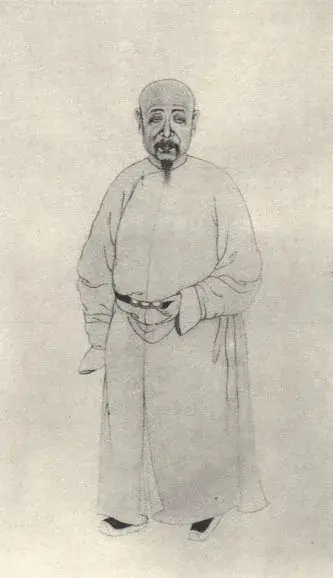
高其倬
Gao Qizhuo (1676–1738), courtesy name Zhangzhi and pseudonyms Fuzhao and Zhongyun, was a native of Tieling, Fengtian, belonging to the Bordered Yellow Banner of the Chinese Martial (Hanjun). A pre-eminent civil administrator serving across the Kangxi, Yongzheng, and Qianlong reigns, he held successive appointments as Governor of Guangxi, Viceroy of Yun-Gui, Viceroy of Min-Zhe, Viceroy of Liangjiang, Minister of Works, and…
Gao Qizhuo (1676–1738), courtesy name Zhangzhi and pseudonyms Fuzhao and Zhongyun, was a native of Tieling, Fengtian, belonging to the Bordered Yellow Banner of the Chinese Martial (Hanjun). A pre-eminent civil administrator serving across the Kangxi, Yongzheng, and Qianlong reigns, he held successive appointments as Governor of Guangxi, Viceroy of Yun-Gui, Viceroy of Min-Zhe, Viceroy of Liangjiang, Minister of Works, and Minister of Revenue, receiving the posthumous title Wenliang. Hailing from a prominent bureaucratic lineage, Gao Qizhuo achieved the jinshi degree at the extraordinary age of nineteen during the Kangxi reign, entering the prestigious Hanlin Academy. In regional administration, he earned widespread renown for financial incorruptibility, administrative tenacity, and geopolitical acumen. As Viceroy of Yun-Gui under the Yongzheng Emperor, he played a foundational role in the Gaitu Guiliu policy, abolishing hereditary chieftain exactions, replacing native tu-prefects with imperial magistrates in Lijiang and Yao'an, and expanding land reclamation, salt mining, and imperial examinations in borderlands. During the rebellion of Lobzang Danjin in Qinghai, Gao Qizhuo garrisoned the strategic choke point of Zhongdian, dispatching forces into Chamdo to sever rebel access to Tibet and receiving the surrender of thirty-five hundred Tibetan households. Later serving as Viceroy of Min-Zhe and Liangjiang, he reorganized coastal patrols, supervised grain transport networks, and reinforced the Grand Canal and Huai River embankments. Celebrated for both literary mastery and pragmatic governance, Gao Qizhuo exemplified the ideal high-ranking viceregal statesman of the High Qing era.
Born in Tieling into a distinguished official family of the Bordered Yellow Banner.
Passed the imperial metropolitan examination at age nineteen, selected as Hanlin Bachelor.
Appointed Hanlin Junior Compiler; subsequently served as examiner in Sichuan, education commissioner in Shanxi, and Sub-Chancellor of the Grand Secretariat.
Promoted to Governor of Guangxi, personally traveling to Dengheng to negotiate peaceful surrender of rebellious Miao tribes.
Appointed Acting Viceroy of Yun-Gui, formally confirmed by Yongzheng, proposing the abolition of hereditary chieftain kickbacks.
Dispatched troops to Chamdo to contain Qinghai rebels; secured surrender of 3,500 Zhongdian households, awarded hereditary title.
Transferred to Viceroy of Min-Zhe, restructuring coastal garrisons and smoothing trade networks for merchant shipping.
Reappointed Viceroy of Yun-Gui and Guangxi, suppressing the Simao uprising and organizing extensive agricultural reclamation in Zhaotong.
Appointed Viceroy of Liangjiang, inspecting water infrastructure along Lake Hongze and fortifying maritime seawalls at Gaoyou.
Elevated to Minister of Works and Minister of Revenue; passed away in the tenth month, honored with posthumous title Wenliang.
Gao Qizhuo was born in 1676 into an aristocratic Han military family belonging to the Bordered Yellow Banner in Tieling. His father, Gao Yin jue, served with distinction as Prefectural Vice Magistrate in Shuntian, Circuit Intendant in Songmao, and Intendant of the Koubei Circuit in Zhili. Ranked sixteenth among his paternal cousins, he was widely known among contemporaries as "Gao Shiliu." Possessing acute intellect from early childhood, Gao Qizhuo immersed himself in classical literature, statecraft, and administrative history.
In 1694, at the tender age of nineteen, Gao Qizhuo achieved the jinshi degree, ranking eighty-ninth in the third class, and was inducted into the Hanlin Academy as a Bachelor. Declining immediate bureaucratic posting, he requested leave to study in seclusion for several years to deepen his understanding of institutional governance.
Upon passing the Hanlin post-probationary examinations with highest marks, he was commissioned as a Junior Compiler and concurrently served as a Banner Captain. His career progressed steadily through appointments as Chief Examiner of the Sichuan provincial examination, Daily Lecturer, Reader of the Hanlin Academy, Right Companion to the Heir Apparent, Education Commissioner of Shanxi, and Sub-Chancellor of the Grand Secretariat, earning profound regard from the Kangxi Emperor. In 1719, when garrison troops mutinied and assaulted Prefect Shen Yuan in Nanyang, Henan, Gao Qizhuo was dispatched alongside Minister Zhang Tingchu to conduct a rigorous judicial inquiry, executing the ringleaders and disciplining negligent commanders to restore public peace.
In 1720, Gao Qizhuo was promoted to Governor of Guangxi, marking his debut as a regional viceregal administrator. Shortly after his arrival, Miao mountain populations in Dengheng rose in resistance against predatory local taxation. Rejecting calls for bloody punitive campaigns, Gao Qizhuo rode unescorted into the mountainous settlements to hear their grievances, extending imperial clemency and implementing administrative protections that promptly pacified the southwest frontier.
In the second month of 1722, Gao Qizhuo was appointed Acting Viceroy of Yun-Gui. Following the demise of the Kangxi Emperor and the enthronement of the Yongzheng Emperor in the eleventh month, he was formally confirmed in this critical viceregal post. Recognizing systemic corruption in chieftain succession, Gao Qizhuo submitted a memorial detailing how local magistrates routinely extorted massive customary bribes—termed guili—from indigenous leaders seeking confirmation seals, generating racial strife. He instituted an absolute ban on these exactions and simplified memorial processing, earning imperial praise.
Capitalizing on popular desire for regularized administration, Gao Qizhuo methodically replaced hereditary native chieftains with civil magistrates (Gaitu Guiliu) in Lijiang, Yao'an, and Weiyuan, settling thousands of Han and indigenous farmers on reclaimed land. He stabilized the volatile Lukui Mountain region, reorganized the distribution of Green Standard Army signal posts, developed productive salt brine wells at Anban and Baomu, established charity academies, and expanded examination quotas for southwestern candidates, fostering cultural integration.
In the autumn of 1723, Lobzang Danjin, a prince of the Khoshut Mongols in Qinghai, raised a major rebellion against the Qing throne, seeking to coordinate with dissident Tibetan factions and strike across northwestern Yunnan into the Tibetan core. Recognizing that Zhongdian (present-day Shangri-La) represented the sole natural gateway between Yunnan and central Tibet, Gao Qizhuo immediately instructed border commanders Liu Zongkui and Liu Guohou to establish blocking positions.
Executing imperial directives, Gao Qizhuo dispatched Yunnan Commander-in-Chief Hao Yulin with two thousand elite troops to advance rapidly through Zhongdian and secure Chamdo in eastern Tibet, while posting Deputy Commander Sun Hongben with five hundred soldiers at Zhongdian as a central tactical pivot, completely sealing the southeastern approach against rebel maneuvers.
By 1724, Imperial General Nian Gengyao and Yue Zhongqi crushed the Qinghai uprising. Impressed by Qing logistical mastery and defensive firmness, senior lamas and tribal chieftains representing thirty-five hundred households in Zhongdian submitted their lands and pledged allegiance to the Qing state. Delighted, the Yongzheng Emperor commended Gao Qizhuo's geopolitical foresight, conferring upon him the hereditary rank of Baitalabulehafan (Cavalier Commandant). Gao Qizhuo subsequently codified post-conflict pacification guidelines, founding schools, stationing defensive contingents, granting tax exemptions, and promoting Tibetan-Han overland trade.
In the tenth month of 1725, Gao Qizhuo was transferred to serve as Viceroy of Min-Zhe to oversee the strategically sensitive coastal provinces of Fujian and Zhejiang. Touring coastal garrisons and offshore islands, he eradicated extortion rackets practiced by maritime water patrols against commercial fishing craft, established streamlined harbor registration registers, and reinforced security contingents stationed across the Taiwan Strait to suppress maritime smuggling.
In the eighth month of 1730, when indigenous headman Dao Xingguo launched an armed insurrection in Simao, Yunnan, the Yongzheng Emperor reassigned Gao Qizhuo as Viceroy of Yun-Gui and Guangxi. Returning to the frontier, Gao Qizhuo mobilized Green Standard troops alongside integrated native militia to encircle the insurgent stronghold, capturing the rebel leadership within weeks. He subsequently dispatched capable commissioners to conduct cadastral surveys and land reclamation across Zhaotong, permanently consolidating Qing authority throughout northeastern Yunnan.
In 1733, Gao Qizhuo was appointed Viceroy of Liangjiang, governing the fiscal heartland of the empire. With the lower reaches of the Yellow and Huai rivers frequently inundating the Jiangnan agricultural basin, Gao Qizhuo personally surveyed engineering works across Gaoyou, Baoying, and Qingjiangpu. He impeached embezzling river officials, reinforced stone weirs along Lake Hongze, stabilized Grand Canal dikes, and cleared silt from maritime drainage outlets, guaranteeing the punctual annual shipment of millions of piculs of southern tribute grain to the capital.
Following the accession of the Qianlong Emperor in 1736, Gao Qizhuo's vast administrative experience was summoned to the central court. In 1738, he was appointed Minister of Works and subsequently reassigned to head the Ministry of Revenue, participating in supreme state council deliberations. Although advanced in years and battling chronic fatigue, he scrutinized metropolitan expenditures, imperial clan stipends, and infrastructural contracts with meticulous rigor.
In the tenth month of 1738, Gao Qizhuo passed away in office at the age of sixty-three. Mourning the loss of a foundational three-reign counselor, the Qianlong Emperor issued an imperial eulogy praising his unblemished integrity and lifelong devotion, awarding posthumous funeral honors and conferring the revered title Wenliang.
Gao Qizhuo stands as one of the premier architects of the transition from fragmented chieftain hegemony to centralized bureaucratic governance (Gaitu Guiliu) in southwestern China. By systematically outlawing succession graft, he dismantled the parasitic financial mechanisms that had historically alienated native elites.
His administrative reorganizations across Lijiang and Yao'an provided the structural blueprint for regional transformation: establishing civil prefectures, settling uncultivated frontiers, creating charitable schools, and regularizing fiscal levies. His prudent groundwork provided essential precedents that enabled subsequent administrators like Ortai to execute comprehensive reforms across Yunnan and Guizhou.
During the 1723–1724 Qinghai rebellion, Gao Qizhuo exhibited flawless geo-strategic instincts. Refusing to adopt a passive posture within Kunming, he recognized that the security of Tibet hinged upon controlling transit corridors through western Yunnan. By projecting Qing forces forward into Chamdo, he paralyzed rebel movements toward Lhasa and created conditions for peaceful integration, securing the voluntary submission of thousands of Tibetan households and permanently anchoring the southwestern borderlands into the Qing imperial orbit.
FIGURES ASSOCIATED WITH THIS DYNASTY