Born into a military family in Changshan, Zhending.
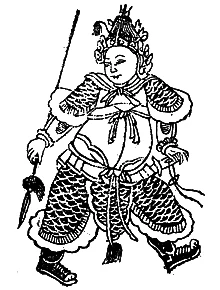
926 CE–982 CE
Northern Song general
Gao Huaide
高怀德
Gao Huaide (926–982), courtesy name Cangyong, was a native of Changshan in Zhending (present-day Zhengding County, Hebei). He was a prominent general from the Five Dynasties and Ten Kingdoms period into the early Northern Song. He was the grandson of Gao Siji, a late-Tang Commander-in-Chief of the Central Army, and the son of Gao Xingzhou, a Later Zhou military governor of Tianping and Prince of Qi. Born into a military…
926 CE–982 CENorthern Song
PROFILE
Gao Huaide (926–982), courtesy name Cangyong, was a native of Changshan in Zhending (present-day Zhengding County, Hebei). He was a prominent general from the Five Dynasties and Ten Kingdoms period into the early Northern Song. He was the grandson of Gao Siji, a late-Tang Commander-in-Chief of the Central Army, and the son of Gao Xingzhou, a Later Zhou military governor of Tianping and Prince of Qi. Born into a military family, Gao served the Later Jin, Later Han, Later Zhou, and Northern Song and was known for personal bravery. He became a brother-in-law of Zhao Kuangyin, Emperor Taizu of Song, participated in the Chenqiao Mutiny that brought Zhao to the throne, and later married the Eldest Princess of Yan, receiving the title Commandant-Escort. Gao fought throughout his life, taking part in the suppression of Li Yun's rebellion, campaigns against Southern Tang, and the conquest of Northern Han. He rose to Acting Grand Preceptor and Participant in Determining Government Matters and was enfeoffed as Duke of Ji. He died in 982, the seventh year of the Taiping Xingguo era, aged fifty-seven, and was posthumously appointed Secretariat Director, made Prince of Bohai Commandery, and given the posthumous name Wumu.
- Courtesy name
- Cangyong
- Period
- Northern Song
- Dynasty/State
- Northern Song
- Identity
- Northern Song general
- Ethnicity/Group
- Not reliably established in historical sources
- Native place
- Changshan, Zhending (present-day Zhengding County, Hebei)
- Date of birth
- 926
- Place of birth
- Unknown
- Date of death
- 982
- Place of death
- Unknown
- Highest office
- See Biography and Major Activities
- Principal achievements
- Brother-in-law of Emperor Taizu of Song; military founding meritorious official and imperial relative; served from the Five Dynasties into the Song; retired safely despite high military prestige
LIFE TIMELINE
Age twenty. Joined his father Gao Xingzhou on a northern campaign; broke out of an encirclement at Qicheng while protecting his father and, for merit, was appointed Inspector of Luo Prefecture.
Age twenty-one. Transferred to Inspector of Xin Prefecture.
Age twenty-two. During a Liao invasion, remained to defend Suiyang and used fortified defense and scorched-earth tactics to resist the Liao army.
Age twenty-three. After the Later Han was founded, appointed Inspector of Zhong Prefecture.
Age twenty-six. Guo Wei, Emperor Taizu of Later Zhou, presented him with clothing, belts, colored silk, and a saddled horse.
Age twenty-nine. After Gao Xingzhou's death, appointed Commander-in-Chief of the Eastern and Western Guards; joined Emperor Shizong in the Battle of Gaoping and was promoted to Commander-in-Chief of the Right Wing of the Iron Cavalry.
Age thirty-one. Campaigned against Southern Tang and fought beneath Luzhou, taking more than 700 heads.
Age thirty-two. Crossed the Huai River at night to reconnoiter Southern Tang positions, captured an enemy deputy commander, and won Shizong's high regard.
Age thirty-four. Joined Shizong's northern campaign, captured Waqiao Pass, and accepted the surrender of Yao Neibin.
Age thirty-five. During the Chenqiao Mutiny, supported Zhao Kuangyin's accession; appointed deputy commander of the Palace Command, married the Eldest Princess of Yan, and received the title Commandant-Escort.
Age thirty-five. Together with Shi Shouxin suppressed Li Yun's rebellion and was promoted to military governor of Zhongwu and Acting Grand Commandant.
Age thirty-six. Transferred to military governor of Guide.
Age forty-eight. Added the office Participant in Determining Government Matters. The Eldest Princess of Yan died that winter, and Gao ceased to hold the Commandant-Escort title.
Age fifty-one. After Emperor Taizong of Song ascended the throne, Gao was concurrently appointed Palace Attendant and then Acting Grand Preceptor.
Age fifty-four. Joined the campaign that destroyed Northern Han; afterward transferred to a command at Cao Prefecture and enfeoffed as Duke of Ji.
Age fifty-seven. Transferred to military governor of Wusheng; died in the seventh lunar month, posthumously appointed Secretariat Director, enfeoffed as Prince of Bohai Commandery, and given the posthumous name Wumu.
BIOGRAPHY
Biography
Family Background and Early Years
Gao Huaide was born into a famous military lineage of the Five Dynasties. His grandfather Gao Siji had served as Commander-in-Chief of the Central Army in the late Tang and was renowned for bravery. His father Gao Xingzhou was an even more celebrated general of the Five Dynasties, serving several regimes and eventually becoming the Later Zhou military governor of Tianping and Prince of Qi.
Gao Huaide grew up in military surroundings and acquired martial skills from childhood. He was described as loyal, generous, and free-spirited, with a frank and expansive temperament and little concern for minor conventions. He disliked book learning but was highly knowledgeable about music, could compose tunes himself, and was said to have an exceptionally refined sense of melody.
When Gao Xingzhou was stationed at Yan and Lu, stayed behind in Luoyang, or exercised authority over Song and Bo prefectures, he appointed Gao Huaide as a yaji, a trusted military aide attached to the military governor. The appointments trained his son for command and also reflected Gao Xingzhou's confidence in him.
Youthful Service and the Breakout at Qicheng
In 944, the first year of the Later Jin Kaiyun era, Liao forces invaded the frontier. The court appointed Gao Xingzhou commander of the northern vanguard army. Gao Huaide, who had just turned twenty, asked his father for permission to join the campaign.
When the Jin army reached Qicheng, north of present-day Puyang in Henan, it was heavily surrounded by the Liao army while relief forces failed to arrive. The situation became critical. Gao Huaide shot arrows to both sides and repeatedly charged through the enemy formation, forcing opponents back and protecting his father as they broke through the encirclement. For this achievement Gao was appointed Inspector of Luo Prefecture and received costly furs, a jeweled belt, and fine horses from the court.
When Gao Xingzhou was transferred to Yun Prefecture, Gao Huaide became Inspector of Xin Prefecture while continuing to command household troops. During a later Liao invasion, the Later Jin court appointed Gao Xingzhou commander of the Xing–Zhao route while leaving Gao Huaide to defend Suiyang. Du Chongwei then surrendered to Liao, and rebels rose throughout the eastern prefectures. Gao strengthened the defenses and cleared the surrounding countryside of supplies, slowing the Liao advance until Gao Xingzhou returned with reinforcements and the invading troops withdrew.
Service under Later Han and Later Zhou
Under the Later Han, Gao Xingzhou was transferred to Weibo and Tianping, while the court appointed Gao Huaide Inspector of Zhong Prefecture. When Guo Wei, Emperor Taizu of Later Zhou, campaigned against Murong Yanchao and passed Wenshang during the army's concentration, he gave Gao Xingzhou generous gifts and presented Gao Huaide with clothing, a belt, colored silks, and a fully equipped horse, showing the standing already enjoyed by the Gao family.
After Gao Xingzhou's death, Gao Huaide became Commander-in-Chief of the Eastern and Western Guards and concurrently Inspector of Ji Prefecture, then transferred to command the Iron Cavalry. When Liu Chong, ruler of Northern Han, invaded, Chai Rong, Emperor Shizong of Later Zhou, led the campaign and appointed Gao Huaide vanguard staff officer. Gao performed well at Gaoping and was promoted for merit to Commander-in-Chief of the Right Wing of the Iron Cavalry, concurrently Training Commissioner of Guo Prefecture.
Campaigns against Southern Tang
Gao followed Emperor Shizong in campaigns against Southern Tang, administering the field headquarters at Luzhou and serving as pacification commissioner. In fighting under the city walls he inflicted more than 700 recorded enemy casualties and was soon promoted to Commander-in-Chief of the Left Wing of the Nengjie troops, concurrently Defense Commissioner of Bing Prefecture, and received seven fine horses.
Southern Tang general Liu Renshan held Shouchun while Shu Yuan occupied Zijin Mountain and linked a series of fortified stockades to resist the Later Zhou army. Shizong ordered Gao to take several dozen trusted cavalrymen and reconnoiter the enemy camps. Gao crossed the Huai River during the night. Southern Tang troops did not discover him until dawn and came out to fight. Although heavily outnumbered, Gao captured an enemy deputy commander and returned after thoroughly observing the disposition of the Southern Tang forces. He reported the information to Chai Rong, who was delighted and rewarded him with ceremonial clothing, a gold belt, vessels, money, and a silver-decorated saddle and bridle.
On another occasion, while observing the enemy, Chai Rong saw a general pursuing Southern Tang soldiers, seizing an enemy spear, and returning. He asked his attendants who it was and learned that the officer was Gao Huaide. Shizong summoned him to the traveling court, praised him, and promised him a military governor's insignia, a very high distinction indicating that the emperor already viewed him as suitable for independent regional command.
Supporting Zhao Kuangyin and the Founding of Northern Song
After Chai Zongxun, Emperor Gong of Later Zhou, succeeded to the throne, Gao Huaide was promoted to Commander-in-Chief of the Cavalry of the Imperial Guards, concurrently military governor of Jiangning, and commander of the cavalry in the northern expeditionary army.
In 960, the seventh year of the Xiande era, Zhao Kuangyin, then commander of the Palace Command, launched the Chenqiao Mutiny, took control of the Later Zhou regime, and founded the Northern Song. As a senior imperial-guard general, Gao participated in the movement that acclaimed Zhao as emperor.
After Emperor Taizu's accession, Gao was appointed deputy commander of the Palace Command, transferred to a command at Hua Prefecture, and made deputy commander for Guannan. He later married Emperor Taizu's younger sister, the Eldest Princess of Yan, and received the title Commandant-Escort. Gao thus became both a founding military notable and a member of the imperial kin, holding a prominent position through control of guard forces and marriage ties.
Suppression of Li Yun's Rebellion
In the fourth lunar month of 960, the first year of the Jianlong era, Li Yun, military governor of Zhaoyi, rebelled against Song at Shangdang in present-day Changzhi, Shanxi, and allied with Northern Han. Emperor Taizu decided to lead the campaign personally but first ordered Gao Huaide to join Shi Shouxin in attacking the rebels.
Gao's troops decisively defeated Li Yun's army south of Ze Prefecture, near present-day Jincheng. In the sixth lunar month Zhao Kuangyin arrived at the front. Li Yun withdrew into Ze Prefecture and eventually died by self-immolation. After the rebellion was suppressed, Gao was promoted for merit to military governor of Zhongwu and Acting Grand Commandant. He later accompanied Emperor Taizu in suppressing unrest at Yangzhou.
Later Years and Death
In 961, the second year of the Jianlong era, Gao was transferred to military governor of Guide. In the autumn of 973, the sixth year of the Kaibao era, he was granted the additional office Participant in Determining Government Matters. That winter, the Eldest Princess of Yan died, and Gao's title Commandant-Escort was removed.
After Zhao Guangyi, Emperor Taizong of Song, ascended the throne, Gao was given the concurrent office Palace Attendant and then the honorific office Acting Grand Preceptor. In the spring of 978 Gao became ill. Emperor Taizong sent the imperial physician Wang Yuanyou and the Daoist Ma Zhi to his residence to treat him, showing the court's continued concern for his health.
In 979 Gao followed Emperor Taizong in the conquest of Northern Han. After Northern Han was destroyed, he was transferred to a command at Cao Prefecture and enfeoffed as Duke of Ji. In 982 he became military governor of Wusheng. He died in the seventh lunar month of that year at the age of fifty-seven. The court posthumously appointed him Secretariat Director, enfeoffed him as Prince of Bohai Commandery, and conferred the posthumous name Wumu.
Major Activities
Military Campaigns
Gao spent his entire adult life campaigning. Beginning with his northern expedition alongside his father at the age of twenty, he served four successive regimes: Later Jin, Later Han, Later Zhou, and Northern Song. Major campaigns included the breakout at Qicheng in 944, the Battle of Gaoping in 954, the campaigns against Southern Tang in 956–957, the northern expedition against Liao in 959, the suppression of Li Yun's rebellion in 960, the campaign at Yangzhou in the same year, and the conquest of Northern Han in 979.
Two episodes were especially celebrated. At Qicheng he protected his father and broke out through an enemy encirclement at only twenty years old. Later, during the Southern Tang war, he crossed the Huai at night with only several dozen cavalrymen, penetrated enemy-held territory, captured a deputy commander, and returned with detailed intelligence, demonstrating exceptional courage and military judgment.
Founding Meritorious Official
Gao was an important participant in the Chenqiao Mutiny. As Commander-in-Chief of the Cavalry of the Later Zhou imperial guards, he supported the acclamation of Zhao Kuangyin when the latter was "draped in the yellow robe." After the Northern Song was founded, Gao became one of its founding military notables alongside Shi Shouxin and others. Emperor Taizu further consolidated his relationship with Gao by marrying him to the emperor's own younger sister, the Eldest Princess of Yan.
Suppressing Rebellion
Li Yun's revolt in 960, launched with Northern Han support, was the first major armed rebellion against the newly founded Northern Song. Gao and Shi Shouxin were ordered to lead the forward forces and defeated Li Yun south of Ze Prefecture, making an important contribution to the rebellion's suppression. The victory helped stabilize the new dynasty, and Gao was rewarded with promotion to military governor of Zhongwu and Acting Grand Commandant.
Musical Ability
Although Gao disliked formal study, he was skilled in music and could compose his own tunes, whose melodic structure was said to be refined. The Song writer Xu Shiluan described him as somewhat extravagant but deeply knowledgeable in music, claiming that the quality of the singers and musicians around him was unmatched at the time and scarcely surpassed even by the finest performers of the imperial music establishment.
Hunting
Gao was also fond of hunting and shooting. He might camp outdoors for three to five days at a time and return with several hundred foxes and hares. At times he would leave guests without warning and take several dozen riders through a side gate to hunt outside the city. This impulsive behavior reflected his personality, but the Chinese source also suggests that it may have been a strategy of deliberate self-obscuration. Toqto'a later wondered whether, in the political environment in which Emperor Taizu was reducing the independent military power of great generals, Gao's excessive hunting and apparent neglect of decorum may have helped preserve his safety.
Personal Relations
Family
- Grandfather: Gao Siji, late-Tang Commander-in-Chief of the Central Army.
- Father: Gao Xingzhou, Later Zhou military governor of Tianping and Prince of Qi.
- Wife: Eldest Princess of Yan, younger sister of Zhao Kuangyin, Emperor Taizu of Song.
- Eldest son: Gao Chugong, who rose to General of the Right Guard of the Palace Gates.
- Second son: Gao Chujun, who rose to Workshop Commissioner of the Western Capital.
- Daughter: Lady Gao, daughter of the Eldest Princess of Yan; enfeoffed first as Commandery Lady of Changle and later as Princess Renshou.
Rulers and Minister
- Shi Chonggui, the Later Jin emperor: Gao's ruler in his youth.
- Guo Wei, Emperor Taizu of Later Zhou: Rewarded Gao with gifts.
- Chai Rong, Emperor Shizong of Later Zhou: Relied on Gao and promised him an independent military command.
- Zhao Kuangyin, Emperor Taizu of Song: Gao helped acclaim him as emperor and later became his brother-in-law.
- Zhao Guangyi, Emperor Taizong of Song: Promoted Gao and sent physicians to treat him when ill.
Colleagues
- Shi Shouxin: Joined Gao in suppressing Li Yun's rebellion.
- Han Tong: Together with Gao, led troops that reached Cang Prefecture first during Shizong's northern expedition.
- Chen Sirang: Served as a subordinate commander in the capture of Waqiao Pass.
Later Fictional Figures
- Gao Chong: Fictional figure in The Complete Tale of Yue Fei, portrayed as a descendant of Gao Huaide.
- Gao Guiying: Fictional daughter in the opera Gao Huaide Bids Farewell to His Daughter.
Historical Assessment
Song and Contemporary Assessments
- The History of Song describes Gao Huaide as "loyal, generous, free-spirited, and possessed of martial courage."
- Toqto'a comments in the History of Song that Shi Shouxin's accumulation of enormous wealth and Gao Huaide's excessive riding and hunting may both have been ways of concealing themselves politically and ensuring survival.
- Xu Shiluan praised Gao's musical ability, saying that although he was somewhat extravagant, he thoroughly understood music and that the excellence of his singers and performers surpassed those of his age and was scarcely exceeded by the finest musicians of the imperial establishment.
Song and Yuan Periods
- The Yuan court's compilation of the History of Song included Gao in the biographical section and recognized his contribution to the founding of the Northern Song.
- In Song–Yuan popular tales and drama, characters based on Gao began to appear, including in works such as Beheading the Yellow Robe, where he was portrayed as a loyal minister.
Ming and Qing Periods
- Wang Fuzhi of the Ming–Qing transition, in Song Lun, argued that generals such as Shi Shouxin and Gao Huaide did not possess the entrenched territorial power of later warlords and that Emperor Taizu's successful recovery of military authority need not have required discarding the talents of former generals. Wang suggested that had the Song better preserved and deployed such experienced commanders, it might have strengthened both the interior and the frontier.
- Ming and Qing plays such as Three Attacks on Tao Sanchun and Beheading the Yellow Robe circulated widely, and Gao's popular image often became that of a loyal and courageous imperial son-in-law who rescued the ruler.
Modern Period
- Modern historians regard Gao Huaide as an important founding general of the Northern Song and as a direct witness to the early Song policy of reducing the independent authority of senior military commanders. His career illustrates the changing political ecology of generals between the Five Dynasties and early Song.
- Gao Huaide's tomb, near Caizhuang village in Zhitian town, Gongyi, Henan, is one of the accompanying burials of the Northern Song imperial mausoleums and provides physical evidence relevant to the study of early Song funerary institutions.
FIGURES ASSOCIATED WITH THIS DYNASTY
Bibliography
- History of Song, vol. 250, biography 9