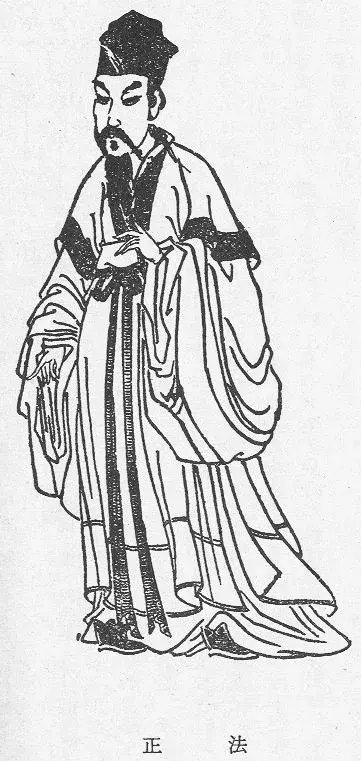
Biographical Narrative
Prominent Lineage of Guanxi and Frustration in Shu
Fa Zheng was born in 176 into an illustrious scholarly family in Mei County, Right Fufeng, in the Guanzhong region. His great-grandfather Fa Xiong served as the Grand Administrator of Nanjun in the Eastern Han Dynasty, and his grandfather Fa Zhen was a renowned scholar and recluse admired throughout the realm, known respectfully by northern scholars as Master Xuan De. The Han court had issued four imperial summons to appoint Fa Zhen to high office, yet he persistently declined to serve.
Born into this respected family of Confucian erudition, Fa Zheng displayed extraordinary intellect, read extensively in military theory and grand strategy, and possessed a proud, decisive character coupled with acute political instincts and tactical adaptability. However, during the closing years of the Eastern Han Dynasty, Dong Zhuo plunged the empire into chaos and relocated the capital westward, unleashing endless civil war among rival warlords and causing widespread famine across Guanzhong.
In 196, the twenty-one-year-old Fa Zheng saw the fields of the capital region laid waste and the common people reduced to starvation. To escape the ravages of famine and warfare, he and his fellow townsman Meng Da led their families south over the mountains into Shu, seeking shelter under the Governor of Yi Province, Liu Zhang.
However, Liu Zhang was indecisive, weak-willed, and lacked grand ambition, while the political landscape of Shu was deeply prejudiced against emigre scholars from the north. For years after his arrival, Fa Zheng was appointed merely as the Magistrate of Xiang'er, before being transferred to serve as Magistrate of Xindu. Deeply frustrated that his extensive learning and strategic talents were squandered in minor county postings, and burdened by the haughty contempt of the entrenched local Shu gentry, Fa Zheng languished in prolonged obscurity and bitter disillusionment.
During this period of hardship, Fa Zheng formed a close friendship with Liu Zhang's Attendant Officer, Zhang Song, who was similarly neglected and underutilized. Sharing identical frustrations and complementary talents, the two often shared wine in secret, lamenting Liu Zhang's faint-hearted mediocrity and concluding that if Yi Province remained under his feeble grasp, it would inevitably be swallowed by Cao Cao in the north or Liu Bei in Jing Province. They resolved to find an enlightened hero whom they could assist in restoring order to the realm.
Abandoning Liu Zhang to Welcome Liu Bei and Conquering Sichuan
In 208, Cao Cao captured Jing Province. Zhang Song was dispatched as an envoy to Ye, where Cao Cao treated him with cold indifference due to his plain appearance and outspoken manner. Upon his return, Zhang Song persuaded Liu Zhang to break ties with Cao Cao and ally with Liu Bei. In 211, Cao Cao dispatched Zhong Yao and Xiahou Yuan to lead an army west against Zhang Lu in Hanzhong, sending shockwaves throughout Yi Province.
Zhang Song seized this opportunity to advise Liu Zhang: "Cao Cao's legions are formidable; if he crushes Zhang Lu and takes Hanzhong, Shu will face immediate peril! Liu Bei is a peerless hero of the imperial house, your kinsman, and a proven commander. If you send an envoy to invite Liu Bei into Shu to vanquish Zhang Lu, Yi Province will be secure as a mountain." Liu Zhang agreed and specifically commissioned Fa Zheng to travel to Jing Province as chief envoy to invite Liu Bei.
Upon arriving in Jing Province, Fa Zheng met extensively with Liu Bei. Liu Bei treated Fa Zheng with utmost deference, modesty, and cordiality. The two converse at length and discovered an instant intellectual affinity. Overwhelmed by Liu Bei's magnetic charisma, benevolence, and imperial vision, Fa Zheng abandoned his loyalty to Liu Zhang and bared his heart, declaring: "With your extraordinary brilliance and martial valor, you can easily capitalize on Liu Zhang's incompetence. With Zhang Song serving as an internal ally in Chengdu, and relying on the agricultural wealth, abundant population, and rugged natural defenses of Yi Province, establishing an imperial hegemony will be as effortless as turning one's palm!" Liu Bei was overjoyed and immediately embraced the counsel, leading tens of thousands of elite troops west into Yi Province.
In 212, after stationing his army at Jiameng Pass for over a year, Liu Bei openly broke relations with Liu Zhang and turned his forces southward toward Chengdu. Liu Zhang's strategist Zheng Du submitted an emergency plan: "Liu Bei has invaded deep into our territory with an isolated army lacking substantial supply trains; his troops rely entirely on local grain. We should forcibly evacuate the civilian populace of Baxi and Zitong southward, burn all granaries and standing crops, and fortify our garrisons behind deep moats and high ramparts to exhaust them. Denied a decisive engagement, they will starve and retreat within months, at which point our pursuing forces can easily capture Liu Bei."
Upon hearing of Zheng Du's scorched-earth stratagem, Liu Bei grew deeply alarmed and anxiously consulted Fa Zheng. Fa Zheng laughed with total composure and replied: "My lord, have no fear! Liu Zhang has always been excessively soft-hearted and lacking in ruthless resolve. Throughout his life he has cared for the populace and detested cruelty; he will never bear to burn the peasants' homes and destroy their livelihoods. Though the plan is lethal, Liu Zhang will definitely reject it!" True to Fa Zheng's prediction, Liu Zhang indignantly rejected Zheng Du's proposal, allowing Liu Bei to overcome successive mountain passes and advance smoothly to the walls of Chengdu.
During the siege of Chengdu, Fa Zheng penned a comprehensive letter to Liu Zhang, systematically outlining the strategic realities of the empire and the inevitability of defeat, while offering generous terms. In the summer of 214, Liu Zhang opened the gates and surrendered, granting Liu Bei complete control over Yi Province.
Directing the Secretariat and Governing Shu Commandery
Following the pacification of Yi Province, Liu Bei rewarded his meritorious followers, honoring Fa Zheng as the foremost architect of his conquest. Liu Bei not only awarded Fa Zheng five hundred catties of gold, one thousand catties of silver, fifty million copper coins, and one thousand bolts of fine silk (equal to the maximum rewards given to Zhuge Liang, Guan Yu, and Zhang Fei), but also appointed him Grand Administrator of Shu Commandery and General of Martial Might.
At the time, Shu Commandery housed the capital of the province, featuring dense urban populations and powerful aristocratic lineages. Fa Zheng was entrusted with civil and military administration over the capital commandery while simultaneously participating in all core military deliberations inside Liu Bei's headquarters, becoming the most influential and trusted advisor in Liu Bei's inner circle.
Having attained absolute authority, Fa Zheng demonstrated a deeply personal and vindictive temperament. Having endured countless slights and humiliations during his early years of obscurity in Shu, he now utilized his newfound power to reward generously even the smallest gesture of past kindness, while relentlessly punishing anyone who had ever spoken ill of him or looked down upon him, even executing several individuals without proper judicial process.
Disturbed by these excessive actions, several righteous officials approached Zhuge Liang, who held office as Military Advisor and Household General, urging him to report Fa Zheng's tyrannical behavior to Liu Bei and restrain his arrogance.
Zhuge Liang, however, demonstrated extraordinary political wisdom and magnanimity, replying calmly: "When our lord was stranded and besieged in Jing Province, he faced Cao Cao's massive armies pressing down from the north and Sun Quan's constant duplicity and menace from the east, unable to sleep in peace. It was Fa Xiaozhi who spread his wings like a great eagle, elevating our lord into the skies and enabling him to overturn the heavens and secure Yi Province. How can we now bind such an indispensable hero with trivial legal ropes and dampen his valiant spirit?"
Zhuge Liang recognized that Fa Zheng's genius for daring military stratagems perfectly complemented his own administrative and logistical strengths. In governance, the two worked together in complete harmony, jointly drafting the foundational legal code of the nascent regime, the Shu Ke (Statutes of Shu), which established an enduring institutional and judicial framework for Shu Han.
Mastering Strategy in Hanzhong and Victory at Mount Dingjun
In 215, Cao Cao conquered Hanzhong, forced the capitulation of Zhang Lu, and pacified the northern approaches. However, instead of pressing his immense momentum south into Sichuan, Cao Cao stationed General Who Conquers the West Xiahou Yuan and General Who Sweeps Away Bandits Zhang He to garrison Hanzhong, while hastily leading his main army back east.
With the penetrating vision of a master military strategist, Fa Zheng immediately seized upon this fleeting strategic opening. He approached Liu Bei and analyzed the situation: "Cao Cao easily pacified Zhang Lu, an achievement that should have propelled him straight into Shu; yet he abruptly withdrew his main forces to the north, leaving only Xiahou Yuan and Zhang He behind. This is not because his strategic intellect was deficient, but because severe domestic emergencies have erupted in the Central Plains. Although Xiahou Yuan and Zhang He are renowned commanders, their tactical capacities are no match for your lordship. If we now mobilize the full might of Shu to take Hanzhong, we can at best march into Guanzhong to restore the Han dynasty, at median exploit Liang and Yong provinces to expand our frontiers, and at least defend the mountain passes to guarantee the survival of Sichuan. This is a heaven-sent opportunity that comes once in a millennium; we must not let it slip!"
Liu Bei fully embraced this analysis. In 217, Liu Bei, accompanied by Fa Zheng, Huang Zhong, Zhang Fei, and Zhao Yun, launched a massive northern offensive, opening the historic Hanzhong Campaign that would determine the geopolitical equilibrium of the Three Kingdoms.
By the spring of 219, the armies had remained locked in grueling stalemate for over a year. Liu Bei's forces crossed the Mian River south of Yangping Pass and established fortified camps along the steep ridges of Mount Dingjun. Xiahou Yuan led the elite Wei forces to contest the high ground.
Ascending to a high vantage point to observe the enemy dispositions, Fa Zheng observed that the Wei army had bifurcated its defenses: Xiahou Yuan held the southern barricades while Zhang He commanded the eastern barricades. Fa Zheng instantly formulated a classic feint: he instructed Liu Bei to lead over ten thousand veteran troops in a ferocious assault against Zhang He's eastern positions. Under overwhelming pressure, Zhang He's lines buckled and fell into disarray. Watching the crisis unfold, Xiahou Yuan fell directly into the trap, hurriedly detaching half of his personal veteran forces to rush eastward to reinforce Zhang He.
Seeing Xiahou Yuan's central camp severely depleted, and noticing Xiahou Yuan personally stepping outside the stockade to repair damaged deer-horn obstacles, Fa Zheng recognized that the decisive moment had arrived. He shouted passionately to Liu Bei: "Strike now!"
Liu Bei immediately unleashed veteran general Huang Zhong leading elite infantry. Amid rolling battle drums and deafening war cries, Huang Zhong's forces swept down from the steep heights of Mount Dingjun like an avalanche. Crashing through the thinned defenses of the central camp, Huang Zhong struck down Xiahou Yuan beneath his warhorse and slew Zhao Yong, the Wei-appointed Governor of Yi Province.
Xiahou Yuan was the supreme commander of Cao Wei's western armies and a core kinsman of Cao Cao. His sudden death triggered total collapse across the Wei defensive lines. When Cao Cao subsequently rushed west with massive reinforcements, he found Liu Bei entrenched behind impenetrable terrain and guided by Fa Zheng's masterly defenses; unable to make any headway and suffering severe supply shortages, Cao Cao was forced to abandon Hanzhong entirely.
The decisive victory at Hanzhong permanently secured the natural shield of the Qinling Mountains for Shu Han, completely eliminating the direct northern menace against the Chengdu Plain. Liu Bei proclaimed himself King of Hanzhong and appointed Fa Zheng as Prefect of the Masters of Writing and General Who Protects the Army, placing him in supreme control of state administration and military affairs.
Tragic Passing of Marquis Yi and Zhuge Liang's Lament
Following the conclusion of the Hanzhong Campaign, years of ceaseless battlefield exertion took a fatal toll on Fa Zheng's physical health. In early 220, Fa Zheng succumbed to chronic illness in his Chengdu residence at the age of forty-five.
Upon learning of Fa Zheng's untimely demise, Liu Bei was inconsolable with grief, weeping continuously for days, refusing food, and suspending imperial audiences. To honor the extraordinary strategist who had paved the road for his imperial enterprise, Liu Bei issued an imperial decree posthumously enfeoffing Fa Zheng as Marquis Yi (interpreting "Yi" according to the Posthumous Name Regulations as "profound in strategic foresight and illustrious in meritorious service"). Throughout Liu Bei's entire lifetime before and after ascending the imperial throne, Fa Zheng was the sole minister upon whom he personally conferred a posthumous noble title, demonstrating his unrivaled favor and stature.
In late 219, Guan Yu was defeated and killed in Jing Province. After Liu Bei declared himself emperor in 221, he disregarded the strenuous objections of Zhuge Liang, Zhao Yun, and the civil court, determined to mobilize the entire national army to launch an eastern punitive expedition against Eastern Wu to avenge Guan Yu.
In 222, Liu Bei's expeditionary forces were thoroughly routed at the Battle of Yiling by Lu Xun, who burned hundreds of miles of interconnected camps. The core military strength of Shu Han was virtually annihilated, and Liu Bei retreated in despair to Baidi City.
Stationed in Chengdu overseeing the home front, Chancellor Zhuge Liang received news of the catastrophic defeat at Yiling and looked to the heavens with tears of anguish, uttering a legendary lament: "Had Fa Xiaozhi been alive, he would certainly have dissuaded our lord from marching east; even had our lord proceeded, with Xiaozhi accompanying the army as strategist, we would never have suffered such an utter catastrophe!" This historic lament stands as the ultimate testament to Fa Zheng's peerless intellect and indispensable influence over Liu Bei.
Major Achievements
Devising the Grand Strategy to Conquer Yi Province and Establishing the Tripartite Realm
Fa Zheng's most fundamental contribution to Shu Han lay in shattering Liu Bei's geopolitical confinement to the narrow, vulnerable border regions of Jing Province, personally opening the gateway into the abundant lands of Sichuan.
In Zhuge Liang's Longzhong Plan, controlling both Jing and Yi provinces was the prerequisite for restoring the Han house; yet in practice, Liu Bei had long hesitated over the moral dilemma of seizing territory from his own kinsman, Liu Zhang.
As an insider intimately familiar with the political fissures of Sichuan, Fa Zheng not only demonstrated to Liu Bei the historical inevitability of Liu Zhang's collapse, but also systematically dismantled Liu Zhang's defensive positions on the battlefield. From navigating the mountain passes and defusing the scorched-earth crisis to orchestrating the final surrender of Chengdu, Fa Zheng exhibited supreme military direction, enabling Liu Bei to absorb Western Sichuan at minimal cost and firmly establish the territorial foundation for the Three Kingdoms.
Winning the Decisive Battle of Mount Dingjun and Slaying Xiahou Yuan to Secure Hanzhong
The Hanzhong Campaign was the most glorious victory achieved by Liu Bei's forces in direct large-scale confrontation against Cao Cao's military apparatus, and its operational soul and tactical architect was Fa Zheng.
Fa Zheng not only astutely identified Cao Cao's post-conquest vulnerability, inspiring Liu Bei's resolve to initiate the northern expedition, but also engineered the brilliant tactical feint at Mount Dingjun that divided the enemy's strength.
It was Fa Zheng's acute timing and decisive shout—"Strike now!"—that enabled Huang Zhong to execute the battlefield decapitation of Xiahou Yuan, forcing Cao Cao to abandon Hanzhong altogether. This triumph provided Shu Han with an indispensable northern springboard and propelled Liu Bei directly onto the throne as King of Hanzhong.
Co-Authoring the Statutes of Shu to Formulate the Rule of Law
During the initial phase following the pacification of Yi Province, the region suffered from decades of lax governance, local warlordism, and aristocratic lawlessness inherited from Liu Yan and Liu Zhang. As Grand Administrator of Shu Commandery, Fa Zheng was commissioned alongside Military Advisor General Zhuge Liang, Yi Ji, Liu Ba, and Li Yan to draft the fundamental legal code of the regime—the Shu Ke (Statutes of Shu).
During the legislative process, Fa Zheng drew upon classical legalist traditions from Qin and Han governance while tailoring regulations to local Sichuan customs, advocating strict discipline to curb the rapacious power of entrenched gentry clans.
The promulgation of the Statutes of Shu eradicated the pervasive culture of administrative negligence, establishing strict legal norms that bound officials and commoners alike and providing the vital institutional foundation for Zhuge Liang's subsequent rule of law.
Harmonizing Regional Factions to Consolidate the New Regime's Foundation
As an emigre scholar from Guanxi who had entered Shu early, Fa Zheng functioned as an indispensable bridge reconciling the Jing Province newcomers, the Dongzhou faction, and the native Sichuan gentry.
When Liu Bei's generals advocated disenfranchising former officials of Liu Zhang after entering Chengdu, Fa Zheng vigorously urged Liu Bei to honor and employ the prominent scholar Xu Jing. Fa Zheng argued that although Xu Jing possessed grand renown without practical administrative acumen, his fame spanned the four seas; honoring him would persuade scholars across the empire to pledge allegiance. Liu Bei followed this advice and appointed Xu Jing Grand Tutor.
Through recommending numerous local gentry and talented scholars into the bureaucracy, Fa Zheng effectively dispelled mutual suspicion and hostility, playing an irreplaceable role in stabilizing the social order of the newly founded regime.