Birth in Jiaxing
Born in Jiaxing County, Zhejiang
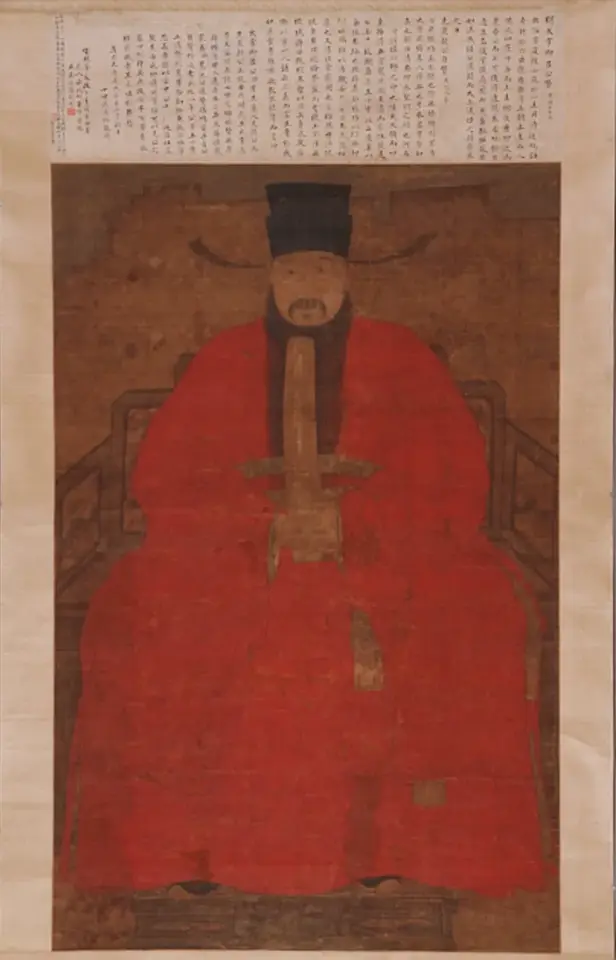
项忠
Xiang Zhong (项忠, 1421–1502), courtesy name Jinchen, art name Qiaosong, was a native of Jiaxing County, Zhejiang, and one of the foremost military commanders and statesmen of the mid-Ming dynasty. Passing the palace examination as a jinshi in 1442, he served in the Ministry of Justice and accompanied Emperor Yingzong on the northern campaign of 1449. Captured by the Oirat Mongols at the Tumu Crisis and forced to herd horses,…
Xiang Zhong (项忠, 1421–1502), courtesy name Jinchen, art name Qiaosong, was a native of Jiaxing County, Zhejiang, and one of the foremost military commanders and statesmen of the mid-Ming dynasty. Passing the palace examination as a jinshi in 1442, he served in the Ministry of Justice and accompanied Emperor Yingzong on the northern campaign of 1449. Captured by the Oirat Mongols at the Tumu Crisis and forced to herd horses, he seized two horses and fled south, walking barefoot for seven days and nights after the horses exhausted themselves until he reached Xuanfu. Serving as Surveillance Vice Commissioner of Guangdong during the Jingtai era, he helped pacify the Longshui Yao rebellion. During the Tianshun era, as Surveillance Commissioner and then Grand Coordinator of Shaanxi, he opened state granaries without waiting for imperial approval to save over a million famine victims, instituted grain-redemption commutation for convicts, dredged the Longshou, Zheng, and Bai irrigation canals, and pacified rebellious Qiang tribes in Taomin. In 1468, as Supreme Commander, he fought over three hundred engagements alongside Ma Wensheng to storm the cliff fortress of Shicheng and capture the rebel chieftain Man Si (Man Jun), advancing to Right Censor-in-Chief. In 1470–1471, he commanded 250,000 troops to suppress the Jingxiang migrant rebellion led by Li Yuan, resettling over 1.4 million displaced people and advancing to Left Censor-in-Chief. Rising to Minister of Justice and Minister of War in 1474, he was stripped of office in 1477 after leading the Nine Ministers in impeaching the Western Depot eunuch Wang Zhi, but was restored upon Wang Zhi's fall and lived in retirement until his death in 1502 at age eighty-two, receiving the posthumous name "Xiangyi."
Born in Jiaxing County, Zhejiang
Passed the palace examination as a jinshi and served as Secretary and Vice Director in the Ministry of Justice
Captured by Oirat Mongols at Tumu Fort; escaped with two horses and walked barefoot for seven days and nights back to Xuanfu
Serving as Surveillance Vice Commissioner of Guangdong, acted as army supervisor under Ma Ang to quell the Longshui Yao revolt and freed over 500 innocent civilians
Appointed Surveillance Commissioner of Shaanxi; opened granaries before reporting to the throne during the 1461 famine, saving a million lives
Instituted grain commutation for prisoners; appointed Right Vice Censor-in-Chief and Grand Coordinator of Shaanxi, dredging the Zheng-Bai canals and pacifying Qiang tribes
Directed over 300 engagements with Ma Wensheng to capture Man Si and destroy the rebel stronghold at Shicheng in Guyuan, advancing to Right Censor-in-Chief
Commanded 250,000 troops to defeat the Jingxiang rebel leader Li Yuan at Zhushan and resettle over 1.4 million migrants, advancing to Left Censor-in-Chief
Appointed Minister of Justice and then Minister of War; cashiered in 1477 after impeaching Western Depot eunuch Wang Zhi, then restored after Wang's fall
Died in Jiaxing after twenty-six years in retirement at age eighty-two; posthumously named "Xiangyi"
Born in Jiaxing County, Zhejiang, in 1421, Xiang Zhong passed the palace examination as a jinshi in 1442 and rose from Secretary to Vice Director in the Ministry of Justice. In the autumn of 1449, he accompanied Emperor Yingzong on the northern campaign against the Oirat Mongols, was captured in the Tumu disaster, and was assigned by his captors to herd horses on the steppe. Seizing an opportunity, Xiang Zhong took two horses and galloped south; when the horses collapsed from exhaustion, he climbed through rugged mountains barefoot for seven days and seven nights until he reached the frontier fortress of Xuanfu.
Promoted during the Jingtai era to Surveillance Vice Commissioner of Guangdong, Xiang Zhong advised Supreme Commander Ma Ang during the Longshui Yao rebellion of 1453–1454 to "awe the rebels with martial might while winning over coerced civilians with benevolence." Appointed army supervisor, he helped quell the uprising and personally exonerated and released more than five hundred innocent civilians after the campaign.
Appointed Surveillance Commissioner of Shaanxi in 1457, Xiang Zhong confronted severe droughts in 1460–1461 that sent grain prices soaring. Refusing to wait for slow court approval while people starved, he opened state granaries on his own authority and distributed 1.8 million piculs of grain before reporting to the throne, saving over a million lives and securing the remission of 910,000 piculs of tax grain. When he left office to mourn his mother's death, Shaanxi soldiers and civilians petitioned the throne for his return, prompting Emperor Yingzong to recall him before his mourning ended.
In 1463, as drought spread to Yan'an, Xiang Zhong proposed a policy of "relieving famine through convict grain commutation" (nami shuzui), allowing prisoners sentenced to beating, penal servitude, exile, or commutable capital offenses to redeem their punishments by delivering between five pecks and forty piculs of grain for famine relief. When he was summoned to Beijing as Chief Minister of the Court of Judicial Review in the eleventh lunar month of 1463, Shaanxi elders again petitioned to retain him, and Emperor Yingzong appointed him Right Vice Censor-in-Chief and Grand Coordinator of Shaanxi.
Because the well water in Xi'an was brackish and alkaline, Xiang Zhong organized labor to reopen the Longshou Canal and Zao River to channel fresh water into the provincial capital, and dredged the ancient Zheng and Bai canals in Jingyang to irrigate more than 70,000 qing of farmland across Jingyang, Sanyuan, Liquan, Gaoling, and Lintong counties. When Qiang tribes in Taozhou and Minzhou rebelled, he led Shaanxi troops to occupy strategic passes and overawed the chieftains into surrendering without bloodshed.
As Grand Coordinator of Shaanxi, Xiang Zhong actively promoted capable officials—such as Cui Da, Li Zuo, Wang Jian, Qian Maolü, Xi'an Prefect Yu Zijun, Pingliang Prefect Wang Zheng, and Liu Xuan—while dismissing more than eighty aged, corrupt, or incompetent officials during the 1464 evaluations and swapping magistrates across prefectures to match administrative talent to local needs.
In the ninth lunar month of 1465, addressing Shaanxi's chronic shortage of capable generals, Xiang Zhong submitted a memorial proposing three reforms: granting frontier commanders full authority to enforce martial law so soldiers would fear their generals more than the enemy, rewarding capable civil officials, and relaxing the written essay requirement in military examinations—pointing out that since barely one or two out of a hundred Confucian students excelled at policy essays, requiring written essays of rugged northwestern warriors excluded genuine military talent. The Chenghua Emperor approved his proposals.
In 1468, Man Jun (commonly known as Man Si), a Mongol-descended native chieftain in Guyuan, Shaanxi, rebelled after local officials extorted his household, occupying the precipitous mountain fortress of Shicheng—the former Tang-era Tibetan stronghold of Shibao City—and styling himself "King Who Welcomes Worthies." Protected by sheer cliffs on four sides, a single narrow path, and five rock-cut water cisterns, Man Si defeated forces under Xing Duan and Grand Coordinator Chen Jia, swelling his army to 20,000 men with captured government armor. Appointed Supreme Commander alongside Grand Coordinator Ma Wensheng and Regional Commander Liu Yu, Xiang Zhong advised Senior Grand Secretaries Peng Shi and Shang Lu against sending weak capital troops, marching instead with 33,000 frontier soldiers in seven columns.
During a fierce assault on Shicheng, Earl of Fuqiang Mao Zhong was killed by an arrow and Liu Yu was surrounded. When Ming troops wavered, Xiang Zhong immediately beheaded a retreating battalion commander before the ranks, rallying the army to rescue Liu Yu and tighten the siege. When court officials warned that a comet in the western sky portended defeat, Xiang Zhong cited the Tang general Li Sheng's victory over Zhu Ci under an unfavorable Mars conjunction and pressed the siege through bitter winter cold to prevent Man Si from crossing the frozen Yellow River to join the Ordos Mongols.
Braving stones and arrows daily at the foot of the walls, Xiang Zhong burned the rebels' forage and cut their water channels. After riding out with only a few dozen horsemen to seize Man Si's nephew Man Shu during a parley, Xiang Zhong bombarded the fortress with bronze cannon. When Man Si's chief strategist Yang Huli was captured while sneaking out at night for water, Xiang Zhong spared his life, gave him his own gold belt hook, and promised a rich reward; returning to the fortress, Yang Huli lured Man Si out into an ambush where Xiang Zhong's troops captured him alive. Storming and leveling Shicheng after more than three hundred engagements, Xiang Zhong established Guyuan Guard in early 1469 and was promoted to Right Censor-in-Chief.
In the winter of 1470, over a million displaced migrants in the Jingzhou-Xiangyang (Jingxiang) mountains of Huguang rose in revolt under Li Yuan ("Bearded Li," a follower of Liu Tong), who styled himself "King of Great Peace." Appointed Supreme Commander over 250,000 troops, Xiang Zhong first occupied the mountain passes and sent proclamations into the hills, persuading over 400,000 migrants to return home peacefully and capturing rebel leader Wang Biao. When Minister of War Bai Gui listened to false rumors from the ambitious Embroidered Uniform Guard officer Wu Shou and halted troop reinforcements, Xiang Zhong impeached Wu Shou and had him recalled.
When Li Yuan's main force attempted to cross a swollen mountain stream at Zhushan during a flash flood, Xiang Zhong's commanders Yu Xun and Li Zhen struck them mid-crossing, capturing Li Yuan and "Little Wang Hong." In all, Xiang Zhong resettled more than 1.4 million migrants, executed only about a hundred ringleaders, and was promoted to Left Censor-in-Chief. Defending himself against impeachment by Bai Gui and Liang Jing, Xiang Zhong compared his slanderers to those who accused Ma Yuan of smuggling pearls and Deng Ai of treason, winning a comforting edict from the Chenghua Emperor.
Recalled to Beijing in 1472, Xiang Zhong was appointed Minister of Justice and then Minister of War in 1474. In 1477, outraged by the abuses of the Western Depot eunuch Wang Zhi, Xiang Zhong joined Senior Grand Secretary Shang Lu and led the Nine Ministers in impeaching Wang Zhi. When the Western Depot was reopened, Wang Zhi and his henchman Wu Shou fabricated charges against Xiang Zhong; despite Xiang's defiant defense at his court trial, he was stripped of office and reduced to commoner status. Restored to his ministerial rank after Wang Zhi's downfall, Xiang Zhong lived in retirement in Jiaxing for twenty-six years until his death in 1502 at age eighty-two, receiving the posthumous title Grand Guardian of the Heir Apparent and the posthumous name "Xiangyi."
FIGURES ASSOCIATED WITH THIS DYNASTY