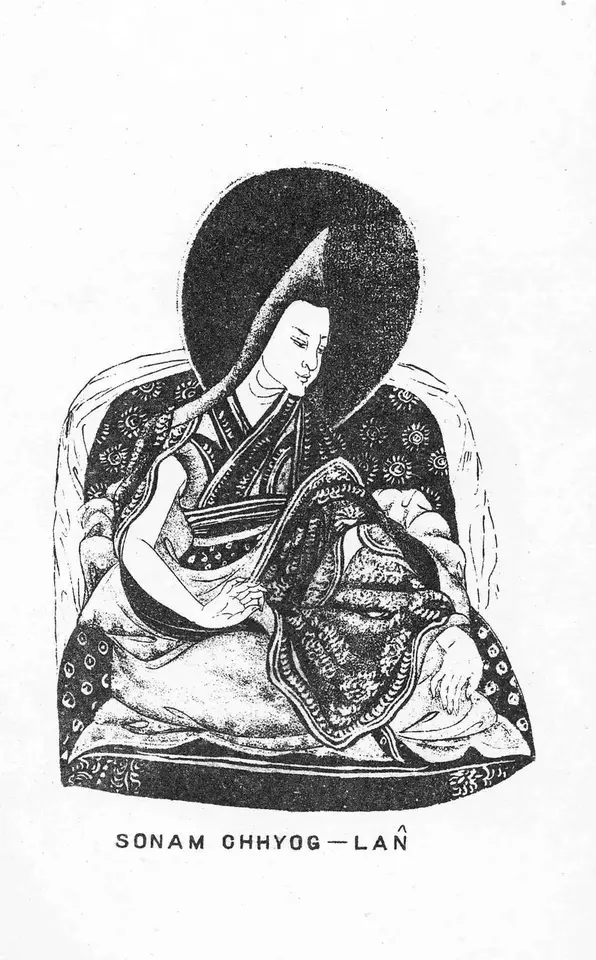
PROFILE
The Second Panchen Lama (二世班禅, 1439–1504), whose monastic name was Sonam Chokyi Langpo and who was widely known as Ensa Sonam Choklang, was a renowned prelate of the Gelug school of Tibetan Buddhism and a master of Vajrayana meditation. He was the founder of the Ensa contemplative tradition within the Gelug school. In 1713, when the Kangxi Emperor of the Qing dynasty formally bestowed the title "Panchen Erdeni" upon the Fifth Panchen Lama Lobsang Yeshe, Sonam Choklang was posthumously recognized as the Second Panchen Erdeni.
Possessing keen intelligence and spiritual devotion from childhood, Sonam Choklang traveled to Ganden Monastery near Lhasa during his youth to take monastic vows, systematically studying both the exoteric and esoteric teachings transmitted by Je Tsongkhapa. He mastered the Five Great Treatises, the Madhyamaka Prasangika philosophy, and Buddhist epistemology (Pramana), before dedicating himself to the physical and meditative practices of the Highest Yoga Tantra, notably Yamantaka and Chakrasamvara. In his mature years, Sonam Choklang retired to Ensa Monastery (also known as Yingen Monastery) in Tsang, spending decades in ascetic retreat within remote Himalayan cliff caves. His profound spiritual realizations and extensive meditation manuals established the Ensa tradition, which prioritized solitary tantric contemplation over worldly ecclesiastical honors.
On May 9, 1504 (25th day of the 3rd lunar month of the 17th year of the Hongzhi reign), Sonam Choklang passed into parinirvana at Ensa Monastery at the age of sixty-six. His reincarnation was later identified as Lobsang Dondrup (the Third Panchen Lama). Renowned for strict adherence to monastic vinaya, extraordinary meditative absorption, and pure spiritual conduct, Sonam Choklang was a principal founder of the Gelug tantric lineage.
- Dharma Name
- Sonam Chokyi Langpo
- Dynasty
- Ming
- Ancestral Home
- Ensa, Tsang, Tibet (modern Jiangdang Township, Shigatse, Tibet)
- Birth Date
- 1439 (4th year of the Zhengtong reign, Ming)
- Death Date
- 1504 (25th day of the 3rd lunar month, 17th year of the Hongzhi reign, Ming)
- Age at Death
- 66
- Historical Identity
- Gelug prelate, Vajrayana master, Second Panchen Erdeni (posthumously recognized)
BIOGRAPHY
Chronology
- 1439 (4th year of the Zhengtong reign) | Birth in Tsang | Born in the Ensa district of Tsang, Tibet, into a devout Buddhist family.
- 1455 (6th year of the Jingtai reign) | Ordination at Ganden | Traveled to Ganden Monastery near Lhasa, taking novice vows and studying the Tripitaka under Tsongkhapa's disciples.
- 1470 (6th year of the Chenghua reign) | Studying Under Masters | Traveled across central and western Tibet, mastering the Five Great Treatises and Anuttarayoga Tantra.
- 1485 (21st year of the Chenghua reign) | Retreat at Ensa | Retired to Ensa Monastery in Tsang, engaging in solitary cliffside meditation and founding the Ensa tradition.
- 1495 (8th year of the Hongzhi reign) | Turning the Tantric Wheel | Instructed dedicated disciples in profound Yamantaka and Chakrasamvara practices, composing doctrinal guides.
- 1504 (17th year of the Hongzhi reign) | Parinirvana at Ensa | Passed into nirvana in seated meditation at Ensa Monastery at age sixty-six.
- 1713 (52nd year of the Kangxi reign) | Imperial Recognition | The Qing court formally institutionalized the lineage, recognizing Sonam Choklang as the Second Panchen Erdeni.
Life and Career
Noble Lineage and Monastic Ordination
Sonam Choklang was born in 1439 in the Ensa region of Tsang (located in modern Jiangdang Township, Shigatse City, Tibet Autonomous Region). His lineage had long observed Buddhist practices with strict discipline. From childhood, Sonam Choklang was contemplative and observant, displaying natural comprehension of sacred mantras and liturgical rituals.
During the Jingtai reign, the young Sonam Choklang bade farewell to his family and journeyed across the plateau to Ganden Monastery, the foundational seat of the Gelug school east of Lhasa. Before the main altar of Ganden, he shaved his head and took novice vows, receiving the monastic name Sonam Chokyi Langpo (meaning "Elephant of Merit and Dharma"), commonly abbreviated as Sonam Choklang. At Ganden, he studied under direct disciples of Je Tsongkhapa, reading scriptures from dawn to dusk. He methodically mastered the Five Great Treatises—Pramana (Epistemology), Prajnaparamita (Perfection of Wisdom), Madhyamaka (Middle Way), Abhidharma (Phenomenology), and Vinaya (Monastic Discipline)—gaining complete mastery of the Prasangika Madhyamaka view of emptiness and winning widespread acclaim in debate assemblies.
Sutric Mastery and Tantric Cultivation
After completing his exoteric education and receiving full monastic ordination (Bhikshu) at Ganden, Sonam Choklang concluded that intellectual mastery of textual doctrine alone was insufficient for ultimate liberation, requiring complete integration with esoteric Vajrayana meditation. Leaving Lhasa, he traveled extensively across U and Tsang, visiting leading scholars of the Gelug, Sakya, and Kagyu schools to receive Highest Yoga Tantra transmissions.
He immersed himself in the empowerment lineages and generation and completion stages of the three supreme yidam deities: Yamantaka, Chakrasamvara, and Guhyasamaja, developing exceptional realization in Yamantaka meditation. Throughout his studies, he observed monastic vows strictly, avoiding public acclaim and living on the simplest sustenance. Often meditating in solitary wilderness retreats, he fused the renunciation and bodhicitta outlined in Tsongkhapa's Lamrim Chenmo (Great Treatise on the Stages of the Path) with the transcendent wisdom of the tantras.
Solitary Retreat at Ensa Monastery
During the Chenghua reign, observing that administrative burdens and sectarian rivalries in large monasteries could impede spiritual progress, Sonam Choklang resolved to withdraw from monastic institutional life and return to Tsang for solitary contemplation. He relocated to Ensa Monastery (known in Tibetan as Ensa Rito, meaning "hermitage of quiet contemplation"), nestled in a high mountain gorge.
Perched among sheer cliffs, Ensa suffered from an extreme alpine climate and scarce provisions. Sonam Choklang resided in a natural cave above the monastery, beginning decades of ascetic retreat. Sustaining himself on minimal roasted barley flour, he focused entirely on profound meditation, breath regulation, and inner-heat cultivation. Through long years of quiet contemplation, he overcame severe physical hardships and demonstrated deep meditative realization. Hearing of his saintly discipline, monks and pilgrims crossed snow-covered passes to seek his guidance, establishing Ensa as a major contemplative sanctuary.
Guiding Disciples and Peaceful Nirvana
In his later years at Ensa, while remaining in seclusion, Sonam Choklang instructed practitioners who possessed genuine renunciation. He maintained a small circle of disciples, demanding strict ethical purity and solid sutric foundations before bestowing advanced tantric transmissions.
Sonam Choklang authored numerous meditation guides summarizing his practical insights into the generation and completion stages, standardizing texts such as the Yamantaka Sadhana Liturgy and Manual for Tantric Generation Stages. These writings established the doctrinal and liturgical foundation of the Ensa tradition. On May 9, 1504, Sonam Choklang seated himself in meditative posture in his cave at Ensa and passed away peacefully at age sixty-six. Following his cremation, his relics were enshrined in a stupa erected by the monastic assembly of Ensa.
Major Achievements
Founding the Gelug Ensa Tantric Practice Tradition
Sonam Choklang's most significant achievement in Tibetan Buddhist history was establishing the Ensa contemplative tradition (Ensa Nyengyu). While Je Tsongkhapa had emphasized strict vinaya and balanced study of sutra and tantra, Sonam Choklang developed a specialized path of solitary hermitage practice dedicated to achieving enlightenment in a single lifetime.
He integrated Tsongkhapa's Mahamudra teachings with the generation and completion stages of Highest Yoga Tantra, creating a meditation lineage centered on Yamantaka. Rather than constructing expansive monastic centers, this tradition prioritized remote cliffside hermitages (rito), austere monastic discipline, and direct master-to-disciple oral transmission. Expanded by his reincarnation, the Third Panchen Lama Lobsang Dondrup, the Ensa tradition became one of the three principal tantric transmission lineages of the Gelug school.
Codifying Tantric Rituals and Doctrinal Manuals
Sonam Choklang made enduring contributions to the codification of esoteric tantric practice. Drawing upon Anuttarayoga scriptures and Tsongkhapa's oral instructions, he authored authoritative meditation manuals and liturgical guides.
His treatises examined psychological transformation and subtle physiological systems, guiding practitioners from ordinary consciousness to the realization of the fundamental clear light mind. He detailed the subtle channels (nadi), winds (prana), and drops (bindu) in Yamantaka and Chakrasamvara cultivation. These concise manuals became standard practice texts across Ensa Monastery and the wider Gelug school.
Laying the Foundation for the Panchen Lineage
Sonam Choklang occupies a foundational position in the institutional history of the Panchen Lama reincarnation lineage. While Khedrup Gelek Palsang (the First Panchen Lama) had been a primary disciple of Tsongkhapa, a formal reincarnation lineage had not yet been established. Following Sonam Choklang's passing at Ensa, the recognition of Ensapa Lobsang Dondrup as his conscious rebirth marked the historical inception of the lineage.
During the early Qing, the Fourth Panchen Lama Lobsang Chokyi Gyaltsen expanded Tashilhunpo Monastery and formalized the lineage's administrative authority. In 1713, the Kangxi Emperor dispatched imperial envoys to Shigatse to bestow an imperial golden seal and jade certificate upon the Fifth Panchen Lama Lobsang Yeshe, officially confirming Khedrup Je as the First Panchen Lama and Sonam Choklang as the Second Panchen Erdeni, incorporating the lineage into the imperial state archives of the multiethnic Qing realm.
Personal Relationships
- Lineage Predecessor: Khedrup Gelek Palsang, one of Je Tsongkhapa's two foremost disciples; posthumously recognized by the Qing court as the First Panchen Lama.
- Reincarnated Successor: Lobsang Dondrup, celebrated Tsang meditation master recognized as Sonam Choklang's reincarnation and posthumously honored as the Third Panchen Lama.
- Institutional Successor: Lobsang Chokyi Gyaltsen, the Fourth Panchen Lama; abbot of Tashilhunpo Monastery who formally institutionalized the Panchen reincarnation system.
- Spiritual Mentors: Direct disciples of Je Tsongkhapa at Ganden Monastery who instructed Sonam Choklang in classical sutras and tantric treatises.
Historical Evaluations
- Tuken Chokyi Nyima, Origin and Doctrines of Tibetan Religious Sects: "Ensa Sonam Choklang was a realized adept of supreme Vajrayana who dwelt in the Ensa hermitage. Undertaking ascetic retreat, he founded the sublime Ensa transmission, illuminating the snowy realm with spiritual virtue."
- Blue Annals (Debther Ngonpo): "Venerable Sonam Choklang possessed pure monastic discipline and radiant meditative wisdom. Discarding worldly ambitions like worn sandals, he dedicated himself to contemplation, serving as an anchor of authentic Gelug realization for posterity."
- Kangxi Emperor, Imperial Edict Bestowing the Panchen Erdeni Title: "The Panchen Lamas have across generations propagated the holy teachings with immaculate discipline and widespread virtue; let this golden seal and jade record endure for all time."
Related Entries
- Panchen Erdeni
- Khedrup Gelek Palsang
- Lobsang Dondrup
- Tashilhunpo Monastery
- Ganden Monastery