Life and Career
Palace Upbringing and Youthful Military Service
Yoto was born on February 26, 1599 in the ancient stronghold of Hetu Ala. He was the eldest legitimate son of Daišan, the eldest surviving son of Nurhaci, born to Daišan's primary consort Lady Ligiya. Having lost his mother at an early age, Yoto and his younger brother Šoto suffered harsh mistreatment and neglect from their stepmother, who repeatedly persuaded Daišan to confiscate their inheritance and livestock.
Upon learning of this domestic injustice, Nurhaci was incensed, severely reprimanding Daišan and taking young Yoto into the imperial palace to be raised under his direct supervision. Nurhaci entrusted Yoto's daily upbringing to his primary consort Lady Menggu Zhezhe, the mother of his eighth son Hong Taiji. Consequently, Yoto grew up in the same household as Hong Taiji, studying Manchu and Chinese texts together, practicing mounted archery, and developing a profound mutual trust that resembled that of close brothers. Precocious, composed, and endowed with strategic acumen, Yoto was deeply cherished by Nurhaci.
In 1619, when the Ming court mobilized four expeditionary columns against Later Jin, the Battle of Sarhu erupted. The twenty-year-old Yoto accompanied Daišan's Red Banner cavalry to reinforce Tiebei Mountain and Jilin Cliff, repelling Ming vanguard columns. Following the subsequent annexation of the Yehe tribe, Yoto joined Manggūltai and Darhan in commanding two thousand soldiers to receive and resettle several thousand surrendered Yehe households, demonstrating administrative maturity and diplomatic restraint. In late 1619, Nurhaci created him a beile, placing him in command of the Bordered Red Banner and recognizing him alongside Ajige, Dorgon, and Dodo as one of the "Four Junior Beile."
In 1621, Nurhaci launched massive offensives against Ming strongholds in southern Manchuria. Yoto led the vanguard of the Bordered Red Banner in storming Shenyang and Liaoyang, crossing the Hun River to cut off elite Ming infantry under Qi Jiguang's former commanders, killing Ming general You Shigong. He subsequently participated in the conquest of Guangning in 1622, routing Ming vice general Liu Qu at Xipingbao and capturing Jinzhou and Yizhou. In border skirmishes against the Jarud and Khorchin Mongol tribes, Yoto repeatedly led from the front, establishing a stellar reputation as one of the most capable young banner commanders.
Advising Father and Securing Hong Taiji's Succession
In the eighth month of 1626, Nurhaci died at Aijipu from severe illness following the Battle of Ningyuan. Because Nurhaci had not designated a sole successor, preferring a collective collegiate system among eight senior princes, the Later Jin state was immediately plunged into political uncertainty. As the senior surviving prince holding direct command over both the Plain Red and Bordered Red Banners, Daišan occupied the most powerful position, and many expected him to claim the throne. However, Daišan was hesitant, and personal rivalries among the other senior princes threatened to tear the banners apart.
Recognizing the existential danger of internecine conflict, Yoto acted with remarkable political wisdom. He recognized that his eighth uncle Hong Taiji possessed superior military acumen, statesmanship, and personal authority capable of unifying the diverse banner factions. In contrast, had Daišan attempted to assume the throne, Second Beile Amin, Third Beile Manggūltai, and the younger sons would have resisted, precipitating civil war.
On the night of September 29, 1626, Yoto conferred secretly with his younger brother Sahaliyan, reaching complete agreement on supporting Hong Taiji. The following morning, Yoto and Sahaliyan entered Daišan's private tent, directly presenting the geopolitical stakes: "The Fourth Beile possesses unmatched virtue and foresight, commanding the universal respect of both soldiers and people. If our father yields to popular desire and actively nominates him, our house will secure perpetual honor and the state will achieve lasting tranquility." Daišan was persuaded by his sons' reasoning and agreed to abandon any personal claim.
Daišan convened the council of beiles and formally proposed Hong Taiji as Great Khan. After ritual demurrers, Hong Taiji accepted the throne, inaugurating the Tiancong era. During the coronation ceremony, Yoto led the Bordered Red Banner in pledging solemn allegiance. Furthermore, Yoto subsequently advocated abolishing the old custom whereby the three senior beiles sat facing south alongside the Khan, actively fostering the consolidation of supreme centralized monarchical power.
First Expedition to Joseon and Thwarting Amin
In early 1627, in order to neutralize the threat of Ming commander Mao Wenlong's island garrison and secure Later Jin's rear flank, Hong Taiji launched the First Manchu invasion of Joseon (Dingmao Campaign). He appointed Second Beile Amin as commander-in-chief, with Yoto, Jirgalang, and Ajige serving as vice commanders over thirty thousand troops. The Later Jin forces crossed the Yalu River, captured Uiju and Chongju, shattered defenses at Pyongyang, and advanced toward Hanseong, driving King Injo to seek refuge on Ganghwa Island.
Enamored by the wealth and scenic beauty of the Korean peninsula, Amin's personal ambitions swelled. Amin convened a private council of beiles and proposed defying Hong Taiji's orders by establishing permanent garrisons across Korea, declaring himself an independent monarch. He demanded that Yoto and Jirgalang endorse his territorial partition scheme.
Yoto displayed unyielding loyalty and moral courage, openly rebuking Amin to his face: "We marched under the Great Khan's solemn mandate to chastise Joseon's hostility and secure our borders. To abandon our homeland and establish an unauthorized kingdom abroad is an act of treason! Who would protect Liaodong if our forces were stranded here?" With Jirgalang's support, Yoto firmly blocked Amin's design.
Yoto then took charge of peace negotiations with the Korean court, concluding the Treaty of Ganghwa Island. King Injo sacrificed a white horse and swore a blood oath, establishing a "brotherly alliance" between Later Jin and Joseon while cutting off grain supplies to Mao Wenlong. On the return march, Yoto strictly prohibited pillaging, ensuring that Korean civilians were spared unnecessary devastation. Through his decisive intervention, Yoto preserved imperial unity and brought the army home intact, receiving personal accolades from Hong Taiji outside Shenyang.
Directing the Board of War and Incursions beyond the Great Wall
In late 1629, Hong Taiji bypassed the heavily fortified Ningjin defense line by launching a surprise incursion into northern China through eastern Inner Mongolia, known as the Jisi Campaign. Yoto led the vanguard of the Bordered Red Banner, breaching the Great Wall at Longjingguan, seizing Da'anbu, and capturing Zunhua. Advancing directly to the gates of Beijing, Yoto deployed outside Guangqumen, repelling counterattacks by Ming commander-in-chief Yuan Chonghuan's elite cavalry, and went on to capture Jizhou, Liangxiang, and Xianghe before safely escorting massive spoils back across the border.
In July 1631, Hong Taiji established the Six Ministries to modernize state administration, appointing Yoto as the inaugural Beile Directing the Board of War. In this capacity, Yoto eliminated administrative disorder, standardized weapon specifications, and organized the Han Artillery Corps (Ujen Choha) trained in Western-style cannons, fundamentally modernizing Later Jin siege capabilities.
In August 1631, the pivotal Siege of Dalinghe began against Ming general Zu Dashou. While directing artillery deployments and supply lines, Yoto personally led heavy cavalry during the Battle of Mount Chang, ambushing and shattering a forty-thousand-man Ming relief army under Wu Xiang and Song Wei. When Zu Dashou's garrison was reduced to starvation, Yoto held talks with Zu's adopted son Zu Kefa, explaining that the earlier massacre at Yongping was Amin's personal crime for which he had been punished, and assuring them that the Great Khan governed with mercy and benevolence. Zu Dashou surrendered the city, dismantling Ming defenses in western Liaodong.
Following the victory at Dalinghe, Yoto submitted memorials advocating the enlightened policy of "nourishing surrendered Han Chinese." He proposed intermarriages between Manchu noblewomen and surrendered Han officers to foster mutual trust, while insisting that Manchu clans be forbidden from mistreating Han sons-in-law. He also urged distributing land and oxen to surrendered populations, establishing a strategic framework that attracted widespread Han defections. Between 1632 and 1635, Yoto joined western expeditions against Ligdan Khan of the Chahar Mongols, securing the surrender of Ligdan's son Erke Khongghor and recovering the ancient Imperial Jade Seal. When Hong Taiji declared the founding of the Qing dynasty in 1636, Yoto was invested as Prince Cheng of the First Rank.
Incursion as Commander-in-Chief and Death in Camp
Despite his monumental contributions, Yoto was fiercely independent and outspoken, frequently clashing with Hong Taiji over matters of principle. He defended his younger brother Šoto during family disputes, incurring imperial displeasure. In August 1636, the Imperial Clan Court impeached Yoto for insolence and insubordination, recommending the death penalty. Recognizing his founding achievements, Hong Taiji commuted the sentence, demoting him to Prince of the Third Rank (Duoluo Beile). In 1637, Yoto redeemed himself during the Second Korean Campaign, participating in the siege of Namhansanseong that forced King Injo to accept Qing suzerainty.
In August 1638, during an imperial banquet, Yoto made candid remarks that once again incensed Hong Taiji, resulting in his demotion to Prince of the Fourth Rank (Gushan Beizi). Yet merely one month later, when the Qing launched a decisive two-pronged invasion of Ming China, Hong Taiji restored Yoto to Prince of the Third Rank and entrusted him with the supreme commission of Commander-in-Chief of Inspiring Martial Prowess, commanding the Right Wing Army alongside Dorgon's Left Wing Army.
In the autumn of 1638, Yoto breached the Great Wall at Qiangzilu near Miyun, overwhelming Ming garrisons in difficult mountainous terrain. His cavalry swept across the Zhili plains, capturing Changping, crossing the Grand Canal, and striking deep into Shandong. Yoto stormed Gaoyang, capturing and executing former Ming Grand Secretary Sun Chengzong, and subsequently took the provincial capital of Jinan, capturing Ming imperial prince Zhu Youshu.
Over several months of continuous winter campaigning, Yoto's army traversed thousands of li, capturing thirty-six cities and acquiring vast quantities of military equipment and grain. However, relentless operations in freezing conditions severely exhausted his vitality. In late 1638, an outbreak of virulent smallpox swept through the military encampments outside Jinan, and Yoto contracted the disease.
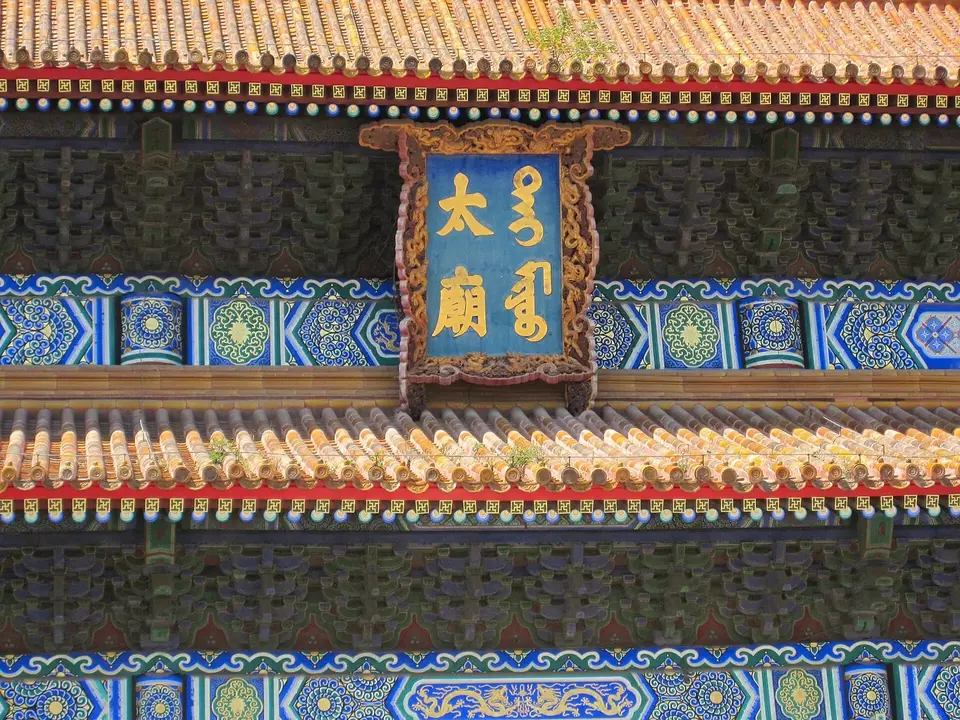
On February 11, 1639 (9th day of the 1st month of Chongde 4), Yoto died of smallpox at the age of forty-one in his military command post at Mount Niangniang outside Jinan. When news of his death reached Shengjing, Hong Taiji broke down in tears outside the Great Qing Gate, weeping uncontrollably to the point of fainting. The emperor suspended court business for three days and posthumously created him Prince Keqin of the Second Rank. In 1778, the Qianlong Emperor granted the Prince Keqin line perpetual hereditary succession, enshrining Yoto in the Imperial Ancestral Temple as one of the Eight Iron-Cap Princes of the Qing dynasty.
Major Achievements
Strategic Decision to Elevate Hong Taiji
Following Nurhaci's unexpected death in 1626, the Later Jin state faced severe internal fragmentation. With Daišan holding the senior position and controlling the two Red Banners, succession rivalries could easily have escalated into widespread civil war.
Yoto displayed extraordinary political vision by setting aside narrow clan interests, convincing his brother Sahaliyan and their father Daišan to renounce succession ambitions and lead the Eight Banners in electing Hong Taiji. This decisive statesmanship averted internal conflict, secured a peaceful transfer of power, and established the centralized authority essential for the eventual conquest of China.
Diplomatic Subjugation of Joseon Korea
During the 1627 Dingmao Campaign, Second Beile Amin sought to betray the Great Khan by partitioning the Korean peninsula and establishing an independent realm. As vice commander, Yoto openly resisted Amin's coercion, preserving the integrity of the Later Jin state.
Yoto subsequently conducted the negotiations that resulted in the Treaty of Ganghwa Island, establishing a tributary relationship that compelled Joseon to cease military cooperation with Ming commander Mao Wenlong while sparing Korean civilians from destruction. His diplomatic acumen effectively secured Later Jin's eastern flank.
Reorganizing Military Administration in the Board of War
As the first director of the Board of War from 1631, Yoto modernized the military institutions of the Later Jin state. He reformed banner muster rolls, standardized military logistics, and created the specialized Han Artillery Corps, transforming the army into a combined-arms force capable of protracted siege warfare.
Following the Siege of Dalinghe, Yoto championed the policy of benevolent assimilation toward surrendered Han Chinese, advocating intermarriages and economic support for surrendered personnel, laying the structural foundation for broad-based Han support for the Qing cause.
Commanding the Right Wing into Zhili and Shandong
Appointed Commander-in-Chief of Inspiring Martial Prowess in 1638, Yoto led the Right Wing Army on a sweeping strategic raid deep into the Ming heartland. Breaching the Great Wall at Qiangzilu, his cavalry crossed the Grand Canal, advancing through Zhili and Shandong.
Operating across thousands of li, Yoto captured thirty-six cities, executed Ming Grand Secretary Sun Chengzong, captured the Ming Prince of De, and seized vast quantities of weapons and supplies, delivering a devastating strategic blow to the late Ming dynasty and confirming his status as one of the preeminent field marshals of the early Qing era.