PROFILE
Wang Bing (王冰, c. 710 – c. 805), art name Qi Xuanzi (启玄子), also styled Qi Yuanzi, was a prominent physician, Daoist scholar, and high-ranking court official of the Tang dynasty, universally known to posterity as "Director Wang" (Wang Taipu). He stands as an epoch-making giant in traditional Chinese medical theory, celebrated as the primary organizer and definitive annotator of the foundational medical canon, the Yellow Emperor's Inner Classic: Plain Questions (Huangdi Neijing Suwen).
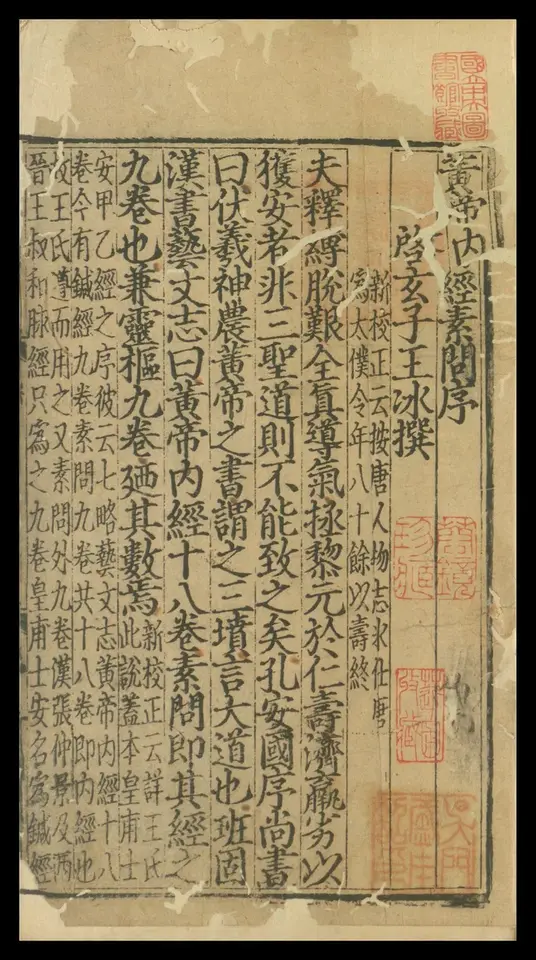
From early youth, Wang demonstrated a deep affinity for Daoist longevity arts and the philosophy of the Book of Changes, devoting decades to medical research. During the Tianbao and Baoying eras of the Tang dynasty, observing that ancient manuscripts of the Plain Questions had suffered severe corruption, textual dislocations, and missing chapters through centuries of civil turmoil, he resolved to restore the ancient text. Having acquired a rare ancestral manuscript preserved by Master Zhang from the study of Master Guo, Wang spent twelve continuous years (750–762) compiling, collating, and commenting on the text, completing his historic 24-volume, 81-chapter masterpiece, Broadly Expanded and Annotated Yellow Emperor's Inner Classic: Plain Questions (Chongguang Buzhu Huangdi Neijing Suwen).
In reorganizing the Plain Questions, Wang reordered sections, corrected archaic characters, and interpolated the indispensable "Seven Great Treatises on Yunqi" (Yunqi Qipian Dalun), establishing the foundational theoretical framework of Five Movements and Six Qi (Wu Yun Liu Qi) for traditional Chinese medicine. In pathology and clinical therapeutics, he formulated immortal clinical maxims: "Strengthen the master of water to control the scorching sun" (zhuang shui zhi zhu, yi zhi yang guang) for true yin deficiency, and "Nourish the source of fire to dispel cloudy yin" (yi huo zhi yuan, yi xiao yin yi) for true yang deficiency, while pioneering classical reproductive theories including "The Chong meridian is the sea of blood, and the Ren meridian governs the womb." Wang's annotated edition served as the exclusive textual blueprint for the Northern Song imperial medical bureau's official edition, enduring for over a millennium as the paramount theoretical source of classical Chinese medicine.
- Art Name
- Qi Xuanzi (启玄子), Qi Yuanzi (启元子)
- Identity
- Prominent physician, Daoist scholar, and Director of the Court of the Imperial Stud of the Tang dynasty; foundational organizer and commentator of the Yellow Emperor's Inner Classic: Plain Questions
- Highest Office
- Director of the Court of the Imperial Stud (Taipu Ling, Rank 3b)
- Major Offices
- Director of the Court of the Imperial Stud (Taipu Ling)
BIOGRAPHY
Chronology
- 710 (Jingyun 1) | Birth in the High Tang | Born around the early eighth century during the Tang dynasty, displaying precocious intelligence and studying Daoist longevity arts and classical philosophy.
- 730 (Kaiyuan 18) | Medical Inquiry | Devoted his youth to investigating ancient pharmacology and physiological balance, seeking principles of life preservation and longevity.
- 750 (Tianbao 9) | Acquiring the Secret Text | Acquired the rare ancient ancestral manuscript of the Plain Questions handed down by Master Zhang at Master Guo's study, vowing to complete a definitive annotation.
- 755 (Tianbao 14) | Preserving Texts during Rebellion | Amidst the An Lushan Rebellion, carried the precious medical manuscripts through wartime displacements, continuing his commentaries on astronomical and physiological cycles.
- 762 (Baoying 1) | Completion of Commentary | After twelve continuous years of rigorous research, completed the 24-volume, 81-chapter Broadly Expanded and Annotated Yellow Emperor's Inner Classic: Plain Questions.
- 763 (Baoying 2) | Director of Imperial Stud | Appointed Director of the Court of the Imperial Stud (Taipu Ling), attaining the third rank and overseeing dynastic equestrian administration, earning the title "Wang Taipu."
- 780 (Jianzhong 1) | Daoist and Medical Writing | Retired from imperial administration to live in scholarly seclusion, adopting the art name Qi Xuanzi and composing the medical treatise Xuanzhu.
- 805 (Yongzhen 1) | Passing | Passed away at an advanced age around the Yongzhen era; his commentary was later selected by the Northern Song imperial medical bureau as the official standard edition.
Biography
Early Learning and Acquisition of the Secret Canon
Wang Bing lived during the pivotal historical transition from the High Tang to the Middle Tang. While his early family origins and birthplace were not formally recorded in the dynastic histories, his own autobiographical prefaces and subsequent medical bibliographies record that he received a comprehensive education in classical literature and Daoist philosophy from early childhood. Uninterested in worldly bureaucratic advancement during his youth, Wang was fascinated by Huang-Lao Daoism, the hexagram metaphysics of the Book of Changes, and classical respiratory gymnastics (daoyin). Recognizing that human suffering was inextricably tied to disease and bodily decline, he made a solemn vow to investigate the deepest principles of medicine to relieve suffering.
During the mid-Tang period, the Huangdi Neijing—the foundational canon of Chinese medicine compiled between the Warring States period and the Han dynasty—had suffered catastrophic textual deterioration across centuries of warfare. Circulating manuscripts of the Plain Questions (Plain Questions) were plagued by missing bamboo slips, garbled syntax, transpositions, and unauthorized interpolations by uncritical practitioners, obscuring its theoretical essence. Grieved by the chaotic state of the classical text, Wang embarked on an extensive search across imperial provinces for rare manuscripts. In 750, visiting the private studio of Master Guo, Wang's sincerity persuaded Guo to transmit to him an ancient ancestral manuscript of the Plain Questions originally preserved by Master Zhang. The text was exceptionally well-preserved and complete. Recognizing its immense value, Wang immediately commenced an ambitious twelve-year project of textual collation and philosophical commentary.
Twelve Years of Dedicated Commentary
From 750 (the ninth year of the Tianbao reign of Emperor Xuanzong) to 762 (the first year of the Baoying reign of Emperor Daizong), Wang Bing dedicated himself completely to the commentary on the Plain Questions. This twelve-year span coincided with the devastating An Lushan Rebellion, which sacked both capitals and displaced millions of refugees. Even while fleeing through war zones, Wang carried the heavy medical manuscripts with him, guarding them with his life.
Wang's editorial approach was both profound and methodically rigorous. Utilizing Master Zhang's ancestral text, he collated variant readings against remnants of ancient masters such as Chunyu Yi, Bian Que, Zhang Zhongjing, and Wang Shuhe. Moving beyond the fragmentary eight-volume commentary prepared by Quan Yuanqi during the Southern Liang dynasty, Wang boldly restructured the entire canon: he reorganized the text from nine corrupted volumes into twenty-four comprehensive volumes comprising eighty-one thematic chapters, standardizing terminology and restoring fractured syntax. Most significantly, Wang recovered and incorporated the long-lost "Seven Great Treatises on Yunqi" into the canon, including Treatise on the Heavenly Origin, Treatise on the Five Movements, and Treatise on the Supreme Truth, filling a vast structural void in ancient Chinese medical theory.
In 762, Wang brought this monumental undertaking to completion under the title Broadly Expanded and Annotated Yellow Emperor's Inner Classic: Plain Questions. In his elegant preface, he expressed his lifelong mission to "deliver the common people into benevolence and longevity, and bring comfort to the frail and suffering," revitalizing classical medicine for future generations.
Imperial Office and Secluded Longevity
In recognition of his immense erudition and administrative competence, Wang was appointed Director of the Court of the Imperial Stud (Taipu Ling) during the Baoying era of Emperor Daizong. The Court of the Imperial Stud was a vital central administrative agency overseeing imperial carriage retinues, state pastures, and cavalry breeding programs across the empire. The office held the prestigious third rank, leading medical scholars throughout Chinese history to revere him as "Director Wang" (Wang Taipu). In his official capacity, Wang applied his methodical precision to state equestrian affairs, maintaining an unblemished reputation for probity.
In his spare hours, Wang pursued Daoist internal cultivation and philosophical writing, adopting the sobriquet "Qi Xuanzi" to signify his contemplation of celestial mysteries and the vital sources of life. Practicing the longevity methods he advocated, Wang lived to the extraordinary age of ninety-six, passing away peacefully around 805 during the Yongzhen reign of Emperor Shunzong. During the Jiayou reign of Emperor Renzong in the Northern Song dynasty, when the imperial Bureau for the Collation of Medical Books (Jiaozheng Yishu Ju) undertook the definitive revision of ancient medical classics, imperial scholars Gao Baoheng and Lin Yi determined that Wang Bing's text was the most complete, coherent, and authoritative edition in existence. The court promulgated Wang's edition as the official imperial standard, ensuring that his scholarship would anchor Chinese medical thought across centuries.
Major Achievements
Reorganization of Plain Questions and the Seven Treatises
In the preservation and transmission of traditional Chinese medical literature, Wang Bing's historical contribution remains matchless. His 24-volume, 81-chapter Broadly Expanded and Annotated Yellow Emperor's Inner Classic: Plain Questions rescued the supreme canon of Chinese medicine from textual oblivion.
Prior to Wang, existing editions were fractured, with Quan Yuanqi's sixth-century commentary missing more than two-fifths of the text. Applying rigorous philological standards to Master Zhang's ancestral manuscript, Wang reconstructed the canon into eighty-one cohesive chapters, annotating archaic terms and clarifying obscure idioms.
Crucially, Wang interpolated the "Seven Great Treatises on Yunqi" into the core text. These extensive treatises established the doctrine of the "Five Movements and Six Qi" (Wu Yun Liu Qi), which analyzed the complex interactions between celestial cycles, seasonal meteorological fluctuations, internal organ energetics, and seasonal epidemics. This addition elevated Chinese medicine into a holistic science linking human physiology directly to macroscopic astronomical patterns.
Formulating Dual Therapeutic Principles for Yin and Yang
In physiological pathology and clinical therapeutics, Wang revolutionized Yin-Yang theory by establishing two landmark therapeutic maxims that continue to guide clinical practice.
Addressing the diagnostic challenges of differentiating true deficiency from false excess, Wang formulated two immortal clinical rules: for severe exhaustion of true yin presenting with internal heat, he established the maxim "Strengthen the master of water to control the scorching sun" (zhuang shui zhi zhu, yi zhi yang guang); for exhaustion of true yang presenting with internal cold, he formulated "Nourish the source of fire to dispel cloudy yin" (yi huo zhi yuan, yi xiao yin yi). He warned physicians against misinterpreting deficiency heat as excess heat, prohibiting the indiscriminate use of bitter cold herbs that further deplete vital essence.
Wang summarized this diagnostic principle in his famous aphorism: "If cold drugs do not cool heat, fault the lack of water; if hot drugs do not warm cold, fault the lack of fire." This insight revealed that apparent heat often stems from kidney yin deficiency, while apparent cold often stems from kidney yang deficiency. His formulations laid the direct foundation for the Nourish Yin and Warm Tonic schools developed by Jin, Yuan, and Ming masters such as Zhu Danxi and Zhang Jingyue.
Fluid Metabolism and Reproductive Physiology
Wang made pioneering theoretical contributions to internal organ physiology and gynecological medicine.
In fluid metabolism, commenting on the Plain Questions, Wang looked beyond the kidneys to articulate the integrated roles of the lung, spleen, and kidney in water distribution. He demonstrated that the lungs govern the descending and dispersion of fluids, the spleen manages transportation and transformation, and the kidneys govern vaporization and opening, providing a comprehensive three-organ therapeutic model for edema and fluid retention.
In reproductive physiology, drawing upon the opening chapters of the Plain Questions, Wang formulated the classic medical axiom: "The Chong meridian is the sea of blood, and the Ren meridian governs the womb; when both support each other, conception occurs." He established that menstruation and fertility depend upon the harmonic balance of blood and qi within the Chong and Ren meridians. This maxim became the opening premise of traditional gynecology from the Song dynasty onward.
Clarifying Orthodox and Contrary Treatments
In clinical methodology and the classification of disease mechanisms, Wang significantly refined diagnostic precision.
Wang provided an exhaustive analysis of "orthodox treatment" (zhengzhi) and "contrary treatment" (fanzhi). He stated: "Opposing is orthodox treatment; following is contrary treatment." While orthodox treatment counteracts symptoms directly (using cold herbs for heat patterns and warm herbs for cold patterns), severe false-heat or false-cold conditions require contrary treatment (using warm herbs alongside cold manifestations), guiding pathological fire back to its origin. Furthermore, for the "five stagnations" (wood, fire, earth, metal, water), Wang defined specific therapies: emesis, sweating, purgation, percolation, and drainage.
In etiology, Wang classified all diseases into "qi movement" and "non-qi movement" categories, subdividing each into internal and external origins. Defining qi movement as visceral disharmony, he integrated pathogen origin with internal physiological reaction, pioneering integrated models of disease pathology.
Personal Relationships
- Medical Mentor: Master Guo (reclusive Daoist scholar of the Tang dynasty who recognized Wang's dedication and transmitted to him Master Zhang's ancestral copy of the Plain Questions)
- Textual Transceiver: Master Zhang (ancient medical scholar whose carefully preserved ancestral copy of the Plain Questions formed the primary textual base for Wang's twelve-year commentary)
- Subsequent Beneficiary: Zhang Jingyue (renowned Ming dynasty master of the Warm Tonic school, who revered Wang's yin-yang maxims as the pinnacle of clinical medicine)
- Northern Song Imperial Editor: Gao Baoheng (Northern Song scholar and Director of the Bureau for the Collation of Medical Books, who designated Wang's commentary as the official imperial standard text)
- Northern Song Imperial Editor: Lin Yi (leading Northern Song medical official who praised Wang's commentary as an immortal guide for clinical medicine)
Historical Evaluations
- Gao Baoheng and Lin Yi, Preface to the Corrected Edition of the Broadly Expanded and Annotated Yellow Emperor's Inner Classic: Plain Questions: "There arose Wang Bing, who obtained the secret manuscript of Master Zhang and retired to his studio, studying it for twelve years to produce twenty-four volumes and eighty-one chapters... Wang's commentary displays expansive erudition and archaic elegance; his textual verifications are rigorous and orderly, standing as a true compass for physicians and a model for a thousand years."
- Li Lian, Medical History, "Biography of Wang Bing, Tang Director of the Imperial Stud": "Director Wang was broadly learned in medicine and devoted to longevity arts. In re-annotating the Plain Questions, he incorporated the seven treatises on Yunqi, illuminating ancient ambiguities so that subsequent scholars invariably followed his models."
- Zhang Jiebin, Classified Canon (Leijing), "Preface": "In antiquity, Wang Qixuan commented upon the Plain Questions, uncovering the mysteries of water, fire, yin, and yang with his words: 'Strengthen the master of water to control the scorching sun; nourish the source of fire to dispel cloudy yin.' This revealed subtle truths that earlier sages had left unsaid, encompassing the full scope of clinical genius."
- Xu Chunfu, Compendium of Ancient and Modern Medicine: "Qi Xuanzi possessed generational genius, annotating the canons of Shennong and the Yellow Emperor. His elucidation of scriptural principles and exposition of Yunqi became standard rules for later scholars. His merit was no less than that of Qibo and Leigong."
- New Book of Tang, Scroll 59, "Treatise on Literature III": "Wang Bing's Commentary on the Yellow Emperor's Plain Questions, in twenty-four volumes. Wang Bing served as Director of the Court of the Imperial Stud during the Baoying era."
Related Entries
- Yellow Emperor's Inner Classic
- Plain Questions
- Five Movements and Six Qi
- Director of the Court of the Imperial Stud
- Lin Yi
- Zhang Jiebin