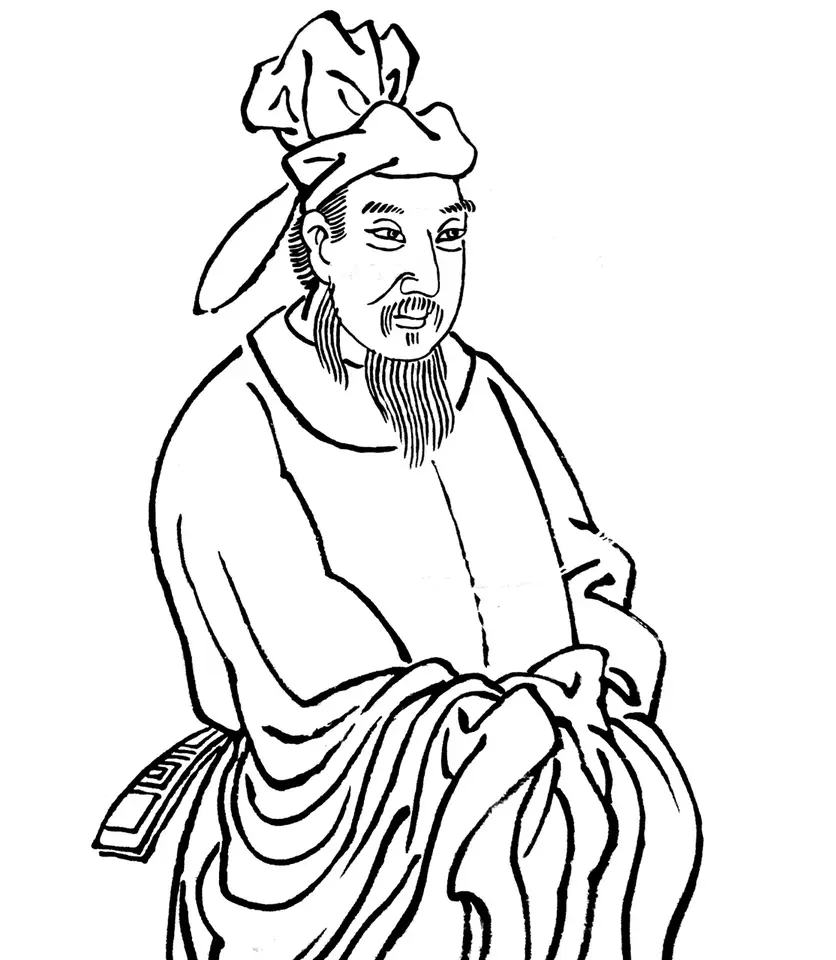
Life and Career
Captivity in War and Royal Tutelage
Zheng Hui was born in Xiangzhou into a scholarly family, mastering the Confucian classics, historical chronicles, and literary arts from youth. During the Tianbao era of Emperor Xuanzong, he passed the Mingjing examination and received an appointment as Magistrate of Xilu County in Xizhou, located along the mountainous southwestern frontier. In office, Zheng Hui practiced benevolent governance, fostering peaceful coexistence among Han and indigenous ethnic groups.
In the mid-eighth century, rapacious exactions by Jiannan Military Governor Xianyu Zhongtong and Yunnan Governor Zhang Qiantuo provoked Nanzhao into armed rebellion, igniting the disastrous Tianbao War. In 754, Tang general Li Mi suffered catastrophic defeat, losing an army of eighty thousand men. Exploiting their victory, Nanzhao King Geluofeng marched north into Xizhou. Xilu County fell, and Zheng Hui was taken prisoner.
Geluofeng possessed deep admiration for Chinese civilization and administrative institutions. Learning that Zheng Hui was a consummate Confucian scholar of remarkable character, Geluofeng released him from shackles, treated him with supreme courtesies, bestowed upon him the local name "Zheng Manli", and appointed him State Preceptor. Geluofeng entrusted the education of his son Fengjiayi and grandson Yimouxun entirely to Zheng Hui. Zheng Hui managed his academy with uncompromising rigor. If royal princes neglected their recitations or breached decorum, he reprimanded and caned them without hesitation. Rather than taking offense, Geluofeng and the royal court held Zheng Hui in ever greater veneration, instilling deep respect for Chinese literary culture in the royal heirs.
Administrative Reforms and Cultural Enlightenment in Nanzhao
In 779, Geluofeng passed away, and his grandson Yimouxun ascended the throne of Nanzhao. Remembering Zheng Hui's mentorship, Yimouxun elevated him to the paramount office of Qingpingguan (chief minister) and Grand Military General, placing the kingdom's executive apparatus under his direct supervision.
Recognizing that Nanzhao's traditional tribal confederation lacked institutional coherence, Zheng Hui assisted Yimouxun in executing structural feudal reforms. Modeling the administration on Tang central institutions, he established six administrative bureaus—War, Revenue, Protocol, Judicial, Rites, and Works—directed by the chief ministers. He standardized official hierarchies and implemented merit-based assessments for regional headmen.
In education and culture, Zheng Hui instituted the doctrine of "manifesting the Three Teachings and welcoming scholars from the four directions", prioritizing Confucian learning among Nanzhao elites. He established academies in the capital, taught classical Chinese prose, and arranged for sons of indigenous aristocrats to study abroad in Chengdu. Around 766, Zheng Hui drafted the monumental Nanzhao Dehua Stele, a massive inscription exceeding three thousand Chinese characters erected at Taihe City. The inscription provided a lucid historical account of the Tianbao conflict, underscoring that Nanzhao had fought only in self-defense and longed for reconciliation with the Tang throne, laying an ideological bridge for future rapprochement.
Discerning the Tubo Threat and Urging Return to Tang
Following the Tianbao conflict, Nanzhao had been forced into an asymmetric alliance with Tubo, receiving the title of "Younger Brother of the Tibetan Emperor" while Yimouxun was titled "King East of the Sun". However, the Tibetan nobility treated Nanzhao with contempt, imposing exorbitant levies of livestock and precious metals while forcibly conscripting Nanzhao soldiers as frontline fodder in aggressive campaigns against Sichuan.
Furthermore, Tubo erected heavily fortified garrisons across northern Nanzhao, keeping the royal family under surveillance. Observing this suffocating subjugation, Zheng Hui repeatedly advised Yimouxun in private: "The Great Tang embodies authentic civilization, practicing benevolence, virtue, and moderation without insatiable greed. Tubo, by contrast, is predatory, extortionate, and deceitful, squandering the lives of our people like vermin. Remaining bound to Tibet is like holding dry grass to extinguish a blaze. Today, the Tang emperor is sage and enlightened, and Wei Gao, Military Governor of Jiannan, is a statesman of sublime virtue. If we sever our ties with Tibet and return to the Central Realm, we will relieve our people from predation and safeguard our frontiers for eternity!"
Yimouxun initially hesitated in dread of Tibetan military vengeance. Zheng Hui methodically dissected the geopolitical balance, demonstrating that Tubo suffered from overextended logistics and internal factional strife, whereas Nanzhao possessed formidable natural defenses around Mount Cangshan and Lake Erhai. Convinced by his mentor's strategic brilliance, Yimouxun entrusted the secret plan of rapprochement entirely to Zheng Hui.
The Diancang Alliance and Joint Victory at Iron Bridge
In 793, Zheng Hui drafted confidential petitions to the Tang court, which Yimouxun dispatched via three separate courier routes to bypass Tibetan patrols and reach Chengdu. Wei Gao received the overtures with enthusiasm, forwarding them to Chang'an. Emperor Dezong rejoiced, dispatching Vice Censor-in-Chief Cui Zuo with imperial seals to consummate the alliance.
In the first month of 794, Cui Zuo arrived at the Nanzhao capital of Yangjumie (modern Dali). King Yimouxun, Zheng Hui, and royal dignitaries assembled at the shrine of Mount Cangshan to conduct the solemn alliance ceremony. Zheng Hui presided over the recitation of the alliance covenant, joining the envoys in smearing their lips with blood and burning incense. Four authentic copies of the oath were prepared: one for the imperial ancestral temple in Chang'an, one buried atop Mount Cangshan, one submerged in Lake Erhai to propitiate water spirits, and one preserved in the Nanzhao royal treasury. The alliance restored peaceful vassalage with the Tang empire.
Anticipating no treachery, Tibetan commanders demanded Nanzhao troops for an imminent raid. Following Zheng Hui's tactical trap, Nanzhao forces feigned compliance, luring thousands of Tibetan troops into the defiles along Lake Erhai before springing a devastating joint ambush with Tang forces. In subsequent operations, Nanzhao troops sacked the Tibetan outpost at Iron Bridge, burning the river crossings, capturing several Tibetan royal princes, and seizing sixteen frontier fortresses. This decisive victory permanently dismantled Tibet's southern offensive axis.
In 795, Emperor Dezong conferred brocade robes, a golden belt, and rich silks upon Zheng Hui, praising his enduring fidelity and extraordinary statecraft. Zheng Hui passed away in Nanzhao during the late Zhenyuan era, mourned across the kingdom. Subsequent generations of the Bai and Yi peoples honored him as a cultural patron, establishing memorial shrines that endured across centuries.
Major Achievements
Orchestrating the Diancang Mountain Alliance
The Diancang Mountain Alliance of 794 represented a watershed moment in the history of southwestern ethnic relations in imperial China. Zheng Hui was the indispensable architect of this historic reconciliation.
Over years of clandestine diplomacy, he overcame institutional distrust and severed Tibetan intelligence surveillance, establishing robust coordination with Wei Gao. The resulting treaty terminated four decades of destructive warfare between Tang and Nanzhao, fundamentally altered the geopolitical balance against the Tibetan Empire, and restored the southwestern borderlands to dynastic stability.
Authoring the Nanzhao Dehua Stele
During the Dali era, King Geluofeng commissioned Zheng Hui to compose the text of the Nanzhao Dehua Stele. Standing nearly four meters tall south of Taihe City, this inscription represents the preeminent historical monument of southwestern China.
Zheng Hui's text demonstrated profound literary elegance and deep political subtlety. It articulated the shared historical bonds between Nanzhao and the Tang court, explained the tragic defensive necessity of the Tianbao conflict, and emphasized Nanzhao's enduring veneration for imperial authority. The stele served as an enduring cultural and legal justification that paved the way for subsequent diplomatic reunification.
Disseminating Confucian Education and Institutional Reforms
Serving across three generations of Nanzhao kings, Zheng Hui served as the chief agent of administrative modernization and cultural integration in Yunnan.
He introduced the Tang-style six-ministry administrative framework to replace informal tribal gatherings, systematized taxation and criminal codes, and championed the study of Confucian classics among the indigenous ruling class. By dispatching local scholars to study in Chengdu and establishing local academies, he fostered deep linguistic and philosophical synthesis, laying the cultural foundations for the integration of the southwestern peoples into the broader Chinese civilization.