Birth in Gaoyou
Born into an illustrious scholarly family in Gaoyou, Jiangsu; educated in classical philology and Neo-Confucian morality.
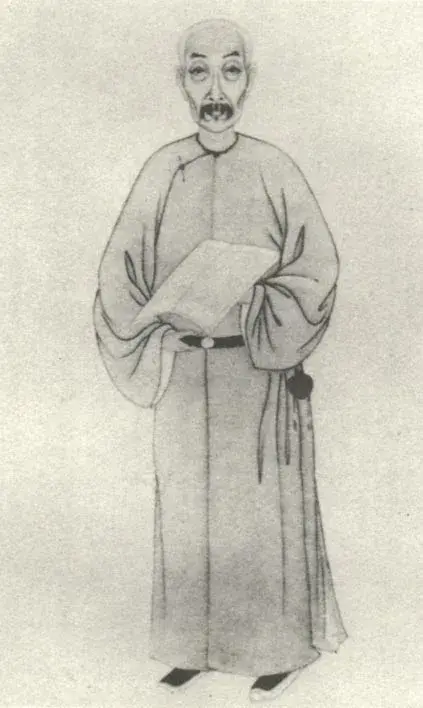
王引之
Wang Yinzhi (王引之, April 19, 1766 – December 25, 1834), courtesy name Baishen (伯申), art name Manqing (曼卿), and posthumously named Wenjian (文简), was a native of Gaoyou State, Yangzhou Prefecture, Jiangsu (present-day Gaoyou City). He was the culminating master of the Qianlong-Jiaqing School of Evidential Research (Qian-Jia Hanxue), a paramount philologist, phonologist, and classical exegete, and an incorruptible high-ranking…
Wang Yinzhi (王引之, April 19, 1766 – December 25, 1834), courtesy name Baishen (伯申), art name Manqing (曼卿), and posthumously named Wenjian (文简), was a native of Gaoyou State, Yangzhou Prefecture, Jiangsu (present-day Gaoyou City). He was the culminating master of the Qianlong-Jiaqing School of Evidential Research (Qian-Jia Hanxue), a paramount philologist, phonologist, and classical exegete, and an incorruptible high-ranking minister of the late Qing dynasty, rising to Minister of Works, Minister of Rites, Chief Director of the Wuying Palace Editorial Office, and Imperial Lecturer, while being granted the rare privilege of riding a horse within the Forbidden City. Born into an eminent scholarly and bureaucratic lineage, his grandfather Wang Anguo served as Minister of Personnel, while his father Wang Niansun was a titan of classical philology. Father and son were collectively celebrated as the "Two Wangs of Gaoyou," standing alongside Hui Dong's Wu School and Dai Zhen's Wan School as the premier intellectual standard-bearers of Qing Han learning. In 1799, Wang Yinzhi achieved the highest academic distinction by placing third overall (Tanhua) in the imperial palace examination, entering the Hanlin Academy as a Compiler. In public office, he was renowned for unbending integrity and fearless forthrightness; the Jiaqing Emperor issued an imperial commendation praising him with the words: "Wang Yinzhi speaks what others dare not speak." He overturned the wrongful prosecution of Fujian Financial Commissioner Li Gengyun, impeached corrupt viceroys, and as Vice Minister of Rites settled complex ancestral lineage mourning disputes with rigorous adherence to classical ritual canon. In his educational appointments and examination presidencies, he identified and nurtured transformative intellectual figures, including the pioneering thinker Gong Zizhen and early modernization statesman Tao Shu. Academically, Wang Yinzhi brought Chinese philology, phonology, and historical semantics to their highest zenith. Applying the rigorous methodology of "seeking ancient meaning through ancient phonetics" and uncovering phonetic loan characters, he resolved textual ambiguities that had confounded scholars for over two millennia. Over three decades of exhaustive collation, he authored the thirty-two-volume exegesis Record of Meanings in the Classics (Jingyi Shuwen), correcting over one thousand misinterpretations dating back to Han and Tang commentaries. His ten-volume masterpiece Explanation of Empty Particles in the Classics and Commentaries (Jingzhuan Shici) was the first comprehensive, systematic treatise in Chinese linguistic history dedicated to the grammatical analysis of ancient function words. Furthermore, under imperial decree, he directed the correction of the imperial dictionary, producing the twelve-case Critical Examination of the Kangxi Dictionary (Zidian Kaocheng). He died in Beijing in 1834 at the age of sixty-nine, receiving the posthumous title Junior Guardian of the Crown Prince and the name Wenjian.
Born into an illustrious scholarly family in Gaoyou, Jiangsu; educated in classical philology and Neo-Confucian morality.
Studied the Shuowen Jiezi and ancient phonology under his father Wang Niansun, who celebrated his capacity to carry forward the family tradition.
Completed Explanation of Names and Courtesy Names in the Spring and Autumn Annals, initiating research on Jingyi Shuwen and Jingzhuan Shici.
Placed third overall (Tanhua) in the imperial palace examination, appointed Compiler in the Hanlin Academy.
Ranked first in the imperial testing of Hanlin scholars, promoted to Expositor and appointed Imperial Diarist and Historiographer.
Appointed Educational Commissioner of Shandong, reforming examination morality, banning superficial literary plagiarism, and aiding famine victims.
Commissioned by the Jiaqing Emperor to direct the textual verification of the Kangxi Dictionary, drafting Zidian Kaocheng.
Dispatched as imperial commissioner to Fujian, overturning the false charges against Li Gengyun and impeaching Viceroy Wang Zhiyi.
Promoted to Vice Minister of Rites, successfully rejecting non-canonical proposals regarding mourning rites for secondary grandmothers.
Elevated to Minister of Works and Chief Director of Wuying Hall, granted the privilege of riding a horse within the Forbidden City.
Overhauled clerical corruption in the ministries and successfully memorialized to lift the grain embargo in Beijing to feed famine victims.
Transferred to Minister of Rites and Acting Minister of Personnel, serving as chief examiner and discovering Gong Zizhen.
Died in office in Beijing at age sixty-nine, honored posthumously as Junior Guardian of the Crown Prince with the name Wenjian.
Wang Yinzhi was born into one of the most intellectually distinguished gentry clans in Gaoyou State, Yangzhou Prefecture, Jiangsu. For generations, the Gaoyou Wang family combined strict Neo-Confucian moral discipline with practical learning. His grandfather, Wang Anguo, was the second-ranked graduate (Bangyan) in the palace examinations of 1724, rising to Governor of Guangdong, Censor-in-Chief, Minister of Rites, and Minister of Personnel, celebrated for unblemished administrative incorruptibility. His father, Wang Niansun, earned the metropolitan degree in 1775 and served as Defense Intendant of the Yongding River, while establishing himself as an unrivaled titan of Qing phonology and philology through monumental masterworks including Extended Erya with Textual Commentary (Guangya Shuzheng) and Reading Notes (Dushu Zazhi).
Nurtured in this rich scholarly environment, Wang Yinzhi demonstrated precocious talent from childhood. His father maintained an exacting standard of scholarship, repeatedly instructing him that the true meaning of the Confucian Classics could never be discovered through dogmatic repetition of later commentaries, but must be excavated through rigorous linguistic science: "The essence of exegesis resides in phonetics. When words share identical or proximate phonetic values, ancient texts frequently employ phonetic loans. When scholars seek meaning through sound, identifying the phonetic loan to restore the original character, obscurities dissolve like melting ice; if one forces an interpretation based strictly on the borrowed graph, the text becomes utterly unintelligible."
At seventeen, Wang Yinzhi immersed himself in the Erya, Shuowen Jiezi, Fangyan, and Gu Yanwu's Five Treatises on Phonology, submitting his research to his father. After reviewing his son's deductions, Wang Niansun exclaimed with joy: "Here is the son who can carry forward my life's learning!" At twenty-five, Wang Yinzhi published Explanation of Names and Courtesy Names in the Spring and Autumn Annals (Chunqiu Mingzi Jiegu), demonstrating that the relationship between personal names and courtesy names in ancient texts adhered to systematic phonetic principles. Working in close collaboration, father and son classified ancient Chinese rhymes into twenty-one discrete groups, refining the distinctions among the Zhi, Zhi, and Zhi rhyme categories beyond anything achieved by their contemporaries.
In his late twenties, Wang Yinzhi accompanied his father to Beijing, engaging in intellectual exchanges with the greatest minds of the era, including Dai Zhen's prominent disciples Duan Yucai, Jiao Xun, Ruan Yuan, Weng Fanggang, and Qian Daxin. Duan Yucai, author of the authoritative commentary on the Shuowen Jiezi, was astonished by the younger Wang's rigorous inductive precision, praising him as a genius endowed with divine discernment. In 1795, Wang passed the provincial examinations, and in 1799, during the first year of the Jiaqing Emperor's direct personal rule, he took the metropolitan and palace examinations, placing third overall (Tanhua) and receiving appointment as Compiler in the Hanlin Academy.
Within the Hanlin Academy, Wang rejected the superficial pursuit of flowery literary prose, dedicating himself to the rigorous editing and collation of imperial archives. He contributed to the compilation of the Administrative Precedents of the Hanlin Academy (Cilin Diangu) and served as Imperial Diarist, Associate Director of the Veritable Records Office, and Associate Director of the State Historiography Office. In 1803, during a special palace examination conducted personally by the Jiaqing Emperor for Hanlin academicians, Wang's essays demonstrated deep historical acumen and classical elegance, ranking him first class and earning promotion to Expositor. The emperor developed great respect for his vast learning and incorruptibility, frequently summoning him to resolve textual anomalies and exegetical questions.
In 1810, Wang Yinzhi was appointed Educational Commissioner of Shandong. During his circuit tours, he aggressively suppressed the prevailing scholar vices of plagiarism, empty rhetoric, and superficial examination essays, requiring candidates to demonstrate solid mastery of the Classics and historical institutions. He imposed strict security on his examination staff, prohibiting private communications, bribery, and gifts, while providing financial support for impoverished candidates from humble backgrounds.
During his tenure, widespread droughts and locust plagues devastated agricultural lands across Shandong and Zhili. Witnessing displaced famine victims along his route, Wang immediately memorialized the throne, urging prompt tax exemptions, grain price stabilization, and the retention of tribute grain to feed the starving, winning praise from the Jiaqing Emperor, who issued a commendation: "Wang Yinzhi speaks what others dare not speak; he is truly an upright minister of the state!"
In 1817, a major political crisis erupted in Fujian. Zhu Luzhong, the corrupt acting magistrate of Longxi, had been investigated by Financial Commissioner Li Gengyun for embezzlement. In retaliation, Zhu fabricated bribery charges against Li. The Viceroy of Minzhe, Wang Zhiyi, and Governor Wang Shaolan accepted the accusation without evidence, placing intense pressure on Li during interrogations. Unable to bear the humiliation of false charges, Li committed suicide by hanging, sparking outrage throughout southeastern China. Enraged, the Jiaqing Emperor dispatched Wang Yinzhi as an imperial commissioner to conduct an independent investigation.
Arriving in Fujian, Wang disregarded bureaucratic intimidation, examining official archives and conducting undercover inquiries among local citizens. He uncovered conclusive proof that Zhu had fabricated the charges out of malice, while the viceroy and governor had abused judicial power to cover up their negligence. Wang submitted an unsparing memorial demanding accountability. The Jiaqing Emperor fully adopted his findings, exonerating Li Gengyun, stripping Wang Zhiyi of his viceroyalty and banishing him to Xinjiang, and dismissing Governor Wang Shaolan from public service. The populace of Fujian celebrated Wang's impartiality, hailing him as an incorruptible judge.
In 1823, Wang was promoted to Vice Minister of Rites. Around this time, a major dispute arose among ritual officials concerning ancestral mourning rites for secondary grandmothers (concubines who gave birth to ancestral heirs). Several ministers proposed that heirs should observe three years of deep mourning (Qicui), implementing the decree prematurely before the Ministry of Rites had concluded deliberations. Wang intervened with an incisive memorial grounded in classical ritual canon.
Wang argued that mourning rites were the foundational pillar of the ancestral patriarchal system. Secondary grandmothers did not hold equal institutional status with principal grandmothers under classical ritual codes and Qing dynastic statutes; therefore, the three-year mourning rite could not canonical be applied. While private filial emotion could never fully repay parental kindness, state ritual demanded clear distinctions between principal wives and secondary consorts to preserve social order. Wang's masterful analysis grounded in the Yili and Liji persuaded the Daoguang Emperor, who overturned the earlier proposal and restored the traditional one-year mourning period.
Serving concurrently in the ministries of Personnel and Revenue, Wang moved aggressively to eliminate clerical corruption. Board clerks had long exploited bureaucratic procedures to extort bribes from officials seeking promotions, deliberately delaying candidate dossiers for months or years. Wang instituted strict registration logs, established processing deadlines, and severely punished corrupt scribes. Furthermore, in 1828, when severe droughts struck Zhili and Beijing, grain prices skyrocketed, yet municipal authorities enforced outdated edicts banning outside grain merchants. Recognizing that merchants were vital to preventing famine, Wang successfully petitioned the emperor to suspend the grain embargo, enabling merchant shipments to flood into Beijing and saving countless lives.
In 1827, in recognition of his profound scholarship and administrative achievements, the Daoguang Emperor appointed Wang Yinzhi as Minister of Works, Chief Director of the Wuying Hall, and Imperial Lecturer. In November of that year, the emperor granted him the exceptional honor of riding a horse within the Forbidden City. Over the following years, Wang served as Acting Minister of Revenue, Acting Minister of Personnel, and Minister of Rites, reaching the apex of civil bureaucracy.
In his final years, Wang frequently presided over provincial and metropolitan civil service examinations. Rejecting stylistic conformity, he actively sought out original thinkers with practical governing talent. When the brilliant but eccentric intellectual Gong Zizhen took the examinations, other examiners dismissed his bold essays, but Wang recognized his visionary grasp of statecraft, overriding objections to grant him high honors. Senior statesmen such as Tao Shu and Chen Shouqi similarly benefited from Wang's mentorship and patronage.
In 1834, Wang was reappointed Minister of Works. Despite approaching his seventieth year, he continued to work tirelessly on textual scholarship and administrative duties. On December 25, 1834, he passed away from illness at his residence in Beijing at age sixty-nine. The Daoguang Emperor was deeply shaken, canceling court audiences and conferring the posthumous title Junior Guardian of the Crown Prince, alongside the posthumous name Wenjian. He was buried in his native Gaoyou, mourned by scholars throughout China as the foremost classical master of the age.
Over thirty years of tireless labor, Wang Yinzhi carried forward the intellectual legacy of his father to complete the thirty-two-volume exegetical masterpiece Record of Meanings in the Classics (Jingyi Shuwen). The work provides critical textual commentaries on the Book of Changes, Book of Documents, Classic of Poetry, Rites of Zhou, Etiquette and Ceremonial, Book of Rites, Zuo Zhuan, Discourses of the States, and Erya.
Comprising more than 1,300 detailed entries—accounting for over two-thirds of the entire compilation—Wang applied phonetic loan analysis and historical phonology to correct more than one thousand long-standing exegetical misinterpretations that had persisted since Zheng Xuan in the Han dynasty and Kong Yingda in the Tang dynasty. Grand Secretary Ruan Yuan famously observed: "Wherever ancient scholars erred, he illuminated the text with such persuasive evidence that if the ancient sages were to see it, they would smile and say, 'This is truly what I meant!' Misunderstandings of several thousand years are now clarified."
Wang's ten-volume treatise Explanation of Empty Particles in the Classics and Commentaries (Jingzhuan Shici) represents a revolutionary landmark in Chinese historical linguistics. Prior to Wang's work, traditional exegesis focused almost exclusively on substantive nouns and verbs, dismissing function words (xuci) as ornamental tone particles.
Examining classical literature across the pre-Qin and Han dynasties, Wang systematically analyzed 160 grammatical function words. Employing inductive categorization, he demonstrated how particles functioned as conjunctions, adverbs, prepositions, and pronouns, while explicating complex phenomena such as phonetic loans, inverted syntax, and grammatical shifts. The work established the foundation for modern Chinese historical syntax.
Although the Kangxi Dictionary had served as the empire's definitive reference since the early eighteenth century, its hurried initial compilation resulted in tens of thousands of transcription errors and citation mistakes. In 1816, the Jiaqing Emperor ordered Wang to direct a comprehensive re-examination of the dictionary.
Leading a team of Hanlin scholars, Wang collated rare Song and Yuan editions from the imperial library, verifying character shapes, phonetic pronunciations, and original literary citations. Over a decade of research, he corrected more than forty thousand errors, producing the twelve-case Critical Examination of the Kangxi Dictionary (Zidian Kaocheng), which established the highest methodological standard for Chinese lexicography.
As Educational Commissioner and Chief Imperial Examiner, Wang fought against the mechanical conventions of the eight-legged essay, demanding that scholars demonstrate practical competence in institutional history, hydrography, geography, and legal administration.
His discernment led him to champion groundbreaking minds such as Gong Zizhen, whose reformist ideas laid the intellectual groundwork for nineteenth-century institutional transformation, as well as statesmen such as Tao Shu, who later led the sea transport of tribute grain and fiscal reforms in Jiangnan.
Spanning three generations of scholar-officials, the Gaoyou Wang family synthesized Neo-Confucian moral rectitude with evidential philology. Wang Yinzhi advanced his father's research, co-authoring the four cardinal texts of the Wang canon: Guangya Shuzheng, Dushu Zazhi, Jingyi Shuwen, and Jingzhuan Shici.
The "Two Wangs of Gaoyou" stood alongside the Wu School of Hui Dong and the Wan School of Dai Zhen, recognized by contemporaries as representing the absolute pinnacle of Qing dynasty Han Learning. Wang's empirical rigor—refusing to assert any interpretation without exhaustive cross-textual evidence—remains an enduring model of classical scholarship.
Throughout his thirty-five years of government service, Wang translated his exegetical rigor into legal and administrative governance. In the Li Gengyun case, he fearlessly challenged high-ranking viceroys to overturn a fatal judicial miscarriage, restoring administrative justice in southeastern China.
In the Ministry of Rites, his mastery of ancient ritual codes allowed him to settle protracted dynastic mourning controversies, while his intervention in the Ministry of Revenue successfully lifted the rigid grain embargo on Beijing, demonstrating the profound practical benevolence of a Confucian statesman.
FIGURES ASSOCIATED WITH THIS DYNASTY