Birth into Prominence
Born into the prominent Fuca clan as third son of Fuheng; raised and educated in the Forbidden City.
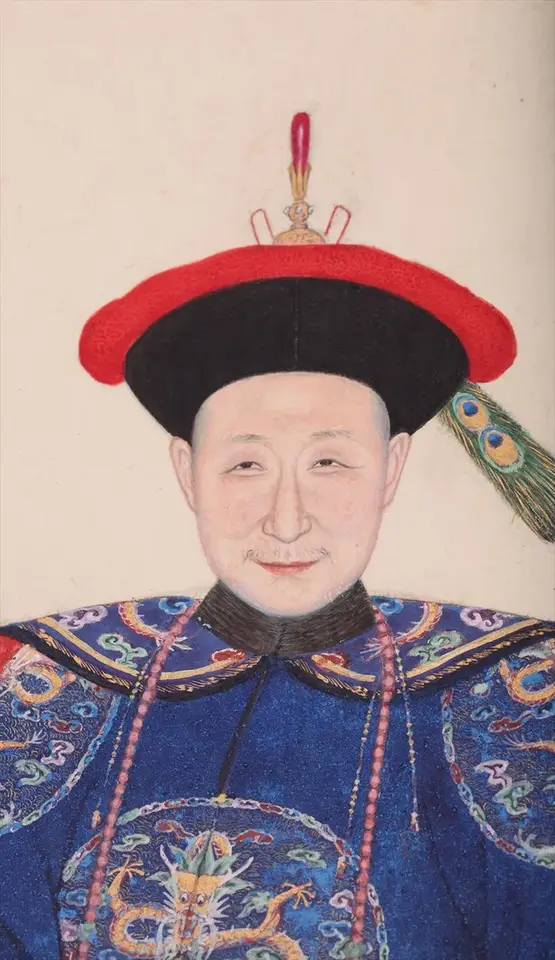
福康安
Fu K'ang-an (1754–1796), courtesy name Yaolin, was a member of the Bordered Yellow Banner Fuca clan. He was an outstanding military commander, strategist, Grand Secretary of the Hall of Military Glory, and Grand Councilor during the high Qing dynasty. The third son of Grand Secretary Fuheng and nephew of Empress Xiaoxian Chun, Fu K'ang-an was educated alongside imperial princes in the Forbidden City, developing exceptional…
Fu K'ang-an (1754–1796), courtesy name Yaolin, was a member of the Bordered Yellow Banner Fuca clan. He was an outstanding military commander, strategist, Grand Secretary of the Hall of Military Glory, and Grand Councilor during the high Qing dynasty. The third son of Grand Secretary Fuheng and nephew of Empress Xiaoxian Chun, Fu K'ang-an was educated alongside imperial princes in the Forbidden City, developing exceptional mastery of strategy and mounted archery under the direct tutelage of the Qianlong Emperor. Entering active military service during the Second Jinchuan Campaign in 1772, Fu K'ang-an distinguished himself under General Agui by personally scaling sheer cliffs under heavy fire to destroy stone bastions, rising rapidly to banner lieutenant-general and Minister of Revenue. In 1781, as Viceroy of Shaan-Gan, he pacified the Muslim rebellions of Su Sishisan and Tian Wu. In 1787, when the Lin Shuangwen Rebellion engulfed Taiwan and besieged the isolated garrison of Zhuluo, Fu K'ang-an was appointed Supreme Commander. Crossing the tempestuous Taiwan Strait in winter, he landed at Lukang, lifted the siege of Zhuluo (renamed Chiayi by imperial decree), and captured both Lin Shuangwen and southern insurgent leader Zhuang Datian, pacifying the entire island. In 1791, when the Nepalese Gurkhas invaded Tibet and sacked Tashilhunpo Monastery, Fu K'ang-an was appointed commander-in-chief. Leading veteran Solon and Eight Banner units across glaciated passes of the Himalayas in 1792, he won six consecutive engagements, driving the invaders across the mountains to within sight of Kathmandu. King Rana Bahadur Shah submitted, restoring looted sacred treasures and pledging perpetual tribute. Following the war, Fu K'ang-an formulated the landmark Twenty-Nine Article Ordinance for the More Effective Governance of Tibet, creating the Golden Urn lottery system for identifying reincarnations of the Dalai Lama and Panchen Erdeni. Dispatched in 1795 to command 100,000 troops against the Miao uprising in Hunan and Guizhou, he died of exhaustion and malaria in camp in July 1796 at forty-two. He was posthumously elevated to Prince Jiayong of the Second Rank, granted the posthumous name Wenxiang, and enshrined in the Imperial Ancestral Temple.
Born into the prominent Fuca clan as third son of Fuheng; raised and educated in the Forbidden City.
Appointed Third-Class Imperial Bodyguard following Fuheng's death; rose quickly to First-Class Bodyguard.
Dispatched to the Second Jinchuan Campaign under Agui, personally assaulting steep Tibetan stone redoubts.
Following victory in Jinchuan, promoted to Lieutenant-General of the Plain White Banner Manchu and created a noble.
Appointed Viceroy of Shaan-Gan, coordinating operations with Agui to suppress the Su Sishisan and Tian Wu uprisings.
Commissioned as Supreme Commander to relieve Taiwan; crossed the strait in winter and broke the siege of Zhuluo.
Captured rebel leaders Lin Shuangwen and Zhuang Datian; imperial decree renamed Zhuluo County to Chiayi.
Appointed General to lead the expedition against the Gurkha invaders following the sacking of Tashilhunpo.
Led forces across the Himalayas, forcing the King of Nepal to submit, and instituted the Golden Urn lottery.
Appointed Grand Secretary and Supreme Commander of seven provinces to suppress the widespread Miao rebellion.
Succumbed to illness in camp at Yuanzhou, Hunan; posthumously elevated to Prince Jiayong and granted the name Wenxiang.
Fu K'ang-an was born in 1754 into the Bordered Yellow Banner Fuca clan, the most prestigious aristocratic house of the High Qing era. His grandfather Lirongbao had served as regional commander, his paternal aunt was Empress Xiaoxian Chun (the beloved first empress of the Qianlong Emperor), and his father was Fuheng, Grand Secretary of the Hall of Preserving Harmony, Grand Councilor, and supreme architect of campaigns against the Dzungars and Burma.
Because both princes born to Empress Xiaoxian Chun died in childhood, the Qianlong Emperor directed deep paternal affection toward the young sons of the Fuca clan. Fu K'ang-an was brought directly into the palace precincts to study alongside the imperial princes. The emperor personally inspected his essays, Manchu calligraphy, and mounted marksmanship. Despite growing up amid luxury, Fu K'ang-an displayed rigorous discipline, studying ancient military classics and mastering horse archery.
In 1770, following Fuheng's death during the Burmese expedition, Qianlong showered honors upon the sixteen-year-old Fu K'ang-an, commissioning him as a Third-Class Imperial Bodyguard and quickly promoting him to First-Class Imperial Bodyguard. In 1771, at seventeen, he was named Right Vice Minister of Revenue. Eager to test his military capacity in the field, Qianlong dispatched him in 1772 to the southwestern frontier.
In 1772, the Second Jinchuan Campaign was locked in desperate deadlock. The Gyalrong Tibetan chieftains of Greater and Lesser Jinchuan utilized the sheer cliffs and river gorges of the western Sichuan plateau to build hundreds of multistory stone watchtowers. Following the destruction of General Wenfu's camp at Muguomu, Qianlong appointed General Agui commander-in-chief, with Fu K'ang-an serving as senior brigade commander.
Arriving at the front, the young commander proved remarkably daring. The Tibetan stone fortifications were constructed from heavy granite blocks with narrow arrow slits that resisted direct field artillery. Facing rolling boulder barrages and musket fire, Fu K'ang-an tied ropes around his waist and led elite Solon and Jianrui scouts scaling perpendicular cliffs by night. In the assault on the strategic redoubt of Lamulamu, he climbed under rock avalanches, capturing dozens of bastions and breaching the defensive perimeter.
Agui commended his initiative to the court, and Qianlong promoted him to Lieutenant-General of the Plain White Banner Manchu. During the subsequent assaults on Meinuo, Lewuwei, and the final stronghold of Galayi, Fu K'ang-an operated siege lines in heavy snow, coordinating infantry and mountain mortars to dismantle stone fortifications. Greater Jinchuan surrendered in spring 1776. At twenty-two, Fu K'ang-an returned to Beijing in triumph, awarded the yellow jacket, purple bridle, third-class baron status, and a prominent portrait in the Hall of Purple Splendor.
In operations against Meinuo and Lewuwei, Fu K'ang-an demonstrated sophisticated combined-arms artillery tactics. Recognizing that stone towers dominated open ravines, he directed military engineers to build heavy timber mantlets filled with earth and sandbags, shielding field cannons being pushed within dozens of paces of tower walls. During the siege of Galayi, he led detached raiding parties across precipitous peaks to sever water conduits feeding the mountain fortress. Agui remarked that while Fu K'ang-an was born into elite luxury, he marched through snow with regular soldiers and charged before his men like a natural born tiger general.
Following the Jinchuan campaign, Fu K'ang-an served as Military Governor of Jilin and Shengjing. In 1780, he was named Viceroy of Yun-Gui. In 1781, when the Salar uprising led by Su Sishisan erupted in Gansu and approached Lanzhou, Qianlong appointed Fu K'ang-an Viceroy of Shaan-Gan to coordinate operations alongside Agui.
Arriving in Lanzhou, Fu K'ang-an stabilized municipal defenses and concentrated artillery batteries against fortified enemy strongholds on Longwei and Hualin mountains, cutting off water access and routing the insurgent forces. In 1784, when the Tian Wu rebellion broke out in southern Gansu, he conducted a lightning pursuit, trapping rebel forces in the rugged ravines of Shifeng Mountain in Tongwei County and restoring peace within weeks.
For his achievements in Gansu, he was elevated to First Class Marquis Jiayong. Over the next several years, he served successively as Viceroy of Min-Zhe and Viceroy of Liangguang. In Guangzhou, he reformed maritime customs collection, reinforced the coastal fortifications at Humen, and suppressed regional piracy, demonstrating wide administrative mastery.
In late 1786, the Heaven and Earth Society led by Lin Shuangwen launched a massive uprising in Changhua, Taiwan. Insurgents captured Changhua and Zhuluo, killing imperial magistrates, while Zhuang Datian rose in Fengshan. The regional capital Tainan was invested, and imperial forces under Viceroy Changqing were pinned down. The county seat of Zhuluo was besieged for half a year, its garrison and citizens reduced to eating horse hides.
In August 1787, Qianlong appointed Fu K'ang-an Supreme Commander with Hailancha as his chief deputy, mobilizing ten thousand veteran Solon cavalry, Sichuan marksmen, and Guangdong marines. In November, hundreds of transport junks sailed from Chongwu in Fujian. Navigating through fierce winter gales across the treacherous Taiwan Strait, Fu K'ang-an executed an amphibious landing at Lukang in central Taiwan without losing a vessel.
Realizing that the relief of Zhuluo was decisive for the survival of the island, Fu K'ang-an marched south without pausing. Bypassing flooded trunk roads, he led cavalry through narrow inland tracks, breaking through insurgent ambushes at Lunziding. Advancing under covering fire from heavy swivel guns, Hailancha's cavalry enveloped the insurgent wings, breaching thirty stockades and lifting the siege of Zhuluo. Weeping citizens poured out of the gates to welcome the relief column. In recognition of their stubborn defense, Qianlong renamed Zhuluo County to Chiayi ("Commended Righteousness").
Fu K'ang-an pressed onward, bombarding Lin Shuangwen's stronghold at Daliyi (modern Dali, Taichung) and forcing the rebel leader into the central cordillera. Insisting that capturing the leadership was essential, Fu K'ang-an drove his pursuit columns across rugged mountain ranges for hundreds of li, cornering and capturing Lin Shuangwen at Laoquqi in Miaoli. Marching south, he captured Zhuang Datian at Niuzhuang in spring 1788, ending all resistance on Taiwan.
In securing Taiwan, Fu K'ang-an maintained strict military discipline and addressed chronic ethnic strife between Zhangzhou, Quanzhou, and Hakka settlers. He issued strict orders against indiscriminate retribution, pardoning coerced followers who laid down arms. At key junctions such as Douliumen and Baguashan, he established food distribution centers, distributing tens of thousands of piculs of grain and burying the dead. Reassured by his fairness, local militias and indigenous groups voluntarily guided the imperial columns, isolating the rebel leadership.
Following the victory, Fu K'ang-an reorganized the coastal defense of Taiwan. He restructured garrison rotation systems, rebuilt the earthen walls of Chiayi and Changhua with stone, and erected coastal batteries. Qianlong elevated him to First Class Duke Jiayong with the double-eyed peacock feather, ordering living shrines and ten massive bixi steles bearing imperial poems erected in Tainan and Chiayi.
In 1788, the mountain kingdom of Gorkha in Nepal invaded southern Tibet over trade and coinage disputes, seizing Kyirong and Dzongka. Corrupt imperial commissioners negotiated a humiliating secret indemnity without reporting to Beijing. In summer 1791, when promised payments failed, ten thousand Gurkha troops invaded again, capturing Shigatse and ransacking Tashilhunpo Monastery, forcing the Panchen Erdeni to flee to Lhasa.
Outraged by this affront, the eighty-one-year-old Qianlong commissioned Fu K'ang-an as Supreme Commander with Hailancha as deputy, mobilizing over ten thousand elite troops, including Solon-Daur horsemen, Beijing bannermen, and Sichuan native infantry.
In early 1792, Fu K'ang-an led his force through blizzards and glaciated passes into Tibet. Marching across altitudes exceeding 4,500 meters, soldiers and officers endured subzero cold and severe oxygen deprivation, with supplies conveyed by yaks. Within weeks, the army assembled outside Lhasa.
Advancing west into Tsang, Fu K'ang-an struck the Gurkha forces in May 1792. In fierce mountain engagements at Tsam, Kyirong, and Gyirong Gorge, Chinese artillery dismantled stone breastworks while Solon horsemen assaulted along vertical slopes. Fu K'ang-an drove the invaders out of Tibetan territory in six consecutive victories.
Crossing the Great Himalayas into Nepalese territory, Fu K'ang-an stormed fortified Gurkha positions at the Rasuwa Bridge and Syapru. Pushing through heavy monsoon rains and rushing torrents, imperial columns advanced to within thirty kilometers of the Nepalese capital of Kathmandu. Terrified by the destruction of his frontline armies, King Rana Bahadur Shah sent envoys carrying golden memorials, elephant tusks, and coral, prostrating before Fu K'ang-an to plead for peace. The Gurkha king returned all looted treasures from Tashilhunpo Monastery and pledged perpetual tribute to the Qing court every five years. Having restored imperial suzerainty, Fu K'ang-an accepted the submission and withdrew his army safely to Lhasa.
During the crossing of the Himalayas, the logistical and climatic hardships stretched human endurance. Troops navigated waist-deep snowfields with frozen hands. Fu K'ang-an shared rations of parched flour and melted snow with his men, personally pulling injured soldiers from ice crevasses. In the engagements at Duixun and Gyalgula, where Gurkha snipers fired muskets and poisoned arrows from mountain cliffs, Fu K'ang-an led the vanguard in person, clearing a path through sheer gorges. This trans-Himalayan campaign remains a celebrated mountain operation in world military history.
The expulsion of the Gurkhas enabled Fu K'ang-an to execute a comprehensive reform of Tibetan administration. Recognizing that aristocratic clans had manipulated the recognition of reincarnated lamas, Fu K'ang-an drafted the Twenty-Nine Article Ordinance for the More Effective Governance of Tibet, promulgated with imperial sanction in 1793.
The regulations introduced the historic Golden Urn lottery system. Two golden urns were cast by the imperial palace: one placed in the Jokhang Temple in Lhasa to select the reincarnations of the Dalai Lama and Panchen Erdeni, and one in the Yonghe Temple in Beijing for Mongolian high lamas. Reincarnation candidates were inscribed on ivory tallies, and the drawing was presided over by the imperial Resident Commissioner (Amban), eliminating elite nepotism and anchoring central sovereign authority over Tibetan reincarnation.
The ordinance elevated the Amban to an administrative standing equal to the Dalai and Panchen lamas, requiring that all border defense, foreign diplomacy, tax collection, and monastic appointments receive imperial approval. It created a regular standing Tibetan army and instituted the minting of standardized silver coinage. This system established the legal foundation of Chinese administration over Tibet for subsequent centuries. Fu K'ang-an was elevated to Grand Secretary of the Hall of Military Glory and Grand Councilor.
In early 1795, widespread corruption among regional magistrates and the seizure of ancestral lands ignited a major uprising among the Miao people in Hunan and Guizhou. Leaders Shi Liudeng, Wu Tianban, and Wu Bayue seized towns and outposts, including Qianzhou and Fenghuang, shaking the southwestern provinces.
On the eve of his abdication, the elderly Qianlong entrusted the campaign to Fu K'ang-an, giving him command of 100,000 troops from seven provinces. The karst peaks and subterranean caves of the Wuling Mountains presented a grueling battlefield. Miao fighters utilized precipitous stone cliffs, dense jungles, and local knowledge to wage guerrilla warfare.
Operating in suffocating heat and driving rains, Fu K'ang-an directed operations in person, storming fortresses at Songtao and Tongren. In the assault on Huangguazhai, he led the infantry forward, capturing hundreds of stone redoubts and taking Wu Tianban prisoner. However, prolonged campaigning through malaria-infested valleys exhausted his health. Having spent decades campaigning from the subzero snows of Jinchuan and the Himalayas to tropical Taiwan, his constitution collapsed. Contracting severe swamp fever, he refused to leave the front lines, directing operations from his camp cot.
On July 2, 1796, Fu K'ang-an died of fever in camp at Yuanzhou, Hunan, at the age of forty-two. Both the retired Qianlong Emperor and the newly enthroned Jiaqing Emperor were deeply grief-stricken. Qianlong wept openly, issuing multiple mourning edicts. He posthumously elevated Fu K'ang-an to Prince Jiayong of the Second Rank, awarded him the rank of Grand Preceptor, conferred the posthumous name Wenxiang, and ordered his enshrinement in the Imperial Ancestral Temple. His son Delin inherited the rank of Beile. Across twenty-four years of continuous campaigning, Fu K'ang-an traversed Jinchuan, Gansu, Taiwan, Tibet, and the Miao frontier without suffering a major strategic defeat, standing as the preeminent field commander of the High Qing era.
FIGURES ASSOCIATED WITH THIS DYNASTY