Lineage of a Chancellor
Born in Mianzhu, Sichuan, as the eldest son of the anti-Jin general and grand chancellor Zhang Jun.
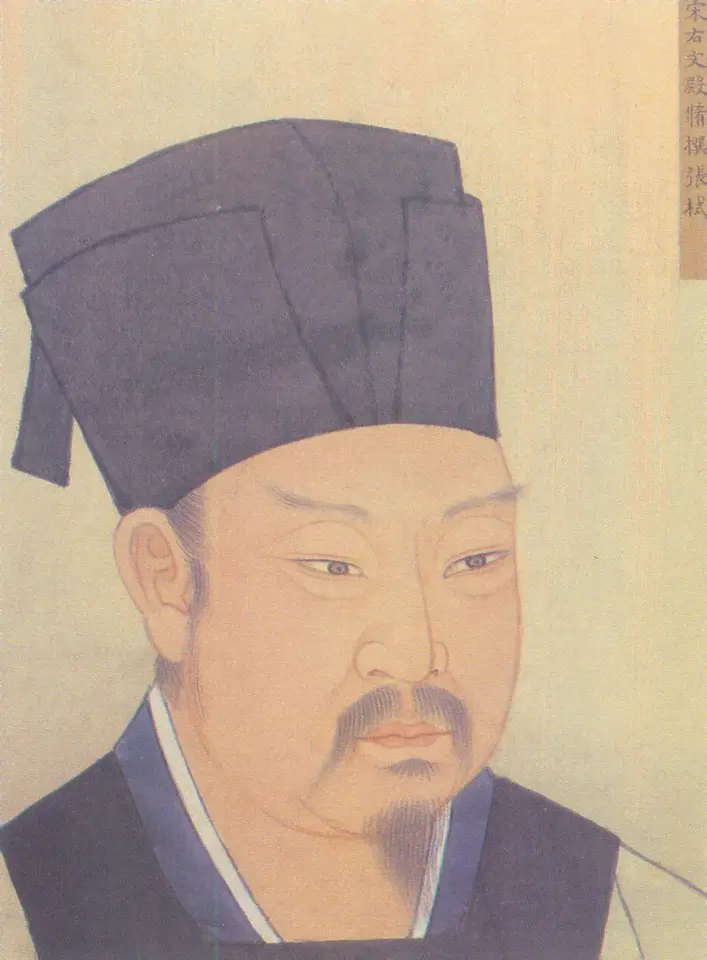
张栻
Zhang Shi (张栻, 1133–March 22, 1180), courtesy names Jingfu and Qinfu, art name Nanxuan, was a preeminent Southern Song Neo-Confucian philosopher, educational reformer, and high-ranking statesman. As the eldest son of the renowned anti-Jin grand chancellor Zhang Jun, he grew up steeped in martial and political duty, later mastering the Luoyang philosophical heritage under Hu Hong at Mount Heng to become the definitive leader…
Zhang Shi (张栻, 1133–March 22, 1180), courtesy names Jingfu and Qinfu, art name Nanxuan, was a preeminent Southern Song Neo-Confucian philosopher, educational reformer, and high-ranking statesman. As the eldest son of the renowned anti-Jin grand chancellor Zhang Jun, he grew up steeped in martial and political duty, later mastering the Luoyang philosophical heritage under Hu Hong at Mount Heng to become the definitive leader of the Huxiang School of thought. Alongside Zhu Xi and Lu Zuqian, he was celebrated across China as one of the "Three Worthies of the Southeast." During the Qiandao era, Zhang Shi directed the Yuelu Academy and Chengnan Academy in Changsha, formulating the enduring educational doctrine of "nurturing talent to propagate the Dao and succor the people," which rejected superficial examination-driven rote learning and educated thousands of devoted scholars. In 1167, Zhu Xi traveled to Changsha to conduct the celebrated "Zhu-Zhang Colloquium" at Yuelu Academy, inaugurating a landmark precedent of inter-school academic debate that catalyzed the Southern Song intellectual renaissance. As an administrator and imperial lecturer, Zhang Shi championed rigorous internal reform, resisted appeasement toward the Jurchen Jin dynasty, and fearlessly confronted sycophantic court favorites. He died of illness while governing the critical frontier stronghold of Jiangling in 1180 at the age of forty-eight, and was posthumously canonized as Xuan and enshrined in the Confucian Temple.
Born in Mianzhu, Sichuan, as the eldest son of the anti-Jin general and grand chancellor Zhang Jun.
Accompanied his father into political exile in remote Lianzhou following the ascendancy of Qin Gui, studying the classics.
Journeyed to Mount Heng to study under Hu Hong, mastering the philosophical tenets of the Huxiang School.
Interred his deceased father at Mount Guan in Ningxiang, Hunan, observing traditional filial mourning in seclusion.
Invited by Pacification Commissioner Liu Gong to take charge of Yuelu and Chengnan academies, setting their core codes.
Hosted Zhu Xi at Yuelu Academy for two months of rigorous philosophical debates on the nature of benevolence and mind.
Received in audience by Emperor Xiaozong in Lin'an, counseling internal moral reform before military expansion; made Prefect of Fuzhou.
Resumed academic leadership at Yuelu Academy after administrative service, compiling Mengzi Shuo and Lunyu Jie.
Appointed Vice Director in the Ministry of Personnel and Imperial Lecturer, fiercely opposing court favoritism.
Served as Prefect of Jingjiang and Pacification Commissioner of Guangnan West Circuit, mitigating extortionate rice surcharges.
Reassigned to govern Jiangling and oversee defense preparations across Jinghu North Circuit.
Passed away from illness at his official residence in Jiangling at age forty-eight; interred beside his father at Mount Guan.
Zhang Shi was born in 1133 against the turbulent backdrop of the Jurchen invasions and the precarious consolidation of the Southern Song dynasty. His father, Zhang Jun, was the foremost leader of the court faction committed to resisting the Jin dynasty, serving as grand chancellor and supreme military commissioner. Imbued from early youth with an unyielding sense of public responsibility and moral resolve, Zhang Shi was raised to regard statecraft and classical virtue as inseparable obligations. When the appeasement advocate Qin Gui seized unchallenged power and banished Zhang Jun to the remote southern post of Lianzhou in 1146, the fourteen-year-old Zhang Shi dutifully followed his father into exile, devoting long years of isolation to intensive study of the Confucian canon and historical records under his father's personal tutelage.
Following Qin Gui's demise, the Southern Song court began rehabilitating banished officials. Although Zhang Shi entered officialdom through hereditary privilege, he showed little interest in bureaucratic advancement, seeking instead the fundamental principles of moral nature and good governance. At that time, Hu Hong, the son of Northern Song scholar Hu Anguo, had established the Huxiang School at Mount Heng, preaching personal introspection combined with practical engagement. In 1161, Zhang Shi traveled to Mount Heng to enter Hu Hong's inner circle. Hu Hong recognized the young scholar's extraordinary moral gravity and imparted to him the philosophical teachings of the Cheng brothers regarding the mind, human nature, and the moral imperatives of the Spring and Autumn Annals. Zhang Shi absorbed these doctrines completely, emerging as the leading torchbearer of the Huxiang tradition.
In 1163, during the reign of Emperor Xiaozong, Zhang Jun was recalled to command the northern counter-offensive. Zhang Shi assisted his father at headquarters, handling confidential correspondence and military supply coordination. After the Song reversal at Fuli due to discord among front-line generals, Zhang Jun fell victim to virulent factional attacks, was stripped of his premiership, and died in sorrow while traveling through Hubei in 1164. In his final testament, Zhang Jun exhorted his son never to forget the national disgrace of the lost northern heartland. Zhang Shi escorted his father's coffin to Mount Guan in Ningxiang, Hunan, where he constructed a thatched hermitage beside the tomb, observing strict filial seclusion and synthesizing his father's statecraft ethos with Hu Hong's Neo-Confucian metaphysics.
In 1165, Liu Gong, the Pacification Commissioner of Hunan, financed the comprehensive renovation and expansion of Yuelu Academy in Changsha and formally invited Zhang Shi to assume supreme administrative and pedagogical charge of both Yuelu and Chengnan academies. Accepting the call, Zhang Shi initiated the most influential period of his educational career. He drafted the immortal Record of Yuelu Academy, explicitly condemning contemporary government schools for degenerating into utilitarian stepping-stones for imperial examinations. He established the founding principle that academy education must aim at "nurturing talent to propagate the Dao and succor the people."
Zhang Shi instituted a structured curriculum that began with foundational daily decorum, personal discipline, and the six classical arts, advancing toward the deep contemplation of the Four Books and Five Classics, and culminating in the realization of ultimate moral nature and statecraft. He authored Mengzi Shuo (Commentary on Mencius) to instill in his pupils the sharp distinction between righteous duty and narrow profit. As his fame spread, aspiring scholars traversed hundreds of miles across mountains and rivers to study under him, swelling the ranks of Yuelu students to thousands and turning Changsha into one of the paramount intellectual capitals of the empire alongside Fujian and Jiangxi.
In the autumn of 1167, Zhu Xi journeyed from Fujian to Changsha specifically to debate foundational philosophical questions with Zhang Shi, centering on the concept of benevolence and the balance between equilibrium and harmony. Zhang Shi greeted his guest with profound warmth. For two continuous months, the two young intellectual titans lodged together, holding intense daily disputations on the Hexi Platform at Yuelu and Chengnan. Scholars from across China crowded the halls and courtyards to listen, creating an academic spectacle unmatched in Song history. This famous "Zhu-Zhang Colloquium" fostered fruitful cross-pollination between the Huxiang School and Zhu Xi's emerging Min School, setting a celebrated precedent for open academic discourse across different regional philosophical traditions.
In 1169, having fulfilled his filial mourning, Zhang Shi answered an imperial summons to the capital at Lin'an. In his audience before Emperor Xiaozong at the Yanhe Hall, he bypassed conventional flattery and presented a trenchant memorandum asserting that true national recovery depended not upon speculative military adventures, but upon internal institutional cleansing and the moral cultivation of the ruler. He cautioned the emperor that palace favorites and eunuch factions were corroding governance, urging him to associate with principled counselors. Highly impressed by his candor, Xiaozong appointed him Prefect of Fuzhou.
In Fuzhou, Zhang Shi applied his philosophical ideals directly to governance. He conducted undercover inspections into local market conditions, suppressed predatory rural magnates, abolished illegal levies, and overhauled irrigation infrastructure. His benevolent yet strict administration brought peace and prosperity, winning him the love of the peasantry. Following another brief tenure at Yanzhou and a return to teaching at Yuelu Academy in 1172, where he finalized Lunyu Jie (Exposition of the Analects), he was recalled to court in 1173 as Vice Director in the Ministry of Personnel and Imperial Lecturer.
Serving in the imperial lecture hall, Zhang Shi utilized historical precedents to check monarchical impulses. When Emperor Xiaozong planned to appoint the favored royal in-law Zhang Shuo to the Bureau of Military Affairs, Zhang Shi spearheaded fierce resistance. He argued passionately before the throne that the supreme military council was the nerve center of imperial security and must never be entrusted to flatterers lacking moral weight or strategic competence. While Xiaozong bowed to public pressure and rescinded the appointment, sycophantic courtiers resented Zhang Shi's unyielding posture, orchestrating factional slander that ultimately prompted his dismissal from the capital.
In 1178, Zhang Shi was assigned as Prefect of Jingjiang and Pacification Commissioner of Guangnan West Circuit, tasked with governing the vast and volatile southern frontier in modern Guangxi. Local officials had long subjected tribal communities to oppressive surcharges under the guise of rice conversion payments, sparking recurring unrest. Upon arriving, Zhang Shi personally inspected remote mountain garrisons and submitted urgent petitions to the throne, successfully securing the permanent remission of crushing rice surcharges totaling tens of thousands of strings of cash. He disciplined garrison troops, forbade embezzlement, established agricultural military colonies, and treated indigenous tribal chiefs with integrity and generous hospitality, swiftly pacifying regional tensions.
In late 1179, amidst escalating border tensions with the Jin dynasty, the court transferred Zhang Shi to the strategic post of Prefect of Jiangling and Pacification Commissioner of Jinghu North Circuit. Controlling the middle reaches of the Yangtze, Jiangling served as the indispensable pivot defending Sichuan and supporting the Huai River defenses. Immediately upon arrival, despite physical exhaustion, Zhang Shi mounted the fortifications, directed the dredging of moats, fortified forward watchtowers, and drilled frontier river flotillas while setting up granaries for famine and wartime reserves.
Prolonged administrative exertion and the damp, freezing winter climate aggravated Zhang Shi's frail health. In early 1180, his condition deteriorated precipitously. Confined to his sickbed, he continued reviewing frontier defense dispatches and dictated a final memorial entreating Emperor Xiaozong to uphold moral integrity and never abandon the recovery of the Central Plains. On March 22, 1180, Zhang Shi died at his official residence in Jiangling at the age of forty-eight. The populace of Jinghu and Changsha mourned openly in the streets, shuttering markets in tribute. His younger brother Zhang Shao escorted his casket back to Mount Guan in Ningxiang, laying him to rest beside his father's tomb.
Zhang Shi's educational leadership fundamentally revitalized classical academy education during the Song dynasty. Confronting the degeneration of imperial state schools into utilitarian training grounds for careerists, he articulated a noble pedagogical mission in the Record of Yuelu Academy. He insisted that true learning prioritized the moral distinction between duty and profit over superficial rhetorical skills. By fusing moral introspection with practical training in fiscal policy, flood control, and border strategy, Zhang Shi instilled a tradition of pragmatic scholarship at Yuelu that profoundly shaped the intellectual lineage of Hunan scholars for centuries.
The 1167 "Zhu-Zhang Colloquium" conducted by Zhang Shi and Zhu Xi at Yuelu Academy stands as an enduring milestone in Chinese intellectual history. Rather than engaging in sectarian polemics, the two thinkers pursued exhaustive philosophical inquiry into the nature of human emotions, benevolence, and epistemology over sixty intensive days. The exchange helped Zhu Xi refine his mature philosophical doctrine of equilibrium and harmony, while infusing the Min School with Huxiang practical vigor. This historic gathering established the open symposium as a central vehicle for philosophical advancement throughout the Song, Yuan, and Ming dynasties.
Zhang Shi made groundbreaking contributions to Chinese philosophy by formulating the doctrine of "mutually stimulating knowledge and action" (zhixing hufa). Departing from detached contemplation, he posited in his preface to Lunyu Jie that action originates in knowledge, while genuine knowledge is fulfilled through action. He vigorously criticized scholars who chased abstract intellectual constructs while neglecting practical deeds, maintaining that moral cultivation required continuous, simultaneous engagement in real-world affairs. His dynamic epistemological framework served as a crucial intellectual precursor to the seventeenth-century materialist philosophy of Wang Fuzhi.
Zhang Shi inherited his father's patriotic legacy, championing steady national defense over reckless appeasement. Throughout his gubernatorial assignments in Fuzhou, Yanzhou, Jingjiang, and Jiangling, he consistently alleviated peasant tax burdens, stamped out bureaucratic extortion, and strengthened defensive works along the Yangtze River. At court, he boldly staked his career against corrupt imperial favorites to protect the integrity of the state apparatus, epitomizing the Song Confucian ideal of the courageous scholar-statesman whose personal ethics guided all public action.
FIGURES ASSOCIATED WITH THIS DYNASTY