Birth in Southern Zhejiang
Born into a scholarly gentry family in Ru'an County, Wenzhou Prefecture, showing intellectual talent from early youth.
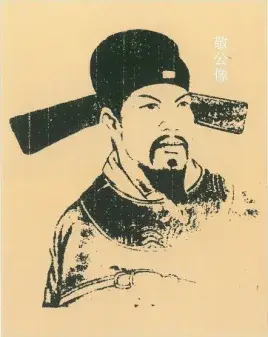
卓敬
Zhuo Jing (卓敬, c. 1354 – August 1402), styled Weigong and known by his literary name Jianzhai, was a native of Ru'an County in Wenzhou Prefecture, Zhejiang. He was an eminent statesman, scholar, and martyr of the Jianwen era during the early Ming dynasty. Exceptionally diligent from his youth and deeply versed in the Confucian classics and dynastic history, Zhuo Jing passed the imperial jinshi examination in 1388 during the…
Zhuo Jing (卓敬, c. 1354 – August 1402), styled Weigong and known by his literary name Jianzhai, was a native of Ru'an County in Wenzhou Prefecture, Zhejiang. He was an eminent statesman, scholar, and martyr of the Jianwen era during the early Ming dynasty. Exceptionally diligent from his youth and deeply versed in the Confucian classics and dynastic history, Zhuo Jing passed the imperial jinshi examination in 1388 during the reign of the Hongwu Emperor (Zhu Yuanzhang) and was appointed Supervising Secretary in the Office of Scrutiny for Revenue. Known for his unbending rectitude and mastery of administrative precedent, he evaluated state memorials with rigorous scrutiny, earning high praise from the dynastic founder. Following the accession of the Jianwen Emperor (Zhu Yunwen), Zhuo Jing foresaw that regional feudal princes commanded dangerous military power, especially the Prince of Yan (Zhu Di), who was gifted in warfare and held the northern frontier at Beiping. In 1399, Zhuo Jing submitted a confidential memorial proposing that Zhu Di be transferred from Beiping to Nanchang in Jiangxi, thereby disarming his northern border cavalry without provoking open rebellion. The irresolute emperor hesitated and failed to act on the counsel, culminating in the Jingnan campaign. When Zhu Di breached the capital gates of Nanjing in July 1402, Zhuo Jing was imprisoned. Refusing all offers of high office, he openly denounced the usurpation. Fearing Zhuo Jing's strategic brilliance, Zhu Di executed him along with three generations of his kin. He was posthumously honored as Zhongzhen during the Wanli reign and as Minlie by the Qianlong Emperor.
Born into a scholarly gentry family in Ru'an County, Wenzhou Prefecture, showing intellectual talent from early youth.
Passed the metropolitan jinshi examination, appointed Supervising Secretary in the Office of Scrutiny for Revenue.
Evaluated provincial memorials, conducted imperial inspections, and eliminated corrupt and incompetent officials.
Urged the Jianwen Emperor to transfer the Prince of Yan to Nanchang in Jiangxi to prevent impending civil rebellion.
The Jianwen Emperor failed to execute the transfer, and Zhu Di launched his rebellion from Beiping.
Promoted to Right Vice Minister of Revenue, supervising grain transportation and supply networks for royal armies.
Forces of the Prince of Yan breached the Jinchuan Gate of Nanjing; Zhuo Jing remained in his residence and was arrested.
Refused to surrender to Zhu Di during prison interrogations, initiating a hunger strike and denouncing the usurpation.
Executed in the market square of Nanjing on Zhu Di's orders, with three generations of his lineage put to death.
Formally rehabilitated by the Wanli Emperor, granted the posthumous title Zhongzhen, and enshrined in local temples.
Zhuo Jing was born around 1354 in Xianyan village, Ru'an County, Wenzhou Prefecture. His family was an established scholarly lineage in southern Zhejiang. Raised during the chaotic conflicts between late Yuan warlord factions and Red Turban insurgencies, Zhuo Jing devoted his youth to classical study, mastering pre-Qin philosophical texts, dynastic administrative law, and fiscal institutions. Endowed with a resolute demeanor and sharp analytical mind, he was skilled in drafting official policy memorials.
In 1388, Zhuo Jing traveled to Nanjing and passed the metropolitan jinshi examinations. Impressed by his depth of historical knowledge and practical acumen, the Hongwu Emperor appointed him Supervising Secretary in the Office of Scrutiny for Revenue. In this post, Zhuo Jing attended daily court audiences, audited financial records of the Ministry of Revenue, inspected memorial registers, and reviewed imperial decrees for legal inconsistencies.
Zhuo Jing was known for his personal austerity and incorruptibility. When regional governors submitted fiscal accounts, Zhuo Jing scrutinized them for peasant exploitation. Although the Hongwu Emperor enforced severe discipline upon bureaucrats, Zhuo Jing argued on behalf of administrative justice without hesitation, correcting hasty ministerial judgments before the throne. The dynastic founder admired his integrity, addressing him by his courtesy name rather than his official title and viewing him as a future pillar of the realm.
In the leap fifth month of 1398, the Hongwu Emperor passed away, and his grandson Zhu Yunwen ascended the throne as the Jianwen Emperor. To secure the frontiers against nomadic incursions, the late emperor had stationed his imperial sons as powerful regional princes commanding veteran border forces. Among them, the fourth son, Zhu Di, Prince of Yan, commanded hundreds of thousands of elite cavalry in Beiping, possessing military talent that presented an existential threat to the young sovereign in Nanjing.
In early 1399, the Jianwen Emperor convened close advisors Qi Tai and Huang Zicheng to formulate a policy of princely reduction (Xiaofan). The ministers resolved to purge weaker princes first, including the Princes of Zhou, Qi, Dai, and Xiang, believing that peripheral eliminations would isolate the Prince of Yan. Zhuo Jing recognized that this approach was flawed; attacking lesser princes would merely warn the Prince of Yan and prompt him to accelerate rebellion.
Consequently, Zhuo Jing submitted a confidential memorial to the Jianwen Emperor containing extraordinary geopolitical foresight. He wrote: "The Prince of Yan possesses intelligence and military prowess surpassing all peers. Beiping is fortified by rugged mountains and fertile plains, home to formidable cavalry—the exact geographic foundation of ancient hegemonic rebellions. Today, among all princes, only Yan harbors imperial ambitions. In trimming branches, the state must strike at the root. Before open discord erupts, an imperial decree should transfer the Prince of Yan to Nanchang in Jiangxi. Nanchang is an affluent heartland without northern cavalry horses or fortified mountain passes. Even if the prince harbors treasonous ambitions, he will be powerless to act. This is the art of transplanting branches to wither the root, securing the realm without civil war!"
However, the Jianwen Emperor was gentle, hesitant, and indecisive, while Qi Tai and Huang Zicheng were constrained by bureaucratic routine, failing to adopt Zhuo Jing's transfer strategy. The court moved against the lesser princes, driving the Prince of Xiang to commit suicide by fire. In July 1399, the Prince of Yan executed court commissioners in Beiping, proclaimed the Jingnan campaign to clear the court of evil ministers, and launched a full-scale civil war.
Following the outbreak of the civil war, the Jianwen Emperor regretted disregarding Zhuo Jing's warning, placing greater administrative responsibility upon him. In 1400, the emperor promoted Zhuo Jing to Right Vice Minister of Revenue, assigning him to supervise military logistics, transport lines along the Yangtze, and national tax revenues to sustain royal forces.
In the Ministry of Revenue, Zhuo Jing worked tirelessly to coordinate grain shipments from Jiangxi, Zhejiang, and Huguang, maintaining transport flotillas along the Grand Canal to supply imperial armies in Hebei and Shandong. Facing market disruptions and peasant displacement, he implemented price-stabilization sales and combated clerk embezzlement, ensuring that government armies remained provisioned throughout four years of attritional warfare.
In spring 1402, the strategic balance collapsed. The Prince of Yan routed imperial forces at Lingbi in Suzhou, bypassed fortified garrisons in Xuzhou, and drove south along the canal. By early June, the rebel army crossed the Yangtze and surrounded Nanjing. On July 13, Prince Zhu Hui of Gu and General Li Jinglong opened the Jinchuan Gate to the invaders. The imperial palace was consumed by flames, the Jianwen Emperor vanished, and numerous court officials defected to the rebel camp.
Amidst the fall of the capital, Zhuo Jing maintained unwavering loyalty. Rather than joining the defectors at the city gates, he retired to his metropolitan residence and waited in composure. Rebel soldiers broke into his courtyard and dragged him to the imperial prison.
Upon assuming the throne as Emperor Yongle, Zhu Di recognized Zhuo Jing's erudition and administrative talent, seeking to recruit him to demonstrate imperial legitimacy to the scholarly elite. Zhu Di remarked to his ministers: "The dynastic founder nurtured the realm's scholars for thirty years, yet a truly loyal and learned official is found in Zhuo Jing alone!"
Zhu Di sent senior advisors to the prison offering Zhuo Jing cabinet ranks. Zhuo Jing initiated a hunger strike, shouting at the emissaries: "I received the profound grace of the dynastic founder and served the late emperor; how could I bow before a treacherous usurper!" Zhu Di visited the prison to interrogate him personally. Standing upright in chains, Zhuo Jing denounced Zhu Di for violating ancestral injunctions and murdering his nephew, refusing to show deference.
Monk Yao Guangxiao (Dao Yan), the emperor's principal strategist, urged Zhu Di to spare the scholar's life out of respect for his literary genius. However, Zhu Di recalled Zhuo Jing's 1399 memorial advising his transfer to Nanchang. Zhu Di remarked: "In past years, this man urged the court to transfer me to Nanchang. His intellect is terrifying! If he will not serve me, how could I leave such a danger alive?"
In August 1402, Zhu Di ordered Zhuo Jing executed in the public market square of Nanjing. Ascending the scaffold, Zhuo Jing maintained an untroubled expression, bowed north toward the altars of the founder and the Jianwen Emperor, and submitted to execution at age forty-eight. Zhu Di ordered the extermination of three generations of Zhuo Jing's clan, executing dozens of relatives and confiscating the family estate.
Zhuo Jing's defining historical legacy was his formulation of the Nanchang transfer strategy during the early months of the Jianwen reign. The imperial prince problem was the principal structural vulnerability of the early Ming, and resolving it without nationwide civil war was the court's greatest challenge. The official strategy of targeting peripheral princes gave the Prince of Yan time to prepare his rebellion.
Zhuo Jing correctly identified the Prince of Yan as the sole existential threat to the throne. His proposal to transfer Zhu Di was strategically sound: first, Nanchang was an affluent cultural center, allowing the court to frame the relocation as an honorific transfer to an imperial uncle, preserving moral decorum; second, moving Zhu Di from Beiping to the southern interior permanently severed his connection to northern cavalry units and border passes.
Had this proposal been implemented, the imperial court could have neutralized Zhu Di's military capability without bloodshed, averting the devastating Jingnan civil war. Zhu Di's decision to execute Zhuo Jing reflected the usurper's realization of how close Zhuo Jing's strategy had come to neutralizing his path to power.
Zhuo Jing's conduct following the fall of Nanjing established him as a premier martyr of the Jianwen court alongside Fang Xiaoru and Tie Xuan. When high-ranking ministers surrendered to preserve their privileges, Zhuo Jing had every opportunity to attain senior ministerial rank in the new administration.
Instead, he chose death and the destruction of his lineage over complicity in usurpation. His sacrifice was rooted in devotion to constitutional dynastic legitimacy and Confucian moral principle. His martyrdom inspired subsequent generations of Ming scholar-officials, establishing a benchmark of political integrity.
Following his accession, Zhu Di attempted to erase the Jianwen reign from history, retroactively designating the era as the thirty-fifth year of Hongwu and labeling loyalist ministers as traitors. However, scholarly veneration of Zhuo Jing persisted across two centuries.
During the Wanli reign of the late Ming dynasty, amidst shifting intellectual currents, the Wanli Emperor issued an imperial decree officially rehabilitating the Jianwen martyrs. In 1594, the court bestowed upon Zhuo Jing the posthumous title Zhongzhen (Loyal and Resolute), recording his life in dynastic sacrificial registries and constructing commemorative shrines in his native Ru'an. He was later granted the posthumous title Minlie during the Southern Ming and praised by the Qianlong Emperor in the Qing dynasty, securing his historical standing as an exemplar of loyalty.
FIGURES ASSOCIATED WITH THIS DYNASTY