Birth into High Nobility
Born in Yin County, third son of Chancellor Shi Hao.
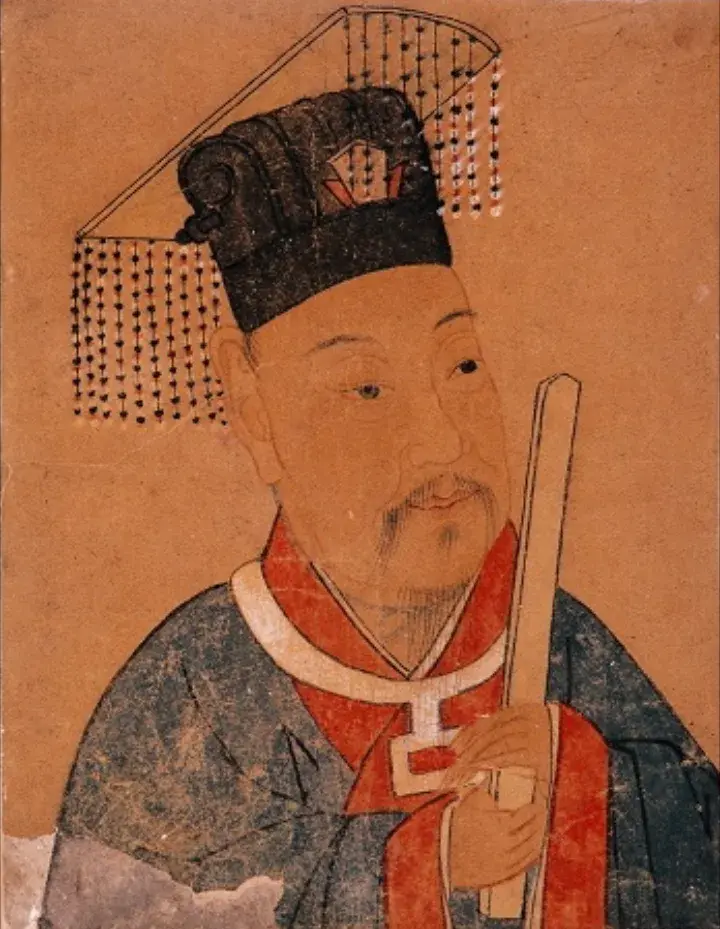
史弥远
Shi Miyuan (史弥远, February 23, 1164 – November 27, 1233), courtesy name Tongshu (同叔), was an ancestral native of Yin County in Mingzhou (present-day Yinzhou District, Ningbo, Zhejiang Province). He was the paramount autocratic Chancellor and political strongman of the Southern Song dynasty, and the third son of Right Vice Director of the Department of State Affairs Shi Hao. Monopolizing supreme executive authority for…
Shi Miyuan (史弥远, February 23, 1164 – November 27, 1233), courtesy name Tongshu (同叔), was an ancestral native of Yin County in Mingzhou (present-day Yinzhou District, Ningbo, Zhejiang Province). He was the paramount autocratic Chancellor and political strongman of the Southern Song dynasty, and the third son of Right Vice Director of the Department of State Affairs Shi Hao. Monopolizing supreme executive authority for twenty-six consecutive years, he holds the record for the longest uninterrupted premiership in Southern Song history. Entering bureaucratic service through ancestral privilege and earning the Jinshi degree in 1187, Shi Miyuan advanced through offices including Court Judicial Officer, Director of Ranks, and Reader in the Zishan Hall. In 1207, during the setbacks of the Kaixi Northern Expedition led by Han Tuozhou, Shi Miyuan conspired with Empress Yang and her adopted brother Yang Cishan to forge an imperial edict, ordering commander Xia Zhen to ambush and bludgeon Han Tuozhou to death at Yujin Garden. Assuming control over the government, Shi Miyuan exhumed Han's remains, sent his severed head to the Jurchen Jin dynasty as a tribute of submission, and concluded the humiliating Treaty of Jiading in 1208, demoting Song's status to that of an inferior nephew state while dramatically increasing annual silver tributes. In 1209, Shi Miyuan returned to court as Right Grand Chancellor, establishing a monopolistic autocracy. In 1224, as Emperor Ningzong lay dying, Shi Miyuan orchestrated a palace coup to dethrone Crown Prince Zhao Hong, forging imperial edicts with Empress Yang to enthrone the obscure imperial clansman Zhao Yun (Emperor Lizong), subsequently forcing the deposed Prince Zhao Hong to commit suicide in Huzhou. While entrenching his corrupt cronies known as the "Four Woods and Three Evils" and unleashing catastrophic runaway inflation through the reckless printing of unbacked paper currency (huizi), he cleverly rehabilitated the Neo-Confucian Cheng-Zhu school, lifting ideological prohibitions and conferring grand posthumous honors on Zhu Xi and Yue Fei to neutralize scholarly criticism. Passing away in 1233 at age seventy, he was posthumously granted the title Prince of Wei and the posthumous name Zhongxuan.
Born in Yin County, third son of Chancellor Shi Hao.
Placed first in civil evaluations and passed the metropolitan Jinshi examination.
Completed mourning for his father; appointed Court Judicial Officer, praised by Chancellor Jing Tang.
Advanced to Reader in Zishan Hall, Director of Ranks, and Vice Minister of Rites and Justice.
Forged imperial edicts with Empress Yang, ordering Xia Zhen to bludgeon Chancellor Han Tuozhou to death.
Sent Han Tuozhou's severed head to Jin, signing the Treaty of Jiading; elevated to Right Grand Chancellor.
Scholar Hua Yue plotted his assassination; Shi Miyuan obstinately insisted on executing him in the public market.
Forged Ningzong's deathbed decree to depose Prince Zhao Hong and enthrone Zhao Yun (Emperor Lizong).
Printed over two hundred million strings of unbacked huizi, ruining the market while relying on his "Four Woods and Three Evils" cronies.
Resigned on deathbed; died on November 27 at age seventy, posthumously created Prince of Wei with the title Zhongxuan.
Shi Miyuan belonged to the celebrated Shi aristocratic lineage of Mingzhou, whose father Shi Hao served as Chancellor under Emperors Gaozong and Xiaozong and was ennobled Prince of Kuaiji. Benefiting from ancestral privilege, Shi Miyuan received appointment as Gentleman for Fulfilling Service in 1179, placed first in the selection examinations in 1181, and successfully passed the metropolitan Jinshi examinations in 1187.
In 1192, upon his father's severe illness, Shi Miyuan retired on nominal temple duties to care for him. Completing the three-year filial mourning period in 1196, he was appointed Court Judicial Officer and Instructor to the Imperial Princes. In a palace audience with Emperor Ningzong, he proposed twelve practical measures covering taxation, flood prevention, agricultural promotion, and frontier defense. Right Chancellor Jing Tang was astonishingly impressed, dismissing attendants and remarking to Shi Miyuan: "Your future accomplishments will far outstrip mine; I entrust my children and grandchildren to your protection."
From 1198 to 1205, Shi Miyuan served as Compiler in the Bureau of Military Affairs, Vice Director of Rites, Vice Minister of Penalties, and Prefect of Chizhou. Entering the central court in 1205, he was made Director of Ranks and Reader in Zishan Hall, entering the intimate advisory circle of the inner palace.
In the fifth month of 1205, imperial relative Han Tuozhou assumed the premiership, directing the Kaixi Northern Expedition against the Jurchen Jin dynasty. Recognizing Shi Miyuan's political capability, Han Tuozhou elevated him within two years to Vice Minister of Rites and Justice, ennobling him as a baron.
In 1206, though initial Song offensives captured Sizhou and Suzhou, Jin forces counterattacked fiercely. Disastrously, western commander Wu Xi betrayed the dynasty and defected to Jin, shattering the entire western theater. The Jin court demanded Han Tuozhou's severed head as an absolute precondition for peace talks. When Han refused and resolved to mobilize for renewed combat, panic swept the court. Seeing Han's authority undermined, Shi Miyuan plotted to eliminate him and seize power.
Emperor Ningzong had married Empress Yang against Han Tuozhou's strenuous objections, leaving the empress deeply resentful. Exploiting this divide, Shi Miyuan allied with Empress Yang's adoptive brother Yang Cishan and coached the young crown prince to tell Ningzong that Han's continued war threatened the state. As Emperor Ningzong hesitated to dismiss his chancellor, Shi Miyuan and Empress Yang forged an imperial decree authorizing assassination. On the morning of November 24, 1207, Palace Guard Commander Xia Zhen ambushed Han Tuozhou outside the Yujin Garden, dragging him inside and battering him to death with iron hammers. Emperor Ningzong remained ignorant of the murder for three days, learning the truth only after the deed was accomplished.
Following Han Tuozhou's death, Shi Miyuan took control of the administration, promoting himself to Minister of Rites and Commissioner of Military Affairs. In 1208, eager to appease the northern Jurchens, he restored the aristocratic honors and posthumous titles of the infamous appeaser Qin Hui. He ordered the exhumation of Han Tuozhou and Su Shidan, severing their decomposing heads, packing them in lacquered boxes, and dispatching them northward.
In the ninth month of 1208, the Song and Jin concluded the Treaty of Jiading, degrading the diplomatic relationship from uncle-nephew to senior-junior uncle, increasing the annual silver and silk tribute to three hundred thousand units, and paying a massive indemnity of three million strings. Scholar Zhen Dexiu lamented: "Whatever the Jurchens demanded, we gave without hesitation, bringing unprecedented disgrace upon the state."
In 1209, Shi Miyuan was reinstated as Right Grand Chancellor, inaugurating his twenty-six-year unbroken dictatorship. Deep resentment lingered among loyalist officers; in 1221, military theoretician Hua Yue plotted Shi Miyuan's assassination. When the scheme was uncovered, Emperor Ningzong wished to spare the brilliant author of the Cuiwei Nanzheng Lu, but Shi Miyuan obstinately demanded his death, having him publicly beaten to death with staves in the capital market.
Crown Prince Zhao Xun died in 1220, and Emperor Ningzong designated Prince Zhao Hong as imperial heir. Conscious of Shi Miyuan's treasonous arrogance, Zhao Hong openly expressed hostility, playing mournful tunes and writing on his screen: "Shi Miyuan must be banished eight thousand leagues!" Informed by spies, Shi Miyuan resolved to depose the prince.
In 1223, Shi Miyuan bribed the imperial scholar Zheng Qingzhi to identify an alternative candidate from the imperial clan, locating Zhao Yun (Zhao Guicheng), an impoverished descendant of the Song founder, and training him under private tutors. In the eighth month of 1224, as Emperor Ningzong lay dying, Shi Miyuan set his trap.
On the night of Ningzong's death, Shi Miyuan mobilized the palace guards under Xia Zhen, surrounding the inner apartments. He sent Yang Cishan's nephews repeatedly to threaten Empress Yang, warning that if she refused to depose Prince Hong, the entire Yang clan would be slaughtered. Bowing to terror, the empress surrendered the imperial seals. Shi Miyuan forged the deathbed edict, demoting Zhao Hong to Prince of Ji and enthroning Zhao Yun as Emperor Lizong. The following year, Shi Miyuan framed Zhao Hong for treason, dispatching henchmen to force the deposed prince to hang himself in Huzhou.
To mask his treacherous crimes, Shi Miyuan skillfully co-opted the intellectual establishment. He reversed the "Qingyuan Factional Ban" imposed during Han Tuozhou's reign, restoring honors to Zhao Ruyu and Lu Zuqian. He elevated the Cheng-Zhu school, conferring the posthumous rank of Grand Preceptor and Duke of Xin upon Zhu Xi and awarding Yue Fei the posthumous title of Zhongwu. While promoting scholars like Zhen Dexiu and Wei Liaoweng to enhance his prestige, he ruthlessly expelled them whenever they dared criticize his governance.
Economically, Shi Miyuan pursued ruinous inflationary policies. Burdened by massive indemnity payments and administrative corruption, he ordered the reckless printing of unbacked paper currency (huizi), coercing the public to redeem old bills at half-value. By 1232, circulating paper currency exceeded 229 million strings, causing runaway inflation, the collapse of credit, and widespread economic devastation. He governed through a tight cabal of sycophants known as the "Four Woods and Three Evils," including Xuan Zeng, Xue Ji, Li Zhixiao, and Liang Chengda, suffocating the censorate.
By the tenth month of 1233, Shi Miyuan was terminally ill. Mindful that he owed his throne to the chancellor, Emperor Lizong personally visited his mansion, appointing him Grand Preceptor and Left Grand Chancellor, and creating him Prince of Kuaiji Commandery. From his sickbed, Shi Miyuan arranged for his protg Zheng Qingzhi to succeed him as Right Grand Chancellor, ensuring the preservation of his family fortunes.
On November 27, 1233, Shi Miyuan died at his capital residence at the age of seventy. Emperor Lizong suspended court audiences, posthumously awarding him the office of Director of the Secretariat, ennobling him as Prince of Wei, and conferring the posthumous name Zhongxian. The noted literatus Liu Kezhuang later submitted a memorial comparing Shi Miyuan directly to Qin Hui as "turbid petty men who ruined all under heaven."
Shi Miyuan's violent rise was forged through the extrajudicial murder of Chief Chancellor Han Tuozhou and the decapitation of his corpse to appease the Jurchen Jin. By sacrificing national honor and binding Southern Song to crushing tributes under the Treaty of Jiading, he purchased foreign peace at the cost of geopolitical autonomy and sovereign dignity.
Shi Miyuan's engineering of the 1224 palace coup represented the supreme triumph of bureaucratic strongman autocracy. Discarding the legitimate imperial heir Zhao Hong and placing a pliable puppet on the throne through forged edicts and palace bayonets, he thoroughly shattered the constitutional balance between throne and chancellery.
To shield his authoritarian usurpation from moral reproach, Shi Miyuan systematically patronized the Cheng-Zhu school of Neo-Confucianism. By establishing the Four Books as the foundation of imperial statecraft and conferring state honors upon Zhu Xi, he institutionalized Neo-Confucianism as official orthodoxy, co-opting the scholarly elite to whitewash his dictatorial rule.
Under Shi Miyuan's prolonged tenure, the Southern Song fiscal system abandoned sound reserve management. The unbridled printing of huizi and mandatory discounting of circulating currency looted civilian wealth and degraded the commercial economy, leaving the state fiscally exhausted on the eve of the catastrophic Mongol invasions.
FIGURES ASSOCIATED WITH THIS DYNASTY