Birth in Western Zhejiang
Born in Xincheng, Hangzhou, into the distinguished Gaoyang Xu clan.
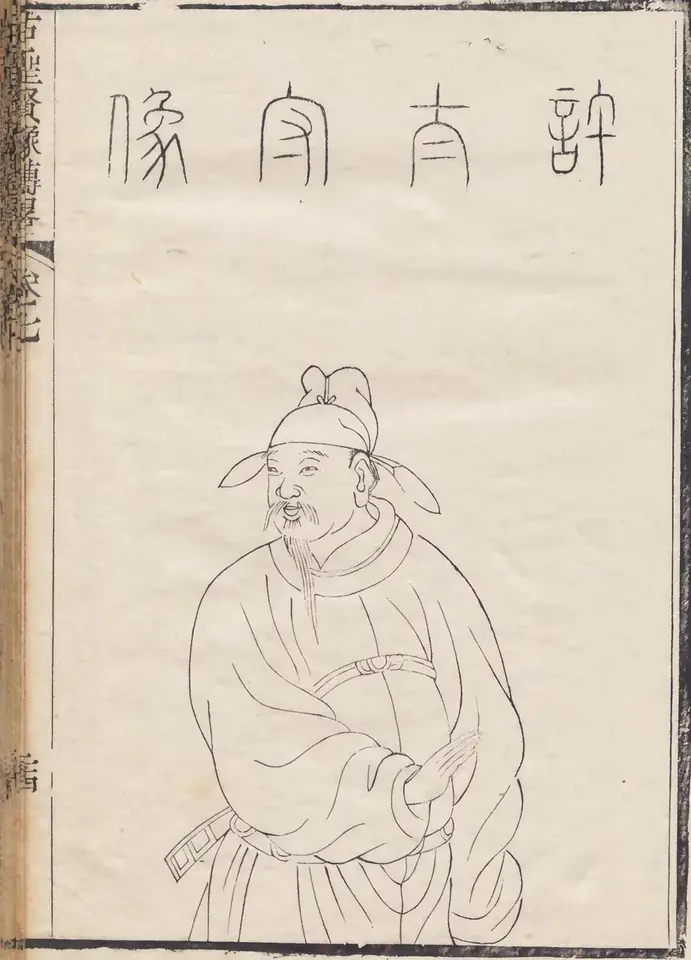
许远
Xu Yuan (许远, 709 – November 757), courtesy name Lingwei (令威), was a native of Xincheng in Hangzhou (modern Xindeng Town, Fuyang District, Hangzhou, Zhejiang), tracing ancestral lineage to Yanguan. He was an eminent loyalist statesman, military commander, Governor of Suiyang, and Defense Commissioner during the Tang dynasty, and the great-great-grandson of Chancellor Xu Jingzong. During the darkest hours of the An Lushan…
Xu Yuan (许远, 709 – November 757), courtesy name Lingwei (令威), was a native of Xincheng in Hangzhou (modern Xindeng Town, Fuyang District, Hangzhou, Zhejiang), tracing ancestral lineage to Yanguan. He was an eminent loyalist statesman, military commander, Governor of Suiyang, and Defense Commissioner during the Tang dynasty, and the great-great-grandson of Chancellor Xu Jingzong. During the darkest hours of the An Lushan Rebellion, Xu Yuan defended the strategic threshold of Suiyang alongside General Zhang Xun. Commanding a meager garrison of several thousand troops against over one hundred thousand rebel cavalry for ten desperate months, he preserved the Jianghuai granaries for the Tang empire, earning immortal veneration as one of the "Two Loyal Martyrs" (Shuangzhong). Passing the imperial examinations in the late Kaiyuan era, Xu Yuan entered the staff of Zhangchou Jianqiong, Military Commissioner of Jiannan, where he was demoted to county magistrate of Gaoyao in southern Lingnan after refusing an arranged marriage with the commissioner's daughter. In 755, following the outbreak of the An Lushan Rebellion, Emperor Xuanzong recognized his integrity and appointed him Governor of Suiyang and Regional Defense Commissioner. In early 757, when rebel general Yin Ziqi besieged Suiyang with thirteen divisions, Xu Yuan recognized the superior operational genius of Zhenyuan magistrate Zhang Xun, voluntarily relinquishing military command to serve as second-in-command, taking charge of logistics, food distribution, and weapon manufacturing while entrusting all tactical combat to Zhang Xun. Throughout the horrific ten-month siege, Xu Yuan and Zhang Xun stood in complete solidarity, directing more than four hundred battles and slaying over one hundred thousand rebel soldiers. In November 757, with all grain exhausted and outside rescue withheld by callous regional generals, Suiyang fell. Zhang Xun was executed on the battlefield, while Xu Yuan was transported in chains to Luoyang. When Tang imperial forces liberated Luoyang shortly thereafter, fleeing rebel leader An Qingxu murdered Xu Yuan in Yanshi. He died at forty-nine. Emperor Suzong posthumously honored him as Grand Area Commander of Jingzhou, enshrined his portrait in the Lingyan Pavilion, and constructed the Shuangzhong Temple in Suiyang for perpetual imperial sacrifices.
Born in Xincheng, Hangzhou, into the distinguished Gaoyang Xu clan.
Passed the metropolitan civil examinations, entering administrative service with an upright reputation.
Served under Jiannan Commissioner Zhangchou Jianqiong; exiled to Gaoyao for rejecting an arranged marriage.
Summoned by Emperor Xuanzong and appointed Governor of Suiyang and Regional Defense Commissioner.
Besieged by Yin Ziqi's massive host; welcomed Zhang Xun, yielding supreme battlefield command to him.
Fought over four hundred battles; sent Nan Jiyun to break out for relief, but regional commanders withheld aid.
Suiyang fell on November 24 after provisions were exhausted; captured and transported in shackles to Luoyang.
Murdered in Yanshi by retreating rebel warlord An Qingxu; posthumously honored as Grand Area Commander, enshrined in the Lingyan Pavilion, and commemorated at the Shuangzhong Temple.
Xu Yuan, courtesy name Lingwei, traced his ancestry to the prestigious Gaoyang Xu clan, being the great-great-grandson of Grand Chancellor Xu Jingzong, who served as Right Executive Servant under Emperor Gaozong. His great-grandfather Xu Ang was a Prince's Secretary, his grandfather Xu Yanbo served as Vice Director, and his father Xu Wang held the post of Right Imperial Forest General. Despite his illustrious patrician lineage, Xu Yuan grew up disciplined, austere, and deeply grounded in classical histories and military tactics, shunning the frivolous ostentation common among aristocratic scions.
In 741, during the late Kaiyuan era of Emperor Xuanzong, Xu Yuan took the metropolitan examinations and obtained the Jinshi degree with exceptional distinction. Entering administrative service, he was recruited by Zhangchou Jianqiong, Military Commissioner of Jiannan, to serve as administrative secretary in his Chengdu headquarters. Admiring Xu Yuan's dignified bearing and patrician background, Zhangchou Jianqiong proposed betrothing his daughter to him. Recognizing that Zhangchou Jianqiong curried favor with court favorites like Yang Guozhong, Xu Yuan adamantly refused to compromise his principles through marriage alliances.
Enraged by the rejection, Zhangchou Jianqiong fabricated criminal charges against Xu Yuan, demoting him to the distant and malarial county of Gaoyao in Duanzhou (modern Guangdong) as a low-ranking county defender. Languishing in southern exile for years, Xu Yuan governed the local indigenous populations with benevolence, maintaining serene detachment and harboring no resentment. In the twilight of the Tianbao era, an imperial amnesty finally allowed him to return northward.
In November 755, An Lushan launched his rebellion in Fanyang, sweeping through the Central Plains with one hundred and fifty thousand northern cavalry and capturing Luoyang and Chang'an. Decades of peace had left commanderies unprepared, causing regional administrators to flee. Desperately seeking incorruptible commanders to fortify strategic strongholds, Emperor Xuanzong summoned Xu Yuan. Impressed by his composure and strategic grasp, Xuanzong immediately appointed him Governor of Suiyang Commandery, concurrently naming him Defense Commissioner and Attendant Censor.
Suiyang (modern Shangqiu, Henan) occupied a vital chokepoint controlling the Bian River and the Grand Canal. The Grand Canal was the economic lifeline through which grain and tax revenues from the Yangzi and Huai river valleys reached northern imperial armies. If Suiyang were breached, rebel cavalry would flood southward into Jianghuai, starving the Tang court and extinguishing the dynasty. Realizing the gravity of his mission, Xu Yuan immediately opened state granaries, fortified walls, deepened moats, and drilled several thousand volunteer militia day and night.
In early 757, following An Lushan's assassination, his son An Qingxu ordered general Yin Ziqi to lead over one hundred and thirty thousand crack cavalry from the Tongluo, Turkic, Xi, and Khitan auxiliary divisions to capture Suiyang. During this crisis, Zhenyuan magistrate Zhang Xun, having evacuated the indefensible garrison of Yongqiu, retreated to Suiyang with three thousand battle-hardened troops.
At this historic juncture, Xu Yuan occupied the senior rank of commandery governor and defense commissioner, possessing vastly superior bureaucratic standing and troops compared to the minor county magistrate Zhang Xun. Yet Xu Yuan displayed an extraordinary selflessness rarely matched in Chinese history. He threw open the city gates to welcome Zhang Xun, bowed with the deference of a subordinate, and declared candidly: "I am a civilian administrator whose talent lies in calculating grain and manufacturing weaponry; in deploying battle lines and outmaneuvering enemies on the field, I am vastly inferior to Your Excellency. Today the survival of this fortress rests in your hands; I gladly subordinate myself to you, devoting all my energies to managing supplies and arrows!" Xu Yuan voluntarily yielded supreme military command to Zhang Xun, dedicating himself to civil logistics. This remarkable abdication of authority united the garrison into a single unbreakable fist.
The defense of Suiyang became the most celebrated and grueling siege of the An Lushan Rebellion. Confronted by Yin Ziqi's siege towers, battering rams, and catapults, Xu Yuan and Zhang Xun operated in flawless coordination. Zhang Xun conducted daring counter-sorties from the battlements, torching siege engines and raiding enemy camps under cover of darkness, while Xu Yuan ensured a continuous supply of crossbow bolts, engineered timber siege defenses, and distributed rations with scrupulous equity.
In May 757, Yin Ziqi reinforced his lines to over one hundred and eighty thousand troops, blockading the fortress behind triple moats and earthen ramparts. Over ten months, Xu Yuan and Zhang Xun commanded a meager force of six thousand soldiers in more than four hundred pitched battles, slaying over three hundred rebel commanders and annihilating one hundred and twenty thousand enemy troops. Piles of enemy corpses choked the riverbanks outside Suiyang. Because of this unyielding defense, the rebel armies were immobilized in eastern Henan, allowing the prosperous provinces of Jiangnan, Zhejiang, and Huainan to remain unmolested. Imperial revenues and provisions flowed uninterrupted to Emperor Suzong's headquarters in Lingwu, enabling Guo Ziyi to rebuild the northern field armies and prepare the counter-offensive to liberate the capitals.
However, the situation within Suiyang deteriorated into unimaginable agony. Provisions were exhausted, bark was stripped from every tree, and horses, sparrows, rodents, and leather armor were boiled for food. Xu Yuan and Zhang Xun dispatched heroic commander Nan Jiyun with thirty cavalrymen to break through the encirclement to seek relief from Helan Jinming, the Military Commissioner of Henan stationed nearby in Linhuai. Jealous of Zhang Xun and Xu Yuan's glory and desiring to hoard troops for personal advancement, Helan Jinming cold-bloodedly refused assistance, offering instead lavish feasts to recruit Nan Jiyun. Nan Jiyun severed his own finger in fury, mounted his horse, and wept as he rode back into the besieged city.
By November 757, fewer than four hundred surviving defenders remained on the battlements of Suiyang, all too emaciated from starvation to draw their bows. Despite facing inevitable death, not a single officer or civilian suggested surrender.
On November 24, 757, rebel divisions scaled the broken ramparts, and Suiyang finally fell. General Yin Ziqi executed Zhang Xun, Nan Jiyun, Lei Wanchun, and thirty-six commanders on the spot. Observing Xu Yuan's dignified composure, and knowing he was the great-great-grandson of Chancellor Xu Jingzong who had supervised logistics, Yin Ziqi refrained from executing him immediately. Instead, he placed Xu Yuan in heavy wooden shackles and transported him under armed escort to Luoyang, attempting to coerce him into collaboration.
Arriving in Luoyang, Xu Yuan faced the threats and inducements of An Qingxu's puppet regime with unyielding defiance, loudly denouncing the rebels as treasonous bandits. Days later, imperial forces led by Vice Generalissimo Guo Ziyi and Uyghur cavalry crushed the main rebel forces at Shanzhou and liberated Luoyang.
Terrified by the collapse of his regime, An Qingxu fled Luoyang toward northern Hebei. Passing through Yanshi, realizing that the loyalist minister would never submit, An Qingxu ordered Xu Yuan cruelly butchered by disembowelment. Xu Yuan shouted "Long live the Great Tang!" and died an honorable martyr at forty-nine.
Merely three days after Xu Yuan's death, Guo Ziyi's vanguard entered Yanshi. Hearing of the fall of Suiyang and Xu Yuan's martyrdom, Emperor Suzong wept bitterly, issuing an edict posthumously granting him the rank of Grand Area Commander of Jingzhou. His portrait was placed in the Lingyan Pavilion alongside Zhang Xun, and imperial orders established the Shuangzhong Temple in Suiyang for annual sacrifices. Throughout successive dynasties, the spirits of Xu Yuan and Zhang Xun were deified across China, their temples revered from the Central Plains to Fujian, Taiwan, and overseas communities.
In early 757, as thirteen rebel divisions bore down upon Suiyang, Xu Yuan occupied the senior rank of commandery governor, possessing superior bureaucratic status over county magistrate Zhang Xun.
Transcending bureaucratic vanity, Xu Yuan made state survival his only criterion. Recognizing his own limitations in battlefield tactics compared to Zhang Xun's operational brilliance, he voluntarily yielded supreme command to Zhang Xun, subordinating himself to supervise military provisions and municipal defense. This selfless humility eliminated factional friction, creating the greatest model of harmonious civil-military cooperation in traditional Chinese warfare.
Suiyang occupied the vital transit node of the Grand Canal, through which southern grain and wealth were channeled to the loyalist armies.
Commanding a few thousand troops against overwhelming odds, Xu Yuan and Zhang Xun held Suiyang for ten grueling months across four hundred battles, destroying over one hundred and twenty thousand enemy troops. Their defense permanently blunted the rebel southward drive, protecting the fertile Jianghuai basin. Han Yu proclaimed: "Without this defense, the empire would have perished." Xu Yuan's sacrifice provided the logistical foundation that enabled the Tang dynasty to survive and recover its lost capitals.
Confronted by starvation, the refusal of outside relief, and torture in enemy chains, Xu Yuan chose death over capitulation.
After being captured and transported to Luoyang, he openly defied An Qingxu and was martyred in Yanshi on the eve of imperial victory. His supreme sacrifice washed away the historical stigma associated with his ancestor Xu Jingzong, establishing the Gaoyang Xu lineage as an exemplar of absolute loyalty. Venerated alongside Zhang Xun as the "Two Loyal Martyrs," his spirit became an enduring symbol of national defiance against foreign subjugation throughout Chinese history.
FIGURES ASSOCIATED WITH THIS DYNASTY