Birth in Luozhou
Born in Shicheng, Luozhou, the son of the powerful tribal chieftain Su Li and the daughter of chieftain Chen Xuan.
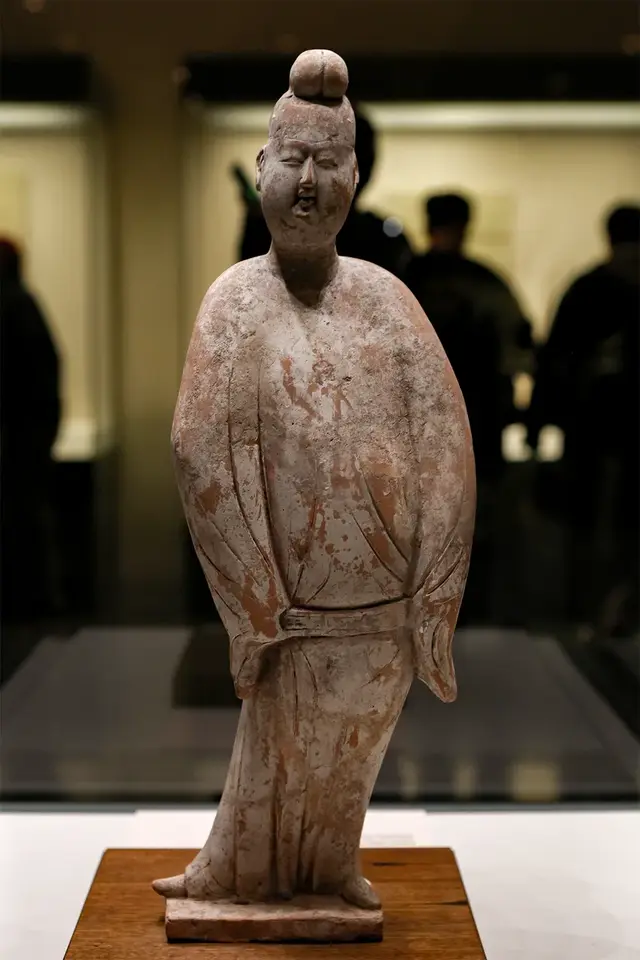
杨思勖
Yang Sixu (杨思勖, 654–740), originally named Su Youzhi (苏祐之) with the courtesy name Youzhi (祐之), was a native of Shicheng in Luozhou and the son of Su Li, a prominent indigenous chieftain of the Lingnan region, who became one of the most distinguished military commanders and eunuch generals of the High Tang under Emperor Xuanzong. In his early childhood, Yang Sixu survived the destruction of his clan, underwent castration…
Yang Sixu (杨思勖, 654–740), originally named Su Youzhi (苏祐之) with the courtesy name Youzhi (祐之), was a native of Shicheng in Luozhou and the son of Su Li, a prominent indigenous chieftain of the Lingnan region, who became one of the most distinguished military commanders and eunuch generals of the High Tang under Emperor Xuanzong. In his early childhood, Yang Sixu survived the destruction of his clan, underwent castration according to penal statutes, and was brought into the imperial palace, where he was adopted by a senior palace attendant of the Yang household. During the Jinglong Coup of 707, he distinguished himself by slaying the rebel vanguard commander Ye Huli before the palace gates, turning the tide of battle. He subsequently supported the Prince of Linzi, Li Longji, during the Tanglong Coup of 710, earning the future Emperor Xuanzong's profound trust as an elite guards commander. Following Emperor Xuanzong's ascension, Yang Sixu led four major military expeditions into southern borderlands over two decades. He suppressed the Annan rebellion of Mai Thuc Loan, routed the Wuxi tribal uprising led by Tan Xingzhang, crushed Liang Dahai in Yongzhou, and defeated the massive confederacy of Chen Xingfan in Longzhou. Renowned for rapid marches along historical coastal routes, strict discipline, and terror-inducing punishments of enemy captives, Yang was promoted to General of Agile Cavalry and Duke of Guo State, attaining rank 1b and shattering traditional caps on eunuch official rank. He remained loyal to the throne and died peacefully at age eighty-seven.
Born in Shicheng, Luozhou, the son of the powerful tribal chieftain Su Li and the daughter of chieftain Chen Xuan.
Survived the annihilation of his clan during local political strife; castrated and sent to the capital as a palace servant.
Volunteered during the Jinglong Coup to duel and slay the rebel vanguard Ye Huli, receiving promotion to Grand Master for Silver-Blue Radiance.
Aided Li Longji in eliminating Empress Wei and Princess Anle; appointed General of the Right Gate Guard.
Accompanied Emperor Xuanzong to Luoyang and joined senior eunuchs in commissioning nineteen Western Amitabha shrines at Longmen.
Recruited over one hundred thousand soldiers and marched along Ma Yuan's coastal route to capture and execute Mai Thuc Loan.
Appointed Pacification Commissioner of Qianzhong, leading sixty thousand troops to defeat Tan Xingzhang and take thirty thousand enemy heads.
Escorted Emperor Xuanzong to Mount Tai for imperial sacrifices; elevated to General of Agile Cavalry and Duke of Guo State.
Dispatched to Yongzhou to quell Liang Dahai's uprising; captured over three thousand insurgents and beheaded twenty thousand.
Commanded one hundred thousand Huainan crossbowmen to annihilate Chen Xingfan's forces across forty cities in Lingnan.
Executed the corrupt eunuch envoy Niu Xiantong on imperial orders with severe mutilation, terrifying the palace administration.
Died of natural illness at his residence in the Yishan Ward of Chang'an at the age of eighty-seven after an undefeated military career.
Yang Sixu originally belonged to the Su clan, bearing the personal name Youzhi. He was born in Shicheng County, Luozhou, in the Lingnan circuit. His lineage was rooted among the indigenous ruling chieftains of southern China; his fifth-generation ancestor Su Mi had served as prefect of Jiaozhi before settling permanently in Luozhou. His father, Su Li, stood as the paramount hereditary leader of the local populace, while his mother, Lady Chen, was the daughter of Chen Xuan, the chief of Leizhou. This union represented a powerful political alliance between two leading clans commanding immense local prestige.
In 659, regional political upheaval engulfed Luozhou. The Su family was completely eradicated in factional fighting. The six-year-old Youzhi was spared execution due to his tender age, but under the harsh penal code, he was castrated and escorted under armed guard to the imperial capital of Chang'an to serve as an inner palace bondsman. In the Palace Domestic Service, he was adopted by a senior eunuch surnamed Yang, from whom he acquired his new surname and the name Sixu. The dramatic reversal from tribal nobility to palace servitude forged in him an exceptionally resilient, austere, and uncompromising character. As he grew into adulthood, Yang Sixu developed immense physical stature, formidable strength, and expertise in martial combat and mounted archery.
In the autumn of 707, dynastic tensions erupted when Crown Prince Li Chongjun, pushed to desperation by Wu Sansi, Empress Wei, and Princess Anle, launched the Jinglong Coup with elite guards commanders. The insurgents executed Wu Sansi and forced their way through the Suzhang Gate of the Western Palace, advancing on Xuanwu Gate. With most palace forces thrown into disarray and guards officers trembling in fear, no commander dared confront the rebels.
At this critical juncture, Yang Sixu volunteered to lead the countercharge. Clad in iron armor and wielding a broadsword, he galloped directly toward Ye Huli, the rebel vanguard commander. Within a single exchange, Yang decapitated Ye Huli on horseback and raised the severed head before the insurgent ranks. Demoralized by their commander's sudden demise, the rebel vanguards disintegrated. Yang led the imperial counterattack, prompting rebel officers such as Wang Huanxi to turn against Prince Li Chongjun. Emperor Zhongzong praised Yang's valor and promoted him five ranks to Grand Master for Silver-Blue Radiance and Acting Palace Attendant.
In 710, following Emperor Zhongzong's sudden death, Empress Wei attempted to usurp the throne. Yang Sixu aligned himself with Prince Li Longji. During the Tanglong Coup, Yang fought at the forefront of the royal assault, cutting down the Empress's partisan commanders and securing the inner compounds. Following Li Longji's enthronement as Emperor Xuanzong, Yang Sixu was appointed General of the Right Gate Guard and awarded the prestigious clan choronym of Hongnong, becoming one of the sovereign's most trusted military confidants.
In the early Kaiyuan era, regional tribal rebellions threatened the stability of the southern empire. In 722, Mai Thuc Loan, an indigenous chieftain under the Protectorate General to Pacify the South, rebelled and proclaimed himself the Black Emperor. Mai mobilized tribal forces across thirty-two prefectures, formed alliances with Champa and Chenla, and seized Songping, threatening to sever the southern territories from imperial administration.
Emperor Xuanzong appointed Yang Sixu as commander-in-chief to recover Annan. Arriving in Lingnan, Yang recruited over one hundred thousand tribal warriors and combined forces with Protector General Guang Chuke. Rather than traversing conventional inland trails, Yang chose the coastal route originally pioneered by General Ma Yuan during the Eastern Han Dynasty, moving along the shores from Hepu and hacking through mountain jungles. Appearing completely unheralded at the rebel stronghold, Yang led the assault in person, capturing and beheading Mai Thuc Loan on the battlefield. Deprived of their leader, the rebel host collapsed, and imperial authority over Annan was swiftly restored.
In 724, Tan Xingzhang, leader of the Wuxi tribes along the border between modern Hunan and Guizhou, launched a violent rebellion, raiding settlements and slaughtering officials. Emperor Xuanzong appointed Yang Sixu Pacification Commissioner of Qianzhong, placing sixty thousand imperial soldiers under his banner. Facing dense tropical forests and poisonous mountain mists, Yang led his soldiers up steep ravines, assaulting fortified stockades. He captured Tan Xingzhang alive, beheaded thirty thousand rebel fighters, and constructed towering corpse mounds to cow hostile tribes. For this achievement, Yang was elevated to General Supporting the State with second-rank privileges, breaching traditional rank limitations for eunuchs. In 725, after guarding Emperor Xuanzong during the imperial sacrifices at Mount Tai, he was created Duke of Guo State and General of Agile Cavalry.
In the spring of 726, Liang Dahai, a chieftain of Fengling Cave in Yongzhou, rebelled and occupied Binzhou and Hengzhou, cutting off water transportation lines. Emperor Xuanzong once again assigned Yang Sixu to march south. Leading imperial detachments through the rugged mountains of western Lingnan, Yang engaged Liang Dahai in prolonged jungle warfare over several months. Enforcing unyielding discipline, he captured Liang and three thousand rebels, beheading twenty thousand insurgent fighters and eliminating all remnants.
In the first month of 728, an even larger insurrection flared across Lingnan. Chen Xingfan of Longzhou, joined by Feng Lin and He Youlu of Guangzhou, seized over forty county and prefectural seats. Chen proclaimed himself emperor, named He Youlu Commander of State Stability, and styled Feng Lin King of Nanyue, openly seeking total separation from Tang governance.
Emperor Xuanzong mobilized forces from Yongzhou, Daozhou, and Lianzhou, reinforcing them with one hundred thousand veteran Huainan crossbowmen under Yang Sixu's supreme command. Arriving in Longzhou, Yang employed combined arms tactics, pinning down the insurgents with devastating crossbow barrages. He slew He Youlu in battle and captured Feng Lin. Chen Xingfan fled into the cavernous recesses of Yunjidong and Panliaodong. Yang led troops directly into the labyrinthine caverns, cutting off water sources and flushing out Chen Xingfan, who was beheaded. Over sixty thousand insurgents fell during the campaign, and peace was secured across Lingnan.
Beyond his battlefield achievements, Yang Sixu functioned as Emperor Xuanzong's uncompromising instrument in maintaining imperial discipline. In 736, the eunuch commissioner Niu Xiantong accepted enormous bribes from General Zhang Shougui while on an inspection tour in Youzhou. Enraged by the corruption, Emperor Xuanzong ordered Yang Sixu to execute Niu. Yang tied Niu to a courtyard pillar, carved out his heart, severed his limbs, and consumed pieces of his flesh before an assembled gathering of officials. The gruesome punishment struck terror into the bureaucracy, halting illicit bribery in the inner palace.
Despite wielding supreme command over massive armies and attaining rank 1b honors, Yang Sixu never interfered in central political policy, formed illicit cliques, or challenged the imperial prerogatives of Emperor Xuanzong. Retiring to his private estate in the Yishan Ward of Chang'an, he passed away peacefully from natural illness on April 16, 740, at the age of eighty-seven. Emperor Xuanzong mourned his demise and issued an imperial eulogy granting posthumous funeral honors. Rising from an orphaned captive to an undefeated grand general, Yang Sixu established a unique record in the military history of the Tang Dynasty.
Yang Sixu established his reputation through decisive valor during dangerous palace confrontations. In the 707 Jinglong Coup, with the imperial residence under siege by Crown Prince Li Chongjun and veteran guard units, Yang stepped forward alone. By executing the rebel commander Ye Huli in mounted combat, he broke the insurgent momentum and saved Emperor Zhongzong's life.
In 710, Yang joined Li Longji in launching the Tanglong Coup, spearheading the elimination of Empress Wei's loyalists. His steadfast courage in moments of supreme hazard established his standing as an indispensable military pillar of the early Xuanzong court.
As the foremost field general dispatched to the southern frontiers, Yang Sixu pacified four major regional rebellions over two decades. His expedition to Annan in 722 neutralized the Black Emperor uprising of Mai Thuc Loan, securing thirty-two prefectures.
Subsequent victories against the Wuxi tribal leagues under Tan Xingzhang, the Yongzhou insurgents under Liang Dahai, and Chen Xingfan's forty-city confederation in Longzhou preserved the territorial integrity of the Tang Empire along its southern periphery, safeguarding maritime trading lanes and central administration.
Yang Sixu was celebrated for his austere operational control and terrifying treatment of rebel leaders. To suppress repeated unrest in the south, he often subjected insurgent commanders to flaying and decapitation, erecting earthen corpse mounds across conquered battlegrounds to extinguish future insurrections.
In camp, his subordinate officers trembled in his presence and dared not gaze directly into his eyes, ensuring unhesitating obedience during complex mountain warfare. His execution of the corrupt eunuch Niu Xiantong demonstrated absolute adherence to imperial commands, establishing him as the court's most formidable deterrent against bureaucratic transgression.
In addition to his martial responsibilities, Yang Sixu played a prominent role in the cultural and religious activities of the imperial court. During Emperor Xuanzong's residences in Luoyang, Yang and senior eunuchs such as Gao Lishi sponsored major Buddhist projects to pray for imperial longevity and national prosperity.
According to the surviving Stele of Merit and Virtue of the Palace Domestic Service of the Great Tang at Longmen, Yang and Gao completed nineteen shrines dedicated to Amitabha Buddha in the sixth month of 718. This monument remains an exceptional relic of High Tang Buddhist art and offers vital material evidence of the religious devotions of senior court officials.
FIGURES ASSOCIATED WITH THIS DYNASTY