Birth into Poverty
Born into a farming family in Ruian, Wenzhou, experiencing recurrent flooding and frequent relocations.
叶适
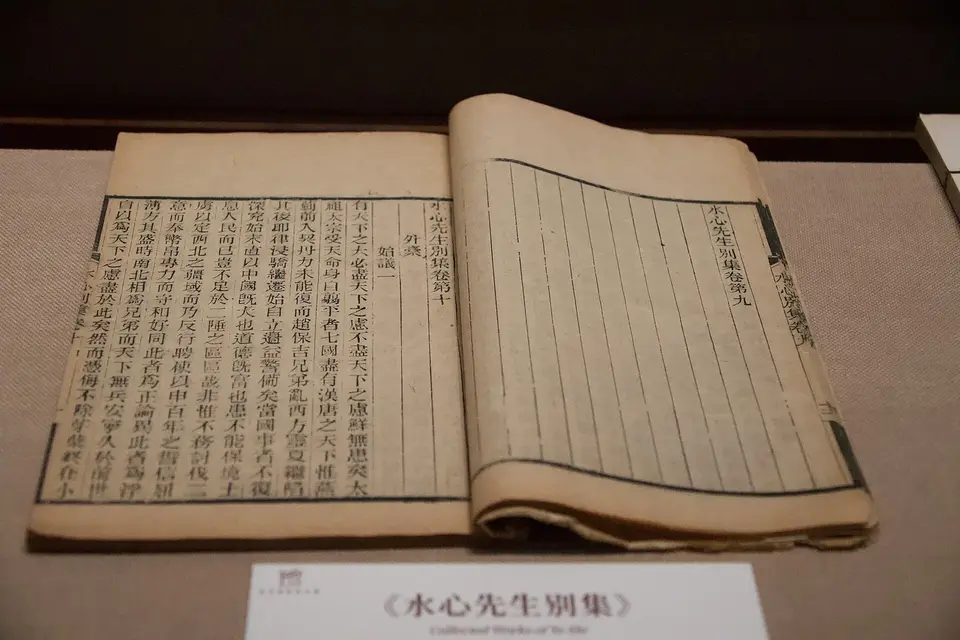
[!NOTE] Ye Shi (1150–1223), courtesy name Zhengze and known to scholars as Master Shuixin, was a preeminent philosopher, political essayist, literary master, and high-ranking statesman of the Southern Song dynasty. A native of Yongjia in Wenzhou (modern Wenzhou, Zhejiang Province), he was the great synthesizer of the Yongjia School of Eastern Zhejiang scholarship. In the intellectual landscape of the Southern Song, Ye Shi's…
[!NOTE] Ye Shi (1150–1223), courtesy name Zhengze and known to scholars as Master Shuixin, was a preeminent philosopher, political essayist, literary master, and high-ranking statesman of the Southern Song dynasty. A native of Yongjia in Wenzhou (modern Wenzhou, Zhejiang Province), he was the great synthesizer of the Yongjia School of Eastern Zhejiang scholarship. In the intellectual landscape of the Southern Song, Ye Shi's pragmatic utilitarian philosophy (shigong or practical statecraft) formed a towering triumvirate alongside the Rationalism (Lixue) of Zhu Xi and the School of Mind (Xinxue) of Lu Jiuyuan. Rising from generations of deep rural poverty to achieve second place (runner-up, or bangyan) in the 1178 imperial examination, Ye Shi served as Vice Minister of War and Administrator of Jiangning Fu, where he fortified the lower Yangtze River defenses during the Kaixi Northern Expedition. Retiring to Shuixin Village for sixteen years, he authored the fifty-volume philosophical monument Xixue Jiyan Xumu (Prefatory Catalog to Records of Learning and Studies, often known as Xixue Jiyan), advocating that moral righteousness cannot be divorced from material utility and championing commercial prosperity and military preparedness.
Born into a farming family in Ruian, Wenzhou, experiencing recurrent flooding and frequent relocations.
Traveled across Wenzhou and Jinhua, studying under early Yongjia pioneers Xue Jixuan, Zheng Boxiong, and Chen Fuliang.
Placed second (bangyan) in the metropolitan and palace examinations, appointed Surveillance Investigator of Pingjiang Fu.
Promoted to Judge of Wuchang Military Commission and appointed Corrector of the Secretariat after passing court examinations.
Appointed Erudite of the National University; defended Zhu Xi against factional attacks and urged Emperor Xiaozong to eliminate redundant offices and tax burdens.
Actively mediated between Emperor Guangzong and Retired Emperor Xiaozong to preserve dynastic governance during the palace crisis.
Targeted by regent Han Tuozhou as part of the "False Learning Rebel Faction" due to ties with Chancellor Zhao Ruyu; stripped of office.
Reappointed Prefect of Quanzhou, reforming maritime trade levies and suppressing coastal piracy.
Presented statecraft maxims on harmonious governance, subsequently appointed Vice Minister of Personnel and Drafter in the Hanlin Academy, where he refused to draft the Northern Expedition declaration.
Appointed Auxiliary Academician of the Baomo Pavilion and Prefect of Jiangning Fu, organizing Yangtze River garrisons during the disastrous Kaixi Northern Expedition.
Quelled the military mutiny of Wu Xiufu; later dismissed and cashiered by the appeasement faction following Han Tuozhou's assassination.
Retired to Shuixin Village outside Wenzhou, dedicating sixteen years to writing and teaching.
Died peacefully at his residence in Wenzhou at age seventy-four; posthumously honored as Grand Master for Splendid Happiness and granted the posthumous name Wending.
Ye Shi was born in 1150 in Ruian, Wenzhou, during the Southern Song dynasty. His ancestral lineage originated in Longquan, Chuzhou, and had suffered three consecutive generations of severe agrarian poverty. His father, Ye Guangzu, was a village schoolteacher of broad learning and unfulfilled ambition. During the year Ye Shi's mother, Lady Du, wed into the family, a devastating seasonal flood swept away their modest possessions. Driven by famine and poverty, the household relocated twenty-one times across rural villages.
Despite grueling hardships, Lady Du managed the household frugally and instilled a rigorous passion for classical learning in young Ye Shi. Gifted with extraordinary memory, he committed classical histories to heart while toiling in the fields. In his youth, Ye Shi studied in Nanxi under Liu Yu, forming lifelong intellectual bonds with scholars Dai Xi, Wang Nan, and Chen Wu. Later, he traveled to Jinhua to visit Lu Zuqian on Mount Mingzhao, and studied under Yongjia School pioneers Xue Jixuan, Zheng Boxiong, and Chen Fuliang. Rejecting the prevailing scholarly obsession with passive meditation and abstract metaphysics, Ye Shi embraced the Yongjia creed of empirical institutional inquiry and utilitarian statecraft.
In 1178, the twenty-nine-year-old Ye Shi achieved second place (bangyan) in the imperial palace examinations under Emperor Xiaozong, receiving an initial appointment as Surveillance Investigator of Pingjiang Fu (modern Suzhou). In Pingjiang, he reformed judicial abuses, cleared backlog litigation, and befriended scholars such as Xue Zhonggeng, composing evocative verse during visits to Tiger Hill and Lingyan Mountain.
In 1184, Ye Shi was elevated to Judge of the Wuchang Military Commission and soon summoned to the capital as Corrector of the Secretariat. Observing that prolonged appeasement had bred systemic inertia, fiscal deficits, and military weakness, Ye Shi submitted multiple memorials, including Memorial on Dynastic Governance Strategies, diagnosing administrative bloat and punitive poll taxes as primary threats to state survival.
In 1188, when imperial lecturer Lin Li launched a vitriolic campaign against Zhu Xi and Daoist learning, denouncing them as deceitful charlatans, Ye Shi boldly memorialized the throne to defend Zhu Xi's integrity, warning that weaponizing factional labels would destroy the realm's intellectual vitality. Later that year, appointed Erudite of the National University, Ye Shi engaged Emperor Xiaozong in palace consultations, arguing that the reclamation of the Central Plains required structural retrenchment, fiscal discipline, and tax relief for southern cultivators.
During the Shaoxi reign (1190–1194), a severe constitutional impasse arose between Emperor Guangzong and his father, Retired Emperor Xiaozong. Incited by Empress Li, Emperor Guangzong refused to perform filial greetings at the Chonghua Palace, scandalizing court and populace. Serving as Secretary in the Imperial Library, Ye Shi risked imperial wrath by submitting memorials urging reconciliation, personally shuttling between imperial residences to prevent dynastic disintegration. During Xiaozong's final illness, Ye Shi mobilized senior ministers to kneel in petition. Although the crisis culminated in the 1194 forced abdication orchestrated by Zhao Ruyu and Han Tuozhou, Ye Shi's steadfast poise earned widespread respect.
Following the accession of Emperor Ningzong, regent Han Tuozhou consolidated autocracy by orchestrating the Qingyuan Factional Prohibition in 1195, banishing Chancellor Zhao Ruyu and blacklisting dozens of scholars, including Zhu Xi and Ye Shi, as members of the "False Learning Rebel Faction." In 1196, Ye Shi was stripped of all titles and expelled to his home village. He accepted exile with equanimity, gathering students and refining his statecraft philosophy.
In 1202, as factional bans eased, Ye Shi was appointed Prefect of Quanzhou. In this vital maritime hub, he suppressed coastal pirates, restructured customs duties, and supported maritime merchant guilds. In September 1203, summoned for an imperial audience with Emperor Ningzong, Ye Shi delivered his famous administrative maxim: "Governing the state relies on harmony as its substance; managing affairs relies on equity as its ultimate standard." Deeply impressed, the emperor appointed him Vice Minister of Personnel and Hanlin Drafter. When Han Tuozhou pressed him to draft the imperial declaration for a preemptive war against the Jurchen Jin, Ye Shi adamantly refused, warning that military unpreparedness would invite ruin, prompting Han to reassign him to the Ministry of Works and the Ministry of War.
In 1206, Han Tuozhou launched the reckless Kaixi Northern Expedition. Jin counteroffensives routed Song forces across the Huai River, leaving the lower Yangtze exposed. In this emergency, the court appointed Ye Shi Auxiliary Academician of the Baomo Pavilion, Prefect of Jiangning Fu, and Pacification Commissioner of Jiangdong, commanding defenses across northern river garrisons. Arriving in chaotic Jiangning (Nanjing), where thousands of retreating routed troops were pillaging local markets, Ye Shi established relief camps, restored rations, and re-established military discipline. He submitted his strategic "Fortress Memorial" (Baowu Zhi Yi), constructing defensive redoubts along the Yangtze, instituting garrison farming (tuntian), and organizing armed river gunboats. Under his leadership, Jiangning remained impregnable, deterring Jurchen cavalry from crossing south.
In early 1207, garrison commander Wu Xiufu launched a mutiny in Jiangning to plunder local granaries. Ye Shi swiftly deployed elite personal guards, encircled the mutineers, and executed the ringleaders, restoring civic order.
However, the complete failure of the Northern Expedition provoked a palace coup in late 1207, in which peace-faction leader Shi Miyuan assassinated Han Tuozhou and sued for peace. New court factions launched purges against officials associated with the war. Despite having opposed Han's initial recklessness, Ye Shi was impeached as a high-ranking minister of the war period and stripped of office.
In the winter of 1207, the fifty-eight-year-old Ye Shi retired permanently to Shuixin Village outside Wenzhou, adopting the moniker Master Shuixin. For sixteen years, he rejected subsequent imperial recall decrees, devoting his solitude to exhaustive philosophical research and commentary. In 1223, Ye Shi passed away at his Shuixin estate at age seventy-four. The Southern Song court granted him the posthumous title Grand Master for Splendid Happiness and the posthumous name Wending.
Ye Shi's paramount philosophical contribution was the comprehensive synthesis of the Yongjia School, establishing utilitarian statecraft as a peer to the Rationalism of Zhu Xi and the School of Mind of Lu Jiuyuan.
Directly challenging the abstract scholasticism of contemporary Neo-Confucianism, Ye Shi formulated the revolutionary dictum: "Without material utility, moral righteousness is merely empty rhetoric." He posited that the Dao resides inherently within physical utensils and historical institutions (dao bu li qi), asserting that concrete state efficacy, public welfare, and national defense constitute the sole criteria for authentic learning. By dismantling the artificial dichotomy between righteousness (yi) and benefit (li), Ye Shi established an empirical, reformist philosophical tradition that prefigured modern pragmatic realism.
Over sixteen years in Shuixin, Ye Shi produced the monumental fifty-volume critical study Xixue Jiyan Xumu (widely cited as Xixue Jiyan), representing a milestone in historical criticism.
Subjecting three millennia of institutional evolution, classical texts, and philosophical lineages from pre-Qin times through the Five Dynasties to empirical scrutiny, Ye Shi dismantled abstract dogma. He severely criticized the Cheng brothers and contemporary followers of Zhu Xi for diluting classical Confucianism with Buddhist and Daoist quietism, warning that internal meditation without statecraft capacity produced helpless intellectuals incapable of saving the state in crises. His meticulous examinations of historical land registers, military levies, fiscal reforms, and bureaucratic offices pioneered the evidentiary methods later celebrated by the Qing dynasty Qianjia School.
Transcending millennia of traditional feudal prejudice that prioritized agriculture while suppressing commerce (zhongnong yishang), Ye Shi formulated advanced economic theories advocating the equal promotion of agriculture and merchant enterprise (tongshang huigong).
Observing vibrant maritime trade across Southeast China, Ye Shi argued that commerce was not a parasitic drain on agrarian society, but an essential lifeline facilitating resource circulation and public prosperity. He urged the state to protect private merchant property, eliminate state monopolies, reduce transit duties, and foster overseas trade. Asserting that national strength originated from popular wealth (minfu fangneng guoqiang), his market-oriented economic ideas stood centuries ahead of contemporary feudal doctrine.
As an accomplished military strategist during the Kaixi conflict, Ye Shi formulated the comprehensive "Fortress Memorial" (Baowu Zhi Yi) and garrison colonization plans (tuntian), establishing an integrated defense in depth across the Huai-Yangtze corridor.
Ye Shi maintained that defending the south required proactive frontier fortifications rather than passive reliance on the Yangtze River barrier. He mobilized border populations to erect mutual-support stone fortresses and beacon towers across hills and waterways, combining seasonal agriculture with fortified civil defense to deny supplies to cavalry raiders. Additionally, he commissioned specialized riverine warships to secure amphibious mobility. This integrated system significantly mitigated dynastic grain transport costs and provided an enduring defense model for later Southern Song border marshals.
Within Southern Song literature, Ye Shi pioneered a stylistic revolution championing substantive historical prose over ornamental rhetoric.
Rejecting the convoluted obscurities of the Jiangxi Poetry School and the rigid ornamental formalism of parallel prose, Ye Shi advocated that writing must document real affairs (wen yi zai shi), grounding literature directly in socioeconomic reality and historical fact. His essays exhibited sweeping momentum and sharp analytical clarity, earning praise from the late Song patriot Wen Tianxiang as the supreme prose stylist of the Southern Song.
In his twilight years at Shuixin, Ye Shi established an open academy that trained a generation of eminent scholars committed to institutional history.
Discarding mechanical recitation and introspective quiet-sitting, Ye Shi instructed pupils to examine historical fiscal documents, agrarian systems, and legal codes. His most distinguished disciple was Chen Zhensun, author of the definitive Chinese bibliographic monument Zhizhai Shulu Jieti. Through systematic pedagogy, Ye Shi preserved the empirical spirit of Eastern Zhejiang scholarship, nurturing the intellectual seeds that flourished during the seventeenth-century statecraft revival led by Huang Zongxi.
FIGURES ASSOCIATED WITH THIS DYNASTY