Birth in Pucheng
Born into an impoverished household in Pucheng County, Jianning Prefecture, altering his surname from Shen to Zhen.
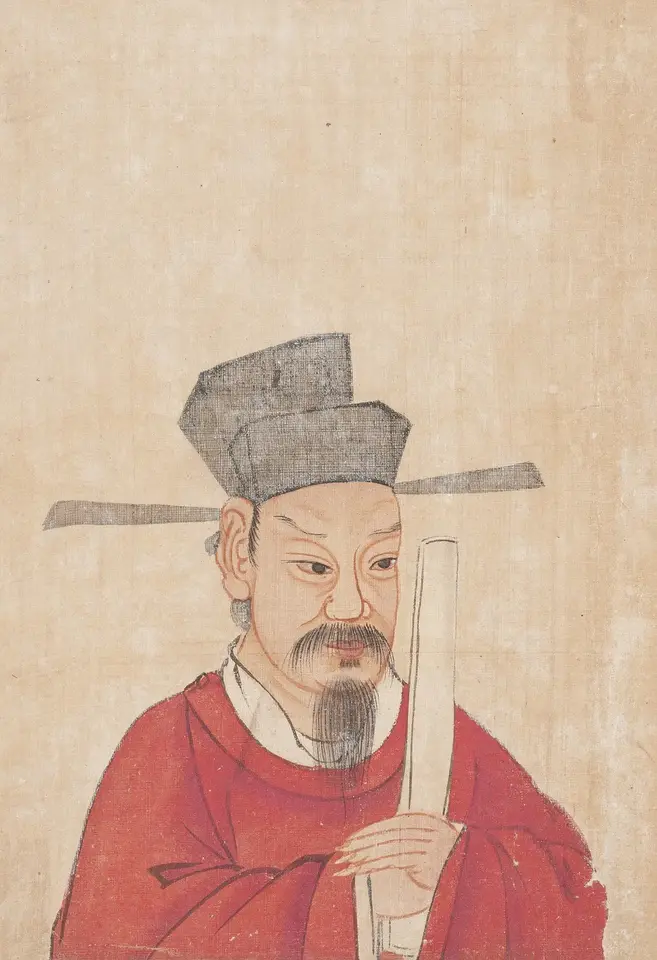
真德秀
Zhen Dexiu (真德秀, October 27, 1178 – May 28, 1235), originally named Shen Dexiu and styled Xiyuan, was a native of Pucheng in Jianning Prefecture (present-day Pucheng, Fujian Province). Known by his literary sobriquet Master Xishan, he was an eminent statesman, Neo-Confucian philosopher, and essayist of the middle and late Southern Song dynasty. A prominent second-generation disciple of Zhu Xi, he was paired with Wei Liaoweng…
Zhen Dexiu (真德秀, October 27, 1178 – May 28, 1235), originally named Shen Dexiu and styled Xiyuan, was a native of Pucheng in Jianning Prefecture (present-day Pucheng, Fujian Province). Known by his literary sobriquet Master Xishan, he was an eminent statesman, Neo-Confucian philosopher, and essayist of the middle and late Southern Song dynasty. A prominent second-generation disciple of Zhu Xi, he was paired with Wei Liaoweng as Xishan and Heshan, serving as principal architects of the state-sponsored revival of Neo-Confucianism (Daoxue). Rising from humble agrarian origins, Zhen Dexiu passed the imperial jinshi examination in 1199, subsequently serving as judge in Nanjian Prefecture, professor in the National University, and compiler in the Institute of National History. In 1214, when the Jin dynasty sent envoys demanding overdue tribute under pressure from the Mongols, Zhen Dexiu courageously urged the court to terminate tribute payments to Jin, warning against appeasement. Throughout his official career, his outspoken criticism of grand councilor Shi Miyuan's autocratic faction led to repeated dismissals and appointments to regional commands in Jiangdong, Quanzhou, Fuzhou, and Tanzhou. In provincial administration, he suppressed the Wugang military mutiny, revitalized the maritime trade supervisorate in Quanzhou, and founded charitable granaries (Huimincang) to combat famine. Following the death of Shi Miyuan and the assumption of personal rule by Emperor Lizong in the Duanping era, Zhen Dexiu was summoned back to metropolitan leadership, serving as Minister of Revenue, Hanlin Academician, and Participant in Determining Governmental Matters (Vice Grand Councilor). In intellectual history, his forty-three-volume masterpiece Daxue Yanyi (Extended Meaning of the Great Learning) elevated the Confucian concepts of rectifying the mind and making the intentions sincere into the foundational doctrine of imperial statecraft, becoming an indispensable handbook of governance for Song, Yuan, Ming, and Qing rulers.
Born into an impoverished household in Pucheng County, Jianning Prefecture, altering his surname from Shen to Zhen.
Passed the provincial examinations in the Fujian circuit at age eighteen through dedicated classical study.
Passed the metropolitan jinshi examinations alongside his father-in-law Yang Gui, appointed judge in Nanjian Prefecture.
Passed the Boxue Hongci examination, entering the military commission of Fuzhou and advancing to National University Professor.
Urged the immediate cessation of annual tribute payments to the Jin dynasty, which was adopted by Emperor Ningzong.
Appointed Academician Drafter and Vice Minister of Works, submitting memorials warning against imperial consort influence.
Banished from the capital due to opposition to Shi Miyuan, appointed prefect of Quanzhou to overhaul maritime trade and coastal defenses.
Dismissed from all imperial titles and placed under house arrest for protesting the murder of Crown Prince Zhao Hong.
Recalled to the capital by Emperor Lizong following Shi Miyuan's demise, presenting Daxue Yanyi and appointed Minister of Revenue.
Appointed Participant in Determining Governmental Matters, passed away in Lin'an on May 28 at age fifty-eight.
Zhen Dexiu was born on October 27, 1178, in Xianyang village, Pucheng County, Jianning Prefecture. His ancestral lineage had originally borne the surname Shen, which had migrated to northern Fujian during the early medieval era. To avoid the personal taboo name of Emperor Xiaozong (Zhao Shen), the family dropped the heart radical from their surname, adopting the character Zhen. Losing his father at an early age, Zhen Dexiu grew up in extreme poverty, supported by the spinning and needlework of his mother, Lady Wu. Endowed with precocious intellectual abilities, he could recite classical texts after a single reading by age four.
His youth was characterized by extraordinary devotion to scholarship. Returning from the local academy at dusk, he would place his manuscripts beside his bedding, reading late into the night beneath a coarse mosquito net by candlelight until the netting was blackened with soot. When neighboring boys swam and played, Zhen Dexiu borrowed their textbooks to master their contents. Yang Gui, an eminent gentry scholar of the commandery, observed his moral discipline and invited the youth into his household to study alongside his own children, subsequently giving his daughter to Zhen Dexiu in marriage.
In 1195, at age eighteen, Zhen Dexiu passed the provincial examinations in Fujian. Four years later, in 1199, he and his father-in-law traveled to Lin'an and earned the jinshi degree in the same cohort. Zhen Dexiu was appointed judge of Nanjian Prefecture, where he organized local tax registers, audited public granaries, eliminated clerk extortion, and resolved complex civil lawsuits, earning high praise from Prefect Ni Si. In 1205, he passed the elite Boxue Hongci examination, entering the staff of Fuzhou Pacification Commissioner Xiao Kui.
In late 1206, the court summoned Zhen Dexiu to Lin'an to serve as Professor in the National University. At the time, Grand Councilor Han Tuozhou launched the disastrous Kaixi Northern Expedition, resulting in crushing military defeats and Jin counteroffensives. Within the National University, Zhen Dexiu maintained an upright stance, urging students to prioritize national welfare over personal careerism. Following the assassination of Han Tuozhou in 1207, Zhen Dexiu successively served as Proofreader in the Palace Library, Collator, and Compiler in the Institute of National History.
During his court service, Zhen Dexiu observed that Southern Song weakness stemmed from bureaucratic cynicism and moral laxity. He repeatedly petitioned Emperor Ningzong to maintain ethical standards and enforce administrative accountability. In 1208, while directing examination evaluations in the Ministry of Rites, he rigorously scrutinized policy essays, selecting candidates of genuine integrity and combating superficial flattery.
In spring 1214, the geopolitical landscape in the north fractured as Mongol armies battered the Jin dynasty, forcing the Jin court to abandon Yanjing and flee south to Kaifeng. Deprived of agrarian revenues, the Jin dispatched envoys to Lin'an demanding the resumption of massive annual tribute payments suspended during recent hostiles. Most court ministers advocated compliance out of fear of renewed conflict.
Zhen Dexiu submitted an impassioned memorial arguing that the Jin were desperate and facing imminent collapse. He argued that resuming silver and silk shipments would not purchase peace, but would instead project weakness and invite future invasions. Emperor Ningzong accepted Zhen Dexiu's counsel and terminated tribute payments to the Jin dynasty, strengthening Southern Song resolve.
In 1215, Zhen Dexiu was appointed Fiscal Vice Commissioner and Judicial Commissioner of Jiangdong, stationed at Jiankang. Confronted with severe droughts and locust infestations across the lower Yangtze, Zhen Dexiu visited affected counties, implementing decisive relief measures. He ordered the postponement of summer taxes for tenant farmers, penalized corrupt grain speculators, organized subsidized grain sales, and established charitable granaries that preserved thousands of lives.
In 1219, Emperor Ningzong recalled Zhen Dexiu to the capital, naming him Academician Drafter and Vice Minister of Works. Renowned for his literary mastery, his imperial proclamations were acclaimed for their classical resonance and moral weight.
However, Right Grand Councilor Shi Miyuan monopolized executive power, distributing titles to subservient followers and silencing the remonstrance bureaus. Zhen Dexiu refused to flatter the grand councilor, remarking to his peer Liu Yue that honorable scholars had a duty to demonstrate that there were still officials who refused to surrender their principles. Zhen Dexiu repeatedly requested provincial postings to escape the compromised court.
In 1222, marginalized by Shi Miyuan's faction, Zhen Dexiu was appointed prefect of Quanzhou. As the premier maritime emporium of the Southern Song, Quanzhou was plagued by official corruption; previous magistrates had subjected foreign merchants to extortion, causing shipping from the Indian Ocean to dwindle, while coastal pirate syndicates preyed on sea routes.
Arriving in Quanzhou, Zhen Dexiu overhauled the Maritime Trade Supervisorate, abolished unauthorized transit fees, and enforced fair valuations for maritime cargo. He hosted welcoming banquets for foreign merchant captains, restoring international confidence in Song ports. Within months, dozens of foreign vessels arrived annually. Concurrently, he fortified Quanzhou's walls, organized naval flotillas, and neutralized maritime pirate bands.
In 1224, Emperor Ningzong passed away. Shi Miyuan orchestrated a palace coup, deposing and murdering Crown Prince Zhao Hong while installing Emperor Lizong. Outraged by this subversion of dynastic law, Zhen Dexiu joined Wei Liaoweng and Hong Zikui in submitting petitions condemning the usurpation. Shi Miyuan retaliated by having his subordinates impeach Zhen Dexiu. In late 1225, Zhen Dexiu was stripped of all academic titles and banished to his native Pucheng under surveillance for nearly a decade. In rural seclusion, he immersed himself in classical philosophy, completing his monumental Daxue Yanyi.
In 1231, acknowledging public sympathy for Zhen Dexiu, the court restored his titles and appointed him prefect of Fuzhou. The following year, severe military unrest and drought erupted across Hunan, prompting the court to appoint him prefect of Tanzhou and Pacification Commissioner of Hunan.
Soldiers of the Wugang military command had mutinied over embezzled rations, killing their commanders and seizing surrounding districts. Zhen Dexiu adopted a balanced policy of military deterrence and compassionate pardons. He mobilized veteran forces to cut off insurgent escape routes, executing the mutiny's ringleaders while offering unconditional amnesties and grain relief to coerced troops.
Following the pacification, Zhen Dexiu rebuilt the regional economy. He reformed tea and salt monopoly bureaus, eliminating predatory levies on regional commerce. Confronted with widespread drought, he established Huimincang granaries to store grain during bumper harvests. He also restored the damaged Yuelu Academy, inviting prominent scholars to lecture and personally delivering discourses on Zhu Xi's commentaries, reviving the scholarly culture of the Xiang river valley.
In late 1233, Shi Miyuan passed away, enabling Emperor Lizong to assume personal rule. Proclaiming the Duanping era, the sovereign sought to reverse bureaucratic corruption, recalling revered scholars including Zhen Dexiu and Wei Liaoweng to metropolitan service.
In 1234, Zhen Dexiu arrived in Lin'an for an imperial audience, presenting his forty-three-volume Daxue Yanyi to Emperor Lizong. The emperor praised the work, placing it on his desk as a guide for governance and appointing Zhen Dexiu Minister of Revenue and Hanlin Academician.
During this period, Mongol forces conquered the Jin dynasty, sparking a debate within the Song court over whether to dispatch armies northward to recover Kaifeng, Luoyang, and Guide (the Duanping Expedition into the Central Plains). Chief Minister Zheng Qingzhi advocated military expansion. Zhen Dexiu submitted memorials warning that the treasury was exhausted, military supply lines through the Huai river were inadequate, and Mongol cavalry forces were formidable, urging the emperor to focus on consolidating southern defenses. His warnings were ignored, and the Song armies suffered a catastrophic defeat outside Luoyang.
In early 1235, Emperor Lizong appointed Zhen Dexiu Participant in Determining Governmental Matters (Vice Grand Councilor). However, decades of administrative strain had shattered his health. After submitting several retirement petitions, Zhen Dexiu passed away in Lin'an on May 28, 1235, at age fifty-eight. Emperor Lizong suspended court audiences, posthumously elevated him to Grand Preceptor and Duke of Fu, and bestowed the posthumous title Wenzhong.
Zhen Dexiu's most influential contribution to Chinese intellectual history was his forty-three-volume work Daxue Yanyi (Extended Meaning of the Great Learning). While Zhu Xi had established the Great Learning as the primary text of the Four Books, Zhu's commentaries focused primarily on individual moral cultivation. Zhen Dexiu transformed this framework into a comprehensive philosophy of imperial statecraft.
Structuring his treatise around the ruler's self-cultivation and governance, Zhen Dexiu combined metaphysical principles with two millennia of historical analysis from the mythological sage kings through the Five Dynasties. Each historical episode was evaluated through Confucian ethical standards, followed by analytical commentaries addressing contemporary administrative crises.
Daxue Yanyi became an authoritative manual of East Asian monarchy. Emperor Lizong used it for daily imperial seminars, while rulers of the Yuan, Ming, and Qing dynasties, including Kublai Khan, the Hongwu Emperor, and the Kangxi Emperor, kept the text near their imperial thrones. By translating Neo-Confucian metaphysics into institutional guidance, Zhen Dexiu shaped the ideological governance of late imperial China.
Zhen Dexiu served as an essential intellectual bridge preserving the School of Zhu Xi during the late Southern Song dynasty. Following the Qingyuan factional ban, when Zhu Xi's teachings were proscribed as false learning, the tradition faced institutional suppression. Having studied under Zhu Xi's disciple Zhan Tiren, Zhen Dexiu dedicated his career to rehabilitating and disseminating the doctrine.
His philosophical approach emphasized the investigation of principles and the maintenance of reverence (qiongli chijing). While defending the Zhu Xi lineage, he incorporated the intuitive methods of Lu Jiuyuan, establishing a foundation for later syntheses of Song-Ming thought.
The Qing scholars Huang Zongxi and Quan Zuwang dedicated a volume of the Song Yuan Xue'an to the Xishan School, crediting Zhen Dexiu with establishing the preeminence of Zhu Xi's thought across the realm. Through his lectures at Yuelu Academy and the National University, he mentored prominent intellectuals such as Wang Yinglin and Wen Tianxiang, instilling an ethical devotion that inspired late Song loyalists.
In regional economic administration, Zhen Dexiu demonstrated an understanding of maritime trade rare among Song scholar-officials. Recognizing that customs revenues from the Maritime Trade Supervisorate (Shibo Si) supported the Southern Song treasury, he worked to restore Quanzhou's commercial prominence.
During his administration, he abolished arbitrary transit levies, prohibited clerks from confiscating foreign cargoes, and enforced transparent harbor market regulations. When foreign merchant vessels arrived or prepared to embark with the seasonal monsoons, Zhen Dexiu led civic officials in traditional prayer ceremonies at Mount Jiuri, hosting banquets for Arab and Southeast Asian merchants.
These policies restored Quanzhou's reputation as a secure global harbor. Contemporary records note that dozens of foreign ships berthed at the port annually, providing state revenues and promoting thirteenth-century Indian Ocean commerce.
Zhen Dexiu developed innovative social relief institutions that became models for disaster management. Observing that natural disasters often triggered peasant displacement and armed rebellion, he implemented systemic reforms in Jiangdong and Hunan.
He formalized the postponement of agricultural taxes during drought years, shielding poorer farming households from predatory collection. To address food shortages, he created the Huimincang granaries, using state capital to purchase surplus grain at equitable prices during abundant harvests and distributing it at subsidized rates during emergencies.
He complemented these public reserves with communal and lineage granaries, authoring instructional proclamations that balanced humanitarian relief with fiscal stability. His methods protected vulnerable populations and preserved social order during severe crises.
In legal administration, Zhen Dexiu was an influential practitioner of ethical jurisprudence. Serving as judicial commissioner and prefect across southern circuits, he resolved property litigations, inheritance disputes, and violent crimes, with dozens of his legal judgments preserved in the Southern Song legal compendium Minggong Shupan Qingming Ji.
Zhen Dexiu advocated compassionate justice and the mitigation of punitive severity. He opposed the systemic use of judicial torture and extended pre-trial detention, inspecting prisons upon arriving at each new post to release wrongfully detained suspects and allocating public funds for prison ventilation and medical care.
His judicial rulings balanced dynastic statutes with moral suasion. In clan property disputes, he utilized ethical instruction to encourage familial reconciliation, while punishing powerful landlords who forged deeds to usurp land from orphans and widows. His judicial opinions combined clarity with legal insight, providing an enduring model for Song magistrates.
In literary criticism, Zhen Dexiu compiled the influential twenty-volume anthology Wenzhang Zhengzong (Orthodox Tradition of Prose). Responding to the ornate parallel prose and superficial verse common in late Song examination halls, he sought to establish an authoritative lineage of classical prose.
Guided by the principle that literary expression must align with the moral way, he organized the collection under the categories of administrative decrees, political treatises, narrative history, and classical rhapsodies. He established rigorous criteria, selecting works from the pre-Qin through Han dynasties and the Tang essays of Han Yu and Liu Zongyuan, while excluding ornate Southern Dynasties writings.
Wenzhang Zhengzong shifted literary standards away from decorative rhetoric toward substantive political and moral prose. The collection served as an essential textbook for examination candidates during the Yuan and Ming dynasties, directly influencing the Tang-Song prose movement led by Gui Youguang and Tang Shunzhi.
FIGURES ASSOCIATED WITH THIS DYNASTY