Birth in Daxing
Born into a military officer family in Daxing, Shuntian Prefecture.
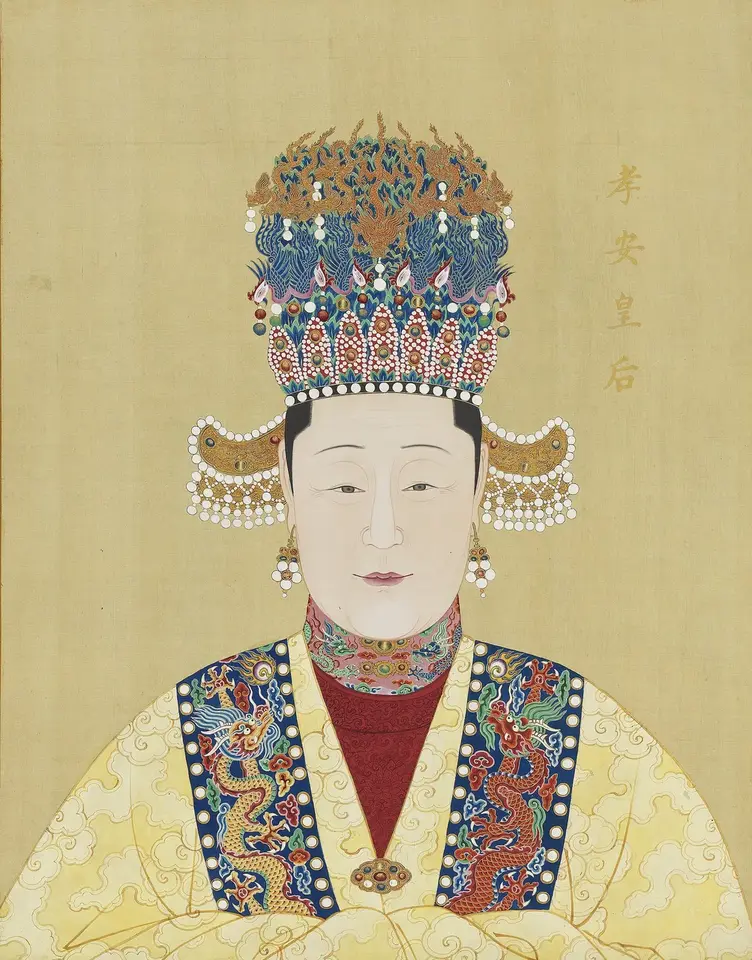
郑贵妃
Noble Consort Zheng (郑贵妃, 1565–December 6, 1630), belonging to the Zheng clan of Daxing and posthumously honored as Imperial Noble Consort Gongke Huirong Hejing and Grand Empress Dowager Xiaoning, was the favorite primary consort of the Wanli Emperor (Zhu Yijun) of the Ming dynasty. The daughter of military officer Zheng Chengxian, mother of Prince Zhu Changxun of Fu, and grandmother of Emperor Hongguang of the Southern Ming,…
Noble Consort Zheng (郑贵妃, 1565–December 6, 1630), belonging to the Zheng clan of Daxing and posthumously honored as Imperial Noble Consort Gongke Huirong Hejing and Grand Empress Dowager Xiaoning, was the favorite primary consort of the Wanli Emperor (Zhu Yijun) of the Ming dynasty. The daughter of military officer Zheng Chengxian, mother of Prince Zhu Changxun of Fu, and grandmother of Emperor Hongguang of the Southern Ming, she enjoyed the uninterrupted, exclusive devotion of the Wanli Emperor for nearly four decades, directly reshaping late Ming court politics. Entering the Forbidden City in 1582 as Concubine Shu, Lady Zheng was rapidly elevated to Imperial Noble Consort within four years. In 1586, she gave birth to the emperor's third son, Zhu Changxun. Wanli sought to set aside his eldest son Zhu Changluo to install Changxun as heir apparent, triggering the fifteen-year "Succession Dispute" (Guoben zhi zheng). Confronting the fierce opposition of civil bureaucrats committed to ancestral primogeniture, Wanli withdrew into chronic imperial absenteeism, driving factional polarization between the Donglin faction and court coalitions. Although Changluo was formally invested as Crown Prince in 1601, Lady Zheng became deeply embroiled in the sensational "Case of the Wooden Cudgel" in 1615, widely suspected of orchestrating an assassination attempt against the heir apparent. Following Wanli's death in 1620, her attempts to secure imperial empress rank ignited the "Red Pill Case" and "Palace Relocation Case." She died in seclusion in 1630 at the age of sixty-six and was interred at Mount Jin.
Born into a military officer family in Daxing, Shuntian Prefecture.
Selected into the Forbidden City during the palace draft for the youthful Wanli Emperor.
Formally invested as Concubine Shu at the Hall of Supreme Harmony, ranking second among the nine imperial consorts.
Gave birth to Princess Yunhe, receiving promotion to Consort De as imperial favor deepened.
Elevated to Noble Consort, eclipsing Empress Xiaoduan in daily imperial influence.
Gave birth to the emperor's third son, Zhu Changxun; elevated to Imperial Noble Consort amid rumors of altering succession.
Senior Grand Secretary Shen Shixing and high ministers submitted memorials urging the formal investiture of the eldest prince.
Sedition tracts circulated in Beijing accusing the Zheng family of plotting to usurp the throne.
Wanli yielded to bureaucratic and dowager pressure, investing Zhu Changluo as Crown Prince and Zhu Changxun as Prince of Fu.
Prince Zhu Changxun departed for his regional fief in Luoyang after thirteen years of delays.
Assailant Zhang Cha stormed the Crown Prince's palace wielding a club, implicating Lady Zheng's confidential eunuchs.
Wanli died, leaving a testament elevating her to Empress, which was rejected; she was expelled from the palace center.
Passed away in the Forbidden City on December 6 at age sixty-six, interred at Mount Jin outside Beijing.
Lady Zheng was born in 1565 in Daxing near the capital into a military household. Her father, Zheng Chengxian, was an officer in the Embroidered Uniform Guard. Endowed with striking physical beauty, fair complexion, and sharp conversational wit, she was also literate, familiar with historical chronicles, and gifted in music and courtly banter.
In August 1581, the nineteen-year-old Wanli Emperor, lacking an heir, ordered the recruitment of young women of honorable parentage between ages fourteen and sixteen to expand the imperial harem. The seventeen-year-old Lady Zheng passed the examinations conducted by the Ministry of Rites. In March 1582, Wanli formally invested her at the Hall of Supreme Harmony as Concubine Shu.
Unlike other court consorts who maintained formal deference, Lady Zheng displayed vibrant candor. Emperor Wanli had spent his adolescence under the oppressive supervision of Empress Dowager Li and Grand Secretary Zhang Juzheng. In contrast to the reserved Empress Xiaoduan and the timid Lady Wang, Lady Zheng engaged the emperor with humor, uninhibited debate, and affectionate teasing. Deeply captivated, Wanli developed an exclusive emotional reliance upon her. In 1583, following the birth of Princess Yunhe, she became Consort De; in 1584, she became Noble Consort; in January 1586, she gave birth to Prince Zhu Changxun, prompting Wanli to elevate her to Imperial Noble Consort, establishing an unprecedented forty-year era of exclusive imperial favor.
The elevation of Lady Zheng and the birth of Zhu Changxun precipitated one of the most prolonged constitutional crises in Chinese history. Wanli's firstborn son, Zhu Changluo, had been fathered upon a palace maid, Lady Wang, whom Wanli treated with cold disdain. By contrast, Wanli doted upon Zhu Changxun, secretly swearing an oath at the Dagaoxuan Daoist Temple pledging to make Changxun his heir apparent, sealing the pledge in a jade casket kept in Lady Zheng's private quarters.
Under the dynastic ancestral injunctions established by the Hongwu Emperor, imperial succession strictly mandated primogeniture (you di li di, wu di li chang). Terrified that the emperor intended to supplant the elder prince, Grand Secretary Shen Shixing, Minister of Revenue Wang Jiaping, and ministerial remonstrators submitted memorials urging the formal investiture of Zhu Changluo. Wanli repeatedly prevaricated, claiming the princes were too young and waiting for the Empress to bear an heir. When censors persisted, Wanli demoted, flogged, and dismissed hundreds of outspoken scholar-officials.
The bitter confrontation produced complete alienation between the sovereign and the civil bureaucracy. Wanli responded with systemic absenteeism, refusing to attend court audiences for decades. Meanwhile, officials blamed Lady Zheng, accusing her of sorcery and treason. In 1598 and 1603, the "Sorcery Book Cases" rocked the capital with anonymous pamphlets accusing Grand Secretary Shen Yiguan and Lady Zheng of scheming against the state. Confronted by widespread scholar-official defiance and the stern rebuke of his mother, Empress Dowager Li, Wanli capitulated in October 1601, investing twenty-year-old Zhu Changluo as Crown Prince and granting Zhu Changxun the title of Prince of Fu.
Although the succession was settled, Lady Zheng's palace influence remained formidable. Wanli delayed Prince Zhu Changxun's departure to his regional fief in Luoyang for thirteen years, until persistent bureaucratic protests forced the prince to leave in 1614. Separated from her beloved son, Lady Zheng harbored deep resentment against the heir apparent.
On the evening of June 30, 1615, an intruder named Zhang Cha breached the northern gates of the Forbidden City wielding a heavy jujube wood cudgel. He stormed into the Ciqing Palace, clubbed gatekeeper eunuch Li Jian, and rushed toward the inner quarters to assassinate Crown Prince Zhu Changluo before being overpowered by guards, in what became known as the "Case of the Wooden Cudgel." During interrogation, Zhang Cha feigned madness, but secret questioning by Prison Director Wang Zhicai revealed that he had been recruited and guided into the palace by Pang Bao and Liu Cheng, two senior eunuchs serving in Lady Zheng's Jingren Palace.
The revelation ignited an explosive court crisis, with ministers demanding the interrogation of Lady Zheng. Terrified of public execution, Lady Zheng knelt weeping before Wanli, protesting her innocence. Recognizing that an inquiry would implicate his favorite consort, Wanli convened an extraordinary conference in the Cining Palace with the Crown Prince and cabinet ministers. He commanded Lady Zheng to bow and apologize directly to the prince. Recognizing the political peril, Zhu Changluo magnanimously declared his belief in her innocence. Wanli executed Zhang Cha and had eunuchs Pang Bao and Liu Cheng secretly beaten to death in prison, hastily burying the case. However, the scandal permanently branded Lady Zheng as a dangerous schemer in late Ming historical memory.
In July 1620, the dying Wanli Emperor dictated a final testament to Senior Grand Secretary Fang Congzhe: "Imperial Noble Consort Zheng has served Us for over forty years with utmost devotion and filial reverence; upon Our demise, let her be elevated to Empress." Wanli sought to bestow the supreme ritual honor upon his beloved consort so that her spirit tablet would enter the imperial ancestral temple.
Upon Wanli's death on August 18, Zhu Changluo ascended the throne as the Taichang Emperor. Lady Zheng attempted to consolidate her position by presenting eight beautiful maidens to the new sovereign. However, exhausted by illness and sexual indulgence, the emperor collapsed within weeks, dying suddenly after ingesting medicinal pills presented by courtier Li Kezhuo in the celebrated "Red Pill Case." Concurrently, Lady Zheng allied with the Taichang Emperor's favorite, Consort Li (Western Li), attempting to retain physical possession of the Qianqing Palace and exercise a regency over the teenage successor Zhu Youxiao. Censor Yang Lian and supervising secretaries stormed the palace, physically escorting the young heir to safety and forcing Lady Zheng and Consort Li into the peripheral Ciqing Palace during the "Palace Relocation Case."
Under fierce attacks by the Donglin faction, the imperial decree elevating Lady Zheng to Empress was formally quashed. Stripped of all political leverage, she lived out her remaining years in the quiet isolation of the inner palace. On December 6, 1630, Lady Zheng died in the Forbidden City at the age of sixty-six. The Chongzhen Emperor granted her the posthumous title Imperial Noble Consort Gongke Huirong Hejing, interring her at Mount Jin outside Beijing. In 1644, when her grandson Zhu Yousong established the Southern Ming regime in Nanjing, he posthumously elevated her as Grand Empress Dowager Xiaoning.
Noble Consort Zheng established an extraordinary record of personal dominance in the Ming imperial inner court, retaining the undivided affection of the Wanli Emperor from 1582 until his death in 1620. Her intelligence, literary cultivation, and psychological resonance broke through the rigid ceremonial constraints of Ming court life, providing emotional shelter to an alienated sovereign. Her enduring influence elevated her male relatives to high military commands and shaped court appointments, serving as the paramount domestic influence upon the late Ming throne.
The birth of Lady Zheng's son Zhu Changxun ignited the fifteen-year "Succession Dispute" (Guoben zhi zheng), the defining political struggle of the late Ming dynasty. Wanli's refusal to pass the throne to his eldest son divided the imperial bureaucracy from the monarchy. The protracted impasse induced Wanli's decades-long administrative strike, which paralyzed central decision-making, fostered bureaucratic factionalism, and catalyzed the rise of the Donglin party, permanently eroding the governance capacity of the Ming empire.
Noble Consort Zheng was the central catalyst in the "Three Palace Cases"—the Case of the Wooden Cudgel, the Red Pill Case, and the Palace Relocation Case. These dramatic controversies exposed deep institutional corruption within the imperial household and intensified bitter feuds between palace eunuchs and scholar-officials. The obsessive focus upon these succession scandals diverted the attention of the court away from the rising Manchu threat in Manchuria and peasant rebellions in the northwest, accelerating the dynastic collapse of the Ming.
Outside the palace political vortex, Lady Zheng directed substantial private resources toward public welfare and Buddhist architecture during her peak influence. In 1594, during a catastrophic famine across North China, she donated tens of thousands of taels of silver from her personal palace stipend to establish soup kitchens for starving refugees. Furthermore, she funded the construction of the Wanfotang stone arched bridge (popularly known as the "Noble Consort Bridge") in Fangshan, an elegant, durable stone structure that survives today as an important monument of late Ming civil engineering.
FIGURES ASSOCIATED WITH THIS DYNASTY