Birth in Jiangnan
Born into a prominent literary lineage in Yin County, Ningbo, Zhejiang; tutored in classical poetry by his uncle Shen Mingchen.
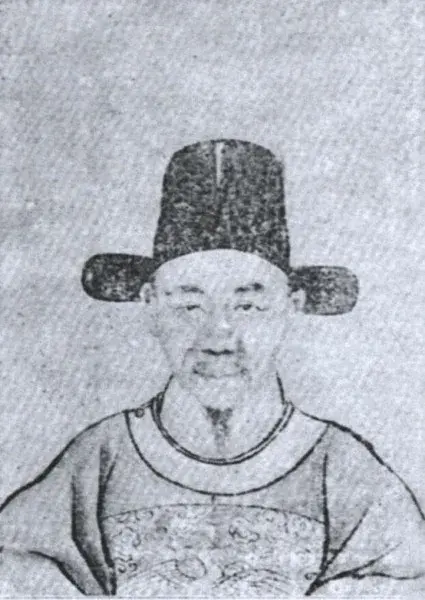
沈一贯
Shen Yiguan (沈一贯, 1531 – March 28, 1615), courtesy name Jianwu (肩吾), also styled Bu'yi (不疑) and Ziwei (子唯), art name Jiaomen (蛟门) and Longjiang (龙江), was a native of Yin County, Ningbo Prefecture in Zhejiang, and stood as one of the most influential and controversial Senior Grand Secretaries during the reign of Emperor Wanli, as well as the founding leader of the powerful "Zhe Faction" (Zhedang). Graduating in the…
Shen Yiguan (沈一贯, 1531 – March 28, 1615), courtesy name Jianwu (肩吾), also styled Bu'yi (不疑) and Ziwei (子唯), art name Jiaomen (蛟门) and Longjiang (龙江), was a native of Yin County, Ningbo Prefecture in Zhejiang, and stood as one of the most influential and controversial Senior Grand Secretaries during the reign of Emperor Wanli, as well as the founding leader of the powerful "Zhe Faction" (Zhedang). Graduating in the third class of the metropolitan examinations in 1568, Shen was selected into the Hanlin Academy as a bachelor and compiler. Early in his career, his lectures regarding filial piety were interpreted as covert criticisms of Senior Grand Secretary Zhang Juzheng's refusal to observe filial mourning, resulting in a decade of career stagnation. Following Zhang's death, Shen advanced rapidly to Junior Supervisor of the Household, instructor of Hanlin bachelors, and Vice Minister of Personnel. In 1595, on the recommendation of Senior Grand Secretary Zhao Zhigao, he was appointed Minister of Rites and Grand Secretary of the Dongge Hall. In 1601, he succeeded Zhao as Senior Grand Secretary, eventually rising to Grand Secretary of the Jianji Hall and Senior Preceptor. During his tenure, Shen secured the historic resolution of the fifteen-year "Succession Crisis" (Guoben Zhi Zheng). By persistently returning Emperor Wanli's postponement decrees unendorsed, he forced the formal investiture of the eldest prince, Zhu Changluo, as Crown Prince in 1601. However, his administration was marred by political vacillation and ruthless factionalism. In 1602, after obtaining Emperor Wanli's bedside decree abolishing the predatory mining taxes, Shen yielded to palace eunuchs and returned the decree, allowing the fiscal extortion to continue unabated. To consolidate political supremacy against the rising Donglin party, Shen organized Zhejiang bureaucrats into the "Zhe Faction," allying with regional cliques from Huguang and Shandong. During the Chu Prince Scandal, the Second Treasonous Pamphlet Case (1603), and the 1605 Metropolitan Evaluation, he weaponized the secret police to prosecute his colleague Shen Li and disciple Guo Zhengyu, causing the torture and death of the eminent Buddhist master Daguan Zhenke. Overwhelmed by censorial denunciations, he retired in 1606. Following his death in 1615 at age eighty-five, he was posthumously granted the title of Grand Preceptor and the posthumous name Wengong.
Born into a prominent literary lineage in Yin County, Ningbo, Zhejiang; tutored in classical poetry by his uncle Shen Mingchen.
Attained the presented scholar (jinshi) degree; exceptionally selected into the Hanlin Academy as bachelor and compiler.
Served as an imperial lecturer; offended Senior Grand Secretary Zhang Juzheng over filial piety doctrines, remaining sidelined for a decade.
Promoted to Junior Supervisor of the Household and instructor of Hanlin bachelors; Guo Zhengyu studied under his direction.
Appointed Minister of Rites and Grand Secretary of the Dongge Hall on the recommendation of Zhao Zhigao.
Returned the emperor's postponement edict unendorsed, forcing the formal investiture of Prince Zhu Changluo; elevated to Senior Grand Secretary.
Obtained a deathbed decree abolishing mining taxes from Wanli; surrendered the document back to eunuchs upon the monarch's recovery.
Exploited the succession pamphlet Xu Youwei Hongyi to implicate Vice Senior Grand Secretary Shen Li and Guo Zhengyu in treason.
Overrode the evaluation results of Donglin ministers to protect his partisan Qian Menggao, cementing deep factional division.
Confronted with a deluge of censorial impeachments, submitted his resignation and retired to Ningbo.
Died at his ancestral home at age eighty-five; granted the posthumous title Grand Preceptor and the posthumous name Wengong.
Shen Yiguan was born in 1531 in Yin County, Ningbo Prefecture, Zhejiang Province. His family belonged to a distinguished scholar-gentry lineage; his uncle, Shen Mingchen, was celebrated as one of the foremost unordained poets of the mid-Ming Dynasty, moving in elite literati circles alongside Li Weijing and Ou Sunbo. Studying literature under his uncle, Shen Yiguan developed an elegant prose style and profound poetic sophistication, earning the popular literati appellation "Lord of Gouzhang."
In 1568, at the age of thirty-eight, Shen sat for the imperial examinations in Beijing, qualifying as a presented scholar in the third class (ranking 136th). While candidates ranked deeply in the third class were rarely admitted to the Hanlin Academy, Shen's refined classical prose and statecraft essays persuaded imperial examiners to appoint him an academy bachelor, followed by appointment as an academy compiler. In 1574, he served as a co-examiner for the metropolitan examination and was advanced to expositor-in-waiting, serving as an imperial lecturer to the young Emperor Wanli.
In 1577, Senior Grand Secretary Zhang Juzheng suffered the bereavement of his father. Anxious to retain supreme control over state affairs, Zhang secured an imperial order for "retained service under grief" (duoqing), staying in office rather than observing three years of filial mourning. This move sparked bitter protests from young Hanlin scholars. During regular court lectures, Shen expounded upon the inviolable primacy of ancestral filial piety. Interpreting these classical discourses as veiled polemics against his conduct, Zhang took deep offense, deliberately suppressing Shen's promotions and stranding him in minor academic posts for over ten years.
Following Zhang Juzheng's death in 1582, Shen's political fortunes rebounded. In 1584, he was promoted to Junior Supervisor of the Household and academician reader, concurrently serving as senior instructor for Hanlin bachelors. Among his students was Guo Zhengyu, a brilliant scholar from Huguang who would later become his fiercest adversary. In 1594, Shen was appointed Left Vice Minister of Personnel and imperial lecturer, holding the concurrent honor of Guest of the Heir Apparent.
In 1595, Senior Grand Secretary Wang Xijue retired, leaving Zhao Zhigao to manage the cabinet alone. Desperate for administrative assistance, Emperor Wanli commanded the Ministry of Personnel to conduct an imperial conference (huitui) to select new grand secretaries. Minister of Personnel Chen Younian recommended former Senior Grand Secretary Wang Jiaping alongside Shen Yiguan. Emperor Wanli, harboring resentment toward Wang Jiaping for his unyielding defense of the Crown Prince, reprimanded Chen Younian. However, because Shen had lived in retirement and preserved a sterling reputation, and with Zhao Zhigao's enthusiastic endorsement, Wanli issued a special edict appointing Shen Minister of Rites and Grand Secretary of the Dongge Hall.
Shen proved an exceptionally astute, calculating, and forceful minister. In October 1601, following Zhao Zhigao's demise, Shen was elevated to Senior Grand Secretary, subsequently being awarded the ranks of Grand Secretary of the Jianji Hall and Senior Preceptor.
Shen's most celebrated achievement occurred during the resolution of the protracted "Succession Crisis." For fifteen years, Emperor Wanli had delayed naming his successor, desiring to bypass his eldest son, Prince Zhu Changluo, in favor of Prince Fu (Zhu Changxun), the son of his favorite concubine, Noble Consort Zheng. By 1601, the Crown Prince had reached twenty years of age, yet his marital and educational ceremonies remained unperformed. Shen submitted exhaustive petitions, invoking dynastic law and emphasizing the necessity of ancestral continuity.
Faced with overwhelming pressure, the emperor agreed to schedule the investiture ceremony. However, on the eve of the appointed date, Noble Consort Zheng wept bitterly, persuading Wanli to hesitate. The emperor issued an imperial palace decree postponing the coronation under the pretext that ceremonial regalia were incomplete. Recognizing that capitulation would destroy the Crown Prince's prospects, Shen exhibited extraordinary fortitude: he returned the imperial order unendorsed to the palace, refusing to execute the delay. Convinced that the Grand Secretariat would not yield, Emperor Wanli capitulated, officially investituring Zhu Changluo as Crown Prince on November 9, 1601, and ennobling Zhu Changxun as Prince Fu.
During Emperor Wanli's middle reign, the population suffered immensely from the rapacious predation of eunuch mining and customs commissioners. Operating under royal warrants to finance palace reconstructions, eunuchs such as Chen Zeng, Gao Huai, and Ma Tang terrorized commercial arteries, confiscating private properties and provoking widespread civil riots. Shen repeatedly petitioned for their recall, but his pleas were ignored.
On March 13, 1602, Emperor Wanli was struck by a sudden, violent gastrointestinal ailment. Believing himself near death, the frightened monarch summoned Shen and cabinet ministers to his bedside in the Qixiang Palace. Weeping profusely, the emperor delivered his deathbed instructions: "My illness is grave; I leave the Crown Prince in your care. The mining taxes were instituted out of financial desperation for palace construction. Now all works shall halt, the mining eunuchs shall be recalled immediately, prisoners pardoned, and dismissed remonstrators restored to office!"
Overjoyed by this miraculous deliverance, Shen wept in gratitude at the foot of the couch. He remained inside the cabinet that night with departmental ministers, drafting the comprehensive imperial decree of amnesty and tax abolition. By dawn, Minister of Personnel Li Dai and Censor-in-Chief Wen Chun had distributed copies of the decree to all ministries to be proclaimed throughout the empire.
However, by the afternoon of March 14, the emperor's fever broke and he made a sudden recovery. Mortified at the prospect of losing his private revenues, Wanli dispatched over twenty waves of palace eunuchs on horseback to the cabinet to demand the return of the decree. Senior Eunuch Tian Yi fiercely opposed the monarch, arguing that imperial promises could not be broken, prompting the enraged emperor to draw his sword against him. Unintimidated, Tian stood firm, but other eunuchs besieged the Grand Secretariat, weeping and banging their foreheads against the stone floor before Shen until blood flowed. Flinching before this intimidation, Shen lacked the moral fortitude to resist, surrendering the unissued decree back to the inner palace.
Within days, the emperor reneged on his promises, recalling only token levies while maintaining the mining eunuchs. Encountering Shen in the palace courtyards, Eunuch Tian Yi spat upon the ground and furiously rebuked him: "Had you held firm for just a moment longer, the scourge of the mining taxes would have been lifted from all under Heaven! Why were you so cowardly as to ruin the state!" Shen was left utterly humiliated, bearing an indelible historical blemish.
In late 1601, the virtuous and unbending scholar Shen Li was appointed Grand Secretary. Possessing a dark complexion that earned him the nickname "The Blue-Faced Bandit," Shen Li operated with uncompromising moral rigor. The cynical, manipulative Shen Yiguan viewed his colleague with intense jealousy, and bitter friction soon paralyzed the cabinet.
In 1603, the "Chu Prince Scandal" erupted. Prince Zhu Huaji of the Chu princely cadet branch submitted a memorial accusing the reigning Prince of Chu, Zhu Huaqui, of being an impostor, asserting that the prince was the smuggled infant of his maternal uncle's concubine. Having accepted immense bribes of gold and silver from the wealthy Prince of Chu, Shen Yiguan blocked the petition at the Office of Transmission and helped the prince file counter-charges of slander against Zhu Huaji. Shen Yiguan's former student, Vice Minister of Rites Guo Zhengyu (who had allied with Shen Li), insisted on dispatching imperial commissioners to Wuchang to investigate the royal bloodline. Furious at this betrayal, Shen directed his partisan censors, Qian Menggao and Yang Yingwen, to impeach Guo, forcing his dismissal.
Before Guo could depart the capital, a scandalous pamphlet titled Xu Youwei Hongyi (Continued Discourse on Anxious Perils) appeared on the streets of Beijing in late 1603. The anonymous tract alleged that Noble Consort Zheng was conspiring with corrupt ministers to depose the Crown Prince, listing cabinet ministers by name. While branding Shen Yiguan and Zhu Geng as treacherous villains, the pamphlet praised Shen Li and urged the emperor to elevate Guo Zhengyu to premier minister.
Furious at this seditious tract, Emperor Wanli placed the capital under military lockdown, ordering the secret police to uncover the authors. Convinced that the pamphlet had been manufactured by Shen Li and Guo Zhengyu to unseat him, Shen Yiguan weaponized the Directorate of Ceremonial and the Imperial Guard to orchestrate a terrifying political purge. Guo's household was besieged, Shen Li's residence was raided, and prominent figures, including the physician Shen Lingyu and the eminent Chan Buddhist master Daguan Zhenke (Zibo Zhenke), were cast into the Imperial Guard prison. Master Daguan was subjected to brutal torture, dying defiantly in prison after severing his own pulse. Only after southern grandees intervened and an itinerant examination candidate named Jiao Shengguang was tortured into confessing and executed by dismemberment did Shen Li and Guo escape death.
To secure his dominance against the Donglin literati movement centered at the Donglin Academy in Wuxi, Shen constructed a patronage network based on provincial origin and master-disciple ties. Mobilizing Zhejiang officials and allied northern bureaucrats, Shen organized the "Zhe Faction" (Zhedang). His group allied with the "Chu Faction" of Huguang and the "Qi Faction" of Shandong, forming the tripartite regional coalition (Qi-Chu-Zhe Dang) that dominated ministerial communications.
In 1605, the court convened the triennial Metropolitan Evaluation (Yisi Jingcha). Donglin stalwarts, led by Vice Minister of Personnel Yang Shiqiao and Censor-in-Chief Wen Chun, utilized the review to censure corrupt bureaucrats, recommending the demotion of Shen's chief attack dog, Supervising Secretary Qian Menggao.
Outraged, Shen disregarded ministerial conventions, submitting a personal memorial accusing Yang and Wen of factional conspiracy and withholding the evaluation dossiers inside the cabinet. When Donglin remonstrators Liu Yuanzhen, He Canran, and Pang Shiyong submitted memorials exposing Shen's corruption, Shen orchestrated a covert campaign through palace eunuchs. The enraged emperor demoted and dismissed the Donglin remonstrators, banishing them to remote frontiers. Although Qian Menggao was removed, Shen emerged completely triumphant, consolidating the Zhe Faction's hegemony over the outer court.
In early 1606, Supervising Secretary Chen Liangxun and Censor Sun Juxiang launched a renewed offensive against Shen, listing his crimes in monopolizing power, manipulating royal edicts, and persecuting colleagues. Disheartened by relentless public condemnation, Shen retreated to his residence and submitted over ten successive retirement memorials.
Emperor Wanli, appreciative of Shen's compliance, accepted his retirement with generous honors, granting him imperial valedictory edicts, pensions, and imperial escorts, while Shen Li was dismissed concurrently. In the autumn of 1606, the seventy-six-year-old statesman returned to his estate in Ningbo.
During his decade of retirement, censorial attacks against him never ceased, as the Zhe Faction and the Donglin party descended into unremitting factional warfare that ultimately undermined the dynasty. In his private retreat beside Dongqian Lake, Shen immersed himself in scholarship, composing refined poetry and drafting philosophical commentaries on the Classic of Changes and the Zhuangzi, including Yixue, Jingshi Cao, and Zhuoming Ji.
Shen passed away at his ancestral home on March 28, 1615, at the age of eighty-five. Emperor Wanli suspended court audiences in his honor, posthumously conferring upon him the supreme rank of Grand Preceptor and the posthumous name Wengong.
Shen Yiguan's most significant historical contribution lay in his decisive intervention during the culmination of the fifteen-year Succession Crisis.
In the face of Emperor Wanli's repeated hesitation under the influence of Noble Consort Zheng, Shen risked his career and life by returning the imperial postponement edict unendorsed. His unyielding stance compelled the formal investiture of Prince Zhu Changluo as Crown Prince in 1601, preserving the traditional rules of primogeniture and shielding the dynasty from succession wars.
As the founding architect and leader of the Zhe Faction, Shen Yiguan altered the trajectory of late Ming bureaucratic history.
He established an extensive political network uniting Zhejiang and northern regional officials that counterbalanced the reformist Donglin coalition. Although this factional conflict crippled late Ming governance, Shen's organizational mastery dominated imperial administration for two decades, setting the stage for subsequent bureaucratic struggles during the Tianqi and Chongzhen eras.
During the Chu Prince Scandal and the Second Treasonous Pamphlet Case, Shen demonstrated formidable political cunning.
By mobilizing the Imperial Guard to investigate his rivals, he brought the inner palace, imperial family, and scholarly elite under intense political surveillance. While his ruthless prosecution of Shen Li and the tragic martyrdom of Master Daguan severely damaged late Ming bureaucratic morality, it demonstrated his operational control over the machinery of state power.
Beyond political controversy, Shen made recognized contributions to late Ming philosophy and classical scholarship.
A gifted poet and classical scholar, his Zhuangzi Tong broke with centuries of mystical escapist commentary. Shen introduced a critical perspective to Daoist philosophy, arguing for the integration of non-action (wuwei) with purposeful statecraft (youwei), reconciling individual subjective desires with social ethical rationality, and providing late Ming thought with a modern secular philosophical perspective.
FIGURES ASSOCIATED WITH THIS DYNASTY