Birth in Youzhou
Born into a soldiering family in Youzhou; lacked formal classical literacy but possessed keen tactical insight.
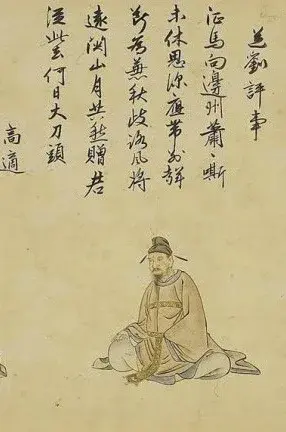
高崇文
Gao Chongwen (高崇文, 746–809), courtesy name Chongwen (崇文), a native of Youzhou with ancestral roots in Xiu County of Bohai, was an illustrious military commander and grand general during the Yuanhe Restoration under Emperor Xianzong of Tang. Emerging from the ranks of the Pinglu Army in his youth, Gao participated in campaigns against various rebel warlords and defended the imperial capital against Tibetan incursions. During…
Gao Chongwen (高崇文, 746–809), courtesy name Chongwen (崇文), a native of Youzhou with ancestral roots in Xiu County of Bohai, was an illustrious military commander and grand general during the Yuanhe Restoration under Emperor Xianzong of Tang. Emerging from the ranks of the Pinglu Army in his youth, Gao participated in campaigns against various rebel warlords and defended the imperial capital against Tibetan incursions. During the reign of Emperor Dezong, he assisted Han Quanyi in defending the strategic bastion of Changwu City. In 789, he led three thousand elite cavalry to crush thirty thousand invading Tibetan troops at Fotangyuan, winning enfeoffment as Prince of Bohai. In 798, he suppressed a violent mutiny among the Changwu garrison, earning promotion to Chief Military Commander of Changwu, where he maintained troops in continuous combat readiness. In 806 (the first year of the Yuanhe era), when Liu Pi launched a separatist rebellion in Western Sichuan and besieged Eastern Sichuan, Emperor Xianzong adopted Chancellor Du Huangshang's recommendation and appointed Gao as commander-in-chief of the expeditionary army. Gao mobilized within two hours of receiving imperial orders, enforcing uncompromising discipline that included summarily executing a soldier who broke an innkeeper's chopsticks. Advancing rapidly through treacherous mountain defiles, he achieved eight consecutive victories over eight months, storming the formidable fortifications at Lutou Mountain and Wanshengdui before capturing Chengdu and taking Liu Pi alive. Entering Chengdu, his troops camped in open thoroughfares without pillaging civilian homes, ensuring commercial life continued uninterrupted. Demurring from civil administration due to illiteracy, he voluntarily transferred to Binning to guard the frontiers, passing away in 809 at age sixty-four. He was posthumously honored as Minister of Works with the title Weiwu and granted enshrinement in Emperor Xianzong's imperial ancestral temple.
Born into a soldiering family in Youzhou; lacked formal classical literacy but possessed keen tactical insight.
Escorted Emperor Daizong during the Tibetan occupation of Chang'an, earning distinction during the capital's recovery.
Campaigned across Huaixi and the Central Plains, suppressing rebel garrisons including Zhou Zhiguang, Li Lingyao, and Liang Chongyi.
Commanded three thousand shock cavalry to crush thirty thousand Tibetan invaders at Fotangyuan, created Prince of Bohai.
Restored order when soldiers revolted over garrison transfers, executing ringleaders and becoming Chief Commander of Changwu.
Oversaw military affairs across Xia, Sui, Yin, and You prefectures, accumulating grain stores and training elite frontier troops.
Appointed commander of the Left Shence Field Army on Du Huangshang's advice; mobilized his army within two hours to invade Shu.
Relieved Zizhou, stormed Lutou Pass and Wanshengdui, and liberated Chengdu, capturing the rebel leader Liu Pi.
Relinquished the rich civil government of Sichuan to request border service; reassigned as Military Commissioner of Binning.
Died of illness at his headquarters in Binzhou at age sixty-four; posthumously granted the rank of Minister of Works and enshrined in Emperor Xianzong's ancestral temple in 846.
Gao Chongwen was born in Youzhou to an ancestral lineage originating from Xiu County in Bohai Commandery. Naturally honest, laconic, and uneducated in classical texts, he possessed an innate brilliance for military tactics, terrain reconnaissance, and the psychology of soldiers. He enlisted in the Pinglu Army during his youth, transferring to the Huaixi region where he honed his command skills during intense skirmishes.
In 763, Tibetan cavalry breached imperial defenses and occupied Chang'an, forcing Emperor Daizong to take refuge in Shanzhou. Gao hurried to the imperial encampment to join the loyalist vanguard, participating in the counteroffensive that recovered the dynastic capital. Over the subsequent decades under Emperor Daizong and Emperor Dezong, he fought against rebellious regional warlords, including Zhou Zhiguang in Tonghua, Li Lingyao in Biansong, and Liang Chongyi in Xiangyang, repeatedly leading assault detachments that pierced enemy battle lines.
During the Zhenyuan era, Gao joined the staff of Han Quanyi at the strategic fortress of Changwu City, defending the northwestern approach against repeated Tibetan incursions. He maintained austere discipline, earning promotions to General of the Chin-wu Guard and Grand Master of Palace Dignities. In the summer of 789, thirty thousand Tibetan cavalry struck Ningzhou. Operating under emergency orders, Gao led three thousand armored cavalry into the fray at Fotangyuan. Through synchronized pincer maneuvers, his force routed the invasion, killing over half the enemy combatants and driving the survivors back into the western plateaus. In recognition, Emperor Dezong created him Prince of Bohai Commandery.
In 798, Han Quanyi was reassigned as commissioner over four border prefectures, and the court ordered the Changwu division to march into the harsh desert terrain of Xiazhou. Disgruntled by the grueling redeployment in the sweltering summer, the troops mutinied, murdered General Wang Qiyan, and sent Han Quanyi fleeing over the fortress ramparts. Serving as camp disciplinary provost, Gao Chongwen rode alone into the mutinous host, executed several mutiny ringleaders on the spot, and restored calm through personal authority. Delighted by his competence, Emperor Dezong bypassed standard bureaucratic chancery procedures to dispatch a palace eunuch with an oral decree promoting Gao to Chief Military Commander of Changwu City. Over the following seven years, Gao stored extensive grain reserves and drilled five thousand shock troops, transforming Changwu into the strongest bastion of Guanzhong.
In the autumn of 805, Wei Gao, the long-serving Military Commissioner of Xichuan, passed away. His deputy, Liu Pi, seized control of the garrison, detained imperial envoys, and launched an invasion of Eastern Sichuan in early 806, trapping Commissioner Li Kang in Zizhou.
Emperor Xianzong, newly ascended the throne, was determined to curb regional autonomy. While most court ministers shrank from the perils of the rugged Sichuan mountain roads, Chancellor Du Huangshang insisted on armed intervention and recommended Gao Chongwen as supreme commander. Emperor Xianzong appointed Gao as Acting Minister of Works and Military Commissioner of the Left Shence Field Army, placing multiple expeditionary detachments under his command.
Gao's operational responsiveness surprised the entire capital. At Changwu, his five thousand troops were kept in perpetual readiness. Receiving the imperial decree at the hour of Mao (around six in the morning), his regiments were fully equipped and marching out of the fortress gates by the hour of Chen (around eight in the morning). En route through Shaanxi, Gao enforced rigorous discipline. While advancing through Xingyuan, a soldier accidentally fractured a bamboo chopstick belonging to a roadside tavernkeeper; Gao immediately had the offender beheaded before the assembled regiments. This uncompromising justice terrified potential plunderers, prompting civilians along the march to present food and supplies freely to the royal troops.
Gao advanced through the Xie Gorge, linking up with Li Yuanyi marching through the Luo Gorge. Striking rapidly from Langzhou, Gao routed Liu Pi's general Xing Ci, shattering the siege of Zizhou. When Liu Pi returned the captured Commissioner Li Kang in an attempt to deflect blame, Gao had Li Kang executed on the parade ground for failing to hold his commandery, demonstrating unbending military accountability.
Retreating toward Chengdu, Liu Pi fortified Lutou Mountain, situated one hundred and fifty li north of the provincial capital. Along the precipitous ridge, the rebels constructed eight interconnected wooden stockades defended by over ten thousand crossbowmen. Early in the sixth month, Gao arrived at the foot of the mountain amidst continuous rainstorms. The rebels established an auxiliary stronghold at Wanshengdui to subject the Tang troops to crossfire.
Gao ordered his vanguard general Gao Xiayu to storm Wanshengdui. Stripping off his armor to beat the war drum personally, Gao Xiayu inspired his shock troops to scale the cliffs under showers of boulders and arrows, capturing and burning the redoubt. With Wanshengdui secured, the Tang army gained high ground overlooking the main passes. Over the next two months, Gao crushed rebel divisions at Deyang, Hanzhou, and Xuanwu, securing eight consecutive triumphs. Emperor Xianzong placed all Sichuan expeditionary forces under Gao's unified command. Operating on the western flank, Li Guangyan severed Liu Pi's supply lines, prompting rebel commanders Chou Liangfu and Li Wenyue to surrender their positions.
With Lutou Pass dismantled, Gao's army advanced unimpeded upon Chengdu, entering the provincial capital on August 21, 806. Liu Pi fled with his family but was captured by Gao Xiayu and Li Dingjin, being sent to Chang'an for execution. Entering Chengdu, Gao ordered his soldiers to bivouac along the central public boulevards without entering civilian compounds. Markets functioned normally, and extensive commercial wealth stored in the bazaars remained untouched. Gao preserved the administrative policies established by Wei Gao, restoring peace to the region without disruptive institutional changes.
Following the pacification of Sichuan, Emperor Xianzong rewarded Gao with promotions to Acting Minister of Works, Chancellor, Military Commissioner of Jiannan Xichuan, and Prince of Nanping Commandery. However, Gao recognized that his illiteracy unfitted him for complex civil administration and tax management. Reluctant to linger in luxury, he repeatedly petitioned the throne for a frontier military posting.
Emperor Xianzong approved his request, appointing him Military Commissioner of Binning in 807 while retaining his chancellor rank. In Binzhou, Gao revitalized border fortresses, accumulated provisions, and deterred Tibetan and Tangut raids. During a winter banquet in Binzhou, the unlettered commander composed an impromptu poem titled Extemporaneous Verse at the Snowy Banquet, conveying soldierly resolve: "Managing the legions without deep design, heaven's justice grants divine support; the barbarian wind whirls snow in nocturnal flight, yet dawn will break on severed enemy heads." On November 6, 809, Gao passed away from illness at his headquarters in Binzhou at the age of sixty-four. Emperor Xianzong mourned his death, suspended court business, and bestowed the posthumous title Weiwu alongside the rank of Minister of Works. In 846, Emperor Wuzong granted Gao the supreme distinction of enshrinement in Emperor Xianzong's ancestral temple.
Gao Chongwen first proved his tactical caliber during his service at Changwu City. In 789, facing thirty thousand Tibetan horsemen in Ningzhou, he deployed three thousand armored cavalry to achieve an overwhelming tactical victory at Fotangyuan, halting Tibetan eastward advances.
In 798, when garrison troops mutinied over transfers to the desert of Xiazhou, Gao rode unattended into the mutinous camp, summarily executed the ringleaders, and restored calm, saving the frontier defense network through iron resolve.
The pacification of Western Sichuan in 806 was the foundational campaign of the Yuanhe Restoration. Confronting Liu Pi's heavily fortified positions along the treacherous approaches to Sichuan, Gao exhibited remarkable command discipline and speed, marching his army within two hours of receiving imperial orders.
By storming Wanshengdui and the fortifications at Lutou Mountain, he won eight major battles in succession, eliminating the rebellion and capturing the rebel leadership, which marked the first successful imperial restoration of central authority over a major regional command in decades.
In contrast to conventional dynastic campaigns where conquerors looted defeated territories, Gao enforced absolute restraint upon occupying Chengdu. He prohibited soldiers from quartering in private houses, ordering them to camp in open thoroughfares.
Markets continued trading without interruption, and the administrative stability cultivated by Wei Gao was preserved intact, winning the lasting affection of the Sichuan populace and establishing a benchmark of disciplined soldiering.
Gao demonstrated rare integrity by refusing to exploit his military triumphs for political enrichment. Recognizing his lack of administrative literacy, he relinquished the lucrative governorship of Western Sichuan to return to the rugged frontiers of Binning.
His devotion to border defense and military preparedness during his final years cemented his reputation as an unselfish servant of the dynasty, leading to his enshrinement in Emperor Xianzong's ancestral temple.
FIGURES ASSOCIATED WITH THIS DYNASTY