Birth in Gaoyang
Born into a scholarly family in Gaoyang, Hebei; demonstrated exceptional memory and studied classical military treatises.
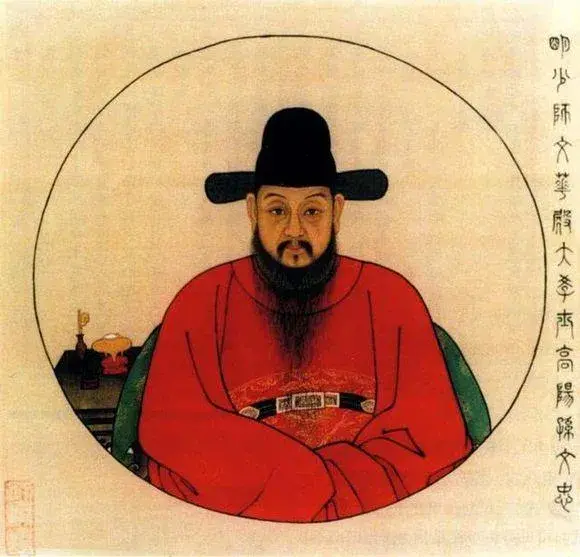
孙承宗
Sun Chengzong (1563–1638), courtesy name Zhisheng and art name Kaiyang, was a native of Gaoyang County, Baoding Prefecture, Northern Zhili (modern Gaoyang County, Hebei Province). He was an outstanding military strategist, supreme commander, Grand Secretary, and imperial tutor during the late Ming dynasty. In his youth, Sun taught in northern border regions such as Datong and Xuanfu, conducting on-site surveys of frontier…
Sun Chengzong (1563–1638), courtesy name Zhisheng and art name Kaiyang, was a native of Gaoyang County, Baoding Prefecture, Northern Zhili (modern Gaoyang County, Hebei Province). He was an outstanding military strategist, supreme commander, Grand Secretary, and imperial tutor during the late Ming dynasty. In his youth, Sun taught in northern border regions such as Datong and Xuanfu, conducting on-site surveys of frontier strategic passes, befriending military veterans, and acquiring deep knowledge of steppe warfare and geographic logistics. Passing the imperial examinations as a Jinshi in 1604, he entered the Hanlin Academy. In 1621, he served as Daily Lecturer to the young Tianqi Emperor, earning profound imperial trust and rising rapidly to Minister of War and Grand Secretary of the Eastern Hall. Following the disastrous Ming collapse at Guangning in 1622, Sun Chengzong stepped forward and requested appointment as Supreme Commander of Liaodong. Stationed at Shanhaiguan, he rejected defeatist proposals to retreat behind the Great Wall. Over four years of energetic governance, he established the four-hundred-li Guanning-Jinzhou Defense Line, building eleven fortified cities including Ningyuan and Jinzhou, reclaiming vast tracts of farmland, training an army of 110,000 elite troops, and pioneering combined cart-and-artillery formations. He discovered, promoted, and trusted legendary generals such as Yuan Chonghuan, Zu Dashou, Man Gui, and Zhao Shuaijiao, effectively halting the western expansion of Nurhaci's Later Jin armies. Forced to retire in 1625 by the eunuch faction of Wei Zhongxian, he returned home in honor. When the Jisi Incident erupted in the winter of 1629 and Hong Taiji's forces breached the Great Wall to threaten Beijing, the Chongzhen Emperor urgently recalled Sun Chengzong to lead the imperial defense. He stabilized the capital by fortifying Tongzhou and personally rode to Shanhaiguan to calm the mutinous Liaodong troops under Zu Dashou after Yuan Chonghuan was imprisoned. In 1630, Sun directed a major counteroffensive, recapturing Zunhua, Qian'an, Luanzhou, and Yongping, completely purging the invaders from the capital region. Following the subsequent fall of Dalinghe, he resigned again. In the winter of 1638, Qing armies invaded the northern plain and besieged Gaoyang. At the age of seventy-six, Sun led the townspeople and his entire family in desperate resistance. When the city fell, he hanged himself rather than surrender, with more than forty family members perishing in martyrdom.
Born into a scholarly family in Gaoyang, Hebei; demonstrated exceptional memory and studied classical military treatises.
Traveled to Datong and Xuanfu to teach in generals' households, inspecting border passes and studying frontier defenses.
Placed second in the second class of the palace examination; appointed Junior Compiler in the Hanlin Academy.
Promoted to Senior Expositor and tutor to Crown Prince Zhu Youxiao, forging a close bond with the future emperor.
Appointed Daily Lecturer upon Tianqi's accession, lecturing on frontier defense strategy and warning of Liaodong dangers.
Volunteered to command the frontier after the Guangning defeat; appointed Minister of War and Grand Secretary.
Stationed at Shanhaiguan, dispatched Yuan Chonghuan to build Ningyuan, advancing the frontier four hundred li.
Following a skirmish at Liuhe, eunuch dictator Wei Zhongxian orchestrated slanders against him, forcing his retirement.
Hong Taiji's forces bypassed defenses to besiege Beijing; Chongzhen recalled Sun to direct defense from Tongzhou.
Pacified mutinous Liaodong troops and organized the victorious counteroffensive that recaptured Zunhua, Qian'an, Luanzhou, and Yongping.
Besieged by Later Jin, Dalinghe fell after stubborn resistance; Sun accepted responsibility and retired to Gaoyang.
Led townspeople in defending Gaoyang against invading Qing forces; committed suicide upon city's breach, with forty kin dying.
Sun Chengzong was born on January 31, 1563, in Gaoyang County, Baoding Prefecture, Northern Zhili. His family was locally renowned for generations of agrarian and scholarly pursuits. From an early age, Sun possessed a dignified bearing, exceptional memory, and a passion for military texts, reading works by Sun Tzu, Wu Qi, and Zhuge Liang alongside the Confucian classics. During his early twenties and thirties, he repeatedly sat for the provincial examinations but initially failed to obtain degrees due to rigid stylistic constraints imposed by examiners.
Refusing to despair within his study, Sun ventured westward into the northern frontier regions of Xuanfu and Datong during the middle Wanli era. He served as a tutor and confidential advisor in the private residences of frontier governors and commanders, including Grand Secretary Wang Xijue and Grand Tutor Shen Li. Over several years, Sun utilized his free time to ride along frontier bastions and mountain passes.
He surveyed strategic checkpoints from Shanhaiguan and Xifengkou in the east to Juyongguan, Yanmenguan, and Pianguan in the west, recording terrain and drawing detailed topographical charts. Sun interacted warmly with frontier junior officers, scouts, and garrison soldiers, drinking by the hearth and discussing supply corruption, cavalry tactical weaknesses, and the coordination of defensive heavy artillery. This extensive field experience freed him from scholarly dogmatism and transformed him into a seasoned strategist deeply familiar with northern defense realities.
In 1597, at thirty-five, Sun passed the Shuntian provincial examination as a Juren. In 1604, at forty-two, he passed the metropolitan and palace examinations, achieving fifth place nationally (second in the second class) and becoming a Bachelor of the Hanlin Academy. After completing three years of specialized study, he was formally appointed Senior Compiler. Over the next decade, Sun examined imperial archives and frontier administrative documents, composing analytical commentaries on Ming relations with Jurchen and Mongol tribes.
In August 1620, following the accession of the Taichang Emperor, Sun was appointed Expositor in the Left Spring Office and Director of the Department of Classics, serving as a tutor to the Eastern Palace. At the time, the imperial eldest son Zhu Youxiao (later the Tianqi Emperor) was unaccustomed to formal book learning and preferred carpentry. Courtiers frequently viewed him as unteachable. Sun approached the prince with patient guidance and warmth.
During their lectures, Sun avoided rigid grammatical dissections, instead recounting the hardships of the dynastic founders and illustrating the sacrifices of border soldiers defending the empire. Prince Zhu Youxiao listened attentively and formed deep affection and reverence for his bearded, dignified tutor.
When the Taichang Emperor died abruptly in 1621, the sixteen-year-old Tianqi Emperor ascended the throne. He immediately promoted Sun to Left Transmission Commissioner and appointed him Daily Lecturer in the Wenhua Hall. At that moment, the Liaodong frontier experienced severe collapse. Later Jin chieftain Nurhaci captured Shenyang and Liaoyang, causing the suicide of Commander Yuan Yingtai and the loss of dozens of fortresses east of the Liao River. Refugees flooded inward, and panic seized Beijing.
During daily imperial lectures, while civil officials panicked, Sun calmly presented clear strategies. He argued that the loss of Liaodong stemmed from poor leadership and factional bickering rather than weak troop strength. He emphasized that retreating behind Shanhaiguan would place the capital in imminent peril, insisting that defending the pass required holding the territory outside it. The emperor praised his courage and promoted him to Right Vice Minister of Rites.
In early 1622, the Ming position in Liaodong deteriorated further. Friction between Commander Wang Huazhen and Governor Xiong Tingbi culminated in the crushing defeat at Guangning. Wang Huazhen fled alone, and Ming forces abandoned all fortified towns in western Liaoxi, allowing Later Jin raiding parties to approach within forty li of Shanhaiguan.
As Minister of War Zhang Heming resigned in panic, the Tianqi Emperor appointed Sun Chengzong Minister of War and Grand Secretary of the Eastern Hall to manage the imperial military crisis. Wang Zaijin was appointed Commander of Liaodong. Upon arriving at Shanhaiguan, Wang was terrified by the chaos and proposed abandoning all exterior territory and constructing a redundant defensive wall at Balipu, eight li outside Shanhaiguan.
Cabinet ministers largely acquiesced, but Sun furiously objected at court, declaring that building a wall eight li from Shanhaiguan would invite enemies to the very threshold of the empire, creating gridlock and disaster if retreating troops were trapped outside. To resolve the impasse, the sixty-year-old Sun requested permission to inspect the frontier in person. The emperor granted him the Imperial Sword and full operational authority.
Arriving at Shanhaiguan in August 1622, Sun ascended the ramparts in heavy rain to examine Balipu and the surrounding terrain. He confronted Wang Zaijin with practical operational dilemmas, asking whether gates would remain open or shut during sudden enemy incursions. Wang had no answer. During this inspection, Ningyuan defense commander Yuan Chonghuan presented himself, boldly advocating an offensive-defensive stance at Ningyuan. Recognizing Yuan's exceptional talent, Sun impeached Wang Zaijin and offered to command the frontier himself: "Your servant is willing to serve as Grand Secretary in Liaodong and bury his old bones outside the pass to fortify defenses." The emperor tearfully consented, elevating Sun to Grand Guardian of the Heir Apparent.
In September 1622, Sun established his headquarters at Shanhaiguan. He encountered complete disarray: hundreds of thousands of refugees clogging roads, deserted soldiers plundering towns, and exhausted supply depots. Sun immediately enforced military discipline by executing officers who embezzled payroll or deserted. He created an agrarian colonization bureau, distributing vacant plots, draught cattle, and farming tools to hundreds of thousands of refugees, stabilizing social order outside the pass.
Sun formulated the strategic principle of "advancing through fortification, establishing firm footholds, and conducting defense as preparation for offense." Recognizing that Later Jin cavalry excelled in open plains but struggled against fortified positions with heavy firepower, he designated Ningyuan as the forward hub and Jinzhou as the outer shield. He promoted Yuan Chonghuan to oversee the fortification of Ningyuan.
Sun allocated over five hundred thousand taels of silver and recruited skilled craftsmen to fortify Ningyuan. The city walls were raised to thirty-two feet in height and thirty feet in thickness, surrounded by deep moats. Far-sightedly, Sun positioned twelve European cannon purchased through Jesuit contacts on the bastions of Ningyuan, turning it into the first fortress in East Asia equipped with modern heavy Western artillery.
Following Ningyuan's completion, Sun pushed the defense perimeter further northeast. He dispatched Man Gui to Qiantun, Zhao Shuaijiao to Jinzhou, and Zu Dashou to Zhongqiansuo. Within two years, Sun mobilized over one hundred thousand soldiers and laborers to construct or expand eleven major fortified cities—including Dalinghe, Xiaolinghe, Jinzhou, Songshan, Xingshan, Lianshan, Tashan, Ningyuan, and Qiantun—and hundreds of beacon towers. This Guanning-Jinzhou Defense Line moved the border forward by four hundred li, recovering thousands of square li of lost territory and holding Later Jin forces east of the Liao River.
To ensure sustainable operations, Sun emphasized maritime supply depots and logistical redundancy. Recognizing that rough overland roads were vulnerable to winter snows and cavalry ambushes, he designated Juehua Island off Ningyuan as the central maritime granary. He established dozens of large storehouses on the island, transferring over one million piculs of grain shipped from Dengzhou, Laizhou, and Tianjin, establishing an unshakeable supply line. He also set up beacon stations every thirty li manned by mounted scouts, creating instantaneous warning across the entire four-hundred-li perimeter.
Sun Chengzong recognized that traditional Ming infantry suffered from severe panic when facing armored Jurchen cavalry in open terrain. Drawing from his early observations in Datong and Xuanfu, he initiated sweeping organizational and tactical reforms across the Liaodong garrison.
He engineered a specialized combat formation centered on defensive battle carts. Sun designed thousands of light and heavy two-wheeled carts equipped with wooden mantlets, breech-loading swivel guns, great-general cannons, and matchlock muskets. On the march, these carts carried gunpowder and provisions; upon encountering enemy cavalry, they rapidly circled to form rectangular or square fortresses linked with chains and iron caltrops. When cavalry attacked, artillery and matchlocks maintained rolling volleys from safe range, followed by spearmen and archers at close quarters. Once enemy formations broke, the carts parted to unleash elite cavalry from the wings in devastating pursuit.
To maximize operational synergy, Sun established four specialized arms: infantry, cavalry, cart divisions, and artillery battalions. He conducted rigorous drill assessments, teaching three-point sight alignment to gunners and galloping archery to horsemen. Through three years of relentless training, he forged an army of 70,000 elite infantry, 40,000 disciplined cavalry, and thousands of combat carts—the famous Guanning Iron Cavalry. Nurhaci realized that Sun's defenses were impregnable and avoided venturing west of the Daling River for several years.
Simultaneously, Sun implemented transparent accounting systems to end payroll corruption. All soldiers received full monthly pay directly from designated officials. During freezing winters, Sun inspected forward encampments in Ningyuan and Qiantun, testing soldiers' winter clothing and even draping his own fur cloak over shivering sentries. His troops revered him deeply, creating unprecedented morale and cohesion along the border.
Looking across the entire northeastern theater, Sun envisioned a combined land-and-sea encirclement involving Liaodong, Dengzhou, and Korea. General Mao Wenlong had crossed the sea with a band of survivors to establish a guerrilla base on Pi Island (Dongjiang) at the mouth of the Yalu River, harassing the rear of Later Jin. While court bureaucrats suspected Mao of insubordination, Sun recognized that Dongjiang was vital for pinning down Jurchen forces.
Sun submitted memorials praising Mao's daring raids and securing imperial backing for him. Under Sun's patronage, the court formally recognized Dongjiang as a frontier command, appointing Mao Left Chief Commissioner and General of Liaodong. Sun established supply routes from Dengzhou and Laizhou, delivering hundreds of thousands of piculs of grain annually. Mao responded with loyal cooperation, conducting frequent amphibious incursions that prevented Nurhaci from concentrating his full army against Shanhaiguan.
In western Liaoxi, Sun prioritized local reconstruction under the motto that border defense depended on border settlement. He established resettlement camps between Shanhaiguan and Ningyuan, implementing military farming. Displaced peasants received abandoned lands, oxen, and seeds, with taxes waived for three years. Within three years, barren plains produced hundreds of thousands of piculs of grain, reducing the burden of shipping rations from the interior. Grateful civilians erected living shrines in Ningyuan and Qiantun to honor him as the father of Liaodong.
Sun also handled neighboring ethnic diplomacy with exceptional skill. The northern perimeter of western Liaoxi was flanked by the Chahar and Kharachin Mongol tribes, whom Later Jin continually courted. Sun implemented a policy of pacifying the Mongols to contain the Jurchens, ensuring the prompt delivery of annual border subsidies, opening regulated tea-horse markets at Shanhaiguan, and strictly forbidding Ming patrols from harming peaceful nomads. Responding to his integrity, Mongol chieftains served as a northern buffer against Later Jin westward maneuvers.
In the summer of 1625, in recognition of his achievements in fortifying the frontier and recovering four hundred li, the Tianqi Emperor granted Sun the title of Junior Guardian and Grand Secretary of the Hall of Central Ultimate. However, as Sun planned further advances toward Shenyang, court politics in Beijing deteriorated violently. Chief Eunuch Wei Zhongxian usurped power, styling himself Nine-Thousand-Years and brutally executing righteous officials of the Donglin faction.
Sun had long detested eunuch meddling and submitted numerous petitions warning against palace abuses. Wei Zhongxian came to regard the prestigious imperial tutor commanding 110,000 soldiers as his greatest obstacle. In November 1624, Sun intended to lead an armed escort to Beijing under the pretext of congratulating the emperor on his birthday, intending to denounce Wei's crimes in person. Wei wept before the emperor, alleging that Sun was plotting a military coup, and forged imperial edicts ordering Sun to halt at Shanhaiguan. Unwilling to plunge the realm into civil war, Sun returned to his post.
In autumn 1625, Later Jin deserter Shen Fu urged General Ma Shilong to launch an amphibious raid across the Liu River to capture enemy supply depots. Ma acted hastily without adequate reconnaissance, sending Vice General Lu Zhifan across the river by night. The force was ambushed by Later Jin reserves, and Lu was killed with several hundred casualties. Seizing on this minor tactical failure, Wei Zhongxian directed his partisans to accuse Sun of squandering millions in military funds and nurturing enemies to preserve his command.
Aware that armed defiance would bring destruction upon the Liaodong army and civilians, the sixty-three-year-old Sun submitted seven successive resignation memorials requesting retirement. The emperor, constrained by Wei's faction, accepted his resignation in October 1625 with gifts of ceremonial robes, allowing him to return to Gaoyang. Following his departure, his protégé Yuan Chonghuan assumed frontier leadership, utilizing Sun's fortified defenses and Western cannons to win the historic Battle of Ningyuan in 1626, in which Nurhaci was fatally wounded.
In 1628, the Chongzhen Emperor ascended the throne and eliminated the eunuch faction. Although Sun's titles were restored, Chongzhen favored Yuan Chonghuan's ambitious promise to pacify Liaodong in five years, leaving Sun to live in quiet retirement in Gaoyang.
In October 1629, realizing that the Guanning Line was too strong to breach directly, Hong Taiji led one hundred thousand elite troops through Mongol territories, breaching the Great Wall at Longkou and Xifengkou. They captured Zunhua and approached Beijing, initiating the panic of the Jisi Incident.
In mortal peril, Chongzhen dispatched imperial couriers through heavy snow to summon Sun Chengzong. The sixty-seven-year-old statesman rode immediately toward the capital. On November 14, Chongzhen received him at the Platform, weeping as he took Sun's hands. He appointed Sun Minister of War and Grand Secretary of the Hall of Central Ultimate, placing all imperial forces under his command. Sun calmly advised fortifying Beijing while personally moving to Tongzhou to secure the Grand Canal grain supply and block enemy retreats.
At Tongzhou, Sun rallied 20,000 scattered soldiers and lined the canal with heavy cannons, thwarting Hong Taiji's attempts to capture the grain fleet. However, in December, Chongzhen fell victim to Hong Taiji's counter-espionage ruse and abruptly imprisoned Yuan Chonghuan. Terrified that the court intended to purge them, General Zu Dashou and twenty thousand Liaodong cavalry broke through Shanhaiguan and fled toward Jinzhou, threatening open rebellion.
Panic gripped Beijing. Chongzhen pleaded with Sun to avert catastrophe. Despite his advanced age, Sun rode through winter blizzards to Shanhaiguan with a small escort. He sent an earnest personal letter to Zu Dashou in Jinzhou, appealing to righteousness: "The Supreme Commander's imprisonment will be judged by the court. If you abandon the frontier, who will vindicate his innocence? I stand here as Grand Secretary, pledging my old life for your safety!" Moved to tears by Sun's honor and past benevolence, Zu and his officers returned to Shanhaiguan, submitting entirely to Sun's authority and vowing to redeem themselves in battle.
With the Liaodong cavalry under his command, Sun launched a coordinated counteroffensive in the spring of 1630. Hong Taiji had left Prince Amin and several thousand troops to garrison four cities inside the Great Wall—Luanzhou, Yongping, Qian'an, and Zunhua—while withdrawing his main army. Sun recognized that the moment for decisive retaliation had arrived.
Sun deployed the relief forces, directing Zu Dashou as vanguard alongside Ma Shilong and Zhang Keda. In May, Ming forces attacked Luanzhou under covering fire from heavy cannon. Zu Dashou's troops stormed the walls, killing over one thousand defenders and capturing the enemy commander Baige. Panic-stricken in nearby Yongping, Amin slaughtered over ten thousand captive civilians, plundered the treasury, and fled beyond the Great Wall. Sun pursued vigorously, liberating Qian'an and Zunhua.
The recovery of the four cities marked the largest successful counteroffensive against Later Jin since the Battle of Sarhu in 1619, crushing Hong Taiji's plan to hold bases within the passes. Chongzhen personally welcomed Sun outside the palace gates, granting him the titles of Grand Tutor, Junior Preceptor, and Left Pillar of State, raising his prestige to its historical zenith.
During these operations, Sun demonstrated tactical restraint and administrative humanity. At Luanzhou and Yongping, he forbade retaliatory violence against civilians, distributing rations to captured Mongol auxiliaries and sending displaced commoners home. Entering Yongping amid smoking ruins, Sun established public relief kitchens for tens of thousands of starving refugees, quickly restoring civil order to the war-torn capital province.
Recognizing that the open plain between Jinzhou and the Liao River remained vulnerable to sudden incursions, Sun petitioned in spring 1631 to rebuild the abandoned fortress of Dalinghe as a forward bastion to protect Jinzhou. He assigned Zu Dashou with fourteen thousand veterans and tens of thousands of artisans to complete the work.
However, Dalinghe lacked natural barriers. In August 1631, before the walls were finished, Hong Taiji descended with one hundred thousand cavalry and heavy cannons. Surrounding the city with triple trenches and palisades, Later Jin isolated Dalinghe completely. Sun attempted to organize relief armies from Jinzhou under Wu Xiang and Song Wei, but the relief force was routed at Changshan.
Dalinghe was besieged for over three months until supplies were exhausted and horses were eaten. Trapped soldiers consumed bark, leather, and eventually the dead. On October 28, 1631, having exhausted all hope, Zu Dashou surrendered under the pretext of returning to Jinzhou as an inside agent.
The loss of Dalinghe provoked severe outcry from court censors, who blamed Sun for reckless advancement and logistical failure. Sun had repeatedly warned that relieving Dalinghe required coordinated flank operations from other frontier commands, which the Ministry of War had delayed. Heartbroken by partisan accusations and Chongzhen's suspicious nature, the sixty-nine-year-old Sun submitted his resignation. In November 1631, Chongzhen accepted, and Sun retired permanently to Gaoyang, spending his final years writing and teaching.
In the winter of 1638, Qing armies launched a massive multi-pronged raid into Northern Zhili. Led by Dorgon through Qingshankou and Yoto through Qiangziling, hundreds of thousands of cavalry swept across the North China plain, capturing dozens of counties and surrounding Gaoyang.
Gaoyang was a small town with low earthen ramparts barely ten feet high, dry moats, no regular garrison, and sparse food reserves. Facing imminent disaster, the seventy-six-year-old Sun Chengzong gathered the townspeople and his clan: "Having received profound imperial favor across three reigns, I would feel deep shame dying anywhere other than the battlefield. If the city stands, we live; if it falls, we die!" He opened his personal granary to feed the citizens, donated all family wealth to enlist defenders, and posted his kin along the ramparts. His five sons, six grandsons, two nephews, and dozens of household retainers took up arms.
On December 10, Qing forces surrounded the town and launched fierce assaults. Leaning on a cane, Sun personally directed the defense from the western gate tower, repelling multiple assaults with burning bricks and stones over three days. Qing forces brought up heavy cannons to batter the frail earthen walls, collapsing a wide breach on December 13.
As enemy troops poured through the breach, Sun's sons and grandsons engaged in fierce hand-to-hand street fighting. His second son Sun Yue cut his own throat after running out of strength; sons Sun Quan and Sun Duo and grandsons Sun Zhihuan and Sun Zhihan fell in battle; female family members threw themselves into wells or hanged themselves. Qing troops surrounded the hall where the elderly statesman sat. Recognizing the former supreme commander, Qing officers offered him titles and riches if he surrendered.
Sun stood upright, bowed toward the imperial palace in Beijing, and furiously denounced the invaders. Intimidated by his righteousness, no soldier dared lay a blade upon him. Having finished his denunciation, Sun sighed: "I am old. Having received such favors from the state, today I find my proper death!" He withdrew his white silk official sash and hanged himself from the rafters. Over forty of his children, grandchildren, and immediate kin died alongside him on that day.
News of the martyrdom moved the empire to profound grief. The Southern Ming Hongguang Emperor posthumously bestowed the title of Grand Preceptor and the posthumous name Wenzhong (Civil and Loyal). In 1776, the Qing Qianlong Emperor, honoring Sun's unyielding loyalty and sacrifice, conferred the posthumous name Zhongding (Loyal and Settled) and restored his tomb and ancestral shrine in Gaoyang. Sun Chengzong's strategic genius in fortifying the frontier and his ultimate sacrifice remain celebrated in Chinese history.
FIGURES ASSOCIATED WITH THIS DYNASTY