Born in Kunshan
Born into a scholarly commoner family in Xuanhua Li, Kunshan County; displayed extraordinary precocity in early childhood.
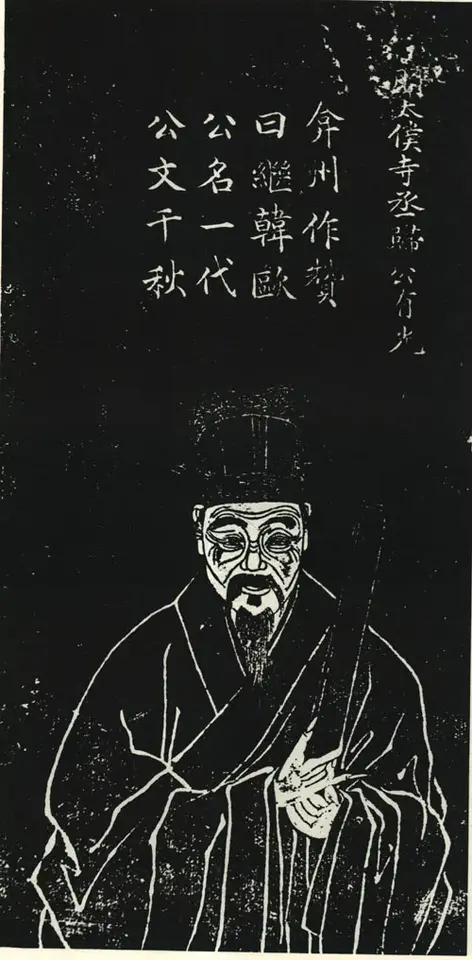
归有光
Gui Youguang (归有光, 1507–1571), courtesy name Xifu (熙甫) and literary name Zhenchuan (震川) (also styled Xiangjisheng), was a native of Xuanhua Li in Kunshan County, Suzhou Prefecture (modern Kunshan, Jiangsu Province). He was one of the foremost prose essayists, literary theorists, and upright officials of the mid-Ming Dynasty, revered by subsequent generations as "Master Zhenchuan" and celebrated as the "Ouyang Xiu of the…
Gui Youguang (归有光, 1507–1571), courtesy name Xifu (熙甫) and literary name Zhenchuan (震川) (also styled Xiangjisheng), was a native of Xuanhua Li in Kunshan County, Suzhou Prefecture (modern Kunshan, Jiangsu Province). He was one of the foremost prose essayists, literary theorists, and upright officials of the mid-Ming Dynasty, revered by subsequent generations as "Master Zhenchuan" and celebrated as the "Ouyang Xiu of the Ming." Born into a modest scholarly family and losing his mother at age eight, Gui Youguang exhibited precocious academic talent, composing full-length classical treatises by his tenth year. In 1540 (the 19th year of the Jiajing era), he attained second place in the Yingtian provincial examination. However, over the subsequent twenty-five years, he suffered failure in the metropolitan examinations eight consecutive times. Resettling beside the Anting River in Jiading, he established an academy where he lectured for more than two decades, drawing hundreds of disciples from across the empire. In 1565 (the 44th year of the Jiajing era), the nearly sixty-year-old scholar finally passed the metropolitan examinations to become a metropolitan graduate (jinshi), receiving appointment as Magistrate of Changxing in Zhejiang. In office, he reformed schools, exonerated wrongful convictions, audited fraudulent tax registers, and curbed predatory local elites; his unyielding integrity antagonized corrupt superiors, leading to his administrative demotion as Vice Prefect of Shunde. In 1570, through the recommendation of Grand Secretaries Gao Gong and Zhao Zhenji, he was elevated to Assistant Minister of the Court of the Imperial Stud in Nanjing and retained in Beijing to manage the Grand Secretariat's Patent Office, directing the compilation of the Veritable Records of Emperor Shizong. In literature, confronting the rigid archaism championed by the Earlier and Later Seven Masters who mandated imitating Qin-Han prose, Gui Youguang led the "Tang-Song Prose School," fiercely denouncing literary boss Wang Shizhen for mechanical plagiarism and asserting that true literature must articulate authentic emotional sincerity in the tradition of Han Yu and Ouyang Xiu. His unadorned prose transformed everyday domestic memories into sublime art; masterpieces like Record of the Xiangji Pavilion (Xiangjixuan Zhi) and Brief Biography of My Deceased Mother (Xianbi Shilue) became immortal classics. Even Wang Shizhen bowed in deep admiration during his later years, praising Gui as the true successor to Han Yu and Ouyang Xiu across a thousand years. He passed away in Beijing in 1571 at the age of sixty-six.
Born into a scholarly commoner family in Xuanhua Li, Kunshan County; displayed extraordinary precocity in early childhood.
His mother, Lady Zhou, died at age twenty-nine; the eight-year-old child's grief became the profound emotional wellspring of his lifelong literary creation.
Achieved second place in the Yingtian provincial examination, earning sweeping literary acclaim across Jiangnan.
Following his first metropolitan examination failure, relocated to Anting in Jiading to lecture for over twenty years, honored as Master Zhenchuan.
Supported local defense against destructive coastal pirate raids, drafting tactical defense plans and organizing town ramparts.
Surveyed the silted lake systems of the Lake Tai basin on a skiff, publishing Records of Water Conservancy in the Three Wu Regions to propose dredging the Wusong River.
Succeeded in the metropolitan examinations at nearly sixty years of age after eight failures; appointed Magistrate of Changxing County in Huzhou.
Eradicated corrupt levies, cleared long-standing courtroom injustices, and educated commoners; demoted by hostile prefectural superiors.
Reassigned as Vice Prefect of Shunde in North Zhili; managed horse pasturage and public stores with scrupulous fairness.
Recommended by Grand Secretary Gao Gong to become Assistant Minister of the Court of the Imperial Stud, retained in the Grand Secretariat to compile the Veritable Records of Emperor Shizong.
Passed away from exhaustion and illness in Beijing at age sixty-six; posthumously conferred the private title Master Wenzhen by his students.
Gui Youguang descended from an aristocratic Kunshan lineage that had produced prominent bureaucrats during the Song and Yuan dynasties, but by the mid-Ming Dynasty, the clan had declined into impoverished farming and teaching. His father, Gui Zheng, lived a quiet life detached from commercial pursuits; his mother, Lady Zhou, managed the household through arduous sericulture and spinning. When Gui Youguang was eight years old, his twenty-nine-year-old mother passed away from illness. The young boy stood weeping beside her coffin, an experience of irreversible loss that left an indelible mark upon his consciousness and inspired his timeless masterpieces Brief Biography of My Deceased Mother and Record of the Xiangji Pavilion.
By nine, Gui Youguang composed complete classical compositions, and at ten, he wrote extended philosophical treatises, earning acclaim as a child prodigy. In his late teens, he placed first in the prefectural qualifying examinations. However, his subsequent examination path proved exceptionally tortuous. Repeatedly failing the provincial examinations throughout his twenties, it was not until 1540, at the age of thirty-four, that he secured second place in the prestigious Yingtian provincial examination. The following spring, filled with high hopes, he traveled to Beijing for the metropolitan examinations, only to find his name omitted from the pass list. Over the next twenty-four years, he undertook the arduous northern journey to sit for the metropolitan examinations eight times, failing on every occasion. These repeated setbacks deepened his philosophical understanding of human fragility and bureaucratic vanity.
In 1542, seeking escape from the noise of Kunshan, Gui Youguang moved his family to the banks of the Anting River in Jiading County. Nestled along the lower reaches of the Wusong River, Anting offered a serene rural environment. Gui Youguang erected a simple studio and opened an academy, teaching there for more than two decades. He expounded the Confucian Six Classics alongside pre-Qin masters, emphasizing moral self-cultivation and practical statecraft rather than empty scholastic debate. Students flocked to his lectures from across Jiangnan, often numbering several hundred at a time, including future Grand Secretaries Wang Xijue and Shen Shixing. Scholars across the realm respectfully referred to him as "Master Zhenchuan."
During the 1550s, southeastern China was ravaged by catastrophic pirate incursions (wokou). Pirate fleets landed on the coast, burning towns and besieging the walled centers of Suzhou, Songjiang, and Jiading. In 1554, when pirate bands threatened Anting, Gui Youguang refused to flee. Entering the walled defenses, he assisted local magistrates in mobilizing town militia, drawing tactical military maps, and authoring strategic defense memorials. He mounted the ramparts alongside common soldiers during night patrols, encouraging unwavering steadfastness. When the immediate military threat subsided, he petitioned the throne for tax remissions on behalf of plundered households, exemplifying the courage of a true Confucian scholar.
During his decades in Anting, Gui Youguang became deeply concerned with the environmental and agrarian welfare of the Lake Tai basin. As the paramount economic heartland of the Ming Empire, the region was perpetually afflicted by waterlogging caused by the silting of the Wusong and Huangpu rivers. Traditional hydraulic officials argued endlessly between building embankments and digging diversionary canals without resolving the underlying crisis.
Traveling by boat, Gui Youguang inspected the water systems of Lake Tai, Songjiang, Jiading, and Kunshan. He sounded water depths, interviewed local fishermen, and scrutinized historical river conservancy gazetteers dating back to the Song and Yuan dynasties. His comprehensive research culminated in his landmark treatise, Records of Water Conservancy in the Three Wu Regions (Sanwu Shuili Lu). Gui Youguang argued that effective hydraulic management required dredging the Wusong River as Lake Tai's natural main outlet to the sea, allowing floodwaters to discharge smoothly into the ocean rather than squandering labor on secondary creeks. This insight shaped subsequent river management, and when Right Assistant Censor-in-Chief Hai Rui served as Governor of Yingtian to dredge the Wusong River, he implemented Gui Youguang's hydraulic blueprints, benefiting millions of farmers.
In 1565, at the age of nearly sixty, Gui Youguang sat for the metropolitan examinations for the ninth time. The chief examiner, Minister of Rites Dong Fen, admired his profound classical scholarship and selected him as a metropolitan graduate (jinshi). Achieving his lifelong goal, Gui Youguang was appointed Magistrate of Changxing County in Huzhou Prefecture, Zhejiang.
Situated amidst the hills and waterways of northern Zhejiang, Changxing suffered from endemic litigation, rampant tax evasion by wealthy landowners, and aggressive banditry. Gui Youguang arrived at his post determined to govern through ancient Confucian principles. Traveling with minimal retinue, he inspected rural villages, eliminated illegal surcharges extorted by yamen runners, and audited land registers to equalize labor service obligations. Discovering hundreds of prisoners languishing in county cells from unresolved lawsuits spanning decades, Gui Youguang reviewed documents under candlelight, resolving dozens of longstanding miscarriages of justice and freeing innocent detainees. Concurrently, he renovated the county Confucian school and Ruoxi Academy, lecturing on the Classic of Filial Piety and the Four Books to foster civic virtue.
However, his austere integrity and refusal to flatter superiors alienated the Huzhou prefect and visiting censors. While other magistrates staged lavish banquets for touring inspectors, Gui Youguang offered only plain tea and vegetarian fare. Furthermore, his aggressive reclamation of public lands usurped by powerful local lineages aroused the fury of regional gentry. In 1566, during the metropolitan personnel evaluation (jingcha), hostile superiors framed him as "too aged and physically decrepit for demanding governance," transferring him to the marginal post of Vice Prefect of Shunde in North Zhili. When news of his removal spread, the people of Changxing closed their shops in mourning, and thousands of weeping citizens blocked his carriage wheels, subsequently erecting a living shrine in his honor.
In 1568, Gui Youguang journeyed north to assume his post as Vice Prefect of Shunde (modern Xingtai, Hebei Province). The office held jurisdiction over regional pasturage, horse breeding, and grain granaries. While contemporaries assumed the aging master would spend his twilight years in despair, Gui Youguang carried out his duties with rigorous dedication, reforming equine tax extortions and winning high respect among northern scholar-officials. In his leisure hours, he annotated classical texts, penning profound historical treatises including his Commentaries on the Records of the Grand Historian.
In 1570, following the accession of Emperor Muzong, Grand Secretaries Gao Gong and Zhao Zhenji petitioned the throne: "Magistrate Gui Youguang of Changxing possesses classical erudition and sublime prose, embodying the spirit of Sima Qian; abandoning him in a remote minor office dishonors the imperial court's duty to reward virtue." Emperor Muzong issued an imperial edict promoting Gui Youguang to Assistant Minister of the Court of the Imperial Stud in Nanjing with sixth-rank standing, ordering him to remain in Beijing to serve in the Grand Secretariat's Patent Office, leading the compilation of the Veritable Records of Emperor Shizong.
Within the Wenhua Palace, Gui Youguang labored day and night over the archival records of the Jiajing reign. Confronting forty-five years of convoluted court memorials and political intrigue, he wielded an uncompromising historical brush, refusing all ideological distortion. Exhausted by prolonged desk labor in the bitter northern winter, his health deteriorated rapidly. On February 7, 1571, the master passed away at his official quarters outside the Xuanwu Gate in Beijing at the age of sixty-six. Hundreds of mourning disciples escorted his coffin south, granting him the private posthumous title "Master Wenzhen" and laying him to rest in his ancestral cemetery in Kunshan.
Gui Youguang's most celebrated achievement in Chinese literary history was his successful campaign against the archaist dogmatism that had dominated Ming letters for over half a century. From the Hongzhi era onward, the Earlier and Later Seven Masters had dogmatically proclaimed that "prose must follow Qin and Han, while poetry must emulate the High Tang," reducing literature to mechanical imitation and pedantic plagiarizing of ancient phrases.
Defying the immense authority of literary leader Wang Shizhen, Gui Youguang launched fierce attacks against this artificial archaism in his Record of the Xiangji Pavilion and theoretical essays. He castigated imitators as shallow minds who severed literature from moral purpose, arguing that the true spirit of poetry and prose lay in capturing genuine human feelings and contemporary truth rather than recycling archaic diction. He championed the prose tradition of Han Yu, Liu Zongyuan, Ouyang Xiu, and Su Shi, establishing the "Tang-Song Prose School" alongside Tang Shunzhi and Mao Kun. In his later years, Wang Shizhen studied Gui Youguang's collected works and conceded defeat, burning incense and lamenting his own superficiality, eulogizing Gui as the singular giant across a thousand years who truly inherited the mantle of Han Yu and Ouyang Xiu. Gui Youguang's breakthrough paved the way for the late-Ming Gong'an School and the Qing Dynasty's Tongcheng School.
In literary aesthetics, Gui Youguang revolutionized classical Chinese prose by bringing everyday domestic intimacy into the high literary tradition. Prior to his work, classical essays were predominantly reserved for statecraft memorials, grand historical biographies, and monumental landscape inscriptions. Gui Youguang turned his gaze toward the ordinary moments of domestic life: hearthside conversations, desk arrangements, aging houses, and the quiet sacrifices of mothers, wives, and domestic servants.
His masterpiece, Record of the Xiangji Pavilion (Xiangjixuan Zhi), weaves together structural renovations of his modest study with tender reminiscences of his mother's advice, his grandmother's blessings, and the quiet companionship of his deceased wife. The concluding sentence—"In the courtyard stands a loquat tree, planted by my wife with her own hands in the year of her death; today it has grown tall and verdant, spreading its canopy like an umbrella"—remains revered as one of the most sublime moments of emotional understatement in Chinese literature. Works such as Brief Biography of My Deceased Mother and Epitaph for Hanhua eschew decorative rhetoric, achieving unmatched emotional power through absolute narrative simplicity. Qing Dynasty Tongcheng master Yao Nai acclaimed him as the finest prose master of the entire Ming Dynasty.
Beyond his literary genius, Gui Youguang was a dedicated practitioner of administrative statecraft whose hydrological treatise, Records of Water Conservancy in the Three Wu Regions, transformed regional water management. Addressing the chronic flood hazards of the Lake Tai basin, he rejected fragmented drainage schemes, demonstrating scientifically that dredging the Wusong River as Lake Tai's primary deep-water conduit to the ocean was the only durable solution.
His systematic proposals were adopted in full by Governor Hai Rui during the Longqing reign, directing the historic canal excavation projects that relieved Suzhou, Songjiang, and Changzhou of chronic waterlogging. By safeguarding hundreds of thousands of acres of fertile farmland, Gui Youguang translated his Confucian moral convictions into lasting socioeconomic protection for the empire's economic core.
FIGURES ASSOCIATED WITH THIS DYNASTY