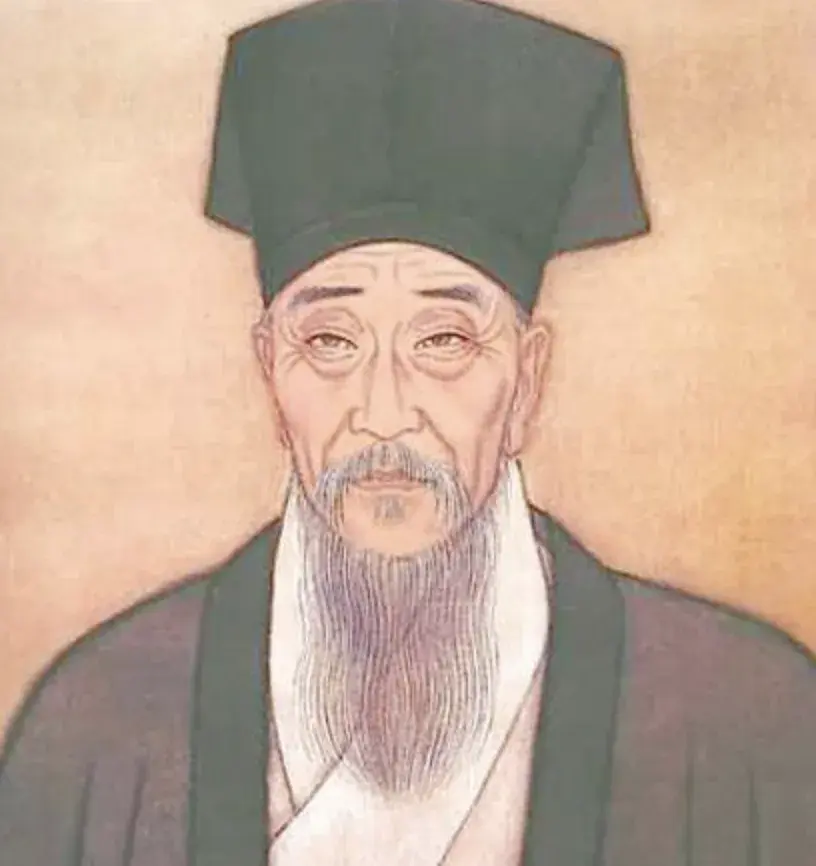
Biography
Early Hardships and Defection to Koxinga
Liu Guoxuan was born in 1629 in Laikeng Village, Sidu Town, Changting County, Tingzhou Prefecture (modern Changting County, Fujian Province). He was born into an impoverished Hakka peasant family residing in the rugged borderlands connecting Fujian, Jiangxi, and Guangdong. The demanding mountainous environment and Hakka cultural traditions forged in him an imposing physical frame, formidable personal bravery, and a cunning, adaptive tactical intellect.
In 1646, Manchu armies invaded Fujian, destroying the Southern Ming Longwu regime. Plunged into displacement by regional warfare, the seventeen-year-old Liu fled to the commercial garrison of Zhangzhou to seek military employment. Initially relegated to the humble status of a common gate sentry, his equestrian skill and keen tactical observation caught the attention of Zhangzhou's Qing commander, Shi Lang, who elevated him to guard captain (shoubei qianzong) tasked with defending the northern gate.
However, witnessing Qing atrocities and cultural subjugation across southern Fujian, Liu harbored secret sympathies for the Southern Ming resistance. When Koxinga (Zheng Chenggong) established naval strongholds on Xiamen and Kinmen, Liu secretly coordinated with Zheng's commanders. In the winter of 1654, Koxinga laid siege to Zhangzhou. On the night of November 29, Liu executed dissenting Qing officers, threw open the northern gates, and guided Zheng's assault columns into the city. Koxinga was overjoyed, praising Liu's daring and appointing him a frontline general in the Southern Ming navy.
Expedition to Taiwan and Expelling the Dutch
In March 1661, seeking to break the Qing coastal evacuation blockade and establish a secure, self-sustaining base of operations, Koxinga launched his maritime expedition across the Taiwan Strait. Liu was entrusted with commanding the advance landing fleet comprising hundreds of junks.
On April 21, 1661, capitalizing on spring tidal surges and guided by indigenous pilots, Zheng's fleet navigated the treacherous Lu'ermen shoals to effect an amphibious landing. Dutch Governor Frederick Coyett dispatched elite musket companies and gunboats from Fort Provintia (modern Chikan Tower, Tainan) and Fort Zeelandia (modern Anping) to repulse the invaders.
Confronting modern Dutch matchlock musketry and heavy cannon, Liu ordered his rattan-shield shock troops and archers to crawl low across the sandy beaches, avoiding direct fire until closing to arrow range. Unleashing dense volleys of fire-arrows that ignited Dutch powder flasks and timber revetments, Liu drew his broadsword and led a ferocious charge into the melee, killing Dutch commander Captain Thomas Pedel and a hundred colonial troops.
Following the capitulation of Fort Provintia, Zheng's forces surrounded Fort Zeelandia. When a relief fleet of twelve warships sent by the Dutch East India Company arrived from Batavia under Jacob Caeuw, Liu coordinated shore batteries and fireships in the Taijiang lagoon, sinking two Dutch galleons and driving off the relief armada. In February 1662, Coyett surrendered Fort Zeelandia, terminating thirty-eight years of Dutch colonial occupation. Liu's vanguard exploits earned him promotion to General of the Right Military Guard.
Military Farming and Economic Foundation of Taiwan
In May 1662, Koxinga died of illness in Taiwan at the age of thirty-nine. His eldest son, Zheng Jing, crossed the strait to assume the title of King of Tungning, establishing a governing duumvirate: "Chen Yonghua presiding over civil administration and Liu Guoxuan directing military operations."
Liu implemented Koxinga's visionary "Military Tuntian System" (tuntian fa), declaring to his troops: "In peacetime, shoulder the plow to cultivate the soil; in wartime, shoulder the spear to defend the realm!" Liu surveyed virgin plains across western Taiwan, organizing garrison divisions into self-sufficient agricultural colonies at Xingang, Xiaolong, Mattau, and Dawulong.
Under Liu's direction, soldiers dug irrigation canals and cleared dense woodlands, transforming untamed wilderness into productive farmland and achieving complete grain self-sufficiency within years. To secure financial viability, Liu encouraged troops and settler families across the Tainan and Gaoping plains to cultivate sugarcane and erect sugar boiling refineries (tangliao), establishing refined cane sugar as Taiwan's primary export commodity to Japan and Southeast Asia.
Furthermore, Liu placed immense emphasis on harmonious relations with indigenous tribes. He prohibited soldiers from encroaching upon native hunting grounds, dispatched experienced farmers to teach plowing, weaving, and metallurgy to native villagers, and integrated native youths into regional militias. His enlightened governance fostered fraternal bonds between Han settlers and indigenous Austronesian populations, laying the socioeconomic foundation of early Taiwan.
The Three Feudatories Revolt and the Mainland Offensive
In 1674, Wu Sangui launched the Revolt of the Three Feudatories against the Qing court, with Geng Jingzhong in Fujian joining the rebellion. Geng invited Zheng Jing to participate in a joint offensive against Qing forces in the south. Zheng Jing appointed Liu Guoxuan Supreme General Director of Military Affairs, dispatching him with a powerful amphibious force to reclaim mainland bases.
Liu demonstrated exceptional operational mobility across the rugged terrain of Fujian and Guangdong. Due to his unpredictable, deceptive maneuvers, both allies and adversaries dubbed him "Liu Guaizi" (The Crafty Liu). Between 1677 and 1678, the Qing court deployed massive banner and Green Standard armies under Prince Jie Shu, General Rahada, and Provincial Commander Duan Yingju to suppress the Southern Ming forces.
At the Battle of Jiangdong Bridge, Liu feigned disorderly retreat, drawing Qing elite cavalry into the narrow defiles of the Jiulong River before detonating concealed explosives beneath the floating bridge and unleashing ambushes from both flanks. The Qing strike force was annihilated, losing commanders Muhelin and Duan Yingju along with thousands of casualties. Liu subsequently captured Haicheng, Quanzhou, Tong'an, and Changtai, eliminating entire Qing garrison armies. For these triumphs, Zheng Jing enfeoffed Liu as Duke of Zhenguo (Zhenguo Gong).
However, isolated on Taiwan, the Ming Zheng regime lacked the demographic and industrial depth required for prolonged continental warfare. In 1680, having extinguished Geng Jingzhong's rebellion, the Qing court concentrated tens of thousands of troops to encircle Xiamen and Kinmen. Outnumbered and facing logistical collapse, Liu fought skillful rearguard actions, successfully evacuating Zheng Jing and the civil-military elite back to Taiwan. Liu then fortified the Penghu archipelago, establishing it as the outer naval bulwark shielding Taiwan.
Battle of Penghu and Peaceful Reunification
In 1681, Zheng Jing passed away in Taiwan, triggering a succession crisis in which Feng Xifan and Liu Guoxuan deposed the eldest prince Zheng Kezang in favor of the twelve-year-old Zheng Keshuang. Liu was elevated to Duke of Linguo, assuming total military and political authority amidst widespread popular yearning for peace. Recognizing this strategic opportunity, the Kangxi Emperor appointed Shi Lang Commander of the Fujian Naval Fleet with absolute operational authority to recover Taiwan.
In June 1683, Shi Lang led three hundred multi-decked warships and over twenty thousand veteran sailors across the strait to assault Penghu. Liu Guoxuan concentrated two hundred warships and twenty thousand defenders at Magong Harbor, constructing twenty li of stone ramparts and heavy shore batteries along Fengguiwei and Niuxin Bay.
From July 10 to 16, 1683, the decisive Battle of Penghu erupted across the island channels. Liu initially deployed favorable winds to encircle and bombard Shi Lang's flagship, wounding Shi Lang in the eye. However, Shi Lang adapted his formation, executing a concentrated wedge assault that overwhelmed isolated Zheng vessels, while wind directions abruptly shifted against the defenders. After seven days of ferocious combat, over a hundred Zheng warships were sunk or burned, resulting in twelve thousand casualties. Recognizing that the day was lost, Liu broke through the blockade in a fast dispatch boat to return to Anping.
Following the catastrophic defeat at Penghu, panic engulfed Taiwan, with radical officers proposing flight to Luzon (the Philippines) to continue guerrilla resistance. Confronting the ruin of the Ming Zheng state, the fifty-five-year-old Liu demonstrated profound statesmanship. Recognizing that the Qing dynasty had consolidated rule across China and that Taiwan's integration was historically inevitable, Liu realized that continued resistance would only bring devastation upon the island's three hundred thousand inhabitants.
Liu persuaded King Zheng Keshuang and Chancellor Feng Xifan to reject futile resistance and embrace peaceful integration. In July 1683, Liu dispatched envoys to Shi Lang's naval camp in Penghu, submitting official documents of surrender. On October 3, 1683, Shi Lang's fleet entered Anping without bloodshed, terminating decades of division and peacefully reintegrating Taiwan into the sovereign territory of China.
Court Enfeoffment and Service in Tianjin
In autumn 1683, Liu Guoxuan traveled north to Beijing alongside Zheng Keshuang and Feng Xifan to attend an imperial audience. In the Hall of Preserving Harmony, the Kangxi Emperor personally received Liu, praising his wisdom in submitting without inflicting further suffering upon the maritime populations.
Executing an enlightened policy of clemency, Kangxi granted Liu the hereditary noble title of Marquis of Shunqing (Shunqing Hou) and appointed him Regional Commander of Tianjin (Tianjinwei Zongbing), an indispensable military post guarding the maritime gateway to Beijing. This assignment reflected Kangxi's profound trust in Liu's strategic capabilities and personal integrity.
During his ten-year tenure in Tianjin, Liu governed with benevolence and discipline. He rebuilt coastal artillery batteries at Daku, dredged maritime channels along the Hai River, prohibited garrison troops from extorting commoners, and promoted water conservancy, turning Tianjin into an orderly and prosperous naval defense center. In 1691, in recognition of his service, Kangxi elevated him to Junior Protector of the Crown Prince (Taizi Shaobao).
In the winter of 1693, Liu Guoxuan passed away in his official residence in Tianjin at the age of sixty-five. The Kangxi Emperor mourned his passing, awarding funeral subsidies, dispatching envoys to offer imperial sacrifices, and confirming his family's hereditary noble status. Rising from an obscure Hakka youth, Liu's life spanned three historical chapters: expelling foreign colonizers to reclaim Taiwan, pioneering agricultural civilization on the island, and ultimately facilitating the peaceful reunification of China.