Birth in Shanyang
Born into a humble military family in Huai'an Prefecture, Jiangsu; educated in ethics and martial arts by his mother.
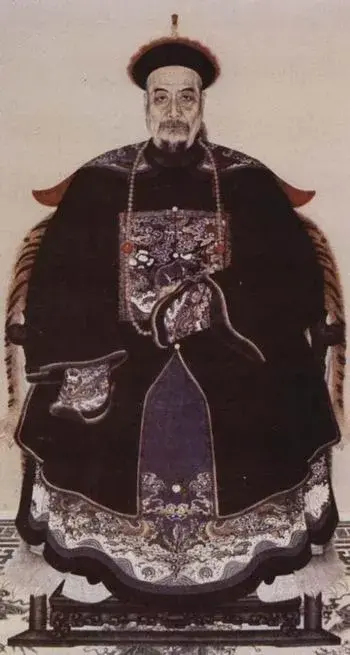
关天培
Guan Tianpei (关天培, January 8, 1781 – February 26, 1841), courtesy name Zhongyin (仲因), art name Zipu (滋圃), and posthumously named Zhongjie (忠节), was a native of Shanyang County, Huai'an Prefecture, Jiangsu (present-day Huai'an District, Huai'an City). He was one of the most celebrated patriotic military commanders, maritime strategists, and national heroes of the mid-to-late Qing dynasty, serving as the Provincial Military…
Guan Tianpei (关天培, January 8, 1781 – February 26, 1841), courtesy name Zhongyin (仲因), art name Zipu (滋圃), and posthumously named Zhongjie (忠节), was a native of Shanyang County, Huai'an Prefecture, Jiangsu (present-day Huai'an District, Huai'an City). He was one of the most celebrated patriotic military commanders, maritime strategists, and national heroes of the mid-to-late Qing dynasty, serving as the Provincial Military Commander of the Guangdong Naval Forces and posthumously awarded the title General of Inspiring Might and Junior Guardian of the Crown Prince. Born into an impoverished military household, he distinguished himself through natural tactical acuity, physical valor, and thorough mastery of naval warfare, passing the military examinations in 1803 and rising steadily through maritime and riverine commands through strict discipline and integrity. In 1826, Guan achieved national prominence when he successfully commanded an unprecedented sea transport convoy of more than one thousand grain junks, conveying over one million piculs of tribute rice from Wusong to Tianjin across treacherous seas without loss, earning promotion to Brigade General of Su-Song and Acting Provincial Military Commander of Jiangnan. In the autumn of 1834, following the armed intrusion of British warships into the Pearl River estuary during the Napier Affair, the Qing court appointed Guan as Provincial Military Commander of Guangdong Naval Forces to fortify southern maritime defenses. Upon arriving in Guangdong, he conducted exhaustive hydrographic surveys, constructed modern fortifications at Humen including the Weiyuan and Jingyuan forts, supervised the casting of hundreds of heavy iron cannons weighing up to eight thousand catties, and compiled the seminal treatise Initial Collection on Maritime Defense Strategy (Chouhai Chuji). In 1839, Guan gave unconditional military backing to Special Imperial Commissioner Lin Zexu in the suppression of the opium trade. He deployed naval squadrons to blockade offshore anchorage routes, forcing foreign merchants to surrender more than twenty thousand chests of opium and providing robust naval security throughout the historic Destruction of Opium at Humen. When British warships launched surprise attacks at Chuenpi and Kwun Chung later that year, Guan fought at the head of his fleet, personally firing cannons to repel the invaders. In early 1841, after defeatist Imperial Commissioner Qishan dismantled coastal barriers and dismissed maritime militias, the British launched an overwhelming combined assault against the isolated Humen forts. Refusing to abandon his post despite being denied reinforcements, Guan distributed his personal savings to his troops, pulled out his own loosened teeth to send home as a final farewell to his elderly mother, and fought to the death at Jingyuan Fort. Wounded in more than ten places, he continued to direct artillery fire until he fell in battle at the age of sixty-one. His supreme martyrdom established him as an enduring symbol of Chinese resistance against foreign imperialist aggression.
Born into a humble military family in Huai'an Prefecture, Jiangsu; educated in ethics and martial arts by his mother.
Passed the local military examinations as a military scholar, appointed Squad Leader in the Grain Transport Division.
Successfully convoyed over 1,500 grain junks carrying one million piculs of rice to Tianjin, promoted to Colonel of the Taihu Battalion.
Appointed Brigade General of Su-Song, commanding Yangtze estuary and offshore coastal defenses with rigorous discipline.
Appointed Acting Provincial Military Commander of Jiangnan, overhauling riverine and coastal fortifications.
Following the Napier incident, elevated to Provincial Military Commander of Guangdong Naval Forces stationed at Humen.
Surveyed the Pearl River mouth, expanding Weiyuan, Jingyuan, and Zhenyuan forts, casting massive cannons, and drilling gunners.
Supported Imperial Commissioner Lin Zexu in confiscating over 20,000 chests of opium and securing the Destruction of Opium at Humen.
Led the naval flagship in the Chuenpi channel to repel surprise British naval artillery attacks.
Maintained impenetrable defenses during the outbreak of the First Opium War; Lin Zexu was dismissed and replaced by Qishan.
Qishan dismantled coastal defenses; British forces overran Shajiao and Dajiao forts, killing Chen Liansheng while Guan's appeals for aid were rejected.
British fleet bombarded Jingyuan Fort; Guan fought to the last breath despite multiple wounds and fell in action at age sixty-one.
Emperor Daoguang granted posthumous titles of Junior Guardian of the Crown Prince and General of Inspiring Might, bestowing the name Zhongjie.
Guan Tianpei was born outside the east gate of Shanyang County, Huai'an Prefecture, Jiangsu. His family had served for generations as minor garrison non-commissioned officers and common soldiers; his great-grandfather Guan Hongrui, grandfather Guan Shu, and father Guan Ziming all held low-ranking military positions. Because the household lived in modest poverty, Guan was tutored during his formative years primarily by his mother, Lady Wu. Endowed with natural integrity, physical vigor, and a sharp memory, he showed little interest in classical civil examinations, focusing instead on horse archery, martial exercises, and traditional treatises on warfare.
In 1803, at the age of twenty-three, Guan took the prefectural military examination in Huai'an and passed as a military licentiate. He entered active service as a Squad Leader under the Grain Transport Governor's Right Battalion. In this frontline assignment, Guan proved diligent, uncomplaining under harsh weather, and scrupulously upright, winning praise from his superiors for his tactical competence. Over the following two decades, he earned steady promotions through the ranks, serving successively as Captain, Major of the Yangzhou Garrison, Major of the Sea Patrol Battalion, Second Captain of the Brigade Standard, Major of the Su-Song Brigade, and Lieutenant Colonel of the Chuansha Naval Battalion. Moving from river transport to coastal fleets, Guan mastered the treacherous tides, sandbars, and wind patterns of the Yangtze estuary, evolving into one of the Qing military's rare, highly capable naval commanders.
In the early Daoguang era, catastrophic breaches along the lower course of the Yellow River repeatedly silted up the Grand Canal, severing the arterial waterway that supplied Beijing with grain. Confronted with a grave national food crisis, Liangjiang Viceroy Tao Shu and Jiangsu Governor He Changling advocated an unprecedented maritime transport scheme in 1826, breaking imperial tradition by shipping tribute rice from Wusong across the Yellow Sea and Bohai Gulf directly to Tianjin.
The undertaking was fraught with peril, as open-ocean navigation faced seasonal typhoons, navigational hazards, and piracy. Entrusted with overall escort command, Guan Tianpei assembled and organized a fleet of more than 1,500 sea junks. He established strict formation discipline, using signals, lanterns, and patrol vessels to maintain cohesion, while personally leading the vanguard. Braving gales and navigating tricky shallows, the entire fleet arrived safely at Tianjin with over one million piculs of grain without the loss of a single cargo vessel. This unprecedented logistical success earned Guan wide acclaim, prompting Emperor Daoguang to appoint him Colonel of the Taihu Battalion.
In 1827, Guan was promoted to Brigade General of the Su-Song Brigade, based at Wusong, placing him in command of the maritime defenses of the Yangtze estuary. In this post, he eradicated long-standing bureaucratic graft, prohibited troops from extorting merchant vessels, and conducted regular gunnery drills at sea. In the spring of 1832, Guan was appointed Acting Provincial Military Commander of Jiangnan, reaching the pinnacle of regional naval leadership.
During the summer and autumn of 1834, the first British Chief Superintendent of Trade, William John Napier, defied Qing regulations by dispatching the frigates HMS Andromache and HMS Imogene to force passage through the Pearl River mouth at Humen, exchanging fire with coastal forts before reaching Whampoa. Following Napier's withdrawal, the Daoguang Emperor removed the ineffective provincial commander Li Zengjie and sought an energetic, tested officer to secure the vital maritime gates of southern China. In October 1834, Guan Tianpei was elevated to Provincial Military Commander of Guangdong Naval Forces, establishing his headquarters at the Humen naval base.
Arriving in Guangdong, Guan was appalled by the laxity and corruption of the regional naval establishment. He firmly banned all illicit gifts and customary fees from subordinate officers, publicly rebuking those who attempted to bribe him. Recognizing that existing forts were dilapidated and their small-caliber cannons incapable of covering the wide main navigation channel, Guan personally boarded small reconnaissance skiffs to survey the shoals, tides, and islets of the Pearl River estuary. He concluded that Humen, where flanking mountains narrowed the deep water channel around intermediate islands, was the only natural chokepoint capable of defending Guangzhou.
Between 1835 and 1839, Guan devoted his energies to transforming Humen into an integrated coastal defense network. He directed the reconstruction and expansion of the Weiyuan, Jingyuan, Zhenyuan, and Shetouwan forts, establishing a multi-layered defense with the outer forts of Shajiao and Dajiao. Across the main channel, he laid submerged pile-driver barriers, iron booms, and stone obstructions. Guan spent months at the state foundry in Foshan personally inspecting iron quality, supervising the casting of forty massive cannons weighing eight thousand catties each, alongside hundreds of medium-range artillery pieces. He drilled garrison gunners in target practice twice a year and compiled his extensive practical knowledge into the four-volume illustrated treatise Initial Collection on Maritime Defense Strategy (Chouhai Chuji), establishing Humen as a model naval fortification.
In March 1839, Special Imperial Commissioner Lin Zexu arrived in Guangzhou with orders to eradicate the opium scourge. Facing recalcitrant British and American merchants backed by British Superintendent of Trade Charles Elliot, Guan placed the entire provincial naval force at Lin's disposal. Setting aside all inter-service rivalries, Guan deployed war junks to patrol Lingdingyang and West Korea Bay, cutting off fresh water and provisions to foreign receiving ships anchored offshore and compelling foreign merchants to surrender their contraband.
Under the pressure of Guan's tight blockade, foreign merchants surrendered 20,283 chests of opium. Throughout the historic twenty-three-day public Destruction of Opium on Humen beach, Guan personally commanded naval vessels patrolling the seaward perimeter day and night, deterring potential British armed raids and ensuring the complete destruction of the contraband. For his exemplary service, the Daoguang Emperor granted Guan special imperial commendations.
British refusal to submit to Qing legal bonds led to escalating skirmishes. In September 1839, British warships HMS Volage and HMS Hyacinth attacked Chinese patrol junks in the Chuenpi channel. Guan boarded his flagship, directing return fire from the bow and scoring direct hits on the British flagship's mainmast, successfully repelling the strike. In October and November, Guan cooperated with Lin Zexu to construct defensive shore batteries at Kwun Chung, winning repeated engagements that forced British merchant vessels to withdraw toward the outer roadsteads of Tsim Sha Tsui.
In June 1840, the British government launched the First Opium War, sending an expeditionary fleet to China. Finding Humen heavily fortified, the British fleet bypassed the Pearl River estuary, sailing north to seize Dinghai and threaten Tianjin. Panicked by the enemy's proximity to Beijing, the Daoguang Emperor dismissed Lin Zexu and Deng Tingzhen, sending Grand Secretary Qishan south to negotiate peace.
Arriving in Guangzhou in late 1840, Qishan sought to appease the British by systematically dismantling regional defenses. He unilaterally dismissed thousands of coastal braves and naval recruits trained by Guan, ordered the removal of iron harbor booms, and instructed fort garrisons to dismount artillery and reduce ammunition. Guan wept in protest, repeatedly confronting Qishan to argue that disarming Humen would invite certain catastrophe. Qishan arrogantly dismissed Guan's warnings, accusing him of warmongering.
On January 7, 1841, observing that Chinese coastal defenses were disabled, British forces under James Bremer breached negotiations and launched a surprise land-sea assault on the outer forts of Shajiao and Dajiao. Lieutenant Colonel Chen Liansheng fought to the death, and both outer forts fell. With British forces advancing directly on Humen, Guan dispatched seven urgent appeals to Qishan pleading for powder, shot, and reinforcements. Terrified of disrupting peace negotiations, Qishan refused to send help, grudgingly sending only two hundred ill-equipped, elderly conscripts.
Surrounded and abandoned, the sixty-one-year-old commander resolved to die for his country. Having lived on his official salary without accumulating personal wealth, Guan pawned his few winter robes and possessions on the eve of battle, raising about one thousand taels of silver. He distributed every ounce to his soldiers in the fort, declaring with tears: "This fort is our designated burial ground; we shall live and die with these ramparts!"
To demonstrate his unyielding resolve, Guan extracted several loosened teeth from his mouth, cut off a lock of his graying beard, and entrusted them along with a final letter to an old servant to be delivered to his eighty-year-old mother in Huai'an, writing: "Your son has dedicated his body to the state; duty and filial piety cannot both be preserved." Moved to tears by his heroic dedication, his remaining soldiers swore to fight to the end.
On the morning of February 26, 1841 (the 6th day of the 2nd month of the 21st year of Daoguang), Commodore Bremer concentrated ten British warships, three armed steamships, and over one thousand Royal Marines against the Humen forts. Firing broadsides of explosive shells, the British fleet subjected Jingyuan Fort to a relentless bombardment that pulverized its parapets. Clad in full armor, Guan stood exposed upon the open battery, personally igniting fuses and directing fire against enemy warships.
By late afternoon, Royal Marines landed in the blind spots behind the fort, storming the breached rear walls. Most of the garrison had fallen, and Guan was wounded in the left arm by musket fire. When British infantry breached the inner courtyard, Guan led his few surviving guards in close-quarters hand-to-hand combat.
Sustaining more than ten sword and bullet wounds that drenched his garments in blood, Guan continued to strike at the enemy with his saber. Weeping aides begged him to escape by boat, but Guan shouted: "I am a high-ranking general of the dynasty; defending this soil is my duty! How could I live in shame?" He ordered trusted attendants to smuggle the provincial commander's official seal out through the rear creek so it would not be captured, then turned back to engage the enemy. Moments later, a musket ball struck him in the chest, followed by an exploding cannon shot. Guan collapsed upon the ramparts, dying a hero's death at age sixty-one.
Even in death, Guan's eyes remained wide open and his posture rigid, commanding such profound respect that British officers removed their caps in solemn tribute. His faithful servant Sun Li recovered his remains under cover of night and transported them back to Huai'an for burial. Deeply shaken and regretful upon learning of the catastrophe, Emperor Daoguang issued an imperial edict posthumously elevating Guan to Junior Guardian of the Crown Prince, conferring the title General of Inspiring Might, granting the posthumous name Zhongjie, and ordering ancestral shrines erected in Huai'an and Guangzhou. Guan Tianpei's supreme sacrifice became an indelible beacon of national resistance in modern Chinese history.
Upon assuming command of Guangdong's naval forces, Guan Tianpei revolutionized traditional coastal defense by transforming Humen into an integrated citadel. Replacing obsolete and isolated shore batteries, he engineered a multi-layered defense featuring the Weiyuan, Jingyuan, Zhenyuan, and Hengdang forts as the inner redoubt, anchored by Shajiao and Dajiao as forward bastions.
Guan supervised the casting of dozens of eight-thousand-catty heavy iron cannons, deployed deep underwater chain booms and ballast obstructions, and systematically trained garrison units in synchronized gunnery. His seminal military treatise, Initial Collection on Maritime Defense Strategy (Chouhai Chuji), established an enduring theoretical and practical foundation for Chinese coastal defense during the early modern era.
During the 1839 anti-opium campaign, Guan demonstrated exceptional patriotism and selfless cooperation with Imperial Commissioner Lin Zexu. Dismissing bureaucratic rivalries, he mobilized the provincial navy to maintain an airtight maritime blockade that severed supplies to foreign receiving ships, forcing merchants to surrender more than twenty thousand chests of opium.
Throughout the public Destruction of Opium, Guan personally commanded naval squadrons on sea patrol around the site, providing absolute security against foreign armed intervention and safeguarding the historic anti-drug action.
Guan stood as an intrepid field commander in the opening skirmishes of the Anglo-Chinese conflict. During the Battle of Chuenpi, he boldly steered his flagship directly against superior British frigates, personally directing cannon fire that struck the enemy vessel and repelled the assault.
In subsequent engagements at Kwun Chung, he coordinated shore artillery and boat ambushes alongside Lin Zexu to achieve six consecutive tactical victories. These triumphs dismantled the myth of British maritime invincibility and bolstered the nation's resolve to resist foreign aggression.
During the final defense of Humen in 1841, facing the betrayal of defeatist officials and an overwhelmingly superior enemy fleet, Guan demonstrated immortal valor. He distributed his personal funds to his troops, sent his teeth home as a final farewell, and refused to abandon his post.
Surrounded and bleeding from multiple wounds, he directed fire to the last breath, dying in combat alongside his men. His martyrdom forged an enduring patriotic legacy that inspired generations of Chinese resistance against foreign imperialism.
FIGURES ASSOCIATED WITH THIS DYNASTY